Our educational chemical engineering pilot plants provide comprehensive hands-on training in core unit operations for universities and research institutions. The extensive product range includes fluid mechanics systems (Bernoulli, friction, cavitation, two-phase flow), heat transfer units (three-tube, solid sphere), mass transfer apparatus (gas-liquid, liquid-liquid), reaction engineering setups (methane cracking, steam reforming, CO2 hydrogenation, fixed/fluidized bed catalysis), distillation and adsorption pilots, and specialized modules for residence time distribution, crystallization, and pump performance. Each plant is designed for safe, curriculum-aligned experimentation with industrial-grade components and digital interfaces.
Toggle Categories
Get Instant Support
Choose your preferred way to connect with our team
-
Get Free Quote Fill out form for detailed pricing
-
Send Email Detailed inquiry support
-
WhatsApp Quick mobile chat
Response Time
Within 8 hours on working days, 24 hours on holidays
Educational Chemical Engineering Pilot Plants

Comprehensive Fluid Mechanics Educational Unit Operations Pilot Plant
Item Number: LPK-BFMC-C
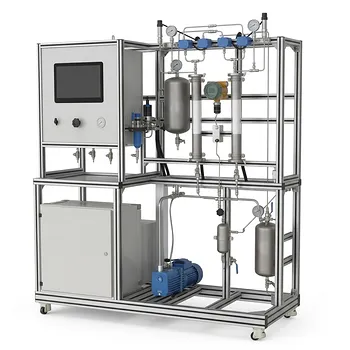
Pressure Swing Adsorption Educational Unit Operations Pilot Plant
Item Number: LPK-BYXF

Methane Cracking Educational Unit Operations Pilot Plant
Item Number: LPK-CJWL

Multi-Functional Special Distillation Educational Pilot Plant
Item Number: LPK-SDMC
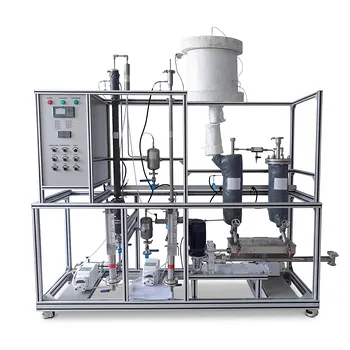
Steam Methane Reforming Hydrogen Production and Purification Educational Pilot Plant
Item Number: LPK-CCHTH

Fluidized Bed Gas Solid Catalytic Reaction Educational Pilot Plant
Item Number: LPK-LHCQG
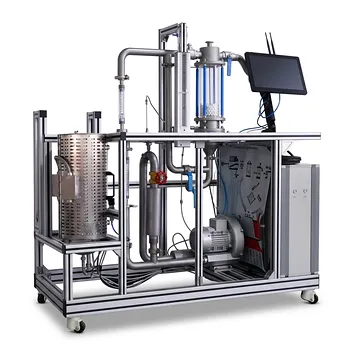
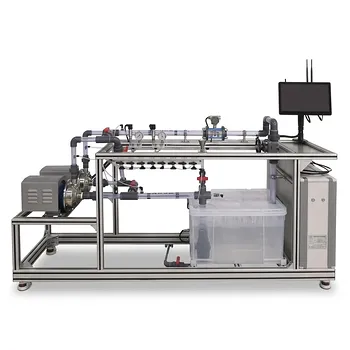
Centrifugal Pump Performance Determination Educational Unit Operations Pilot Plant
Item Number: LPK-LXBZH

Tubular Reactor Flow Characteristics Determination Educational Unit Operations Pilot Plant
Item Number: LPK-GSFYQ

Fixed Bed Gas Solid Catalytic Reaction Educational Pilot Plant
Item Number: LPK-GDCQG
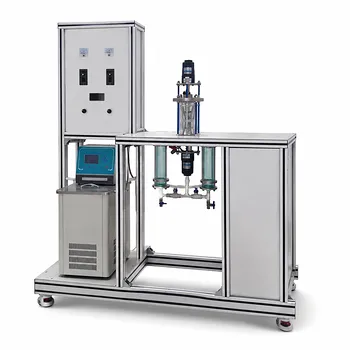
Liquid-Liquid Mass Transfer Coefficient Determination Educational Pilot Plant
Item Number: LPK-YYCZ

Continuous Batch Extractive Distillation Educational Pilot Plant
Item Number: LPK-SFZL

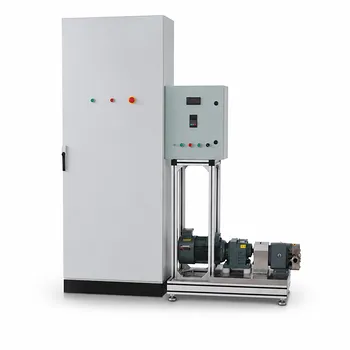
Quantitative Dosing and Liquid Flow Control Educational Unit Operations Pilot Plant
Item Number: LPK-DLJL
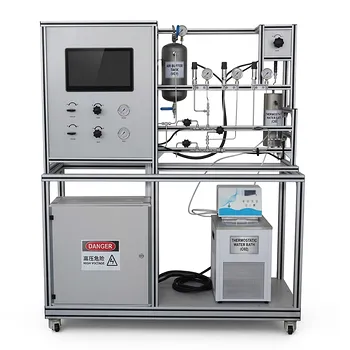
Throttling Effect Determination Educational Unit Operations Pilot Plant
Item Number: LPK-CGT
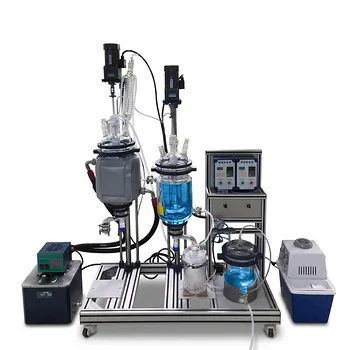
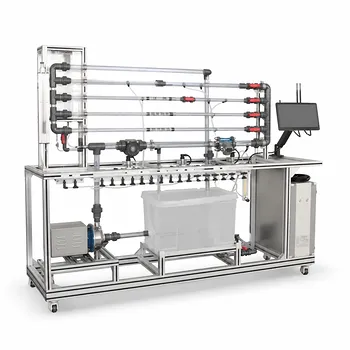
Fluid Friction Resistance Determination Educational Unit Operations Pilot Plant
Item Number: LPK-LTZL
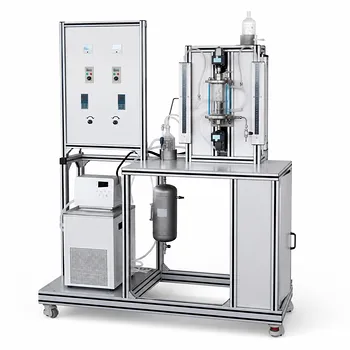
Dual-Drive Stirred Gas-Liquid Mass Transfer Coefficient Determination Pilot Plant
Item Number: LPK-DSA
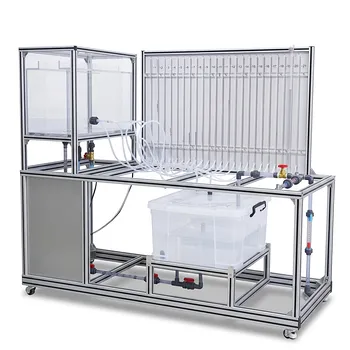
Bernoulli Equation Demonstration Unit Operations Pilot Plant
Item Number: LPK-BBNL

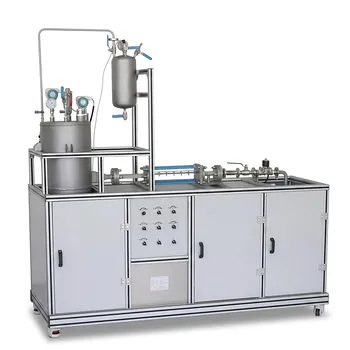
Cavitation Phenomenon Demonstration and Analysis Educational Unit Operations Pilot Plant
Item Number: LPK-CATT

Carbon Dioxide Hydrogen Methanol Synthesis Educational Unit Operations Pilot Plant
Item Number: LPK-CEJH
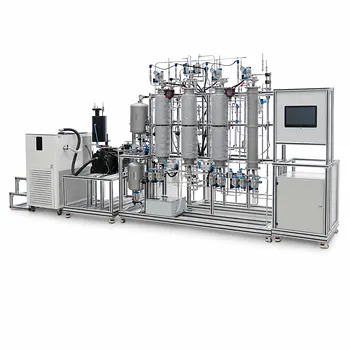
Educational Pressure Swing Adsorption Ethylene Capture Unit Operations Pilot Plant
Item Number: LPK-CYBJ
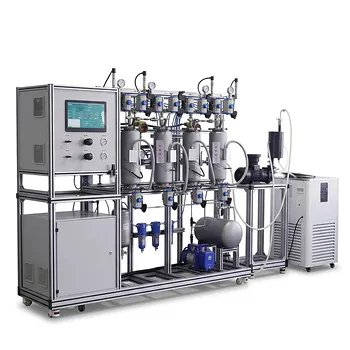
Multi-Component Gas Pressure Swing Adsorption Pilot Plant for Unit Operations Education
Item Number: LPK-CBPA
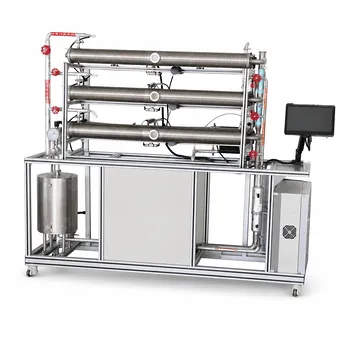
Three-Tube Heat Transfer Educational Pilot Plant for Unit Operations Training
Item Number: LPK-BHTT

Ethylbenzene Dehydrogenation Educational Unit Operations Pilot Plant
Item Number: LPK-SREB
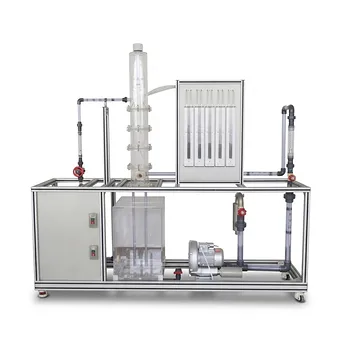
Plate Column Hydrodynamics Tray Demonstration Educational Pilot Plant
Item Number: LPK-BMT
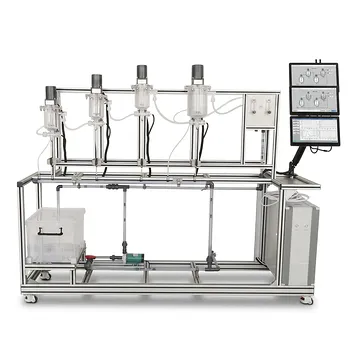
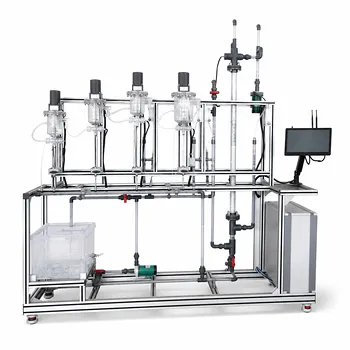
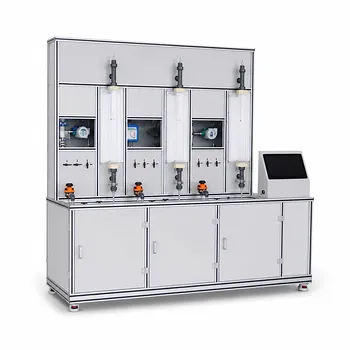
Two Phase Flow Pattern Velocity Resistance Measurement Educational Pilot Plant
Item Number: LPK-TSFR
Comprehensive Training Solutions for Chemical Engineering Education
The study of chemical engineering is fundamentally rooted in the understanding of unit operations—the building blocks that transform raw materials into valuable products. At LABPARK, we specialize in designing and manufacturing state-of-the-art educational pilot plants that bridge the gap between theoretical knowledge and industrial practice. Our Educational Chemical Engineering Pilot Plants cover a vast spectrum of unit operations, from basic fluid mechanics to advanced reaction engineering and separation processes. These systems are meticulously engineered to provide students and researchers with immersive, hands-on experience, enabling them to conduct experiments that mirror real-world industrial scenarios while adhering to the highest safety standards.
Fluid Mechanics and Transport Phenomena
Fluid flow is at the heart of all chemical processes. Our fluid mechanics pilot plants, such as the Comprehensive Fluid Mechanics Educational Unit Operations Pilot Plant and the Bernoulli Equation Demonstration Unit, allow students to visually and quantitatively investigate fundamental principles. The comprehensive system covers over 13 experiments including pipe friction losses in smooth and rough pipes, minor losses through fittings, flowmeter calibration (Venturi, orifice), and centrifugal pump performance under series and parallel configurations. The Bernoulli demonstration plant uses a transparent horizontal pipe with 23 piezometer tubes to illustrate energy conservation and hydraulic grade lines. Other specialized units include the Cavitation Phenomenon Demonstration Plant, which uses a transparent Venturi to show vapor bubble formation and collapse, and the Two-Phase Flow Pattern Velocity Resistance Measurement Plant that characterizes gas-liquid flow regimes in different conduit geometries. The Fluid Friction Resistance Determination Plant employs precise differential pressure sensors and digital data acquisition to calculate Darcy-Weisbach friction factors and observe laminar-to-turbulent transition. These systems are designed with industrial-grade components and robust construction to withstand repetitive academic use while delivering accurate, repeatable results.
Heat Transfer and Thermal Unit Operations
Understanding heat transfer is critical for reactor design and energy optimization. Our Three-Tube Heat Transfer Educational Pilot Plant enables side-by-side comparison of smooth, corrugated, and turbulent tube inserts to study convective heat transfer enhancement and condensation phenomena. With a closed-loop steam recovery system, it ensures safe operation while allowing students to verify empirical correlations such as Dittus-Boelter and Sieder-Tate. The Solid Spherical Heat Transfer Coefficient Determination Plant offers a unique opportunity to measure transient temperature profiles and calculate convective coefficients under natural convection, forced convection, fixed bed, and fluidized bed conditions. This plant combines conduction, convection, and particle dynamics, giving students a holistic view of heat transfer in multiphase systems.
Mass Transfer and Separation Processes
Mass transfer operations like absorption, desorption, and distillation are core to chemical engineering. Our Dual-Drive Stirred Gas-Liquid Mass Transfer Coefficient Determination Pilot Plant features independent agitation for gas and liquid phases, enabling precise control of interfacial area and film resistances. This unique design allows students to decouple and quantify gas and liquid film coefficients using two-film theory. The Liquid-Liquid Mass Transfer Coefficient Determination Pilot Plant provides precise phase boundary control for studying extraction kinetics. For distillation, we offer several advanced systems. The Multi-Functional Special Distillation Educational Pilot Plant supports continuous, vacuum, azeotropic, reactive, and extractive distillation, all in one unit with transparent glass columns for visualizing hydrodynamics. The Continuous Batch Extractive Distillation Plant offers flexibility for batch or continuous modes, with a high reflux ratio range and corrosion-resistant materials. The Plate Column Hydrodynamics Tray Demonstration Plant is a transparent visual tool that showcases the operation of industrial sieve, bubble cap, and valve trays, allowing students to measure pressure drop, observe flooding, weeping, and entrainment, and determine operating limits.
Reaction Engineering and Catalysis
Chemical reactors are the core of any process plant. Our reaction engineering pilot plants cover a wide range of catalytic and non-catalytic systems. The Methane Cracking Educational Unit Operations Pilot Plant introduces students to high-temperature catalytic conversion with a 1000°C furnace and seven mass flow controllers for precise gas management. The Steam Methane Reforming Hydrogen Production and Purification Plant integrates reaction and separation, demonstrating catalyst performance, phase equilibrium, and process dynamics. For heterogeneous catalysis, we offer both Fixed Bed Gas Solid Catalytic Reaction Pilot Plant and Fluidized Bed Gas Solid Catalytic Reaction Pilot Plant. The fixed bed reactor features a split-furnace design for catalyst activation and kinetic studies, while the fluidized bed system allows students to explore fluidization hydrodynamics, minimum fluidization velocity, and bubbling behavior, all under safe conditions with touchscreen data logging. The Carbon Dioxide Hydrogenation Methanol Synthesis Plant and its variant the Carbon Dioxide Hydrogen Methanol Synthesis Plant bring sustainable chemistry into the lab, enabling study of high-pressure catalysis and green fuel production. The Ethylbenzene Dehydrogenation Educational Unit Operations Pilot Plant replicates industrial styrene production, including catalyst regeneration by steam, and incorporates safety interlocks for teaching gas-solid reaction engineering.
Adsorption and Gas Separation
Pressure swing adsorption (PSA) is a key industrial separation technology. Our PSA educational plants, including the Pressure Swing Adsorption Educational Unit Operations Pilot Plant, the Educational Pressure Swing Adsorption Ethylene Capture Unit Operations Pilot Plant, and the Multi-Component Gas Pressure Swing Adsorption Pilot Plant, provide hands-on experience with adsorption fundamentals. The nitrogen-oxygen model plant uses a dual-column design with automatic cycling, while the ethylene capture system employs an eight-column configuration for complex industrial simulation. The multi-component PSA unit features four towers with dual regeneration and IoT-enabled touchscreen control, allowing students to perform breakthrough curve analysis and cycle optimization. These systems teach mass transfer in porous media, adsorbent kinetics, and process economics.
Process Control and Residence Time Distribution
Understanding reactor flow behavior is vital for scale-up. Our Tubular Reactor Flow Characteristics Determination Plant and the Residence Time Distribution and Reactor Flow Characteristics Determination Plant enable students to measure residence time distribution (RTD) using tracer pulse and step inputs. The tubular reactor unit includes an adjustable recycle loop to study plug flow and backmixing effects. The RTD plant combines multiple CSTRs in series with a tubular reactor, offering a comprehensive platform for reactor diagnostics. The Multi-Stage Stirred Tanks in Series RTD and Mixing Performance Plant uses real-time conductivity measurements and interactive 3D simulations to visualize mixing dynamics. These plants help students calculate mean residence time, variance, and model reactor non-ideality.
Specialized Unit Operations and Thermodynamics
Beyond core operations, we offer plants that explore unique phenomena. The Throttling Effect Determination Plant demonstrates the Joule-Thomson effect by measuring temperature change during adiabatic gas expansion, reinforcing thermodynamic fundamentals. The Potassium Salt Thermal Dissolution and Crystallization Separation Plant teaches solubility equilibria, supersaturation, and crystal growth kinetics. The Centrifugal Pump Performance Determination Plant allows students to generate pump curves and understand NPSH and efficiency. The Quantitative Dosing and Liquid Flow Control Plant integrates variable-speed metering pumps, flow sensors, and PLC-based SCADA for training in industrial automation and control theory.
Customization and Educational Integration
All LABPARK pilot plants are designed with education in mind. They feature industrial-grade components (Siemens or similar PLCs, mass flow controllers from Bronkhorst or Alicat, high-precision sensors) but are scaled for laboratory environments. Each system includes a detailed curriculum package with experiment manuals, pre-lab assignments, and post-lab data analysis tools. Our proprietary digital assessment suite allows instructors to track student progress and performance in real time. Many units offer QR-code linked video tutorials and 3D virtual simulations that prepare students before the physical lab session. Safety is paramount: plants are equipped with emergency stops, pressure relief valves, leak detection systems, and interlocks that shut down operations under hazardous conditions.
Companies and academic institutions worldwide trust LABPARK for our commitment to quality, safety, and pedagogical value. We understand that every curriculum is unique, which is why we offer fully customizable designs. Whether you need to add additional sensors, modify the reactor size, or integrate with a learning management system, our engineering team will work closely with you to tailor a solution that meets your specific educational objectives.
Are you ready to transform your chemical engineering labs? Contact LABPARK today to discuss your pilot plant needs. Our knowledgeable sales engineers will guide you through product selection, customization options, and installation support. Fill out the inquiry form at #ContactForm or email us directly. Let us help you build the next generation of chemical engineers with cutting-edge, hands-on training equipment.
REQUEST A QUOTE
Our professional team will reply to you within one business day. Please feel free to contact us!
Related Articles
The 44% Error: Why Your Crystallization Pilot Plant is Lying About Yield
Ignoring water of hydration in crystal mass balances can inflate yield predictions by over 50%. A deep dive into the mass and energy balance coupling that separates an empirical observation from a predictable, scalable process.
Read more
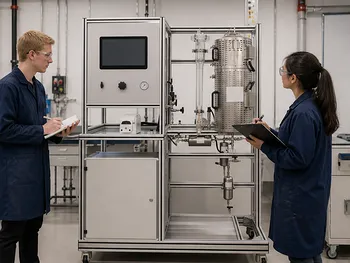
The Lever and the Leverage: Why a Pilot Plant Creates Engineers Who Build, Not Just Calculate
Catalytic reforming isn't a recipe; it's a war of trade-offs. Here’s how a pilot plant transforms abstract catalysis theory into the visceral, systems-thinking intuition that defines a great chemical engineer.
Read more
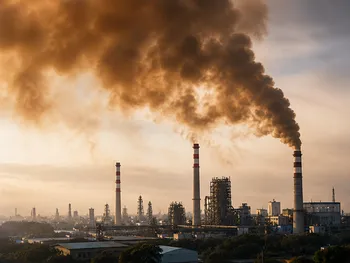
The Brown Cloud and the Engineer’s Mind: Why Pilot Plants Don’t Just Dilute Danger, They Unmake It
Scaling toxic gas management beyond the fume hood is a leap from blind containment to engineered neutralization. Explore the mass-transfer psychology behind gas absorption columns.
Read more
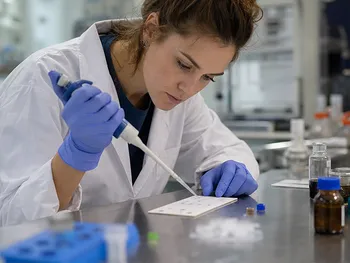
The Intuition You Can’t Simulate: Why the Best Bioprocess Education Still Lives on a Thin-Layer Plate
Before engineers trust a $500,000 bioreactor, they must trust their own hands. How thin-layer chromatography (TLC) builds the tacit knowledge that separates trained operators from true process engineers—and why LABPARK pilot plants preserve this irreplaceable skill.
Read more
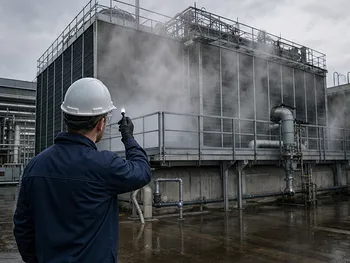
The Two Temperatures Your Cooling Tower Relies On (And Why They Betray a Solvent Column)
Wet-bulb and adiabatic saturation temperatures appear identical in water-air systems, but for organic solvents the divergence can corrupt pilot-plant data. Discover the hidden transport coincidence that makes (or breaks) your energy balance.
Read more
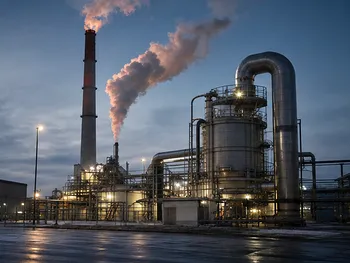
The Single-Count Principle: How a Quiet VSEPR Rule Shapes the Molecules We Scrub, Absorb, and Teach
Why do CO₂, SO₂, and NOₓ behave so differently in a wet scrubber? The answer hinges on a surprisingly simple VSEPR shortcut—treating every multiple bond as one electron group—that predicts shape, polarity, and separation strategies in environmental and bioprocess training.
Read more
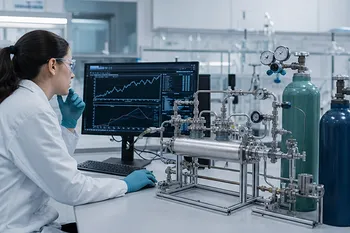
The Ideal-Selectivity Trap: How Pilot Plants Expose the Real Story of Membrane CO₂ Capture
A lab cell measures a membrane’s ideal selectivity; only a pilot plant reveals how it behaves under real flue gas stress, impurities, and economics. Uncover the truth before scaling up.
Read more
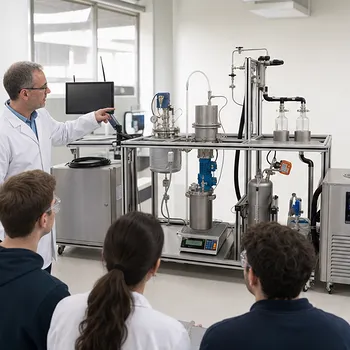
The Machine That Teaches Green Chemistry by Making Pressure Visible
How supercritical CO₂ pilot plants turn the safer-solvent principle into a hands-on, trade-off-driven lesson in chemical engineering—and why memorizing green chemistry isn’t enough.
Read more
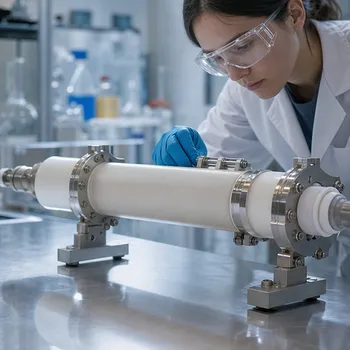
The Bridge Between a Material's Promise and a Carbon Capture Plant's Reality
A membrane pilot plant is not a scaled-down factory; it's a time machine for risk. Learn how hands-on testing exposes the hidden flaws—fouling, plasticization, and pressure penalties—that destroy the economics of CO₂ capture.
Read more
The Invisible Variable That Sinks Bioreactors—and How Pilot Plants Train You to See It
Dissolved CO₂ accumulation silently impairs cell growth and product quality. First-principles modelling, validated on pilot-scale training plants, turns this hidden risk into a controllable process parameter.
Read more
The Invisible Constraint: How First-Principles dCO₂ Modeling Turns Your Pilot Plant into a Predictive Engine
Learn how a first-principles dCO2 mass transfer model de-risks bioprocess scale-up. Validate with pilot plant data to predict manufacturing CO2 profiles, size spargers, and design control loops—eliminating costly full-scale trials.
Read more
The Invisible Thread: How Supercritical CO₂ Weaves a Future Without Water
Explore the high-pressure physics and critical unit operations behind waterless dyeing. A deep dive into why supercritical CO₂ pilot plants are the non-negotiable bridge to sustainable textile manufacturing.
Read more
The Solvent That Disappears: Supercritical CO₂ and the New Logic of Pilot Plant Operations
Supercritical CO₂ extraction doesn’t just replace toxic solvents—it fundamentally reshapes mass transfer, preservation, and teachable moments in chemical engineering pilot plants. Here’s how that changes what an education-focused pilot unit can deliver.
Read more
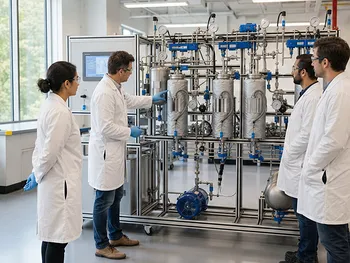
The Physics of Safety: Why Supercritical CO2 Turns a Pilot Plant into a Classroom Without a Poison Cabinet
Supercritical CO₂ extraction eliminates toxic solvents, zeroes out hazardous waste, and operates near room temperature — making it the ultimate teaching tool for process safety and green chemistry.
Read more
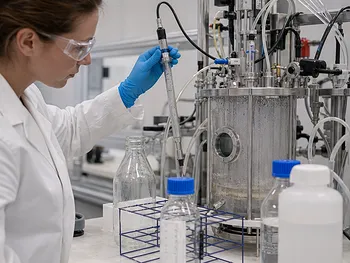
The Electric Ghost in Your Bioreactor: How Optical pH Sensors Are Ending a 50-Year Maintenance Ritual
Optical FRET-based pH and pCO₂ sensors eliminate ground-loop noise, slash response times to milliseconds, and survive repeated autoclaving—a step change for bioprocess pilot plants tired of nursing glass electrodes.
Read more