Our Educational Environmental & Water Treatment Pilot Plants provide comprehensive hands-on training for chemical, environmental, and bioprocess engineering students. The category spans constant pressure filtration, membrane separation (UF, NF, RO), electrochemical treatment, carbon capture, gas-solid separation, pyrolysis, and more. Each bench-scale or pilot-scale unit is designed for safe, visible operation, bridging theory and industrial practice.
Toggle Categories
Get Instant Support
Choose your preferred way to connect with our team
-
Get Free Quote Fill out form for detailed pricing
-
Send Email Detailed inquiry support
-
WhatsApp Quick mobile chat
Response Time
Within 8 hours on working days, 24 hours on holidays
Educational Environmental & Water Treatment Pilot Plants
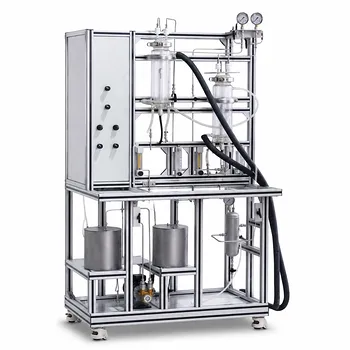
Photocatalytic Membrane Separation and Degradation Unit Operations Pilot Plant
Item Number: LPK-CMBS

Constant Pressure Filtration Educational Unit Operations Pilot Plant
Item Number: LPK-BFLP

Multi-Functional Membrane Separation Educational Pilot Plant for Unit Operations Lab
Item Number: LPK-SUNR
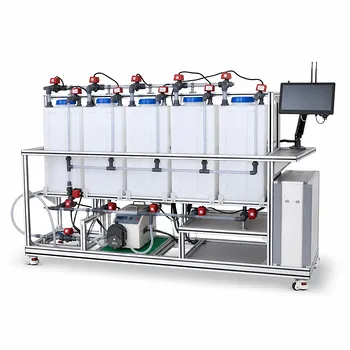
Electrochemical Water Treatment Educational Unit Operations Pilot Plant
Item Number: LPK-CEWT
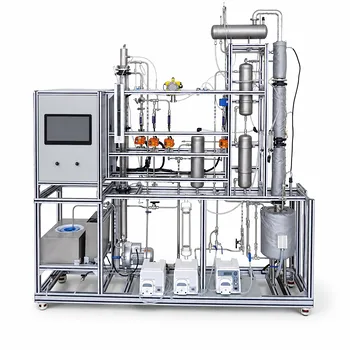
Carbon Dioxide Absorption and Desorption Educational Pilot Plant for Carbon Capture Studies
Item Number: LPK-TBJJX
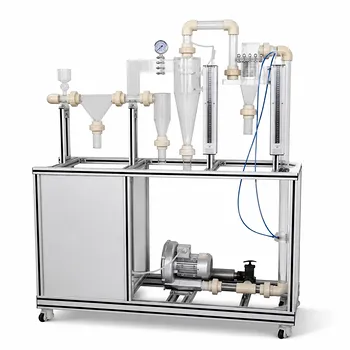
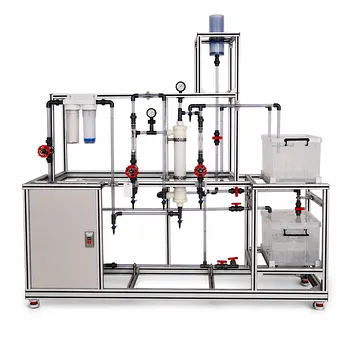
Ultrafiltration Membrane Separation Educational Pilot Plant
Item Number: LPK-CLMFL
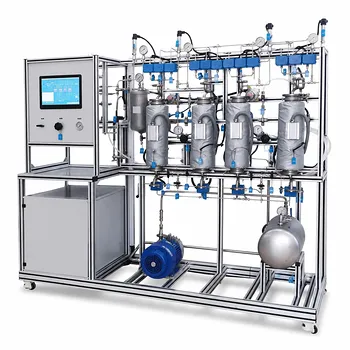
Carbon Dioxide Capture and Utilization Educational Pilot Plant for Unit Operations
Item Number: LPK-TBJQM


Solid Waste Pyrolysis and Refining Educational Pilot Plant for Unit Operations
Item Number: LPK-ISOP
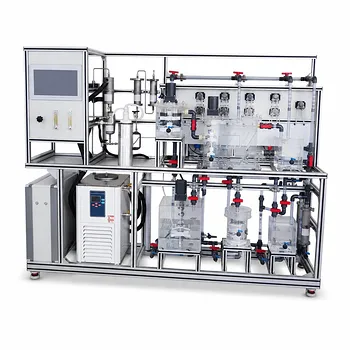
Thermal Desorption Exhaust Gas and Tail Water Treatment Educational Pilot Plant
Item Number: LPK-CRTF
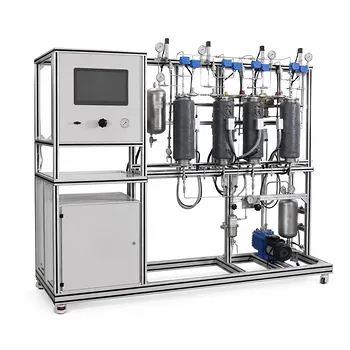
Bench Scale Carbon Dioxide Capture Educational Unit Operations Pilot Plant
Item Number: LPK-CEBJ
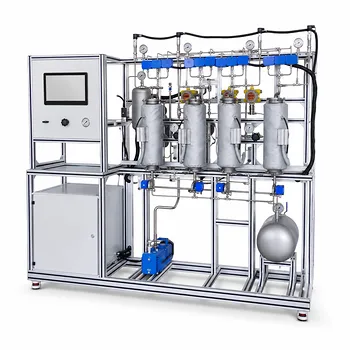
Carbon Dioxide Adsorption and Capture Educational Unit Operations Pilot Plant
Item Number: LPK-TBJC

Bench Scale Dual Column Gas Separation and Capture Educational Pilot Plant
Item Number: LPK-CQBJ

Fixed-Bed Chemical Reaction and Gas Dust Tar Removal Unit Operations Pilot Plant
Item Number: LPK-CDTR
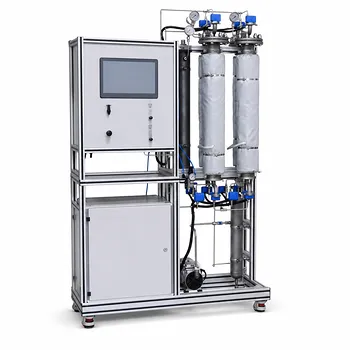
Why Choose LABPARK Educational Environmental & Water Treatment Pilot Plants?
In today’s rapidly evolving engineering landscape, hands-on experience with real-world unit operations is essential for preparing students and researchers to tackle pressing environmental challenges. LABPARK’s Educational Environmental & Water Treatment Pilot Plants are meticulously designed to bridge the gap between theoretical knowledge and industrial practice. These pilot-scale systems cover a wide spectrum of water and waste treatment processes, including physical, chemical, and biological unit operations, enabling universities, research institutes, and industrial training centers to deliver immersive learning experiences.
Comprehensive Process Coverage for Robust Curricula
Our portfolio encompasses the most critical unit operations in environmental engineering:
- Filtration and Separation: From classic constant pressure filtration using plate and frame filter presses to advanced membrane technologies—Ultrafiltration (UF), Nanofiltration (NF), and Reverse Osmosis (RO). Each system illustrates distinct separation mechanisms: RO’s high-pressure demineralization, UF’s macromolecular sieving, and NF’s selective divalent ion rejection. Transparent housings and real-time monitoring allow students to visualize flux decline, membrane fouling, and optimize crossflow velocities.
- Adsorption and Gas Treatment: Multi-column carbon dioxide capture systems teach pressure swing adsorption (PSA) and temperature swing adsorption (TSA) principles. Students analyze breakthrough curves, study adsorbent regeneration, and achieve ≥90% CO2 purity, mirroring industrial carbon capture challenges. Gas-solid separation units demonstrate gravity settling, cyclones, and bag filters, highlighting particulate matter control.
- Advanced Oxidation and Electrochemical Processes: The photocatalytic membrane reactor integrates UV/TiO2 degradation with membrane separation, emphasizing hybrid advanced oxidation processes (AOPs). Our electrochemical treatment plant enables exploration of electrocoagulation, electrodialysis, and real-time data acquisition for efficient salt removal and water reuse.
- Thermal and Chemical Conversion: Solid waste pyrolysis and refining pilot plants combine pyrolysis, distillation, and catalytic hydrogenation, offering a complete view of waste-to-energy conversion. Thermal desorption exhaust gas treatment integrates condensation, Fenton oxidation, and carbon adsorption for holistic remediation training.
Every unit is built on a mobile, benchtop frame with industrial-grade components such as stainless steel, corrosion-resistant PVC, and borosilicate glass, ensuring durability and visibility. Safety interlocks, low-voltage designs, and automatic containment features minimize risk, while allowing students to operate the equipment confidently.
Aligned with Modern Educational Standards
LABPARK’s pilot plants are developed in collaboration with academic experts to align with core curricula in unit operations, mass transfer, reaction engineering, and environmental process design. They support outcome-based education by enabling students to:
- Measure process parameters (pressure, flow, temperature, pH, conductivity) using industrial sensors.
- Analyze data via integrated PLC/HMI systems with touchscreen interfaces and wireless connectivity.
- Conduct error analysis and process optimization through repeatable experiments.
- Connect theory to practice by comparing real-time performance with mathematical models (e.g., Darcy’s law, Langmuir isotherms).
Moreover, these plants are ideal for sustainable engineering projects such as lifecycle assessments (LCA). Per ISO 14040/14044, students can quantify energy inputs, chemical consumption, and waste generation, transforming LCA from an abstract concept into a tangible, data-driven exercise.
Built for Safety and Environmental Compliance
As highlighted by modern environmental regulations like the Clean Water Act, robust containment is non-negotiable. Our designs feature centralized wastewater collection, automatic leak diversion, and comprehensive alarm systems. Sampling ports are strategically placed to prevent fugitive emissions, and all electrical components comply with international safety certifications. This focus on safety and compliance prepares students for the strict operational protocols found in municipal and industrial water treatment facilities.
Customization and Professional Support
We understand that every institution has unique needs. LABPARK offers extensive customization:
- Process Customization: Add or modify unit operations (e.g., integrate ion exchange columns, additional sensors, or alternative membrane modules).
- Software Integration: Our data acquisition systems can output to Excel, MATLAB, or custom SCADA platforms, and we support OPC-UA for Industry 4.0 readiness.
- Curriculum Packages: Optionally include lab manuals, pre-written experiments, and assessment rubrics aligned with ABET or equivalent accreditation criteria.
- Training and Commissioning: We provide on-site or virtual training for faculty and technicians, ensuring smooth integration into your existing laboratories.
Transform Your Engineering Lab Today
Whether you are establishing a new environmental engineering program or upgrading your existing unit operations lab, LABPARK’s Educational Environmental & Water Treatment Pilot Plants offer the ideal blend of educational pedagogy and industrial authenticity. Our team of experienced engineers and educators works closely with you from concept to installation, delivering turnkey solutions that inspire the next generation of environmental professionals.
Contact us today to discuss your requirements and request a customized proposal. Let us help you equip your students with the practical skills needed to solve tomorrow’s water and environmental challenges.
Key Advantages at a Glance:
- Industrial-grade, transparent components for clear process visualization.
- Integrated PLC control with touchscreen HMI and wireless data logging.
- Modular design allowing future expansion or reconfiguration.
- Full compliance with international safety and environmental standards.
- Dedicated educational support, including lab manuals and teacher training.
Empower your students with the tools they need to excel—choose LABPARK for cutting-edge educational pilot plants that make a lasting impact.
REQUEST A QUOTE
Our professional team will reply to you within one business day. Please feel free to contact us!
Related Articles
The 44% Error: Why Your Crystallization Pilot Plant is Lying About Yield
Ignoring water of hydration in crystal mass balances can inflate yield predictions by over 50%. A deep dive into the mass and energy balance coupling that separates an empirical observation from a predictable, scalable process.
Read more
The Lever and the Leverage: Why a Pilot Plant Creates Engineers Who Build, Not Just Calculate
Catalytic reforming isn't a recipe; it's a war of trade-offs. Here’s how a pilot plant transforms abstract catalysis theory into the visceral, systems-thinking intuition that defines a great chemical engineer.
Read more
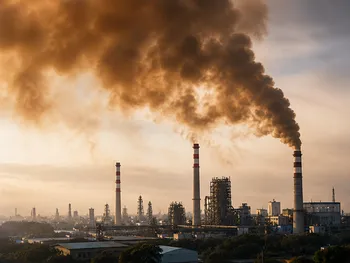
The Brown Cloud and the Engineer’s Mind: Why Pilot Plants Don’t Just Dilute Danger, They Unmake It
Scaling toxic gas management beyond the fume hood is a leap from blind containment to engineered neutralization. Explore the mass-transfer psychology behind gas absorption columns.
Read more
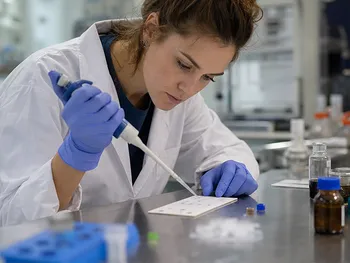
The Intuition You Can’t Simulate: Why the Best Bioprocess Education Still Lives on a Thin-Layer Plate
Before engineers trust a $500,000 bioreactor, they must trust their own hands. How thin-layer chromatography (TLC) builds the tacit knowledge that separates trained operators from true process engineers—and why LABPARK pilot plants preserve this irreplaceable skill.
Read more
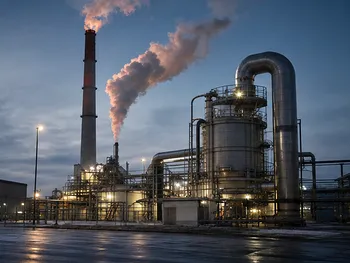
The Single-Count Principle: How a Quiet VSEPR Rule Shapes the Molecules We Scrub, Absorb, and Teach
Why do CO₂, SO₂, and NOₓ behave so differently in a wet scrubber? The answer hinges on a surprisingly simple VSEPR shortcut—treating every multiple bond as one electron group—that predicts shape, polarity, and separation strategies in environmental and bioprocess training.
Read more
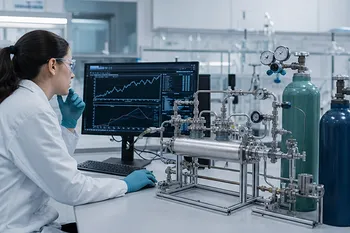
The Ideal-Selectivity Trap: How Pilot Plants Expose the Real Story of Membrane CO₂ Capture
A lab cell measures a membrane’s ideal selectivity; only a pilot plant reveals how it behaves under real flue gas stress, impurities, and economics. Uncover the truth before scaling up.
Read more
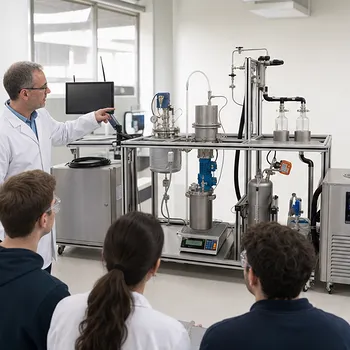
The Machine That Teaches Green Chemistry by Making Pressure Visible
How supercritical CO₂ pilot plants turn the safer-solvent principle into a hands-on, trade-off-driven lesson in chemical engineering—and why memorizing green chemistry isn’t enough.
Read more
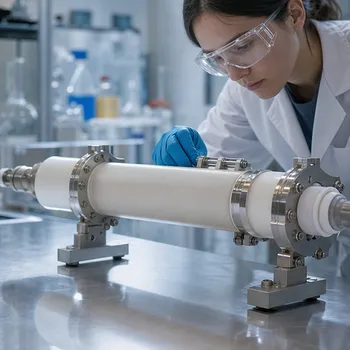
The Bridge Between a Material's Promise and a Carbon Capture Plant's Reality
A membrane pilot plant is not a scaled-down factory; it's a time machine for risk. Learn how hands-on testing exposes the hidden flaws—fouling, plasticization, and pressure penalties—that destroy the economics of CO₂ capture.
Read more
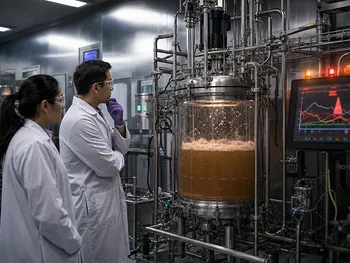
The Invisible Variable That Sinks Bioreactors—and How Pilot Plants Train You to See It
Dissolved CO₂ accumulation silently impairs cell growth and product quality. First-principles modelling, validated on pilot-scale training plants, turns this hidden risk into a controllable process parameter.
Read more
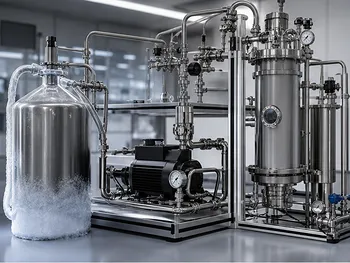
The Vanishing Solvent: How a Single, Recyclable Fluid Solves the Oldest Problem in Chemistry
Exploring the closed-loop physics of supercritical CO2. It’s not just extraction; it’s a masterclass in thermal dynamics where the solvent disappears, leaving a pure product and a zero-waste cycle.
Read more
The Invisible Constraint: How First-Principles dCO₂ Modeling Turns Your Pilot Plant into a Predictive Engine
Learn how a first-principles dCO2 mass transfer model de-risks bioprocess scale-up. Validate with pilot plant data to predict manufacturing CO2 profiles, size spargers, and design control loops—eliminating costly full-scale trials.
Read more
The Invisible Thread: How Supercritical CO₂ Weaves a Future Without Water
Explore the high-pressure physics and critical unit operations behind waterless dyeing. A deep dive into why supercritical CO₂ pilot plants are the non-negotiable bridge to sustainable textile manufacturing.
Read more
The Solvent That Disappears: Supercritical CO₂ and the New Logic of Pilot Plant Operations
Supercritical CO₂ extraction doesn’t just replace toxic solvents—it fundamentally reshapes mass transfer, preservation, and teachable moments in chemical engineering pilot plants. Here’s how that changes what an education-focused pilot unit can deliver.
Read more
The Data Thief in Your Pilot Plant: How Dissolved CO₂ Corrodes More Than Just Your Pipes
Dissolved carbon dioxide doesn't just eat through steel—it sabotages your research data. This deep dive explores the electrochemistry of grooving, the amine trade-offs, and why physical design is your first and best defense.
Read more
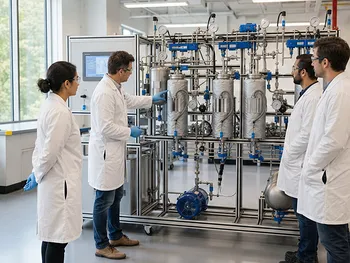
The Physics of Safety: Why Supercritical CO2 Turns a Pilot Plant into a Classroom Without a Poison Cabinet
Supercritical CO₂ extraction eliminates toxic solvents, zeroes out hazardous waste, and operates near room temperature — making it the ultimate teaching tool for process safety and green chemistry.
Read more
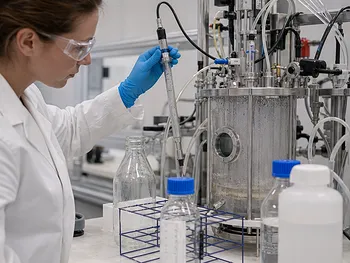
The Electric Ghost in Your Bioreactor: How Optical pH Sensors Are Ending a 50-Year Maintenance Ritual
Optical FRET-based pH and pCO₂ sensors eliminate ground-loop noise, slash response times to milliseconds, and survive repeated autoclaving—a step change for bioprocess pilot plants tired of nursing glass electrodes.
Read more