Our Educational Pharmaceutical Engineering Pilot Plants provide comprehensive hands-on training in key unit operations central to pharmaceutical manufacturing. The range includes liquid-liquid extraction (rotary and comprehensive systems), high-gravity emulsification, ion exchange purification, hot filtration, hollow fiber ultrafiltration, and membrane crystallization. Each plant is designed for engineering students to observe, analyze, and optimize processes, bridging theory and industrial practice.
Toggle Categories
Get Instant Support
Choose your preferred way to connect with our team
-
Get Free Quote Fill out form for detailed pricing
-
Send Email Detailed inquiry support
-
WhatsApp Quick mobile chat
Response Time
Within 8 hours on working days, 24 hours on holidays
Educational Pharmaceutical Engineering Pilot Plants

High-Gravity Emulsification and Mass Transfer Educational Pilot Plant
Item Number: LPK-HGES
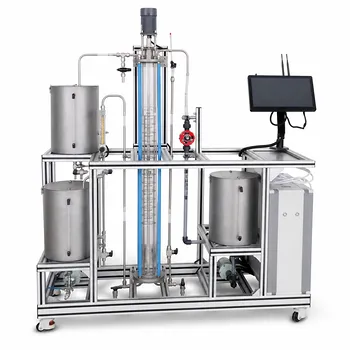
Educational Rotary Disc Liquid-Liquid Extraction Pilot Plant
Item Number: LPK-BEXT

Comprehensive Liquid-Liquid Extraction Pilot Plant for Engineering Education
Item Number: LPK-CDJC

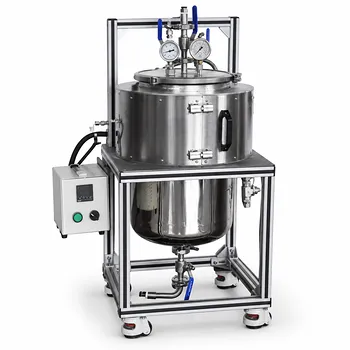
Hot Filtration Educational Unit Operations Pilot Plant Laboratory System
Item Number: LPK-CHFT
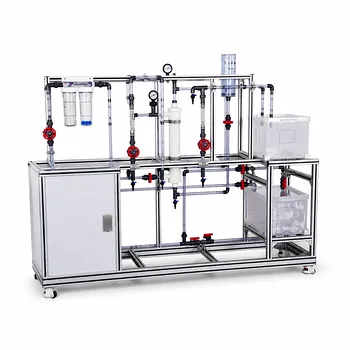
Hollow Fiber Ultrafiltration Membrane Separation Educational Pilot Plant
Item Number: LPK-SUF

Multi Functional Membrane Crystallization Educational Unit Operations Pilot Plant
Item Number: LPK-SMC
Why Choose LABPARK Educational Pharmaceutical Engineering Pilot Plants?
In the fast-evolving field of pharmaceutical engineering, practical experience with unit operations is essential for developing competent engineers. LABPARK’s Educational Pharmaceutical Engineering Pilot Plants are meticulously engineered to provide immersive, hands-on learning experiences that mirror real industrial processes. Designed for universities, research institutes, and corporate training centers, our pilot plants bridge the gap between theoretical knowledge and industrial application, ensuring that students and trainees gain the skills needed to excel in pharmaceutical manufacturing, bioprocessing, and advanced separations.
Key Characteristics of Our Pilot Plants
Our pilot plants are built with a focus on educational efficacy, safety, and industrial relevance. Key characteristics include:
- Modular and Compact Design: Each plant is bench-scale or mobile, allowing for easy integration into existing laboratory spaces. The modular architecture enables instructors to set up, modify, and scale experiments effortlessly.
- Transparent Components: Many units feature glass or transparent polymer columns, vessels, and piping, giving students a clear view of fluid dynamics, phase behavior, and mass transfer phenomena.
- Industrial-Grade Instrumentation: Equipped with PLC control, digital sensors, and data acquisition systems, our pilot plants allow for precise monitoring and recording of parameters like temperature, pressure, flow rate, and conductivity, fostering data-driven analysis.
- Customizability: We understand that every educational program has unique objectives. LABPARK offers extensive customization options, from adding specific sensors to altering process configurations, ensuring that the pilot plant aligns with your curriculum needs.
- Safety and Durability: Built with corrosion-resistant materials (e.g., stainless steel, borosilicate glass) and incorporating fail-safe mechanisms, our pilot plants are designed for rigorous, repeated use in academic settings.
Comprehensive Unit Operations Coverage
The pharmaceutical industry relies heavily on separation, purification, and reaction processes. Our pilot plant lineup covers a broad spectrum of unit operations critical to pharmaceutical production:
Liquid-Liquid Extraction
Liquid-liquid extraction is a cornerstone of pharmaceutical manufacturing for separating heat-sensitive or high-boiling compounds. Our range includes:
- Educational Rotary Disc Liquid-Liquid Extraction Pilot Plant: Featuring a transparent rotary disc column, this plant enables students to study mass transfer, droplet dynamics, and flooding behavior. Variable-speed agitation and PLC control allow for systematic investigation of operating parameters.
- Comprehensive Liquid-Liquid Extraction Pilot Plant: Integrating both rotary and vibratory columns, this system provides a unique platform for comparing extraction techniques. Students observe phase behavior, calculate mass transfer coefficients, and determine height equivalent to a theoretical plate (HETP) under various conditions.
High-Gravity Emulsification and Mass Transfer
Process intensification is vital for improving efficiency and reducing footprint. The High-Gravity Emulsification and Mass Transfer Educational Pilot Plant employs rotating packed bed (RPB) technology to demonstrate high-gravity fields. Students explore how enhanced mass transfer rates enable rapid emulsification and extraction, gaining insights into cutting-edge pharmaceutical engineering such as nanoparticle synthesis and continuous processing.
Ion Exchange Water Purification
Water quality is critical in pharmaceutical formulation. The Ion Exchange Water Purification Educational Pilot Plant trains students in water softening, demineralization, and ultrapure water production. With dual transparent columns, learners observe fluid dynamics, perform resin regeneration, and generate breakthrough curves, mastering the principles of ion exchange chromatography used in API purification.
Hot Filtration
Solid-liquid separation under thermal conditions is essential for processing viscous or temperature-sensitive pharmaceuticals. The Hot Filtration Educational Unit Operations Pilot Plant includes a jacketed stainless steel vessel with removable heating jacket and multi-layer filter plates. Students evaluate filter cake resistance, throughput, and washing efficiency at elevated temperatures, simulating real-world operations like dextrose refining or catalyst recovery.
Membrane Separations
Membrane technologies are increasingly adopted for gentle, energy-efficient separations in pharma:
- Hollow Fiber Ultrafiltration Membrane Separation Educational Pilot Plant: This plant provides hands-on training in ultrafiltration, allowing students to study flux behavior, fouling mitigation, and membrane cleaning. Industrial-grade hollow fiber modules enable experiments in protein concentration, virus removal, and macromolecular separations.
- Multi Functional Membrane Crystallization Educational Unit Operations Pilot Plant: Combining membrane distillation and crystallization, this integrated bench-scale plant demonstrates process intensification for pharmaceutical crystallizations. Students control supersaturation via membrane contactors, observe crystal nucleation and growth, and analyze polymorph outcomes, connecting fundamental thermodynamics with advanced manufacturing.
Educational Benefits and Pedagogical Approach
LABPARK pilot plants are not just hardware; they are complete educational tools designed to foster deep understanding:
- Link Theory to Practice: By directly observing phase behavior, mass transfer, and unit operations, students reinforce concepts from transport phenomena, thermodynamics, and process control.
- Develop Process Engineering Skills: With PLC interfaces and data logging, learners gain experience in process optimization, troubleshooting, and scale-up considerations.
- Promote Inquiry-Based Learning: Open-ended experiments encourage students to formulate hypotheses, design test protocols, and analyze complex data sets, building critical thinking and research capabilities.
- Safety and Sustainability Awareness: Integrated safety features and discussions on energy efficiency and waste minimization prepare students for responsible engineering practice.
Customization and Technical Support
At LABPARK, we recognize that no two laboratories are identical. That’s why we offer bespoke customization services:
- Tailored Configurations: Modify column dimensions, material types, or add/remove unit modules to match specific course requirements.
- Enhanced Instrumentation: Integrate advanced sensors (e.g., NIR probes, particle size analyzers) or online analytics for research-grade experiments.
- Software Integration: We provide compatible data acquisition software and can customize interfaces for your lab’s existing ecosystem.
- Curriculum Packages: Optional experiment manuals, standard operating procedures, and pre-designed lab exercises help instructors seamlessly embed pilot plants into their teaching.
Why LABPARK Stands Out
With decades of cumulative experience in designing educational pilot plants, LABPARK combines engineering excellence with a deep understanding of academic needs. Our plants are:
- Proven in Classrooms Worldwide: Trusted by leading universities and research institutes, our systems have demonstrated reliability and educational impact.
- Designed for Evolution: As pharmaceutical technologies advance, our modular designs allow easy upgrades, protecting your investment.
- Supported by Experts: From installation and training to ongoing technical assistance, our team partners with you to ensure lasting success.
Transform Your Pharmaceutical Engineering Lab Today
Equip your students with the practical skills they need to thrive in the competitive pharmaceutical industry. Whether you are starting a new unit operations lab or enhancing an existing one, LABPARK’s Educational Pharmaceutical Engineering Pilot Plants deliver the realism, versatility, and educational value you demand.
Ready to discuss your requirements? Contact our team today to explore custom configurations, request a quote, or schedule a live demonstration. Let us help you build the ultimate hands-on learning environment that prepares the next generation of pharmaceutical engineers.
REQUEST A QUOTE
Our professional team will reply to you within one business day. Please feel free to contact us!
Related Articles
The 44% Error: Why Your Crystallization Pilot Plant is Lying About Yield
Ignoring water of hydration in crystal mass balances can inflate yield predictions by over 50%. A deep dive into the mass and energy balance coupling that separates an empirical observation from a predictable, scalable process.
Read more
The Brown Cloud and the Engineer’s Mind: Why Pilot Plants Don’t Just Dilute Danger, They Unmake It
Scaling toxic gas management beyond the fume hood is a leap from blind containment to engineered neutralization. Explore the mass-transfer psychology behind gas absorption columns.
Read more
The Intuition You Can’t Simulate: Why the Best Bioprocess Education Still Lives on a Thin-Layer Plate
Before engineers trust a $500,000 bioreactor, they must trust their own hands. How thin-layer chromatography (TLC) builds the tacit knowledge that separates trained operators from true process engineers—and why LABPARK pilot plants preserve this irreplaceable skill.
Read more
The Two Temperatures Your Cooling Tower Relies On (And Why They Betray a Solvent Column)
Wet-bulb and adiabatic saturation temperatures appear identical in water-air systems, but for organic solvents the divergence can corrupt pilot-plant data. Discover the hidden transport coincidence that makes (or breaks) your energy balance.
Read more
The Single-Count Principle: How a Quiet VSEPR Rule Shapes the Molecules We Scrub, Absorb, and Teach
Why do CO₂, SO₂, and NOₓ behave so differently in a wet scrubber? The answer hinges on a surprisingly simple VSEPR shortcut—treating every multiple bond as one electron group—that predicts shape, polarity, and separation strategies in environmental and bioprocess training.
Read more
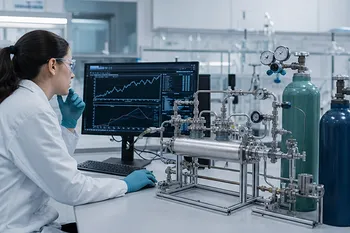
The Ideal-Selectivity Trap: How Pilot Plants Expose the Real Story of Membrane CO₂ Capture
A lab cell measures a membrane’s ideal selectivity; only a pilot plant reveals how it behaves under real flue gas stress, impurities, and economics. Uncover the truth before scaling up.
Read more
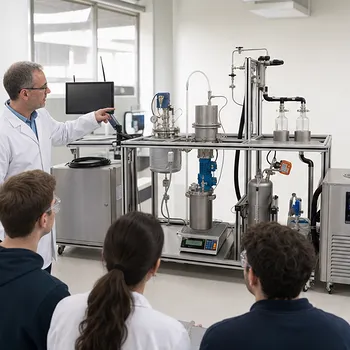
The Machine That Teaches Green Chemistry by Making Pressure Visible
How supercritical CO₂ pilot plants turn the safer-solvent principle into a hands-on, trade-off-driven lesson in chemical engineering—and why memorizing green chemistry isn’t enough.
Read more
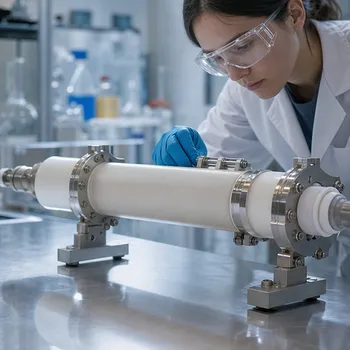
The Bridge Between a Material's Promise and a Carbon Capture Plant's Reality
A membrane pilot plant is not a scaled-down factory; it's a time machine for risk. Learn how hands-on testing exposes the hidden flaws—fouling, plasticization, and pressure penalties—that destroy the economics of CO₂ capture.
Read more
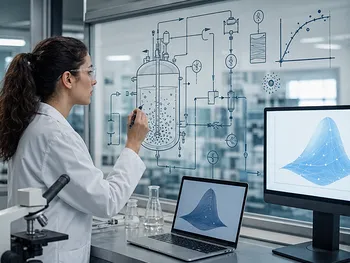
The Invisible Constraint: How First-Principles dCO₂ Modeling Turns Your Pilot Plant into a Predictive Engine
Learn how a first-principles dCO2 mass transfer model de-risks bioprocess scale-up. Validate with pilot plant data to predict manufacturing CO2 profiles, size spargers, and design control loops—eliminating costly full-scale trials.
Read more
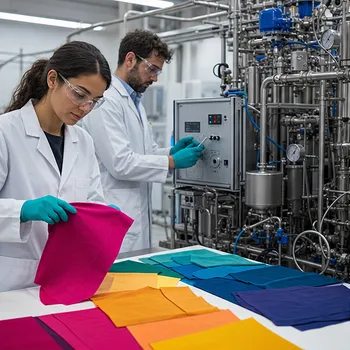
The Invisible Thread: How Supercritical CO₂ Weaves a Future Without Water
Explore the high-pressure physics and critical unit operations behind waterless dyeing. A deep dive into why supercritical CO₂ pilot plants are the non-negotiable bridge to sustainable textile manufacturing.
Read more
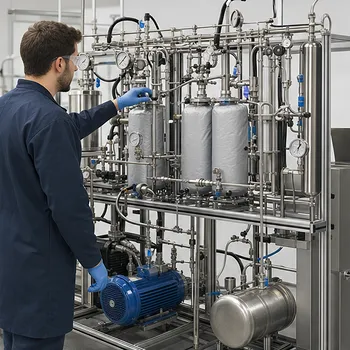
The Solvent That Disappears: Supercritical CO₂ and the New Logic of Pilot Plant Operations
Supercritical CO₂ extraction doesn’t just replace toxic solvents—it fundamentally reshapes mass transfer, preservation, and teachable moments in chemical engineering pilot plants. Here’s how that changes what an education-focused pilot unit can deliver.
Read more
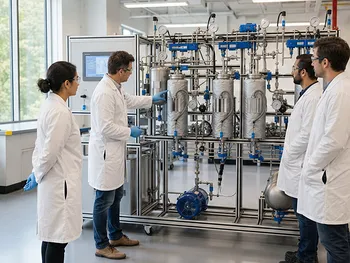
The Physics of Safety: Why Supercritical CO2 Turns a Pilot Plant into a Classroom Without a Poison Cabinet
Supercritical CO₂ extraction eliminates toxic solvents, zeroes out hazardous waste, and operates near room temperature — making it the ultimate teaching tool for process safety and green chemistry.
Read more
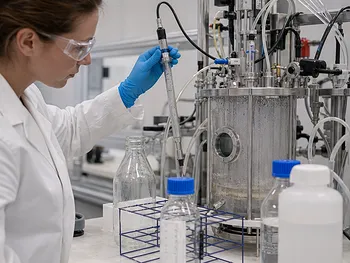
The Electric Ghost in Your Bioreactor: How Optical pH Sensors Are Ending a 50-Year Maintenance Ritual
Optical FRET-based pH and pCO₂ sensors eliminate ground-loop noise, slash response times to milliseconds, and survive repeated autoclaving—a step change for bioprocess pilot plants tired of nursing glass electrodes.
Read more