The River Runs Dry
In the world’s fashion capitals, the environmental cost of a simple red dress is measured in rivers. It takes about 100 to 150 liters of water to dye a single kilogram of textile material. Multiply that by the global output of the fashion industry, and you get roughly five trillion liters of chemically tainted wastewater annually. The problem isn’t just the volume of water; it’s the energy required to heat it and the toxic legacy it leaves behind.
There is an alternative. But it sounds like science fiction: Instead of dissolving dyes in water, we dissolve them in a ghost—a gas compressed until it acts like a liquid.
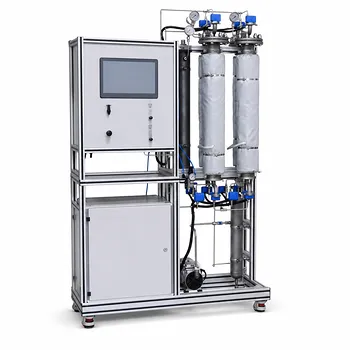
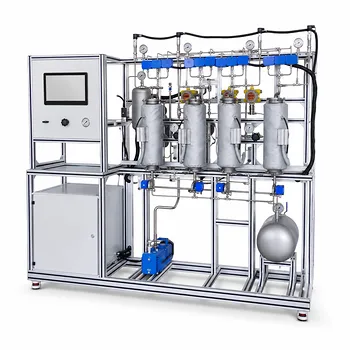
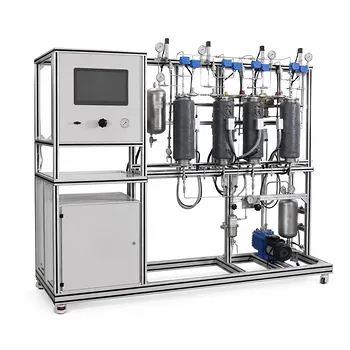
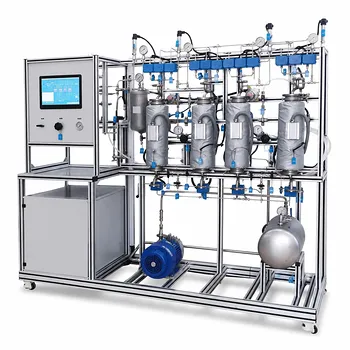
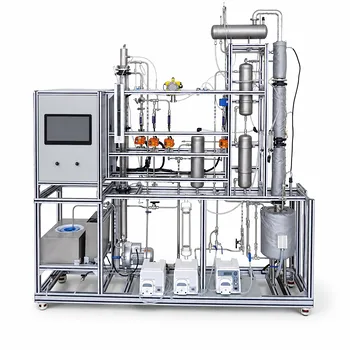
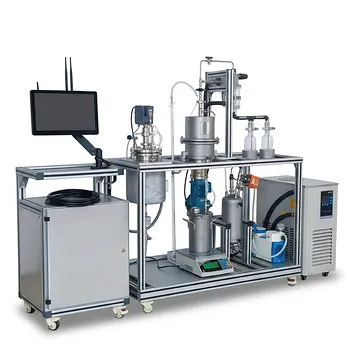
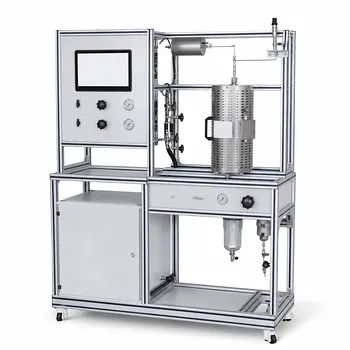
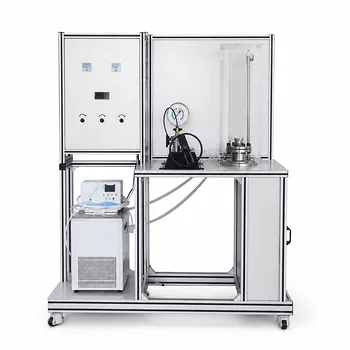
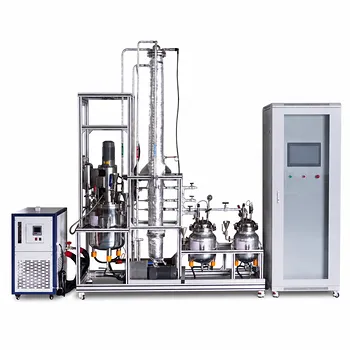
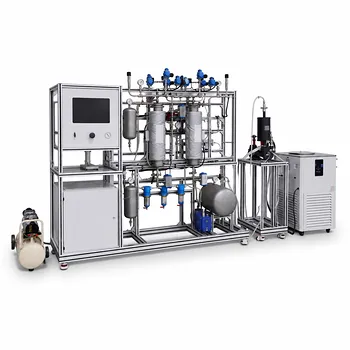
This gas is carbon dioxide, pushed past its critical point. The process demands a system that operates less like a traditional dye bath and more like a deep-sea vessel: a high-pressure, closed-loop plant where pressure and temperature replace potions of chemicals. To de-risk this technology for the industry, researchers need a platform that makes this invisible physics visible. They need a pilot plant that makes the invisible thread tangible.
The Tunable Solvent
To understand the machinery, you must first understand the physics of the ghost.
The critical point is a threshold. For CO₂, it’s 31.1°C and 73.8 bar. Cross that line, and the distinction between liquid and gas ceases to exist. You get a fluid with the density of a liquid and the viscosity of a gas. This is supercritical CO₂.
Why does this matter for dye? The solvent power of supercritical CO₂ is entirely dependent on its density. By adjusting the pressure or temperature slightly, you tweak the density—and therefore the solubility of the dye—with surgical precision. You cannot do this with water.
This is both a superpower and a vulnerability. Near the critical point, a tiny fluctuation of just one or two degrees Celsius can shift the fluid density by 10 to 20 percent. This changes the color uptake drastically. A pilot plant is therefore not just a processing tool; it is a control problem designed to tame a fluid that changes its mind rapidly.
The Five Non-Negotiable Operations
A waterless dyeing pilot plant is a recirculation loop designed for high-pressure mass transfer. To evaluate this process, five unit operations must function in perfect sequence.
1. CO₂ Storage and Supply: The Clean Feed
The process begins with liquid carbon dioxide stored in a refrigerated, pressurized tank. This is not a trivial inventory problem.
- The Issue: Impurities in the CO₂ can alter the critical point and foul the downstream valves.
- The Risk: Cavitation. If the liquid feed vaporizes before hitting the high-pressure pump, you introduce pressure surges that destabilize the entire recovery loop.
- The Goal: A bubble-free, reliable liquid feed to ensure the pump’s longevity and process stability.
2. High-Pressure Pump: The Heartbeat
The pump takes the liquid CO₂ and elevates it to a pressure typically between 150 and 300 bar. This is where electrical energy becomes mechanical force.
The pump must be pulseless. A diaphragm or piston pump works best here. Any instability in the flow rate directly translates into poor mass transfer inside the dyeing vessel. If the solvent is surging, the dye is not diffusing uniformly. The entire color profile of the fabric can be ruined by a shaky pump.
3. Heating System: The Precision Trigger
After compression, the high-pressure liquid is still cold. It must be heated above 31.1°C to reach the supercritical state. Usually, operating temperatures for dyeing polyester or similar synthetics sit between 40°C and 120°C.
Ultra-tight temperature control is mandatory. Because density is so sensitive near the critical point, the heating jacket or exchanger must maintain a variance of no more than ±1°C. Engineers often frame this requirement as “exquisite sensitivity.” It demands high-quality proportional-integral-derivative (PID) controllers and inert construction materials to avoid thermal lag.
4. Dyeing Autoclave: The Engineering Heart
This is a high-pressure vessel, distinct from an open-air machine. The textile is wound on a beam. The dye—often dispersed without a single drop of water—is placed within.
The supercritical CO₂ enters. It dissolves the dye and transports it into the polymer fibers. But because we are dealing with a single phase, not a liquid bath, we need forced convection. A magnetic stirrer or a recirculation loop ensures uniform distribution.
The autoclave must offer visibility without depressurization. Sight glasses and sampling ports allow researchers to draw fluid at different intervals to measure dye uptake kinetics. Without this, you are blind.
5. Separator and Recovery: Closing the Loop
After the fluid leaves the vessel, it carries residual dye and extracted impurities. The process enters a pressure-reduction valve. The drop in pressure forces the CO₂ to revert to a gas, instantly losing its solvent capacity.
- The Precipitation: The dye simply falls out.
- The Product: The fabric emerges dry and dyed. No rinsing.
- The Recycle: The gaseous CO₂ is condensed and stored, ready to be pumped again.
This is the ultimate engineering romance: zero solvent loss and no wastewater. You don’t need a distillation column because the solvent vanishes into a compressible phase at the flick of a valve.
The Psychology of Scale-Up
Moving from a bench-top curiosity to a commercial reality triggers a specific kind of anxiety. It’s the fear that the physics won’t scale linearly.
The Energy Paradox
Compressing CO₂ requires a massive amount of electrical energy. Critics say you are simply trading water pollution for a larger carbon footprint. A properly instrumented pilot plant resolves this debate with data. It measures electrical input per kilogram of fabric. It identifies where to integrate heat exchangers to recover energy from the depressurization cycle. You can’t simulate this with a calculator; you need empirical runtime data.
The Material Trap
High-pressure CO₂ mixed with trace moisture creates carbonic acid. It also swells polymer seals and degrades standard gaskets. A pilot plant serves as a durability testbed. Running the system for hundreds of hours reveals material compatibilities that a spec sheet never could. This is where industrial reliability is forged or broken.
The Distribution Problem
In a water bath, dye distribution is relatively easy. In a packed autoclave under supercritical conditions, channeling of the fluid is the enemy. The pilot plant is the tool that exposes the difference between theoretical fluid dynamics and actual mass transfer kinetics in a non-ideal packing geometry.
Choosing the Right Configuration
Your research question dictates the architecture of the pilot plant. These systems are not one-size-fits-all; they are custom-built for a specific phase of the development cycle.
| Research Goal | Critical Unit Operation Focus | Parametric Luxury |
|---|---|---|
| **Fundamental Solubility & Thermodynamics** | Small-volume autoclave with ultra-stable heating | Mapping solubility isotherms and isobars |
| **Mass Transfer Kinetics** | Vessel with recirculation loops and live sampling | Measuring diffusion coefficients over time |
| **Process Scale-up & Economics** | Full CO₂ recovery loop and condenser | Gathering utility consumption for energy balance |
| **Material Compatibility** | Long-duration extended trials | Wetted material selection for commercial life |
The Summary of Control Points
To ensure reproducibility, every critical parameter must be monitored continuously.
| Unit Operation | Key Function | Critical Control Parameter |
|---|---|---|
| **CO₂ Storage** | Clean liquid feed | Temperature (cavitation prevention) |
| **High-Pressure Pump** | Elevation to 150–300 bar | Flow stability & pulseless output |
| **Heating System** | Transition to supercritical state | Precision (±1–2°C) |
| **Dyeing Autoclave** | Dissolution & transport | Agitation & mass transfer uniformity |
| **Separator & Recovery** | Gas-liquid separation & recycling | Depressurization rate & phase efficiency |
Bridging the Gap with Precision Engineering
Documenting this high-pressure choreography is one thing; building a robust machine that performs it reliably for a university lab or an R&D enterprise is another. The gap between a chemical engineering diagram and a plug-and-play educational pilot plant is wide. It is filled with the challenges of industrial-grade instrumentation, safety interlocks, and custom vessel fabrication.
LABPARK occupies this exact intersection. They engineer Educational and Vocational Unit Operations Pilot Plants specifically for the rigorous demands of chemical engineering, bioprocess, and environmental research. When it comes to supercritical fluid processes or green extraction and dyeing technologies, the margin for error is zero. A pilot plant isn't just a purchase; it’s the systematic de-risking of a multi-million-dollar industrial scale-up idea.
The goal is precision. Whether you are capturing solubility data on a critical isotherm or demonstrating a closed-loop dyeing process to engineering students, the system must translate complex thermodynamics into reliable mechanical action. The right plant turns a physics riddle into a commercial strategy. It takes the ghost out of the machine and puts it to work, dry thread by dry thread.
Related Products
- Low Concentration Carbon Dioxide Capture Pressure Swing Adsorption Educational Pilot Plant
- Carbon Dioxide Adsorption and Capture Educational Unit Operations Pilot Plant
- Bench Scale Carbon Dioxide Capture Educational Unit Operations Pilot Plant
- Carbon Dioxide Capture and Utilization Educational Pilot Plant for Unit Operations
- Carbon Dioxide Absorption and Desorption Educational Pilot Plant for Carbon Capture Studies
Related Articles
- The Ideal-Selectivity Trap: How Pilot Plants Expose the Real Story of Membrane CO₂ Capture
- The Machine That Teaches Green Chemistry by Making Pressure Visible
- The Solvent That Disappears: Supercritical CO₂ and the New Logic of Pilot Plant Operations
- The Physics of Safety: Why Supercritical CO2 Turns a Pilot Plant into a Classroom Without a Poison Cabinet
- The Invisible Constraint: How First-Principles dCO₂ Modeling Turns Your Pilot Plant into a Predictive Engine