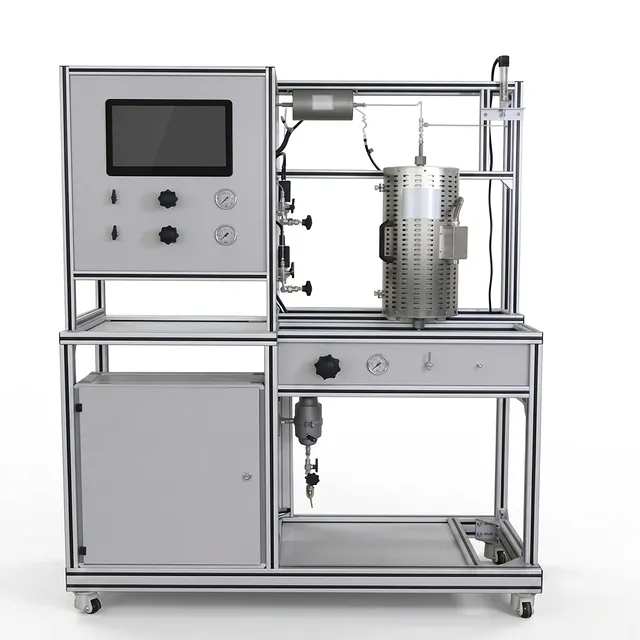
Educational Chemical Engineering Pilot Plants
Carbon Dioxide Hydrogen Methanol Synthesis Educational Unit Operations Pilot Plant
Item Number : LPK-CEJH
Price varies based on specs and customizations
- Max Operating Pressure
- 6 MPa
- Reactor Material
- 316L Stainless Steel
- Data Acquisition Channels
- 32-channel

Shipping:
Contact us to get shipping details Enjoy On-time Dispatch Guarantee.
Why Choose Us
Easy ordering process, quality products, and dedicated support for your business success.
Introduction
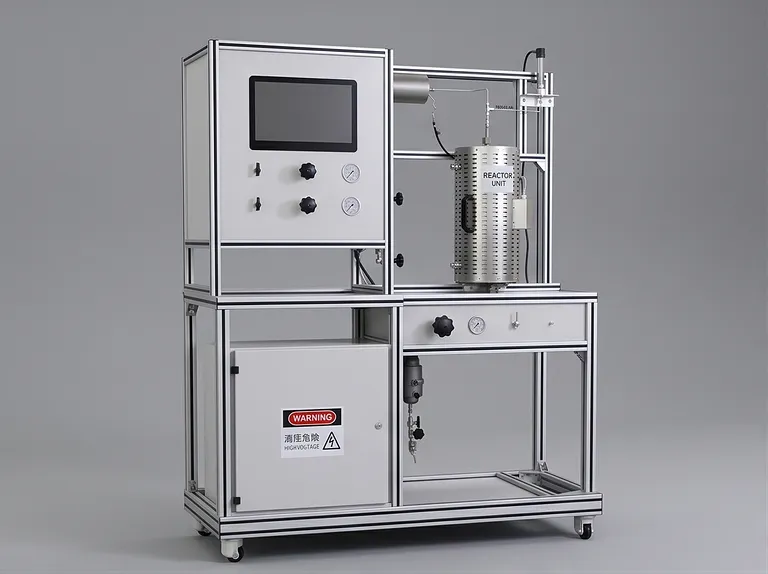
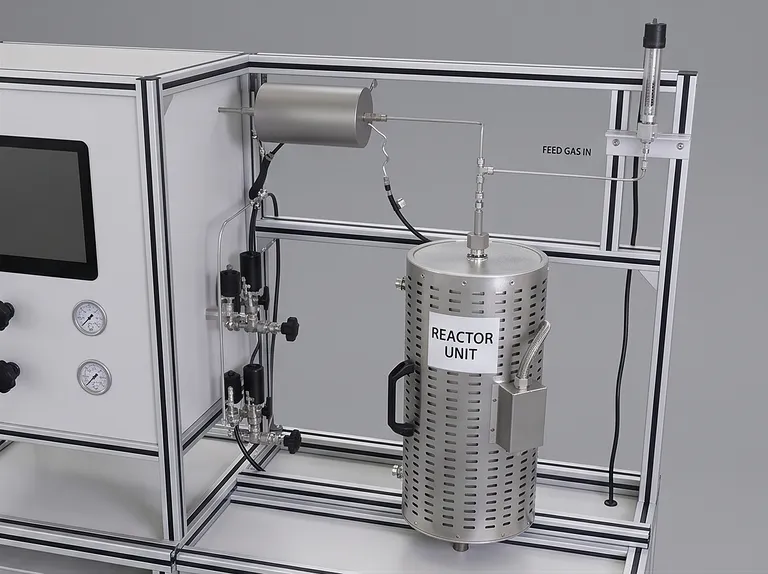
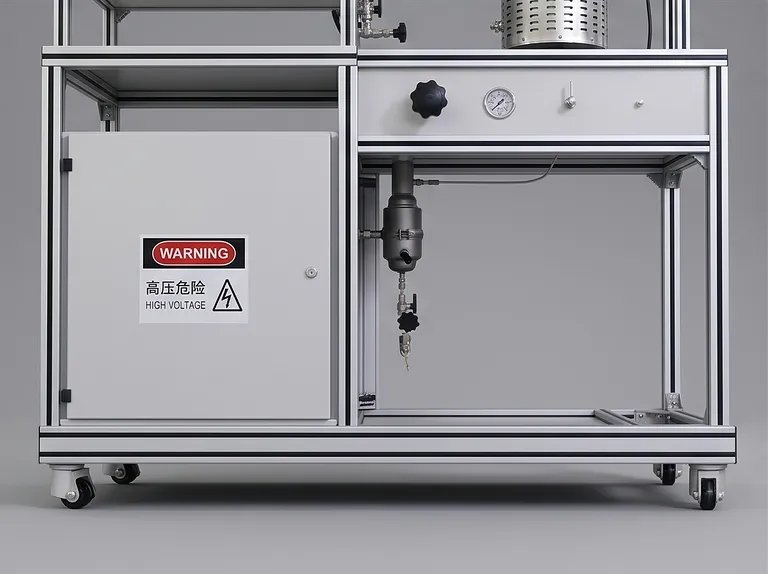
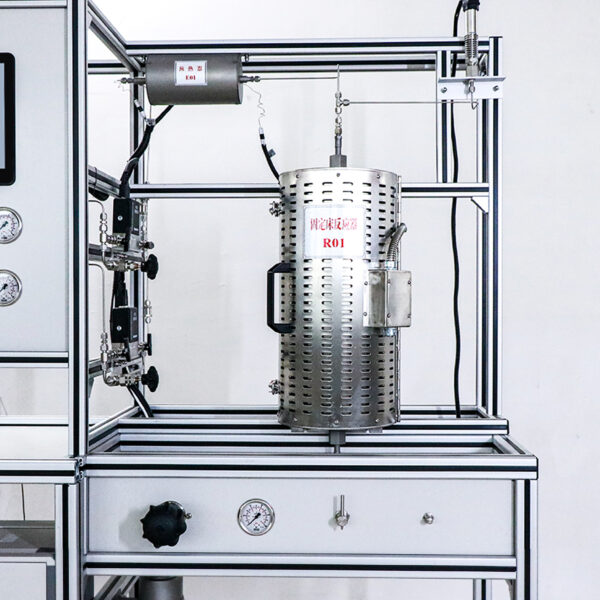
The Carbon Dioxide and Hydrogen Synthesis of Methanol Educational Unit Operations Pilot Plant is an advanced laboratory system designed specifically for higher education engineering departments. This pilot plant provides undergraduate and graduate students with a hands-on, practical environment to study heterogeneous catalysis, high-pressure reaction kinetics, and modern process control. By facilitating the conversion of carbon dioxide and hydrogen into green methanol, the system serves as an exceptional bridge between classroom chemistry and industrial-scale chemical processing.
To ensure the system aligns with diverse curriculum structures and research priorities, both the hardware configurations and software control systems of this pilot plant can be customized according to specific user requirements. This flexible design allows academic departments to adapt the equipment to varying lab space constraints, safety protocols, and pedagogical objectives.
Key Educational Capabilities and Pedagogical Benefits
- Engineering-Scale Practice: Operates under authentic industrial-relevant parameters (up to 6 MPa and high temperatures), allowing students to experience the physical realities of high-pressure gas-phase reactions and safety management.
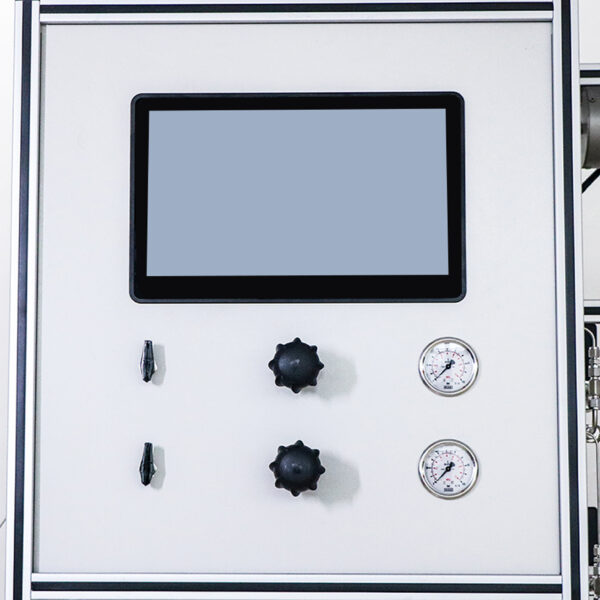
- Comprehensive Data Acquisition: Integrates a multi-channel signal monitoring module, enabling students to log and analyze critical process variables such as temperature profiles, feed flow rates, and pressure drops in real time.
- Analytical Integration: Equipped with integrated sampling ports for online chromatographic analysis, enabling the evaluation of carbon dioxide conversion, methanol selectivity, and catalyst yield.
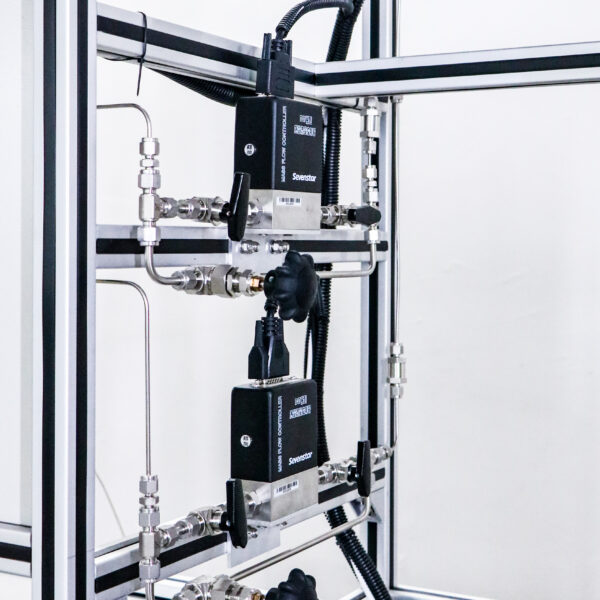
- Modern Process Automation: Features digital mass flow controllers and programmable control loops that introduce students to the industrial instrumentation and control systems used in modern chemical plants.
Detail & Parts
Technical Specifications
The system is constructed with industrial-grade components to withstand repeated educational use while maintaining high safety standards.
| Component / Parameter | Specification | Educational & Operational Value |
|---|---|---|
| Reactor Assembly | 316L stainless steel tubular reactor; rated up to 6 MPa operating pressure | Demonstrates industrial tube-reactor design, material durability, and high-pressure sealing techniques. |
| Heating System | Three-stage temperature-controlled furnace with high-density insulation | Allows students to study non-isothermal temperature profiles along the catalyst bed. |
| Feed Control | High-precision thermal mass flow controllers (MFCs) for gas feeds | Teaches precise molar ratio control and stoichiometric calculations for reactant mixtures. |
| Process Monitoring | 32-channel digital signal monitoring and control module | Demonstrates automated data acquisition, sensor calibration, and process safety interlocks. |
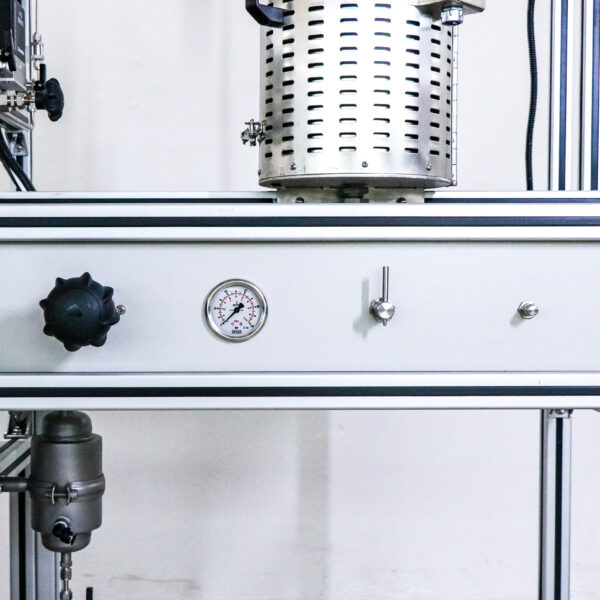
| Safety Features | Quick catalyst unloading mechanism, shock-resistant pressure gauges (0-10 MPa), and overpressure relief systems | Instills industrial safety protocols, hazard mitigation, and pressure relief sizing principles. |
Curriculum Mapping and Academic Applications
This pilot plant is engineered to support core laboratory coursework across multiple engineering and science disciplines, including Chemical Engineering, Environmental Engineering, and Sustainable Energy Technologies. By utilizing this equipment, instructors can bring theoretical concepts from foundational textbooks to life.
The experiments conducted on this unit directly align with core principles taught in classic engineering curricula:
- Unit Operations of Chemical Engineering: The system serves as a physical model for studying packed-bed fluid dynamics, gas-solid heat transfer, and transport limitations in heterogeneous catalysis.
- Transport Processes and Unit Operations: Students can investigate simultaneous heat and mass transfer within the catalyst bed, measuring pressure drops across porous media and verifying transport equations under high-temperature conditions.
- Chemical Engineering Design: The pilot plant provides real-world boundary conditions for students to perform material and energy balances, design scale-up reactors, and evaluate the process economics of carbon capture and utilization (CCU) pathways.
Laboratory Experiment Modules
| Experimental Module | Core Target Concepts | Connection to Classic Engineering Curricula |
|---|---|---|
| Catalytic Reactor Characterization | Space velocity, catalyst packing density, bed voidage, and pressure drop | Unit Operations of Chemical Engineering (Fluid flow through packed beds, Ergun equation application) |
| Reaction Kinetics & Thermodynamics | Reaction rate constants, activation energy, temperature dependence of equilibrium conversion | Transport Processes and Unit Operations (Chemical kinetics, heat effects in reactors) |
| Process Optimization & Yield Analysis | Selectivity, single-pass yield, carbon dioxide conversion efficiency under varying pressure and feed ratios | Chemical Engineering Design (Process optimization, material balance verification, green chemistry metrics) |
| Automation and Control Loop Tuning | Closed-loop flow control, multi-zone cascade temperature control, safety interlock programming | Chemical Engineering Design / Process Control (PID tuning, system dynamics, and safety management) |
To support specific educational goals, LABPARK offers extensive flexibility for this educational plant. Both the hardware layout (such as reactor dimensions, gas feed lines, and sensor selection) and the software architecture (including data acquisition interfaces and control algorithms) can be tailored to meet unique academic goals and facility requirements.
About LABPARK
For over 20 years, LABPARK has been a dedicated partner to higher education institutions worldwide, providing high-quality, practical training equipment designed to prepare the next generation of engineers and scientists. We focus on delivering robust, curriculum-aligned systems across six primary engineering disciplines: Chemistry, Chemical Engineering, Biotechnology, Food Engineering, Pharmaceutical Engineering, and Environmental Engineering.
Driven by continuous innovation and academic feedback, LABPARK holds 209 technical patents and has successfully collaborated with over 289 universities and colleges globally. Our state-of-the-art R&D and manufacturing base spans 49,000 square meters, ensuring that every piece of educational equipment is manufactured to stringent quality and safety standards before arriving at your campus laboratory.
Trusted by Industry Leaders
REQUEST A QUOTE
Our professional team will reply to you within one business day. Please feel free to contact us!
Related Products
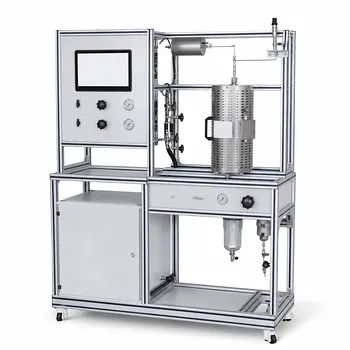
Carbon Dioxide Hydrogenation Methanol Synthesis Educational Unit Operations Pilot Plant
Pilot-scale educational system for carbon dioxide hydrogenation to methanol. Designed for unit operations teaching, it features a fixed-bed reactor, three-stage heating, dual mass flow controllers, and a 15.6-inch touchscreen with data acquisition. Perfect for chemical engineering and sustainable energy courses.

Methanol Synthesis and Catalyst Performance Evaluation Educational Unit Operations Pilot Plant
Bench-scale methanol synthesis and catalyst evaluation educational pilot plant for chemical engineering labs to study catalytic kinetics, high-pressure operations, process control, and unit operations under realistic conditions with industrial safety features, precision gas delivery, data acquisition, and intelligent monitoring.
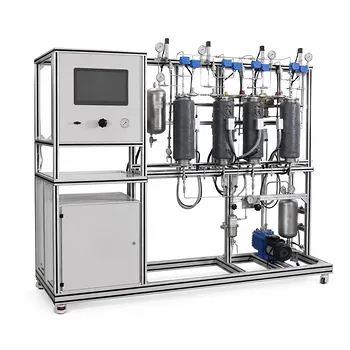
Bench Scale Carbon Dioxide Capture Educational Unit Operations Pilot Plant
This bench-scale educational pilot plant simulates industrial CO₂ separation using a multi-tower adsorption system for hands-on engineering training. Students achieve ≥90% CO₂ purity while studying pressure swing adsorption, desorption kinetics, and process control in gas purification experiments.
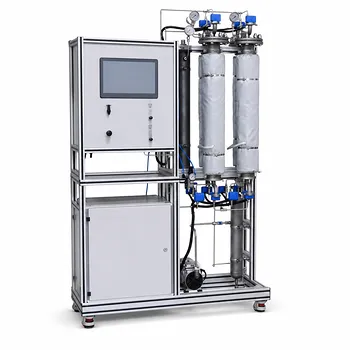
Low Concentration Carbon Dioxide Capture Pressure Swing Adsorption Educational Pilot Plant
Low-concentration CO2 capture pilot plant using Pressure Swing Adsorption for engineering education. Students gain practical experience in breakthrough curve measurement, adsorption dynamics, and variable analysis in a hands-on lab setting. Ideal for unit operations, mass transfer, and chemical engineering labs.
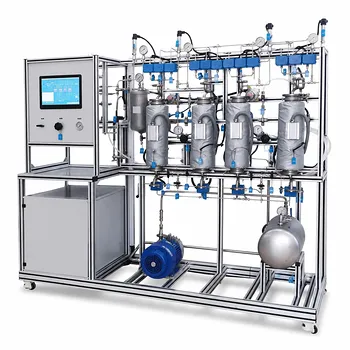
Carbon Dioxide Capture and Utilization Educational Pilot Plant for Unit Operations
Educational pilot plant for carbon dioxide capture and utilization featuring four-tower adsorption, high-temperature regeneration, precise CO2 analysis, modern touchscreen control, real-time data, and robust construction for hands-on unit operations training in university labs with curriculum alignment and safe operation.

Methane Cracking Educational Unit Operations Pilot Plant
This bench-scale methane cracking educational pilot plant provides hands-on catalytic conversion training with a 1000°C furnace, seven mass flow controllers, and real-time automation for safe, curriculum-aligned experiments. Designed for university teaching of unit operations and reaction engineering.
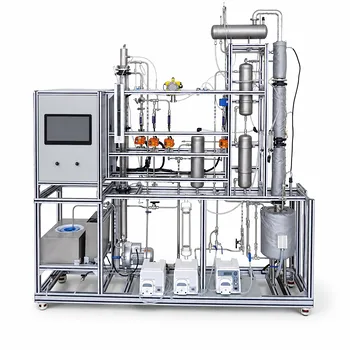
Carbon Dioxide Absorption and Desorption Educational Pilot Plant for Carbon Capture Studies
Explore carbon dioxide absorption and desorption with this educational pilot plant. Transparent columns visualize mass transfer; electric heating simulates industrial solvent regeneration; touchscreen interface enables data monitoring. Ideal for chemical engineering, bridging theory and practice.
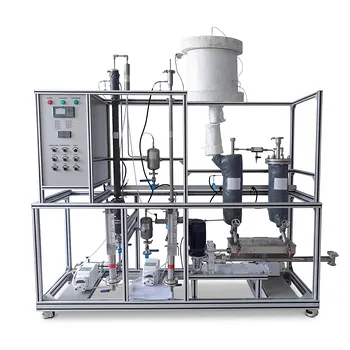
Steam Methane Reforming Hydrogen Production and Purification Educational Pilot Plant
This bench-scale educational pilot plant combines steam methane reforming with hydrogen purification, offering safe, hands-on unit operations training for university engineering laboratories. Its customizable design and high-precision monitoring enable real-time study of catalysis, phase separation, and process dynamics.

Multi-Functional Special Distillation Educational Pilot Plant
Versatile multi-functional special distillation pilot plant for chemical engineering education. Supports continuous, vacuum, azeotropic, reactive, extractive distillation. Transparent glass columns enable real-time visual observation of hydrodynamics and separation processes.

Multi-Reactor Educational Pilot Plant for Reaction Engineering Unit Operations
Integrated bench-scale educational pilot plant for chemical engineering teaching featuring fixed bed fluidized bed and stirred tank reactors with web-based digital twin controls and safety interlocks for hands-on unit operations and reaction engineering comparative studies in one compact system.

100L Continuous Loop Hydrogenation Educational Unit Operations Pilot Plant
This 100L continuous loop hydrogenation pilot plant is designed for chemical engineering education, featuring 316 stainless steel construction, advanced gas-liquid mass transfer components, explosion-proof safety systems, and a 15.6-inch touchscreen with 5G connectivity, cloud data logging, bridging theory and industry.

Carbon Material Thermal Pretreatment Multiphase Separation Educational Pilot Plant
Educational pilot plant for carbon material thermal pretreatment and multiphase separation. Features jacketed agitated reactor, separation column, and modern controls for hands-on unit operations training in heat transfer, fluid flow, and process safety with industrial-grade materials and wireless data acquisition.

Micro-Scale Gas-Solid Catalytic Reaction Educational Pilot Plant
Explore heterogeneous catalysis with this micro-scale gas-solid catalytic reaction educational pilot plant. Designed for university labs, it enables hands-on study of reaction kinetics and transport phenomena in a benchtop packed bed reactor with high-precision flow control and touchscreen automation.
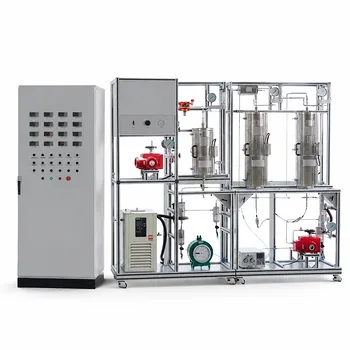
Crude Benzene Hydrogenation Educational Unit Operations Pilot Plant
Advanced pilot plant for higher education, enabling hands-on study of crude benzene hydrogenation and gas-liquid catalytic reactions. Triple-stage reactor system with precision flow and temperature control, AI-driven PID, remote monitoring, and comprehensive safety interlocks. Customizable for curriculum integration.

Electrolytic Hydrogen Production Educational Unit Operations Pilot Plant
Bench-scale electrolytic hydrogen production pilot plant designed for university engineering labs. Provides hands-on training in water electrolysis, gas-liquid separation, and process safety. Fully customizable system with digital PID control, corrosion-resistant components, and hydrogen gas detector. Ideal for chemical engineering curricula.

Continuous Batch Extractive Distillation Educational Pilot Plant
Versatile pilot plant for continuous, batch, and extractive distillation training. High-borosilicate glass column for visualizing hydraulics, 15.6-inch touchscreen with data logging, precise reflux ratio control 1-99, and durable corrosion-resistant frame. Ideal for chemical engineering education and process research.

Bench Scale Dual Column Gas Separation and Capture Educational Pilot Plant
This dual-column educational pilot plant provides hands-on teaching of gas adsorption, separation, and capture processes. It features stainless steel columns, regeneration up to 400°C, and a 15.6-inch touchscreen PLC for TSA and PSA studies in chemical engineering curricula, process simulation.

Fixed-Bed Chemical Reaction and Gas Dust Tar Removal Unit Operations Pilot Plant
Integrated educational pilot plant for studying catalytic gas-solid reactions and downstream gas purification. Features dual fixed-bed reactor, three-stage heating, and touchscreen control for hands-on engineering training. Ideal for chemical and environmental engineering curricula.

Electrolyte Distillation Purification and Formulation Educational Pilot Plant
Integrated bench-to-pilot scale educational pilot plant for electrolyte distillation, purification, and formulation with borosilicate glass construction, PLC automation, touchscreen HMI, and advanced industrial safety features for hands-on chemical process training, ideal for chemical engineering and materials science curricula.

Multi Functional Catalytic Reaction and Reactor Evaluation Educational Unit Operations Pilot Plant
Bench-scale educational pilot plant for catalytic reaction and reactor evaluation, integrating fixed bed, fluidized bed, and stirred tank reactors. Students compare reactor designs, evaluate catalysts, and study reaction kinetics and hydrodynamics. Perfect for unit operations labs in chemical engineering curricula.
Related Articles
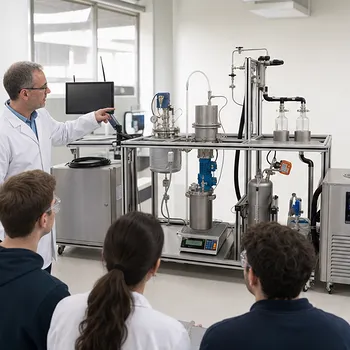
The Machine That Teaches Green Chemistry by Making Pressure Visible
How supercritical CO₂ pilot plants turn the safer-solvent principle into a hands-on, trade-off-driven lesson in chemical engineering—and why memorizing green chemistry isn’t enough.
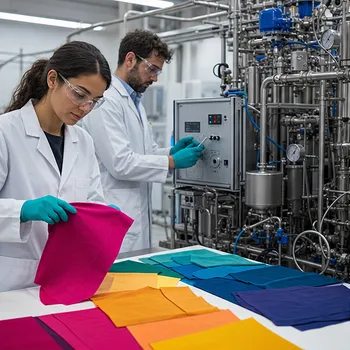
The Invisible Thread: How Supercritical CO₂ Weaves a Future Without Water
Explore the high-pressure physics and critical unit operations behind waterless dyeing. A deep dive into why supercritical CO₂ pilot plants are the non-negotiable bridge to sustainable textile manufacturing.
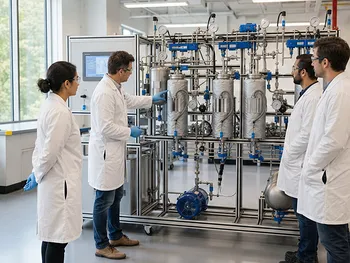
The Physics of Safety: Why Supercritical CO2 Turns a Pilot Plant into a Classroom Without a Poison Cabinet
Supercritical CO₂ extraction eliminates toxic solvents, zeroes out hazardous waste, and operates near room temperature — making it the ultimate teaching tool for process safety and green chemistry.
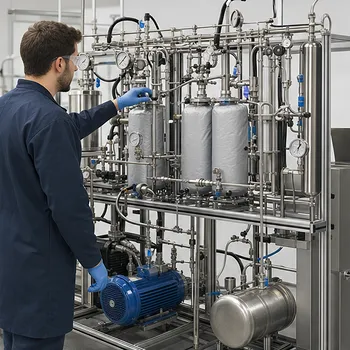
The Solvent That Disappears: Supercritical CO₂ and the New Logic of Pilot Plant Operations
Supercritical CO₂ extraction doesn’t just replace toxic solvents—it fundamentally reshapes mass transfer, preservation, and teachable moments in chemical engineering pilot plants. Here’s how that changes what an education-focused pilot unit can deliver.
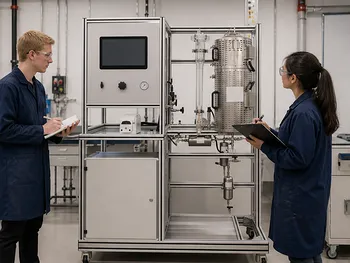
The Lever and the Leverage: Why a Pilot Plant Creates Engineers Who Build, Not Just Calculate
Catalytic reforming isn't a recipe; it's a war of trade-offs. Here’s how a pilot plant transforms abstract catalysis theory into the visceral, systems-thinking intuition that defines a great chemical engineer.
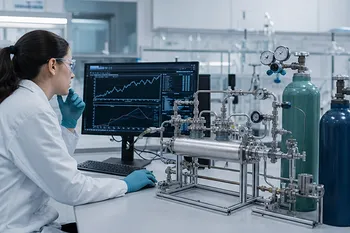
The Ideal-Selectivity Trap: How Pilot Plants Expose the Real Story of Membrane CO₂ Capture
A lab cell measures a membrane’s ideal selectivity; only a pilot plant reveals how it behaves under real flue gas stress, impurities, and economics. Uncover the truth before scaling up.
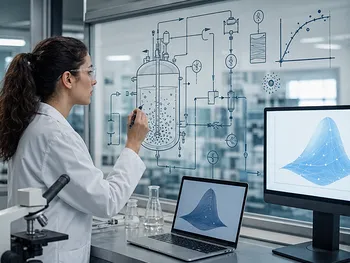
The Invisible Constraint: How First-Principles dCO₂ Modeling Turns Your Pilot Plant into a Predictive Engine
Learn how a first-principles dCO2 mass transfer model de-risks bioprocess scale-up. Validate with pilot plant data to predict manufacturing CO2 profiles, size spargers, and design control loops—eliminating costly full-scale trials.