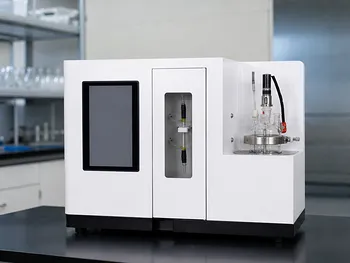
LABPARK's Vocational Food Engineering Pilot Plants are designed for educational and vocational training, providing students and professionals with practical experience in key unit operations of food processing. Our featured product, the Bio-fermentation Ethanol Production Practical Training Unit Operations Pilot Plant, integrates fermentation, solid-liquid filtration, membrane separation, and distillation. This plant serves as an ideal platform for understanding bio-processes in food engineering, from raw material handling to final product purification.
Toggle Categories
Get Instant Support
Choose your preferred way to connect with our team
-
Get Free Quote Fill out form for detailed pricing
-
Send Email Detailed inquiry support
-
WhatsApp Quick mobile chat
Response Time
Within 8 hours on working days, 24 hours on holidays
Vocational Food Engineering Pilot Plants

Bio-fermentation Ethanol Production Practical Training Unit Operations Pilot Plant
Item Number: LPK-IBFE
Comprehensive Training Solutions for Food Engineering
In the rapidly evolving field of food engineering, bridging the gap between theoretical knowledge and industrial practice is essential. LABPARK addresses this need with our advanced Vocational Food Engineering Pilot Plants, meticulously designed to simulate real-world unit operations. These pilot-scale systems provide an immersive, hands-on learning environment where students, researchers, and professionals can gain invaluable experience with processes critical to the food and bioprocess industries. Whether focusing on bio-fermentation, distillation, filtration, or integrated production lines, our pilot plants are engineered to deliver unparalleled educational value, safety, and flexibility.
The Core of Our Food Engineering Pilot Plants
At the heart of our vocational offerings is the Bio-fermentation Ethanol Production Practical Training Unit Operations Pilot Plant. This versatile system encapsulates the essence of food engineering by demonstrating the conversion of biomass into valuable products through fermentation and downstream processing. The plant is specifically designed for academic and vocational training settings, enabling users to study and optimize the complete production cycle of bioethanol—a process directly relevant to food waste valorization, beverage alcohol production, and biofuel development. By working with this pilot plant, learners gain a holistic understanding of unit operations that are transferrable to a wide range of food and biotechnological applications, such as the production of fermented foods, enzymes, organic acids, and other bio-based chemicals.
Detailed Process Integration
The pilot plant integrates four fundamental unit operations that are cornerstones of modern food engineering:
- Fermentation: A jacketed, stirred-tank bioreactor equipped with precise temperature, pH, and dissolved oxygen control allows students to explore microbial kinetics, substrate utilization, and product formation. The transparent vessel and sampling ports enable visual monitoring and analytical testing, reinforcing concepts of aseptic technique and microbial growth parameters.
- Solid-Liquid Filtration: Following fermentation, the broth undergoes clarification using a plate-and-frame filter or a rotary vacuum drum filter (configurable). This step teaches the principles of cake filtration, pressure drop, and filter aid selection, which are critical in juice processing, beer clarification, and biomass separation.
- Membrane Separation: An ultrafiltration or nanofiltration unit then purifies the filtered broth, concentrating the product while removing residual solids and macromolecules. This module introduces membrane science, including flux behavior, fouling control, and molecular weight cut-off selection, mirroring processes used in whey protein concentration, wine clarification, and enzyme recovery.
- Distillation: The final purification is achieved through a continuous or batch distillation column, where ethanol is separated based on volatility. Trainees learn about vapor-liquid equilibrium, reflux ratio optimization, and column efficiency—skills directly applicable to spirit production, essential oil extraction, and solvent recovery.
All these operations are interconnected with sanitary piping, pumps, and instrumentation, allowing the entire process to run as an integrated system or as standalone modules. This modularity maximizes the plant's utility across multiple courses and experiments.
Industrial-Grade Components for Realistic Training
A key differentiator of LABPARK's pilot plants is the use of industrial-grade components that emulate the look, feel, and operation of full-scale production equipment. From 316L stainless steel construction to hygienic fittings and automated valves, every element is chosen to reflect best practices in the food and bioprocess industries. This approach ensures that students become familiar with current Good Manufacturing Practices (cGMP), sanitation protocols, and the operational challenges of industry. The inclusion of a hybrid automated and manual control system further enriches the learning experience. A central PLC (Programmable Logic Controller) with an HMI (Human-Machine Interface) enables automated sequence control, data logging, and process visualization, while manual overrides and local gauges allow students to develop a tactile understanding of process parameters. This dual-mode operation is ideal for teaching both fundamental manual skills and advanced automation concepts.
Safety and Compliance
Safety is paramount in educational environments. Our pilot plants incorporate multiple layers of protection, including rupture discs, pressure relief valves, emergency stop buttons, and intrinsically safe electrical designs for areas potentially exposed to flammable solvents. The systems are designed to meet international safety standards, and comprehensive documentation, including P&IDs, operational SOPs, and safety guidelines, is provided. This ensures that institutions can conduct hands-on training with confidence, even with processes involving volatile substances like ethanol.
Tailored to Your Curriculum
We understand that every educational program has unique needs. That's why LABPARK offers extensive customization options for our Vocational Food Engineering Pilot Plants. Adjustable parameters include:
- Scale and Capacity: From bench-top units for small group demonstrations to larger pilot skids capable of producing several liters per batch.
- Additional Unit Operations: Incorporate pasteurization, spray drying, centrifugation, or chromatography to expand the teaching scope.
- Monitoring and Control: Upgrade to full SCADA integration, add wireless sensors, or include advanced control loops for process dynamics studies.
- Feedstock Flexibility: Configure the plant to handle liquid and semi-solid feedstocks, allowing experiments with various raw materials like corn, sugarcane molasses, fruit waste, or synthetic substrates.
- Visualization and Teaching Aids: Include cut-away models, transparent piping sections, or augmented reality overlays to enhance understanding of internal flows and mechanisms.
Our engineering team works closely with faculty and lab managers to design a system that aligns with your educational objectives, available space, and budget. Whether you need a complete turnkey solution or a phased expansion of existing laboratory equipment, we deliver a product that fits seamlessly into your teaching plan.
Benefits for Students and Faculty
The implementation of pilot-scale training brings profound educational benefits:
- Enhanced Conceptual Understanding: Physical manipulation and observation of processes solidify theoretical concepts taught in lectures, leading to deeper retention.
- Skill Development: Students acquire practical skills in equipment operation, troubleshooting, data analysis, and teamwork—competencies highly valued by employers.
- Research Capabilities: The plant serves as a versatile platform for undergraduate research, capstone projects, and collaborative industry studies, generating data for publications and thesis work.
- Industry Readiness: Graduates who have trained on pilot plants are better prepared for internships and careers, reducing the onboarding time for companies.
- Flexible Teaching: The modular design allows instructors to isolate specific operations for focused experiments or to run entire process cycles for comprehensive studies.
Case Example: Bioethanol Production in Food Engineering
The bio-fermentation ethanol pilot plant exemplifies the multidisciplinary nature of food engineering. Students start by preparing a fermentation medium, perhaps from locally sourced agricultural residues, exploring concepts of sugar extraction and nutritional optimization. During fermentation, they monitor yeast metabolism and calculate yields, learning about factors that affect productivity and by-product inhibition. Downstream, they evaluate the efficiency of filtration and membrane separation, discussing the importance of clarity and purity in final products. The distillation step introduces thermodynamic principles and the art of making high-proof alcohol, akin to the production of distilled spirits. Throughout, they grapple with energy balances, mass balances, and process economics—core tenets of engineering. This single plant thus covers topics ranging from microbiology and chemistry to mechanical and chemical engineering, making it a cornerstone of a modern food engineering curriculum.
Long-Term Value and Support
Investing in a LABPARK pilot plant means gaining a partner committed to your success. We provide:
- Installation and Commissioning: Our technicians ensure the plant is set up correctly and functioning to specifications.
- Training: We offer hands-on training for your staff and initial student groups to accelerate adoption.
- Documentation: Comprehensive manuals, experimental guides, and lesson plans help you integrate the plant into your courses immediately.
- After-Sales Support: Access to spare parts, technical assistance, and upgrades ensures your plant remains a cutting-edge teaching tool for years.
Embrace the Future of Food Engineering Education
The shift towards experiential learning is reshaping technical education, and pilot plant training is at the forefront of this transformation. By choosing LABPARK, you equip your students with the skills and confidence to solve real-world challenges in food production, sustainability, and innovation.
Ready to take the next step? Whether you have a clear vision or are just exploring possibilities, our team of experienced engineers is here to help. We will work with you to design a Vocational Food Engineering Pilot Plant that precisely meets your needs and elevates your program. Contact us today to start a conversation and receive a customized proposal. Let's build the future of food engineering together.
REQUEST A QUOTE
Our professional team will reply to you within one business day. Please feel free to contact us!
Related Articles
The 44% Error: Why Your Crystallization Pilot Plant is Lying About Yield
Ignoring water of hydration in crystal mass balances can inflate yield predictions by over 50%. A deep dive into the mass and energy balance coupling that separates an empirical observation from a predictable, scalable process.
Read more
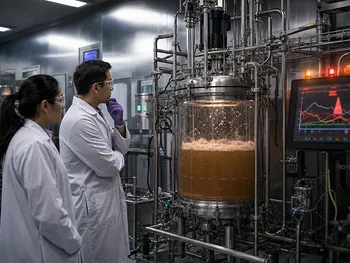
The Invisible Variable That Sinks Bioreactors—and How Pilot Plants Train You to See It
Dissolved CO₂ accumulation silently impairs cell growth and product quality. First-principles modelling, validated on pilot-scale training plants, turns this hidden risk into a controllable process parameter.
Read more