Applied chemistry and chemical engineering programs require robust, hands-on training to bridge theory and industrial practice. LABPARK's Educational Applied Chemistry Pilot Plants provide a comprehensive suite of bench-scale systems covering core unit operations such as catalytic reaction engineering, electrochemical hydrogen production, vapor-liquid equilibrium, and liquid-liquid extraction. Designed for academic and research institutions, these pilot plants enable students to conduct experiments on real-world processes—from intraparticle diffusion measurement and polymerization to methanol synthesis and CO₂ PVT analysis—using modern instrumentation, digital controls, and safety interlocks that mirror industrial environments.
Toggle Categories
Get Instant Support
Choose your preferred way to connect with our team
-
Get Free Quote Fill out form for detailed pricing
-
Send Email Detailed inquiry support
-
WhatsApp Quick mobile chat
Response Time
Within 8 hours on working days, 24 hours on holidays
Educational Applied Chemistry Pilot Plants


Multi-Reactor Educational Pilot Plant for Reaction Engineering Unit Operations
Item Number: LPK-DGNFY
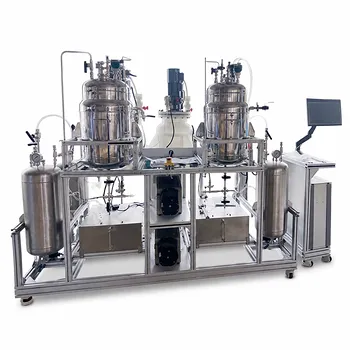
Water Electrolysis Hydrogen Production and Storage Educational Pilot Plant
Item Number: LPK-DJSZQ
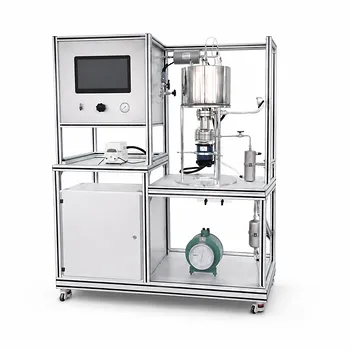
Internal Circulation Gradient Free Catalytic Reaction Educational Pilot Plant
Item Number: LPK-SRIG
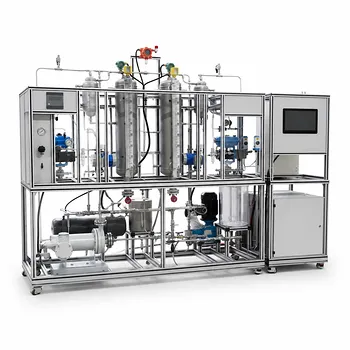

Electrolytic Hydrogen Production Educational Unit Operations Pilot Plant
Item Number: LPK-CEHP
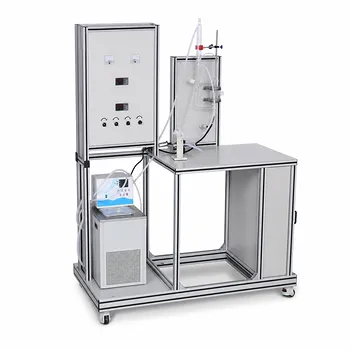
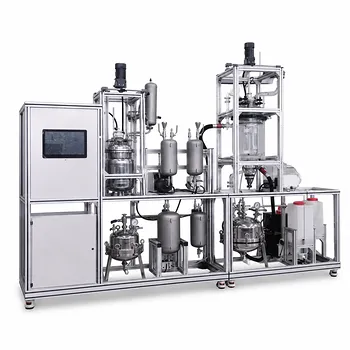
Gallium and Indium Selective Extraction Educational Pilot Plant
Item Number: LPK-CGIE

Polymerization Granulation and Pellet Processing Educational Unit Operations Pilot Plant
Item Number: LPK-CJH30

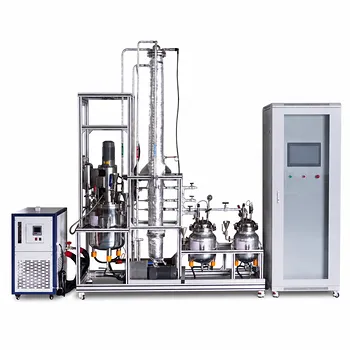
Carbon Material Thermal Pretreatment Multiphase Separation Educational Pilot Plant
Item Number: LPK-CJZFL15


Electrolyte Distillation Purification and Formulation Educational Pilot Plant
Item Number: LPK-CSOCL2

Micro-Scale Gas-Solid Catalytic Reaction Educational Pilot Plant
Item Number: LPK-TLCR
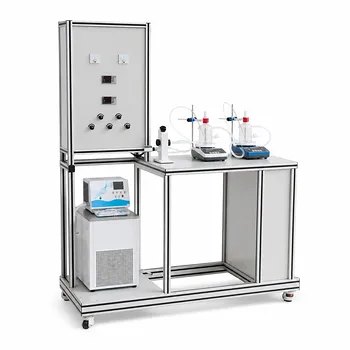
Ternary Liquid-Liquid Equilibrium Educational Pilot Plant
Item Number: LPK-SLLT

100L Continuous Loop Hydrogenation Educational Unit Operations Pilot Plant
Item Number: LPK-HLJQ100
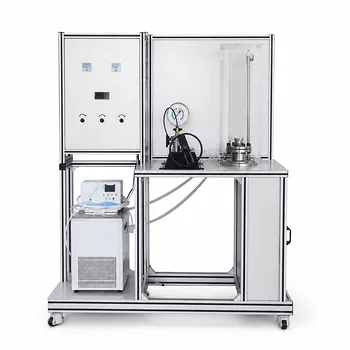
Carbon Dioxide PVT Curve Determination Educational Unit Operations Pilot Plant
Item Number: LPK-SPVT
LABPARK Educational Applied Chemistry Pilot Plants: Bridging Theory and Industry
In the dynamic fields of chemical engineering and applied chemistry, theoretical knowledge must be complemented by practical experience to produce industry-ready graduates. LABPARK’s Educational Applied Chemistry Pilot Plants are meticulously designed to serve as the ultimate hands-on training platforms, enabling students and researchers to explore fundamental unit operations, reaction kinetics, thermodynamics, and process control in a safe, scalable, and customizable setting. With over 17 specialized systems, our range covers electrochemical processes, heterogeneous catalysis, separation technologies, polymer processing, and more, each engineered to deliver immersive learning outcomes. By integrating industrial-grade components, advanced digital automation, and comprehensive safety features, LABPARK empowers universities, research institutes, and enterprises to conduct cutting-edge teaching and research.
Core Principles Driving Our Educational Pilot Plants
Understanding the scientific foundation is key to mastering process engineering. Our pilot plants physically demonstrate essential principles like mass and energy balances, transport phenomena, and reaction kinetics. In electrochemical unit operations, for example, students witness redox reactions where electrode potentials dictate performance. Using the Nernst equation, they explore how ion concentration and pH influence electrodeposition, oxidation, and reduction rates. This hands-on approach makes abstract concepts tangible when studying processes like water electrolysis for hydrogen production or electrolyte purification. Similarly, in catalytic reactors, learners evaluate intraparticle diffusion effective factors, observe gradient-free operation, and compare reactor types—fixed bed, fluidized bed, and stirred tank—to understand how mass transfer and hydrodynamics govern overall conversion.
Unraveling the Complexity of Recycling and Bypass Operations
One of the most practical skills for chemical engineers is managing process streams to optimize efficiency and sustainability. Many of our pilot plants incorporate recycling and bypass capabilities, allowing students to physically manipulate and calculate their effects. Since reactions rarely achieve 100% completion, unreacted feedstocks are separated and reintroduced into the reactor, minimizing waste and maximizing yield. In our systems, learners can study reasons for recycling—such as catalyst recovery, dilution, and process variable control—and compute critical metrics:
- Overall conversion = (Reactant input to process – Reactant output from process) / Reactant input to process
- Single-pass conversion = (Reactant input to reactor – Reactant output from reactor) / Reactant input to reactor
Bypassing, where a portion of the stream is diverted around a unit and later remixed, is another operator strategy taught on our pilot plants. By adjusting bypass fractions, students observe the impact on product concentration and system dynamics, gaining invaluable troubleshooting skills for industrial settings.
A Diverse Portfolio for Comprehensive Learning
Our Educational Applied Chemistry category encompasses a wide spectrum of unit operations, ensuring that every critical aspect of a chemical engineering curriculum is covered:
- Catalytic Reaction and Reactor Evaluation: From the Multi-Reactor Educational Pilot Plant that compares fixed bed, fluidized bed, and stirred tank designs, to the Internal Circulation Gradient-Free Catalytic Reaction Pilot Plant for studying heterogeneous kinetics without concentration gradients, these systems let students evaluate catalyst performance and reactor choice under realistic conditions. The Micro-Scale Gas-Solid Catalytic Reaction Pilot Plant brings benchtop accessibility to studying transport phenomena.
- Electrochemical Processes and Hydrogen Production: As the world shifts toward green energy, our Water Electrolysis Hydrogen Production and Storage Pilot Plant and Alkaline Membrane Water Electrolysis Training System provide hands-on experience with electrolysis, gas-liquid separation, and hydrogen storage. The Electrolytic Hydrogen Production Pilot Plant equips learners with digital PID control and corrosion-resistant components, while the Electrolyte Distillation Purification and Formulation Pilot Plant bridges materials science and process engineering.
- Separation and Equilibrium Studies: Separation is fundamental in chemical engineering. The Binary System Vapor-Liquid Equilibrium Pilot Plant enables determination of T-P-X-Y data under atmospheric pressure, while the Ternary Liquid-Liquid Equilibrium Pilot Plant allows construction of phase diagrams using industrial instrumentation. The Gallium and Indium Selective Extraction Pilot Plant introduces advanced liquid-liquid extraction and reaction kinetics, enhanced with IoT connectivity. For thermodynamics, the Carbon Dioxide PVT Curve Determination Pilot Plant lets students visualize critical opalescence and generate P-V isotherms across phase regions.
- Polymer and Specialty Chemical Processing: The Polymerization Granulation and Pellet Processing Pilot Plant covers the entire chain from polymerization to pelletizing, featuring a 30L reactor, extruder-granulator, and dryer—perfect for polymer engineering courses. The 100L Continuous Loop Hydrogenation Pilot Plant offers large-scale gas-liquid mass transfer studies with explosion-proof safety and cloud data logging.
Unmatched Features and Advantages
Customizable Design for Your Curriculum
Every LABPARK pilot plant is built with flexibility at its core. We understand that educational objectives vary, so we offer extensive customization options—from reactor sizes and materials (316L stainless steel, borosilicate glass, corrosion-resistant alloys) to control architecture and measurement sensors. This ensures the equipment aligns perfectly with your lab exercises, research projects, and budgetary constraints. Our team works closely with faculty to tailor systems that emphasize specific unit operations or incorporate additional analytical tools.
Industrial-Grade Safety and Reliability
Safety is paramount in pilot plant design. All our systems comply with rigorous international standards and feature multiple layers of protection: explosion-proof enclosures, gas detectors, pressure relief valves, emergency stop buttons, and interlocks that shut down processes if parameters exceed limits. Enclosed structures with ventilation and transparent viewing panels allow safe observation of high-temperature or high-pressure phenomena, such as in the methanol synthesis or CO₂ PVT experiments, without compromising learning.
Modern Digital Integration and IoT
To prepare students for Industry 4.0, our pilot plants are equipped with advanced PLC control, touchscreen HMIs, and optional web-based digital twin or 5G connectivity. Real-time data logging and cloud storage enable remote monitoring, data analysis, and even control beyond the physical lab. Systems like the Multi-Reactor Educational Pilot Plant incorporate digital twin technology, allowing simulation of process responses before physical runs, enhancing understanding of process control and automation.
Compact, Modular, and Scalable
Designed for typical laboratory spaces, our bench-scale and pilot-scale units maximize learning without excessive footprint. Mobile frames with casters and modular layouts allow reconfiguration for different experiments. Despite their compact size, they deliver industrial authenticity—students operate with mass flow controllers, PID loops, and recipe management just as they would in a production plant.
Durable Construction for Long-Term Educational Use
Constructed from high-quality materials (SS304/316, PTFE, borosilicate glass), our pilot plants withstand frequent student use and chemical exposure. Robust design reduces maintenance and ensures years of reliable service, a critical factor in academic lab budgets.
Enhance Your Laboratory with LABPARK Expertise
At LABPARK, we are not just equipment suppliers; we are partners in education. Our team brings decades of experience in chemical engineering pilot plant design and a deep understanding of pedagogical needs. From initial consultation to installation, training, and after-sales support, we ensure a seamless integration of our systems into your curriculum. We can develop custom laboratory manuals, experiment protocols, and data analysis tools tailored to your course objectives.
By choosing LABPARK, you provide students with the tangible skills that employers demand: hands-on problem solving, data interpretation, and safe process operation. Our pilot plants have been deployed in leading universities worldwide, consistently receiving acclaim for their educational impact and reliability.
Take the Next Step
Transform your applied chemistry or chemical engineering lab into an innovation hub. Whether you need a single unit to demonstrate reactor kinetics or a comprehensive suite of pilot plants covering all unit operations, LABPARK has the solution. Our experts are ready to discuss your specific requirements and offer a tailored quotation.
Contact us today to schedule a consultation and discover how our Educational Applied Chemistry Pilot Plants can elevate your academic program. Let’s build the future of engineering education together.
REQUEST A QUOTE
Our professional team will reply to you within one business day. Please feel free to contact us!
Related Articles
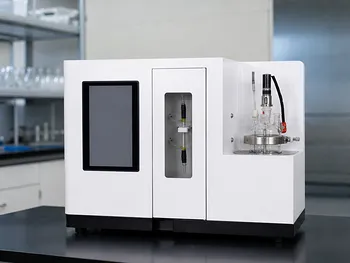
The 44% Error: Why Your Crystallization Pilot Plant is Lying About Yield
Ignoring water of hydration in crystal mass balances can inflate yield predictions by over 50%. A deep dive into the mass and energy balance coupling that separates an empirical observation from a predictable, scalable process.
Read more
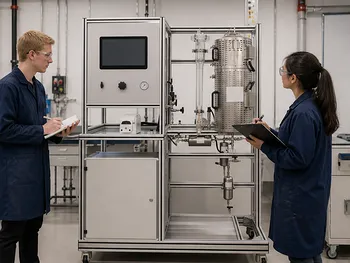
The Lever and the Leverage: Why a Pilot Plant Creates Engineers Who Build, Not Just Calculate
Catalytic reforming isn't a recipe; it's a war of trade-offs. Here’s how a pilot plant transforms abstract catalysis theory into the visceral, systems-thinking intuition that defines a great chemical engineer.
Read more
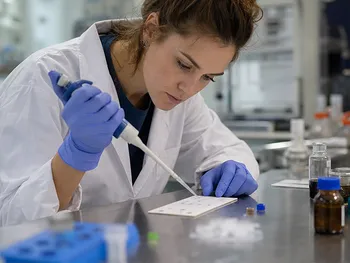
The Intuition You Can’t Simulate: Why the Best Bioprocess Education Still Lives on a Thin-Layer Plate
Before engineers trust a $500,000 bioreactor, they must trust their own hands. How thin-layer chromatography (TLC) builds the tacit knowledge that separates trained operators from true process engineers—and why LABPARK pilot plants preserve this irreplaceable skill.
Read more
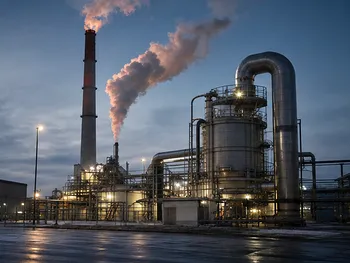
The Single-Count Principle: How a Quiet VSEPR Rule Shapes the Molecules We Scrub, Absorb, and Teach
Why do CO₂, SO₂, and NOₓ behave so differently in a wet scrubber? The answer hinges on a surprisingly simple VSEPR shortcut—treating every multiple bond as one electron group—that predicts shape, polarity, and separation strategies in environmental and bioprocess training.
Read more
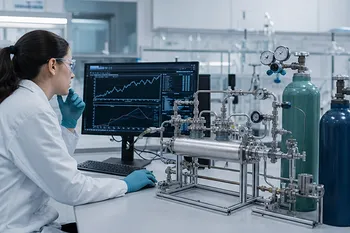
The Ideal-Selectivity Trap: How Pilot Plants Expose the Real Story of Membrane CO₂ Capture
A lab cell measures a membrane’s ideal selectivity; only a pilot plant reveals how it behaves under real flue gas stress, impurities, and economics. Uncover the truth before scaling up.
Read more
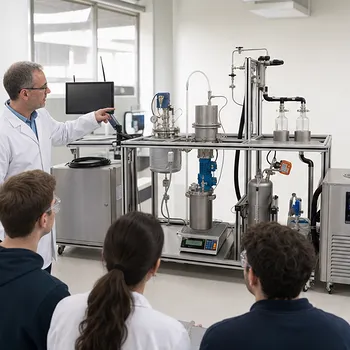
The Machine That Teaches Green Chemistry by Making Pressure Visible
How supercritical CO₂ pilot plants turn the safer-solvent principle into a hands-on, trade-off-driven lesson in chemical engineering—and why memorizing green chemistry isn’t enough.
Read more
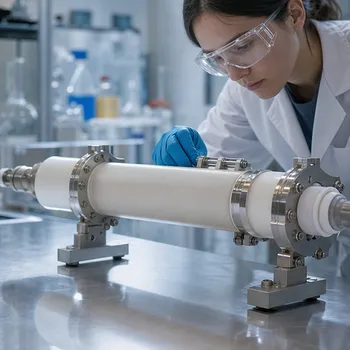
The Bridge Between a Material's Promise and a Carbon Capture Plant's Reality
A membrane pilot plant is not a scaled-down factory; it's a time machine for risk. Learn how hands-on testing exposes the hidden flaws—fouling, plasticization, and pressure penalties—that destroy the economics of CO₂ capture.
Read more
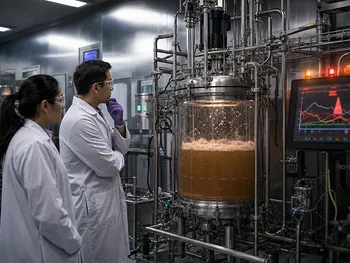
The Invisible Variable That Sinks Bioreactors—and How Pilot Plants Train You to See It
Dissolved CO₂ accumulation silently impairs cell growth and product quality. First-principles modelling, validated on pilot-scale training plants, turns this hidden risk into a controllable process parameter.
Read more
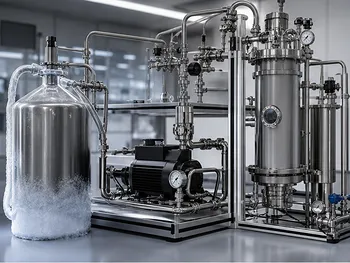
The Vanishing Solvent: How a Single, Recyclable Fluid Solves the Oldest Problem in Chemistry
Exploring the closed-loop physics of supercritical CO2. It’s not just extraction; it’s a masterclass in thermal dynamics where the solvent disappears, leaving a pure product and a zero-waste cycle.
Read more
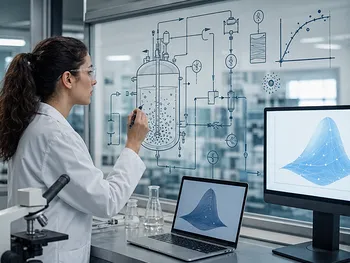
The Invisible Constraint: How First-Principles dCO₂ Modeling Turns Your Pilot Plant into a Predictive Engine
Learn how a first-principles dCO2 mass transfer model de-risks bioprocess scale-up. Validate with pilot plant data to predict manufacturing CO2 profiles, size spargers, and design control loops—eliminating costly full-scale trials.
Read more
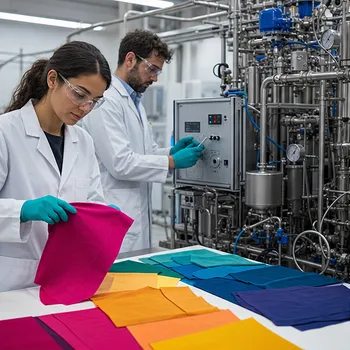
The Invisible Thread: How Supercritical CO₂ Weaves a Future Without Water
Explore the high-pressure physics and critical unit operations behind waterless dyeing. A deep dive into why supercritical CO₂ pilot plants are the non-negotiable bridge to sustainable textile manufacturing.
Read more
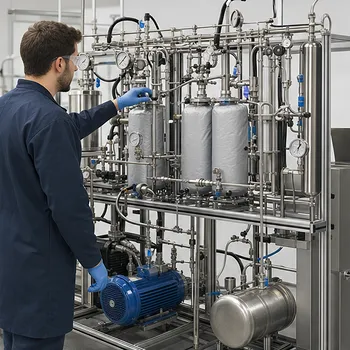
The Solvent That Disappears: Supercritical CO₂ and the New Logic of Pilot Plant Operations
Supercritical CO₂ extraction doesn’t just replace toxic solvents—it fundamentally reshapes mass transfer, preservation, and teachable moments in chemical engineering pilot plants. Here’s how that changes what an education-focused pilot unit can deliver.
Read more
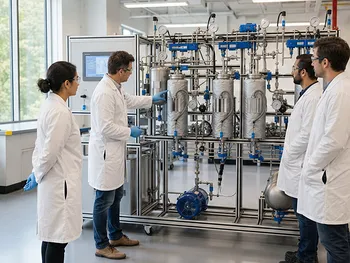
The Physics of Safety: Why Supercritical CO2 Turns a Pilot Plant into a Classroom Without a Poison Cabinet
Supercritical CO₂ extraction eliminates toxic solvents, zeroes out hazardous waste, and operates near room temperature — making it the ultimate teaching tool for process safety and green chemistry.
Read more
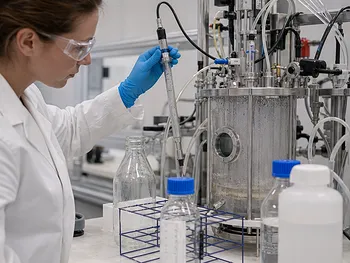
The Electric Ghost in Your Bioreactor: How Optical pH Sensors Are Ending a 50-Year Maintenance Ritual
Optical FRET-based pH and pCO₂ sensors eliminate ground-loop noise, slash response times to milliseconds, and survive repeated autoclaving—a step change for bioprocess pilot plants tired of nursing glass electrodes.
Read more