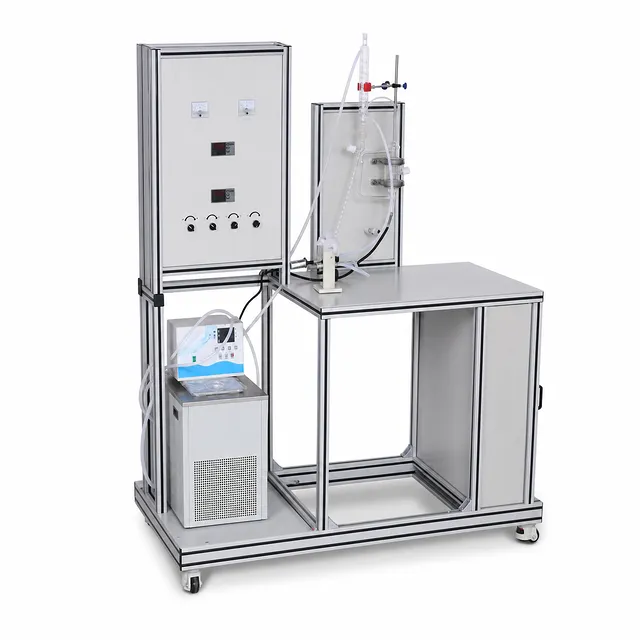
Educational Applied Chemistry Pilot Plants
Binary System Vapor Liquid Equilibrium Data Determination Educational Unit Operations Pilot Plant
Item Number : LPK-SVLB
Price varies based on specs and customizations
- Equilibrium Cell
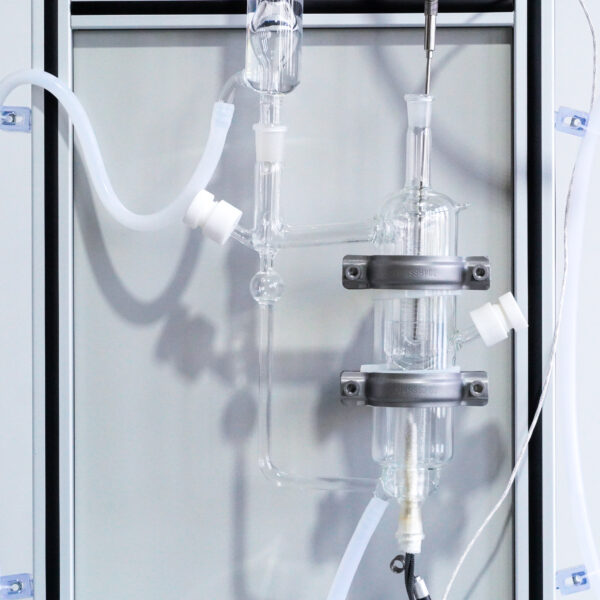
- High-borosilicate glass with vacuum insulation jacket, atmospheric pressure operation
- Circulation Method
- Dual independent vapor and liquid paths for rapid equilibrium
- Measurement Variables
- Real-time temperature (T), pressure (P), liquid mole fraction (X), vapor mole fraction (Y)

Shipping:
Contact us to get shipping details Enjoy On-time Dispatch Guarantee.
Why Choose Us
Easy ordering process, quality products, and dedicated support for your business success.
Introduction
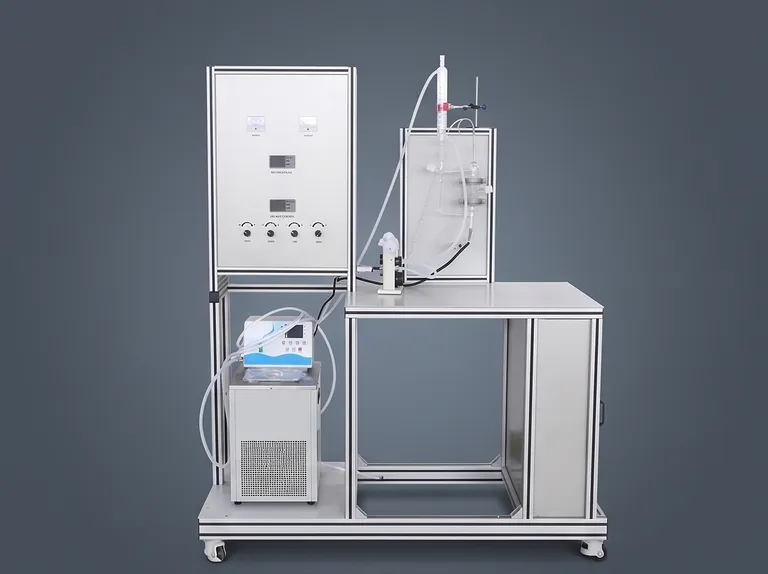
The Binary System Vapor-Liquid Equilibrium Data Determination Educational Unit Operations Pilot Plant is designed for chemical engineering, applied chemistry, and thermodynamics laboratories. This educational unit allows students to determine vapor-liquid equilibrium (VLE) data for binary systems under atmospheric pressure. By facilitating the direct measurement of thermodynamic parameters, the system helps undergraduate students understand the fundamental principles of phase equilibrium, plot VLE phase diagrams, locate azeotropic points, and calculate activity coefficients for individual components using experimental T-P-X-Y data. The unit bridges theoretical thermodynamics and practical separation processes, making it a valuable addition to modern engineering curricula.
Customization Options
To meet the diverse requirements of global universities and specific laboratory spaces, this pilot plant features a modular design that supports extensive customization. Both the hardware configurations—such as glass components, sensor ranges, heating capacities, and structural dimensions—and the software interfaces for data acquisition and control can be tailored to align with your specific syllabus requirements and laboratory layouts.
Key Educational Features and Advantages
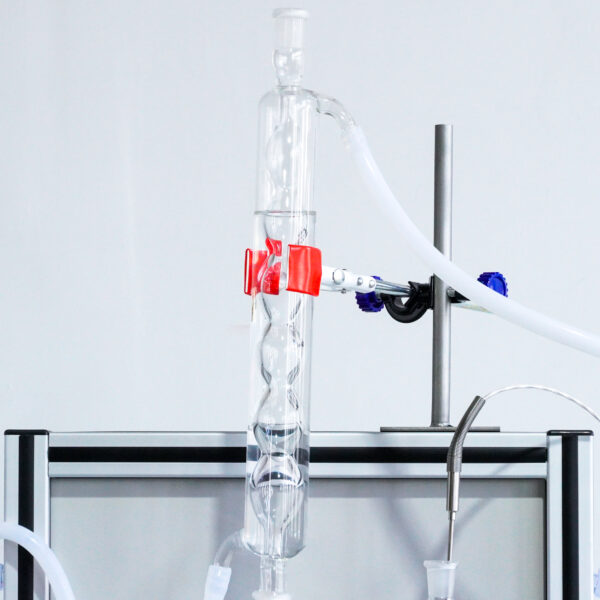
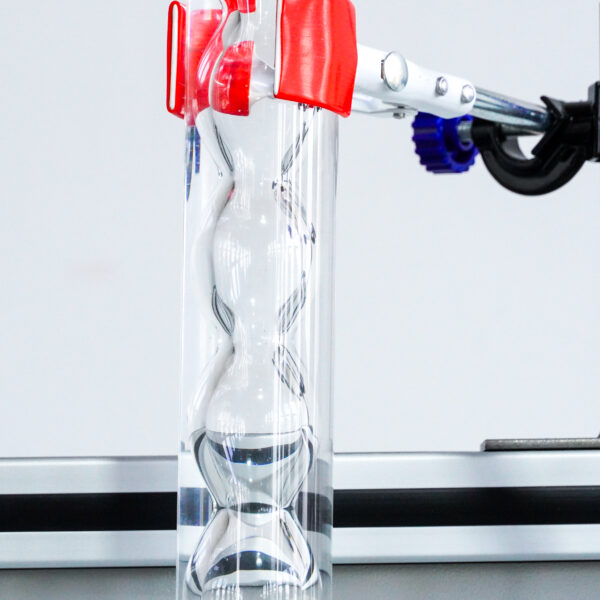
- High Visibility and Observation: The system features a fully transparent vapor-liquid equilibrium cell, allowing students to observe boiling, reflux, and phase separation phenomena in real time.
- Thermal Efficiency: The equilibrium cell is equipped with an integrated vacuum jacket for thermal insulation, minimizing heat loss to the surroundings and ensuring highly reliable steady-state measurements.
- Rapid Equilibrium with Low Volume: Independent circulation loops for both the liquid and vapor phases facilitate rapid equilibrium, significantly reducing overall experiment time and minimizing chemical sample consumption.
- Robust and Ergonomic Construction: Built on a high-grade aluminum alloy frame with heavy-duty industrial casters, the unit offers both structural durability and mobility within the laboratory space.
- Safety and Stability: Integrated control panels with precise temperature regulations and safety cut-offs ensure a safe learning environment for undergraduate students.
Detail & Parts
Technical Specifications and Curricular Alignment
The following table details the key technical aspects of the pilot plant, the experimental modules students can perform, and how these modules align with core topics in standard engineering reference textbooks.
| Technical Parameter / Feature | Description & Utility | Relevant Unit Operations & Textbook Alignment |
|---|---|---|
| Equilibrium Cell Assembly | High-borosilicate glass cell with a vacuum insulation jacket; designed for atmospheric pressure operation. | Vapor-liquid phase behavior; thermodynamics of mixtures as detailed in Unit Operations of Chemical Engineering. |
| Circulation Method | Dual independent vapor and liquid circulation paths to ensure uniform composition and rapid steady-state. | Stage-wise separation processes; fundamental equilibrium stage concepts discussed in Transport Processes and Unit Operations. |
| Measurement Variables | Real-time determination of Temperature (T), Pressure (P), Liquid phase mole fraction (X), and Vapor phase mole fraction (Y). | Activity coefficient calculations; non-ideal liquid mixture behavior covered in Chemical Engineering Design. |
| Structure & Mobility | Premium aluminum alloy framing with locking casters. Dimensions: $\le$ 1480mm × 580mm × 1780mm. | General laboratory integration and pilot plant safety design considerations. |
| Experimental Module 1 | Binary system boiling point diagram construction (T-x-y diagrams). | Distillation fundamentals; determination of relative volatility as described in Unit Operations of Chemical Engineering. |
| Experimental Module 2 | Azeotropic point identification and non-ideal system modeling. | Azeotropic distillation; separation of non-ideal mixtures covered in Transport Processes and Unit Operations. |
| Experimental Module 3 | Thermodynamic consistency testing of experimental data. | Validation of phase equilibrium data; parameter estimation for process design as outlined in Chemical Engineering Design. |
Comprehensive Customization Services
Every laboratory has unique teaching objectives and space limitations. We offer comprehensive software and hardware customization for this educational pilot plant. Hardware modifications include alternative piping arrangements, specialized sensor integrations, and custom footprint layouts to fit specific laboratory benches. On the software side, we provide customizable digital dashboards, data logging features, and educational software modules that match your institution’s specific grading and data analysis standards.
About LABPARK
LABPARK has been serving the higher education sector for more than 20 years, focusing on providing high-quality educational apparatus and pilot plants for laboratories. Our core expertise spans six key academic fields: chemistry, chemical engineering, biology, food engineering, pharmaceutical engineering, and environmental engineering.
With a commitment to engineering innovation and educational excellence, LABPARK holds 209 technical patents and has successfully collaborated with over 289 universities and colleges worldwide. Our state-of-the-art production and research-and-development base covers an area of 49,000 square meters, ensuring that all our educational units are manufactured to rigorous quality and safety standards to support the next generation of engineers and researchers.
Trusted by Industry Leaders
REQUEST A QUOTE
Our professional team will reply to you within one business day. Please feel free to contact us!
Related Products
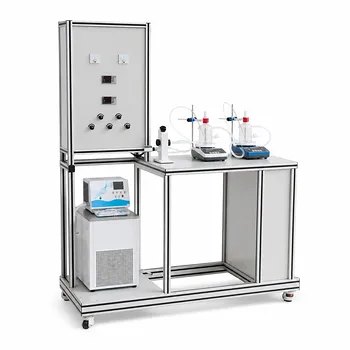
Ternary Liquid-Liquid Equilibrium Educational Pilot Plant
An integrated laboratory training system for engineering students to determine ternary liquid-liquid equilibrium data, construct phase diagrams, and gain hands-on experience with industrial instrumentation, including Abbe refractometer and magnetic stirrers, for precise data acquisition and curriculum-aligned experiments.
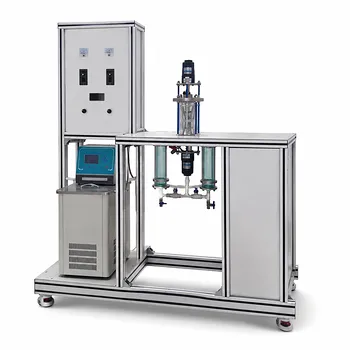
Liquid-Liquid Mass Transfer Coefficient Determination Educational Pilot Plant
This bench-scale educational pilot plant for liquid-liquid mass transfer coefficient determination offers precise control of phase boundary, temperature, and agitation, enabling hands-on study of transport phenomena and unit operations in chemical engineering labs for teaching.
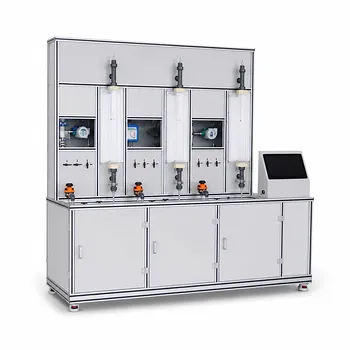
Two Phase Flow Pattern Velocity Resistance Measurement Educational Pilot Plant
Benchtop educational pilot plant for university labs studying gas-liquid two-phase flow patterns, velocity, and resistance across circular, square, and rectangular conduits. Features 15.6-inch touchscreen, 5G connectivity, differential pressure sensors, safe water-air operation. Supports chemical engineering curricula.
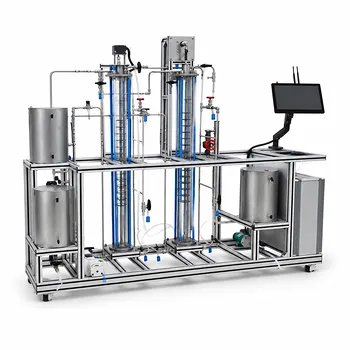
Comprehensive Liquid-Liquid Extraction Pilot Plant for Engineering Education
Comprehensive liquid-liquid extraction pilot plant for engineering education, integrating rotary and vibratory columns for hands-on observation of phase behavior, flooding limits, and mass transfer efficiency, enabling precise HTU and mass transfer coefficient calculations.
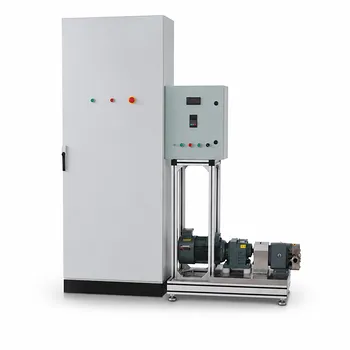
Quantitative Dosing and Liquid Flow Control Educational Unit Operations Pilot Plant
Explore industrial fluid transport and automated process control with this quantitative dosing and liquid flow control educational pilot plant, featuring local and remote control cabinets, variable speed metering pump, high-precision flow sensors, and PLC-based SCADA integration for engineering students.
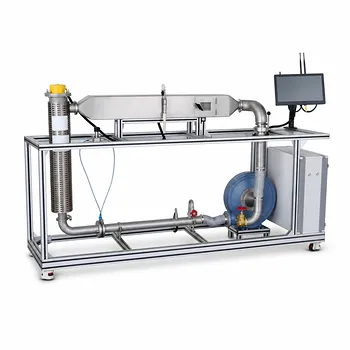
Circulating Wind Tunnel Drying and Convective Heat Transfer Coefficient Determination Educational Pilot Plant
This educational pilot plant enables engineering students to study convective drying, air-water vapor systems, and heat transfer by determining drying curves, drying rate curves, and convective heat transfer coefficients under variable conditions.
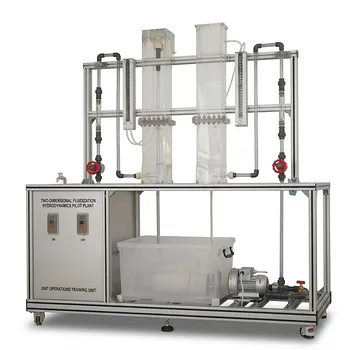
Two-Dimensional Fluidization Hydrodynamics Educational Pilot Plant for Unit Operations Training
Explore gas-solid and liquid-solid fluidization hydrodynamics with our transparent 2D educational pilot plant. Ideal for chemical engineering unit operations labs, it demonstrates fixed to fluidized bed regimes, measures pressure drop, and integrates QR-code digital learning for enhanced student training.

Multi-Functional Special Distillation Educational Pilot Plant
Versatile multi-functional special distillation pilot plant for chemical engineering education. Supports continuous, vacuum, azeotropic, reactive, extractive distillation. Transparent glass columns enable real-time visual observation of hydrodynamics and separation processes.
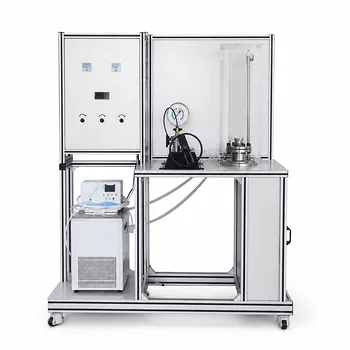
Carbon Dioxide PVT Curve Determination Educational Unit Operations Pilot Plant
Enable hands-on learning of thermodynamic principles with this carbon dioxide PVT curve determination pilot plant. Students visualize critical opalescence, phase transitions, and generate P-V isotherms across liquid, gas, and supercritical regions. Robust safety features, adaptable for university engineering labs.
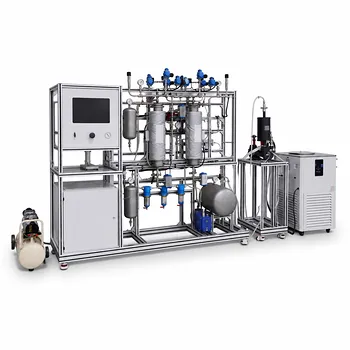
Bench Scale Dual Column Gas Separation and Capture Educational Pilot Plant
This dual-column educational pilot plant provides hands-on teaching of gas adsorption, separation, and capture processes. It features stainless steel columns, regeneration up to 400°C, and a 15.6-inch touchscreen PLC for TSA and PSA studies in chemical engineering curricula, process simulation.
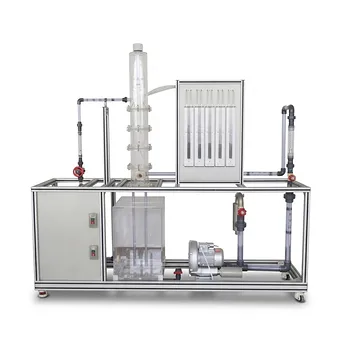
Plate Column Hydrodynamics Tray Demonstration Educational Pilot Plant
Advanced transparent educational pilot plant for chemical engineering labs demonstrates plate column hydrodynamics with industrial sieve bubble cap serrated valve trays for visual observation of gas-liquid contact pressure drop measurement and operational limit analysis including flooding weeping entrainment
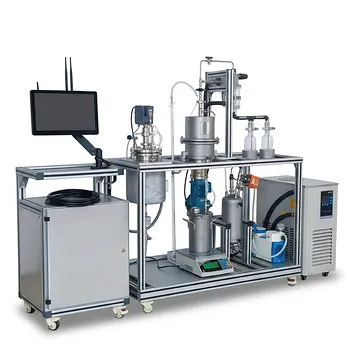
Supercritical High-Gravity Flash Evaporation Educational Unit Operations Pilot Plant
Bench-scale integrated teaching system for advanced separation and mass transfer, combining supercritical high-gravity flash evaporation with heating, chemical reaction, and material collection, featuring modular design, Stainless Steel 316L construction, transparent visualization, touchscreen control, and safety systems for chemical engineering education.
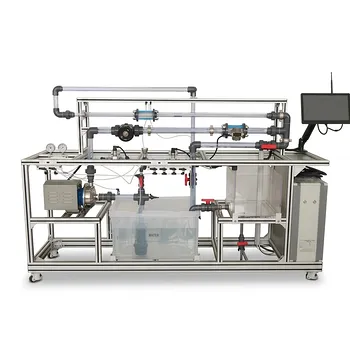
Centrifugal Pump Performance and Orifice Flowmeter Calibration Educational Pilot Plant
This versatile educational pilot plant enables engineering students to conduct centrifugal pump performance tests, orifice flowmeter calibration, and fluid mechanics experiments using a transparent flow loop, industrial HMI, and 3D virtual simulation for a comprehensive hands-on learning experience.
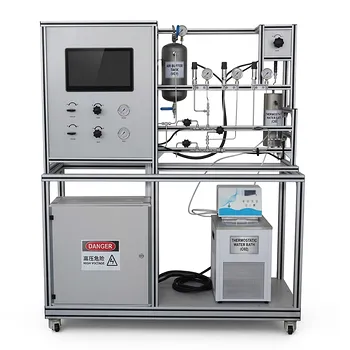
Throttling Effect Determination Educational Unit Operations Pilot Plant
Investigate the Joule-Thomson throttling effect with this educational unit operations pilot plant. Designed for engineering students, it enables hands-on comparative analysis of adiabatic gas expansion using precise process control, interactive digital interface, and eco-friendly operation, ensuring safe repeatable thermodynamic experiments.

Multi-Reactor Educational Pilot Plant for Reaction Engineering Unit Operations
Integrated bench-scale educational pilot plant for chemical engineering teaching featuring fixed bed fluidized bed and stirred tank reactors with web-based digital twin controls and safety interlocks for hands-on unit operations and reaction engineering comparative studies in one compact system.

Comprehensive Fluid Mechanics Educational Unit Operations Pilot Plant
Hands-on fluid mechanics pilot plant for engineering education covering over 13 principles including pipe flow, minor losses, flowmeter calibration, and pump performance with industrial-grade components, smooth and rough piping, venturi and orifice flowmeters, and centrifugal pump testing and analysis.
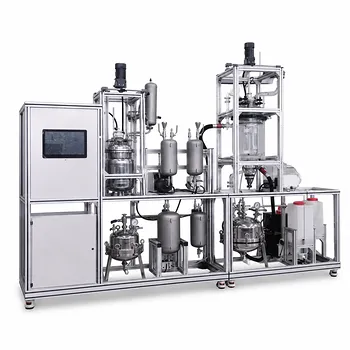
Gallium and Indium Selective Extraction Educational Pilot Plant
Integrated pilot-scale laboratory system for engineering education bridging theoretical concepts with industrial practice enabling hands-on study of liquid liquid extraction reaction kinetics and mass transfer for selective gallium and indium separation featuring real-time IoT connectivity with integrated safety

Educational Unit Operations Pilot Plant for Intraparticle Diffusion Effective Factor Measurement
Designed for chemical engineering university labs, this pilot plant allows hands-on determination of catalyst particle intraparticle diffusion effective factors and gas-solid reaction kinetics using a fixed-bed tubular reactor with industrial touchscreen control, bridging theory and practical reactor design.
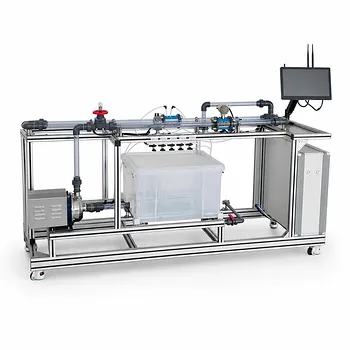
Orifice and Venturi Flowmeter Calibration Educational Pilot Plant for Fluid Mechanics Laboratory
Enhance fluid dynamics education with the Orifice and Venturi Flowmeter Calibration Educational Unit Operations Pilot Plant, featuring transparent orifice and Venturi meters, industrial sensors, touchscreen interface for real-time data analysis and automatic coefficient calculations in engineering student laboratories.

Continuous Batch Extractive Distillation Educational Pilot Plant
Versatile pilot plant for continuous, batch, and extractive distillation training. High-borosilicate glass column for visualizing hydraulics, 15.6-inch touchscreen with data logging, precise reflux ratio control 1-99, and durable corrosion-resistant frame. Ideal for chemical engineering education and process research.