Educational Chemical Engineering Pilot Plants
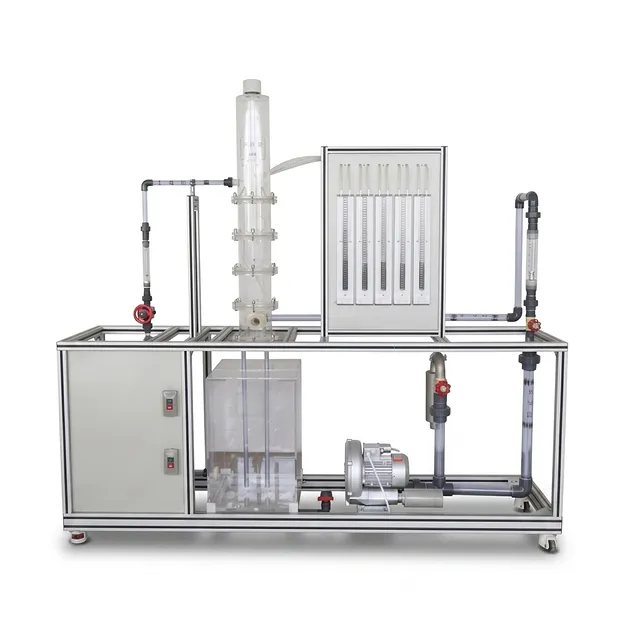
Plate Column Hydrodynamics Tray Demonstration Educational Pilot Plant
Item Number : LPK-BMT
Price varies based on specs and customizations
- Included Tray Designs
- Sieve tray, Bubble cap tray, Serrated tray, Valve tray
- Column Construction
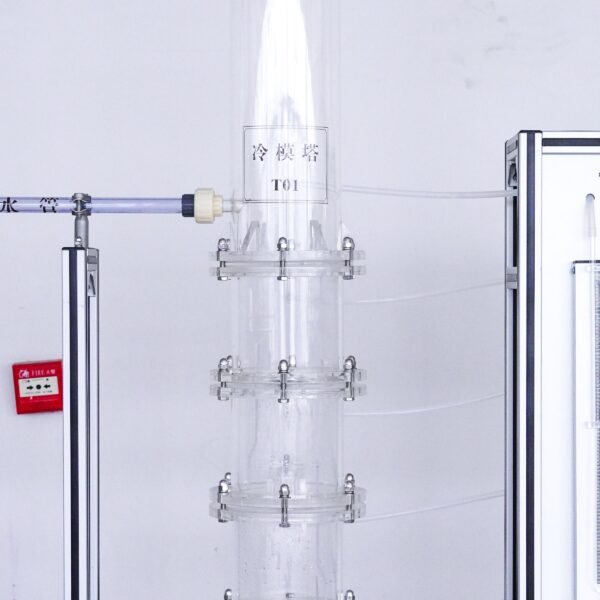
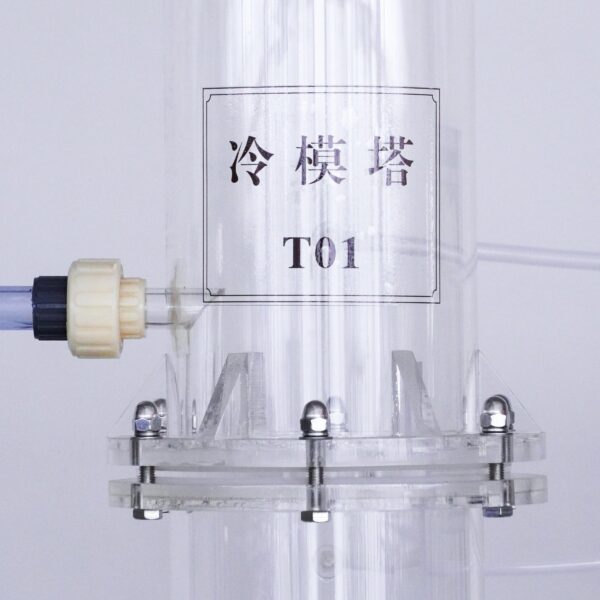
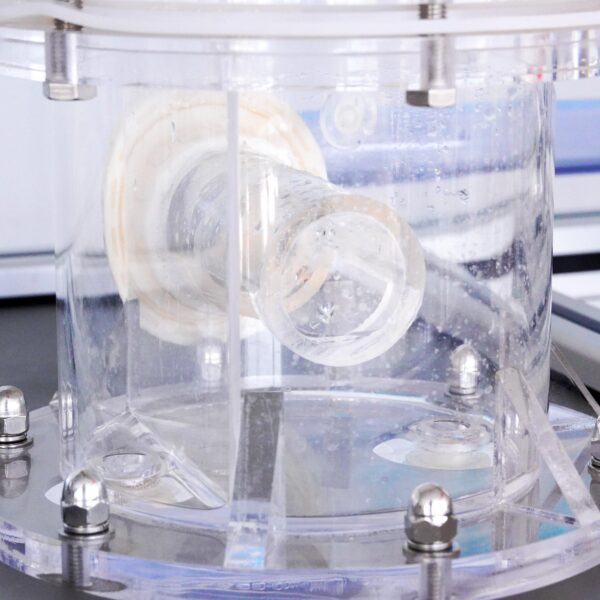
- High-transparency acrylic / polycarbonate cold-model column
- Measurement Devices
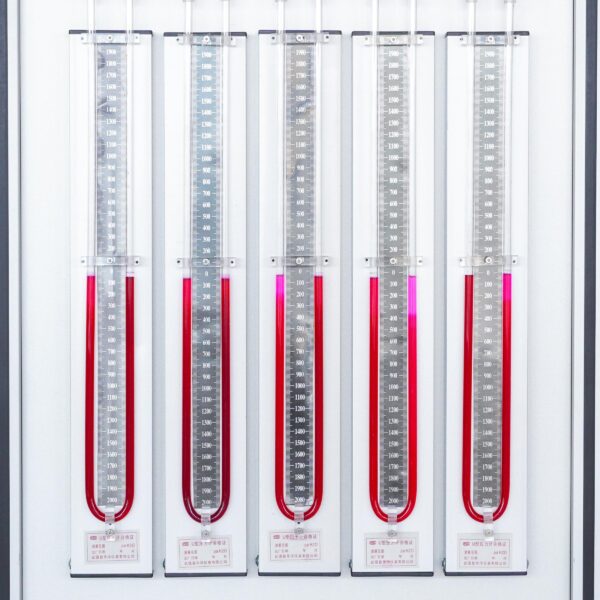
- Multi-tube differential manometer board, gas rotameter, liquid rotameter

Shipping:
Contact us to get shipping details Enjoy On-time Dispatch Guarantee.
Why Choose Us
Easy ordering process, quality products, and dedicated support for your business success.
Introduction
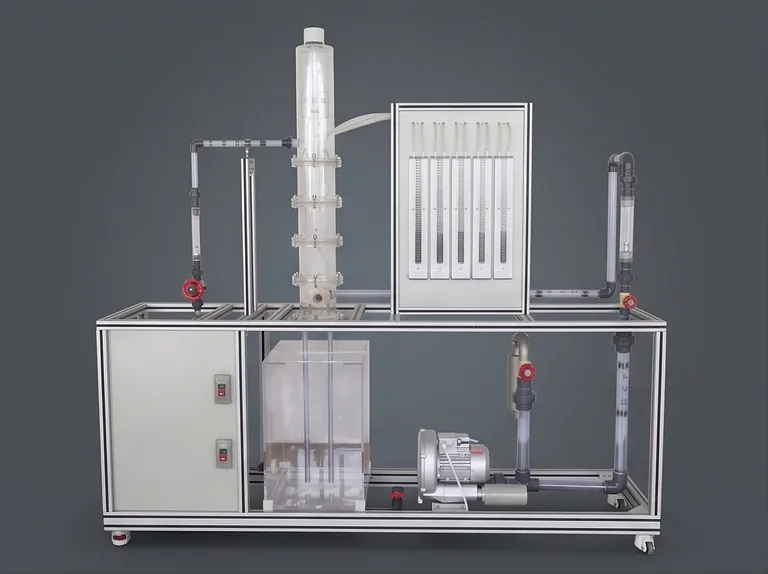
The Plate Column Hydrodynamics and Tray Demonstration Educational Unit Operations Pilot Plant is an advanced laboratory system designed specifically for higher education institutions to demonstrate the physical and operational principles of distillation and absorption column internals. Built with a fully transparent cold-model column, this unit allows students to visually inspect the behavior of gas-liquid contact across several major industrial tray designs. It bridges the gap between abstract fluid dynamic equations and real-world process operations, allowing academic instructors to demonstrate critical column phenomena in a controlled, safe, and highly visual laboratory environment.
To ensure compatibility with varying academic laboratory spaces and specific curriculum goals, this pilot plant offers extensive customizability. Both the hardware components and the digital or software monitoring interfaces can be modified to align with the specific instructional needs and space requirements of your department.
Key Educational Features and Pedagogical Benefits
- Direct Visual Observation: The transparent column wall provides clear, unobstructed views of complex fluid-fluid interactions, transforming theoretical concepts of gas-liquid contact into observable physical realities.
- Multi-Tray Comparative Analysis: The system integrates four fundamental industrial tray configurations—sieve trays, bubble caps, serrated trays, and valve trays—allowing students to directly compare the flow patterns, mixing characteristics, and pressure drop differences of each design.
- Real-Time Hydrodynamic Phenomena: Students can safely operate the system to induce and observe key operational limits, including liquid weeping, entrainment, bubbling, and downcomer flooding.
- Quantitative Instrumentation: Equipped with a multi-tube manometer assembly and precise flow meters, the unit enables students to gather empirical data, calculate wet and dry plate pressure drops, and plot hydrodynamic operating window diagrams.
- Industrial-Grade Engineering Design: Built on a robust, mobile anodized aluminum frame with lockable casters, the unit replicates pilot-scale engineering environments, preparing students for practical field operations and industrial plant conditions.
Detail & Parts
Technical Specifications
The system is constructed with materials chosen for durability, chemical resistance, and pedagogical clarity. Key specifications include:
| Parameter | Description / Specification |
|---|---|
| Frame Material | High-quality anodized aluminum alloy with heavy-duty caster wheels |
| Max Dimensions | 2200 mm × 580 mm × 1925 mm (Length × Width × Height) |
| Column Construction | High-transparency acrylic / polycarbonate cold-model column |
| Included Tray Designs | Sieve tray, Bubble cap tray, Serrated tray, Valve tray |
| Measurement Devices | Multi-tube differential manometer board, gas rotameter, liquid rotameter |
| Safety and Drainage | Integrated bottom water seal and easy-access liquid reservoir with drainage valve |
| Fluid Circulation | Low-noise air blower and industrial-grade water pump |
Curriculum Integration and Academic Mapping
This pilot plant serves as a physical counterpart to foundational transport phenomena and separation process courses. It provides a direct experimental link to core topics covered in standard academic curricula across chemical engineering, environmental engineering, and food process engineering.
The experimental modules possible with this unit directly correspond to key concepts in several globally recognized textbooks:
- Unit Operations of Chemical Engineering: Directly demonstrates column internals, pressure drop characteristics in plate columns, gas-liquid contact operations, and the physical causes of flooding, weeping, and capacity limits.
- Transport Processes and Unit Operations: Complements lectures on gas-liquid mass transfer, plate efficiency, fluid flow through packed and trayed towers, and convective mass transfer dynamics.
- Chemical Engineering Design: Visualizes the practical criteria for choosing specific tray configurations (sieve vs. valve vs. bubble cap) and illustrates how plate layout design impacts downcomer hydraulics and column diameter selection.
Experimental Module Mapping
| Experimental Module | Measurable/Observable Parameters | Connected Textbook Concept |
|---|---|---|
| Tray Geometry Comparison | Structural differences, bubbling active area, downcomer layout | Column Internals and Tray Design Selection |
| Single-Plate Pressure Drop | Liquid level, air flow rate, differential pressure | Plate Column Hydraulics and Flow Resistance |
| Operational Limits Analysis | Flooding velocity, weeping thresholds, mist entrainment | Column Capacity Limits and Operating Windows |
| Water Seal Operations | Gas bypass prevention, bottom liquid level stability | Column Bottom Design and Safety Seals |
Tailored Solutions and Customization
Recognizing that every university laboratory has unique spatial constraints, instrumentation preferences, and course objectives, LABPARK provides tailored customization options for this unit. We can modify the hardware components—such as adjusting overall physical dimensions, adding alternative tray styles, or integrating digital differential pressure sensors. Additionally, the software and data acquisition interfaces can be tailored to support your department's specific analytical workflows, helping you deliver a highly relevant educational experience to your students.
About LABPARK
LABPARK is a dedicated manufacturer of higher education laboratory equipment, with over 20 years of experience supporting universities worldwide. We specialize in designing and engineering pilot plants and experimental units across six core disciplines: chemistry, chemical engineering, biology, food science, pharmaceuticals, and environmental engineering.
Backed by a state-of-the-art 49,000 square meter research, development, and manufacturing base, LABPARK holds 209 technical patents. To date, we have partnered with more than 289 universities and colleges globally, delivering robust, curriculum-aligned educational equipment built to prepare the next generation of engineers.
Trusted by Industry Leaders
REQUEST A QUOTE
Our professional team will reply to you within one business day. Please feel free to contact us!
Related Products

Continuous Sieve-Plate Distillation Pilot Plant for Unit Operations Laboratory Education
Integrated pilot-scale teaching system for continuous sieve-plate distillation studies. Visual demonstration of tray hydraulics, flexible feed positions, and automatic reflux control for hands-on unit operations education in engineering labs. Designed for higher education engineering laboratories.

Dual-Mode Rectification Pilot Plant for Practical Training Unit Operations
Industrial-scale dual-mode rectification pilot plant for chemical engineering practical training. Features real-material and simulated-material operation modes, sieve-plate column with sight glasses for visual observation of hydrodynamics, and customizable SCADA control for safe, hands-on learning of unit operations and mass transfer.
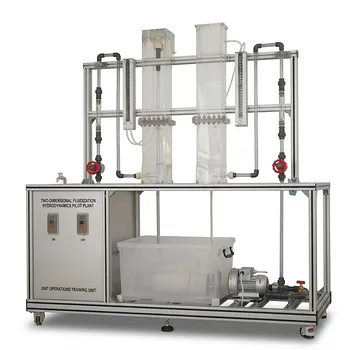
Two-Dimensional Fluidization Hydrodynamics Educational Pilot Plant for Unit Operations Training
Explore gas-solid and liquid-solid fluidization hydrodynamics with our transparent 2D educational pilot plant. Ideal for chemical engineering unit operations labs, it demonstrates fixed to fluidized bed regimes, measures pressure drop, and integrates QR-code digital learning for enhanced student training.

Constant Pressure Filtration Educational Unit Operations Pilot Plant
Hands-on educational pilot plant for constant pressure filtration. Classic plate and frame filter press allows students to study kinetics, determine specific cake resistance, perform cake washing and evaluate washing rates. Ideal for chemical engineering curriculum. Mobile, customizable, safety-compliant design.
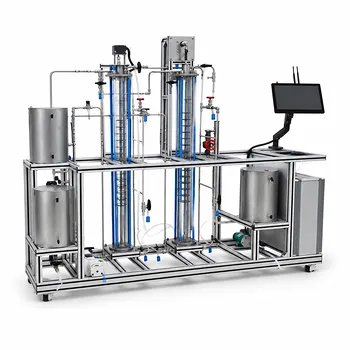
Comprehensive Liquid-Liquid Extraction Pilot Plant for Engineering Education
Comprehensive liquid-liquid extraction pilot plant for engineering education, integrating rotary and vibratory columns for hands-on observation of phase behavior, flooding limits, and mass transfer efficiency, enabling precise HTU and mass transfer coefficient calculations.
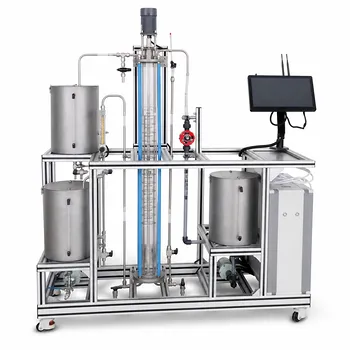
Educational Rotary Disc Liquid-Liquid Extraction Pilot Plant
A transparent rotary disc column for educational liquid-liquid extraction experiments. This pilot plant enables students to study mass transfer, droplet dynamics, and flooding behavior, bridging theory and practice in chemical engineering unit operations education. Features variable-speed agitation and PLC control.

Multi-Functional Special Distillation Educational Pilot Plant
Versatile multi-functional special distillation pilot plant for chemical engineering education. Supports continuous, vacuum, azeotropic, reactive, extractive distillation. Transparent glass columns enable real-time visual observation of hydrodynamics and separation processes.
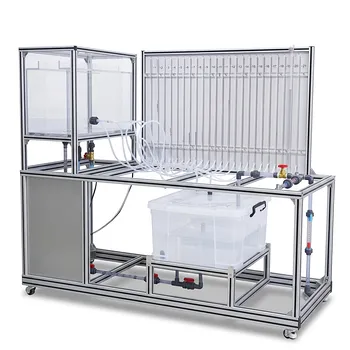
Bernoulli Equation Demonstration Unit Operations Pilot Plant
Laboratory pilot plant for Bernoulli's equation demonstration with transparent PVC pipes, 23 piezometer tubes for pressure measurement, and hands-on experiments. Designed for engineering education to study energy conservation, hydraulic grade line, and localized losses in fluid steady-flow systems.

Multi-Modal Distillation Unit Operations Training Pilot Plant
Multi-modal distillation pilot plant for practical unit operations training in chemical engineering education. Features real, analog, and semi-physical simulation modes, industrial construction, customizable for university labs. Hands-on fractionation columns, SCADA control, safety systems. Includes sight glasses, sampling ports, closed-loop recycling.

Continuous Batch Extractive Distillation Educational Pilot Plant
Versatile pilot plant for continuous, batch, and extractive distillation training. High-borosilicate glass column for visualizing hydraulics, 15.6-inch touchscreen with data logging, precise reflux ratio control 1-99, and durable corrosion-resistant frame. Ideal for chemical engineering education and process research.
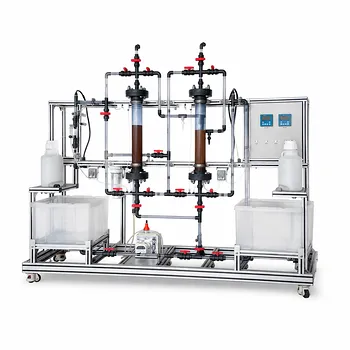
Ion Exchange Water Purification Educational Pilot Plant for Engineering Unit Operations
This bench-scale ion exchange pilot plant trains engineering students in water purification. Dual transparent columns simulate industrial softening and demineralization. Students observe fluid dynamics, perform resin regeneration, and analyze breakthrough curves. The corrosion-resistant frame ensures durability in unit operations experiments.
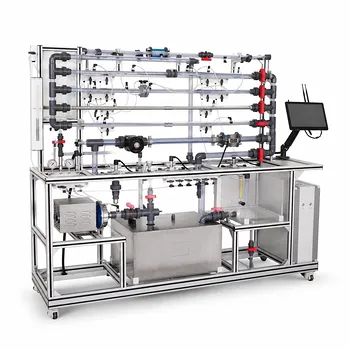
Comprehensive Fluid Mechanics Educational Unit Operations Pilot Plant
Hands-on fluid mechanics pilot plant for engineering education covering over 13 principles including pipe flow, minor losses, flowmeter calibration, and pump performance with industrial-grade components, smooth and rough piping, venturi and orifice flowmeters, and centrifugal pump testing and analysis.
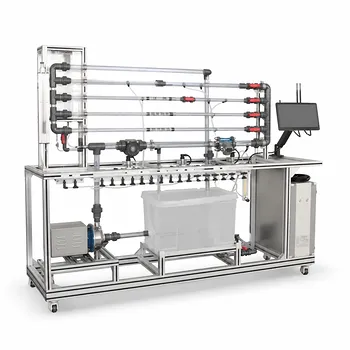
Fluid Friction Resistance Determination Educational Unit Operations Pilot Plant
Engineered bench-scale system for university engineering labs. Provides hands-on fluid mechanics experience: quantitative energy loss analysis, flow regime observation, friction coefficient determination. Features four-point pressure measurement, transparent sections, industrial touchscreen PLC, 3D virtual simulation. Ideal for chemical, mechanical, civil engineering.

Electrolytic Hydrogen Production Educational Unit Operations Pilot Plant
Bench-scale electrolytic hydrogen production pilot plant designed for university engineering labs. Provides hands-on training in water electrolysis, gas-liquid separation, and process safety. Fully customizable system with digital PID control, corrosion-resistant components, and hydrogen gas detector. Ideal for chemical engineering curricula.

100L Continuous Loop Hydrogenation Educational Unit Operations Pilot Plant
This 100L continuous loop hydrogenation pilot plant is designed for chemical engineering education, featuring 316 stainless steel construction, advanced gas-liquid mass transfer components, explosion-proof safety systems, and a 15.6-inch touchscreen with 5G connectivity, cloud data logging, bridging theory and industry.

Rising and Falling Film Evaporation Educational Unit Operations Pilot Plant
Hands-on educational pilot plant for studying rising and falling film evaporation, flow regimes, and heat transfer. Customizable for university labs with industrial instrumentation and data acquisition. Enables comparative evaluation of evaporation modes and energy efficiency.
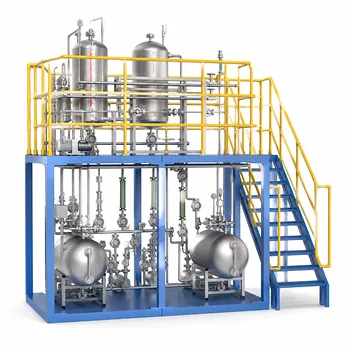
Fluid Transport and Piping Dynamics Practical Training Unit Operations Pilot Plant
This industrial-scale fluid transport and piping dynamics training pilot plant provides essential hands-on experience with pump operations, cavitation, piping resistance, flow metering, and process control. Customizable to fit specific academic engineering curricula.
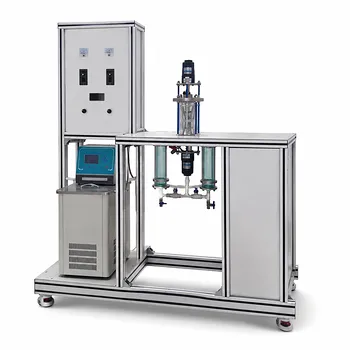
Liquid-Liquid Mass Transfer Coefficient Determination Educational Pilot Plant
This bench-scale educational pilot plant for liquid-liquid mass transfer coefficient determination offers precise control of phase boundary, temperature, and agitation, enabling hands-on study of transport phenomena and unit operations in chemical engineering labs for teaching.
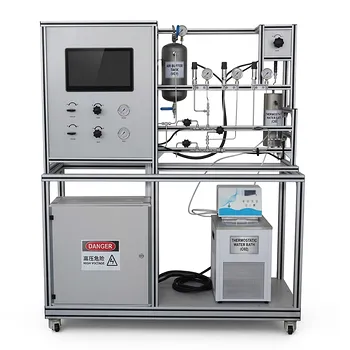
Throttling Effect Determination Educational Unit Operations Pilot Plant
Investigate the Joule-Thomson throttling effect with this educational unit operations pilot plant. Designed for engineering students, it enables hands-on comparative analysis of adiabatic gas expansion using precise process control, interactive digital interface, and eco-friendly operation, ensuring safe repeatable thermodynamic experiments.
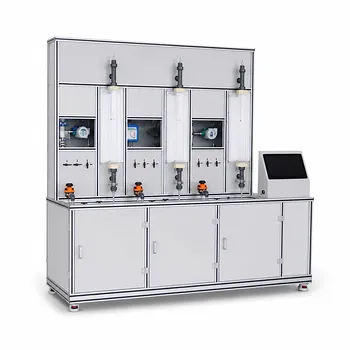
Two Phase Flow Pattern Velocity Resistance Measurement Educational Pilot Plant
Benchtop educational pilot plant for university labs studying gas-liquid two-phase flow patterns, velocity, and resistance across circular, square, and rectangular conduits. Features 15.6-inch touchscreen, 5G connectivity, differential pressure sensors, safe water-air operation. Supports chemical engineering curricula.
Related Articles
The Bridge Between a Material's Promise and a Carbon Capture Plant's Reality
A membrane pilot plant is not a scaled-down factory; it's a time machine for risk. Learn how hands-on testing exposes the hidden flaws—fouling, plasticization, and pressure penalties—that destroy the economics of CO₂ capture.
The Brown Cloud and the Engineer’s Mind: Why Pilot Plants Don’t Just Dilute Danger, They Unmake It
Scaling toxic gas management beyond the fume hood is a leap from blind containment to engineered neutralization. Explore the mass-transfer psychology behind gas absorption columns.