The Visual Problem of Copper Sulfate
In a glass beaker, the reaction looks like trouble. A copper penny or oxide dissolving in nitric acid, releasing a sharp, amber-brown plume of nitrogen dioxide. It rolls over the lip of the flask and vanishes into the draft of a laboratory fume hood.
The student watches the visible poison disappear, but the psychological trap is set. They’ve learned that dilution is the practical cure for toxicity. The hood hides the problem, and the roaring fan solves it.
But chemical engineering isn't about hiding. It's about transforming.
The shift from a benchtop to a pilot plant is not a linear step—it is a philosophical rupture. You are no longer moving a hazard from one room to a stack outside. You are breaking its molecular spine.
Two Philosophies of Safety
Pilot-scale work, especially generating nitrogen dioxide during copper sulfate synthesis, forces a choice between two fundamentally different logics.
The Logic of Isolation (The Fume Hood)
The lab approach relies on velocity. A curtain of air rushes past an open sash, capturing the dense brown gas and ejecting it untreated. It is a physical barrier, not a chemical solution. This works perfectly when your goal is protecting one person from a few grams of product.
The Logic of Destruction (The Scrubber)
The pilot-plant approach relies on intimacy. It forces the toxic gas into a counter-current embrace with a reactive liquid. You are no longer moving molecules away; you are forcing them to crash into a caustic solution to break fundamental bonds.
This is the psychological chasm. One is a wall. The other is a chemical processing unit. Realizing that a safe factory is not a giant fume hood is the first step toward becoming an industrial troubleshooter.
The Anatomy of a Counter-Current Kill
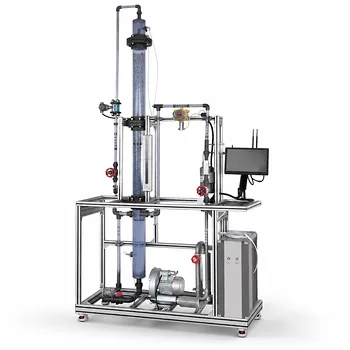
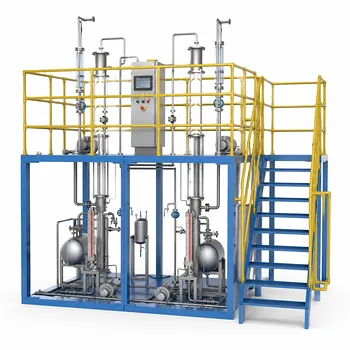
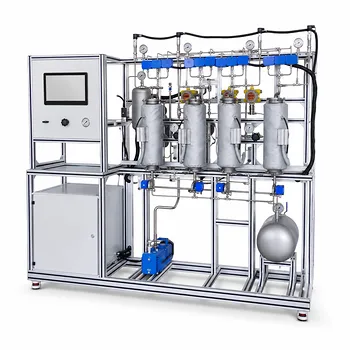
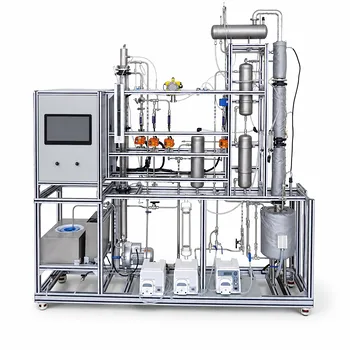
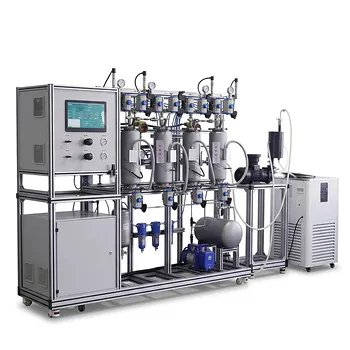
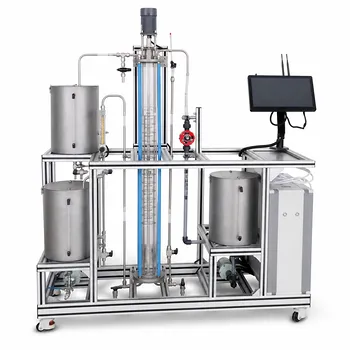
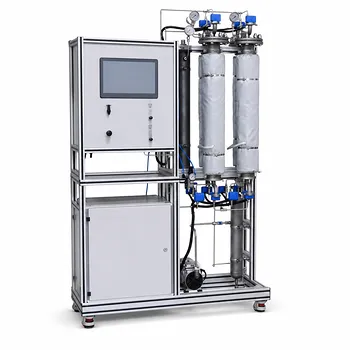
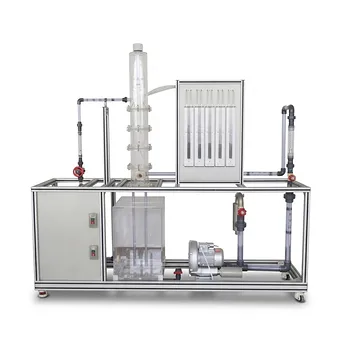
The tool for this transformation is the gas absorption column. It looks static—a tall, vertical cylinder packed with inert shapes—but it hides a brutal, invisible dynamic inside.
Chaos as a Design Tool
Inside the column, gravity pulls a liquid solvent (dilute sodium hydroxide) downward. Pressure pushes the toxic gas upward. The column packing isn’t just filler; it’s an obstacle course. It shatters the liquid into thin, slow-moving films, maximizing the surface area for the gas to collide with.
This is where the NO₂ meets its end.
It dissolves into the alkaline liquid film. But unlike a physical absorption, a chemical reaction instantly destroys the solute. The driving force for mass transfer stays at a razor-sharp maximum because the NO₂ molecule vanishes the moment it crosses the liquid boundary.
The reaction is clinically efficient:
2 NO₂ + 2 NaOH → NaNO₂ + NaNO₃ + H₂O
The brown, toxic threat becomes a harmless, clear salty drip at the bottom of the scrubber. You don't see the engineering. You only see the absence of the brown cloud—proof that the system works.
The Hidden Curriculum of Wet Scrubbing
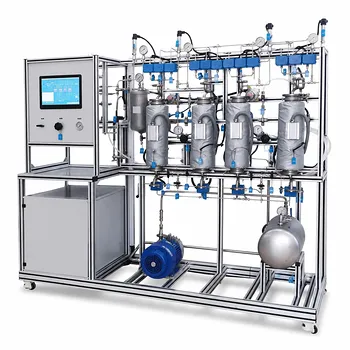
This isn't just safety hardware. For LABPARK pilot plants, this is the curriculum itself.
The Teachable Moment of the Flooding Point
A textbook can define the flooding velocity—where gas holds up falling liquid, pressure spikes, and efficiency collapses. But a student operating a pilot scrubber sees it in the differential pressure gauge. They hear the gurgling instability.
They learn a visceral lesson that gadgets fail not because of chemistry, but because of fluid dynamics. They understand why a factory alarm screaming about high pressure drop is an emergency. The pilot plant transforms an abstract mass-transfer coefficient into a sensory memory.
Beyond the Single Column: The Train Mindset
Real chemical streams are messy. They contain acid gases, entrained droplets, and insoluble nitric oxide. A single scrubber is a brute-force tool. A sophisticated pilot operation adopts the multi-stage purification train mindset.
You see a sequence of defensive layers:
- A safety trap to stop backflow.
- An oxidation wash bottle to convert insoluble NO to soluble NO₂.
- The packed absorption column with caustic.
- A drying column to protect downstream sensors.
This layered defense teaches a psychology of resilience. A single stage might fail, but the hazard can’t escape the train. Safety is not a device; it's an architecture.
The Organ System of a Safe Plant
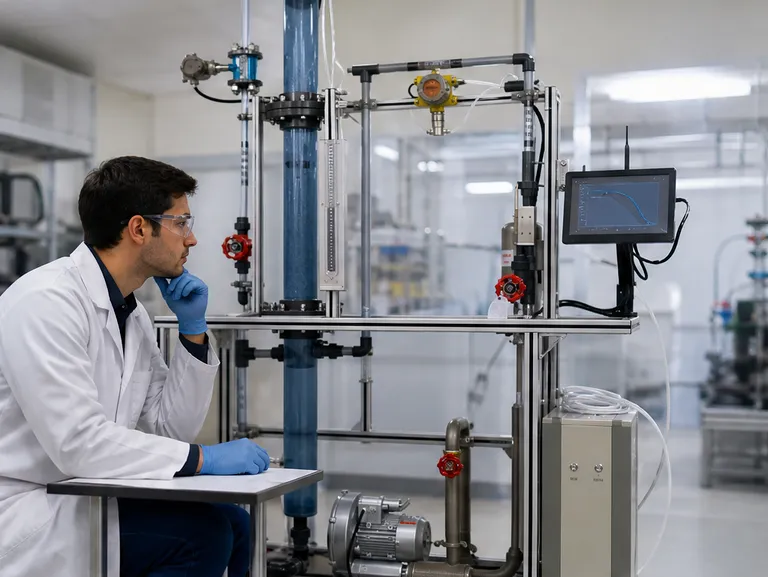
Pilot-plant safety also relies on what you can’t see: the vascular system of inerting and venting.
Consider the nightmare scenario of nickel carbonyl formation in a shutdown reactor—an invisible but lethal gas created by the barest whisper of carbon monoxide. The pilot-scale solution, just as with NO₂ management, rejects blind luck. It demands a rigid protocol of nitrogen purging.
This instills a forensic mindset in engineers. They learn that shutting the heating off isn’t enough. Hazardous volumes lurk in dead legs and condensate traps. The pilot plant teaches that cleaning the system at the molecular level is a standard operating procedure, not an optional extra.
The Real Cost of a Clean Exit Stream
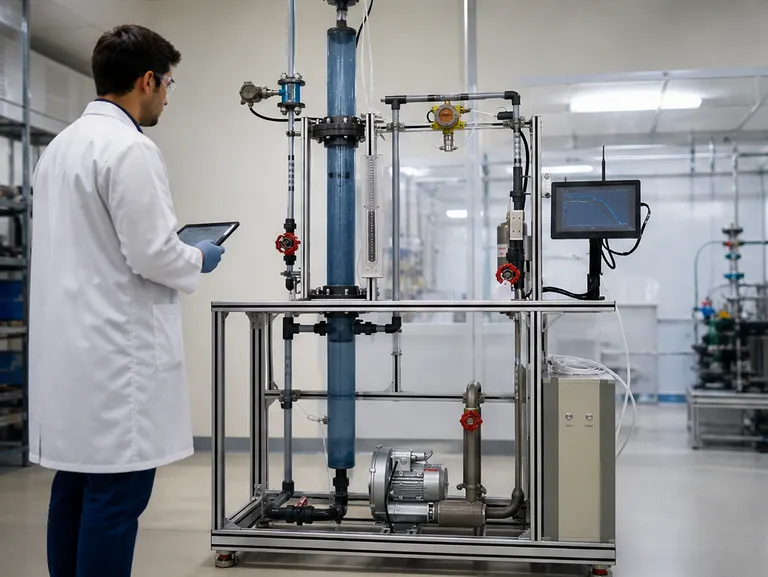
There is an honesty required when discussing this scale. A packed scrubber is a trade-off. It converts an airborne toxin into a liquid saline waste stream.
In a teaching university, this is an easy win—non-hazardous salt goes down the drain. But a sophisticated engineer recognizes the secondary burden (zero-liquid discharge). The scrubber becomes the catalyst for a deeper question: "Where does the pollution go after we neutralize it?"
This is the growth edge. A fume hood asks nothing of the operator's intelligence. A scrubber demands you comprehend the hydraulics, the chemistry, and the environmental fate of the effluent.
Choosing Your Instrument of Learning
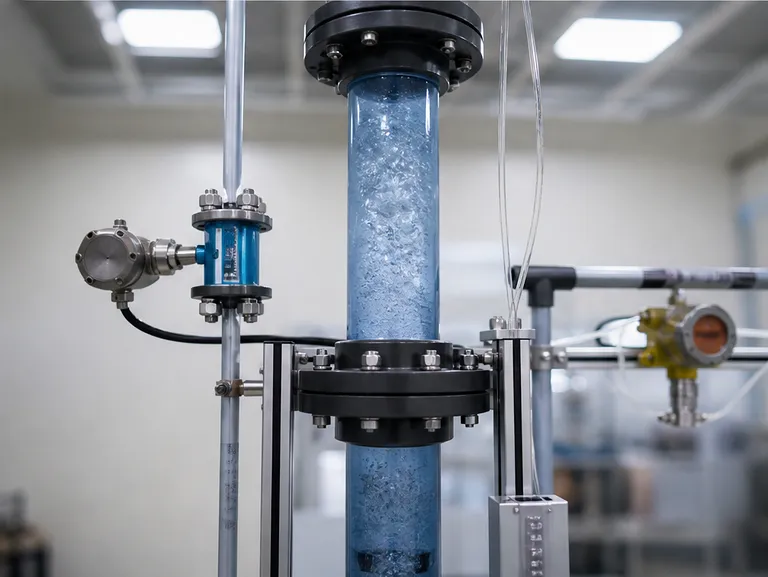
The choice between a fume hood and a LABPARK gas absorption pilot plant isn't about safety compliance. It's about educational identity.
-
If you're demonstrating a reaction: Stick to the hood. The goal is the pure chemistry of copper sulfate. The fume is noise.
-
If you're training a process engineer: The hood is useless. You need the instrumented column. You want the student to optimize the L/G ratio, watch the pressure taps, and curse the foam layer.
-
If you're proving a business case for distribution or OEM integration: You need to show the profit potential of reliability. A knock-off plant fails at the flooding point. A precision-engineered LABPARK system demonstrates the supply-chain quality that prevents downtime. It shows clients that the certification-level safety architecture is built into the steel and glass, not stapled on in a manual.
The engineering romance is found here—in the quiet system that breaks a toxic bond without drama, turning a public health crisis into a silent, salty stream that drains safely away, so the learning can continue uninterrupted.
To integrate this ethical and technical engineering philosophy into your own training or demonstration facility, simply start a conversation with our team: [Contact Our Experts](#ContactForm)
Related Products
- Packed Bed Absorption Educational Unit Operations Pilot Plant
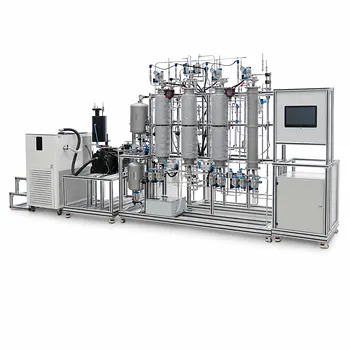
- Absorption and Desorption Educational Unit Operations Pilot Plant
- Bench Scale Dual Column Gas Separation and Capture Educational Pilot Plant
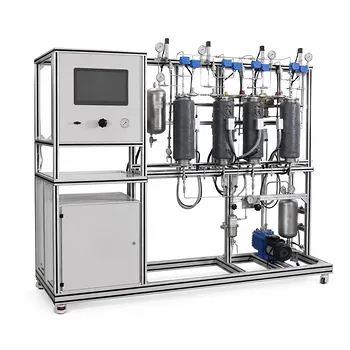
- Pressure Swing Adsorption Educational Unit Operations Pilot Plant
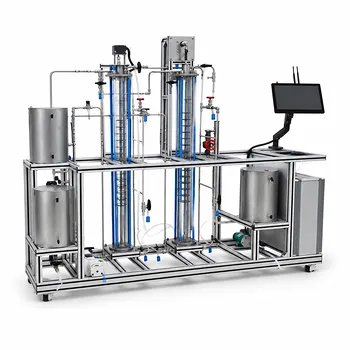
- Multimodal Absorption and Desorption Pilot Plant for Unit Operations Training