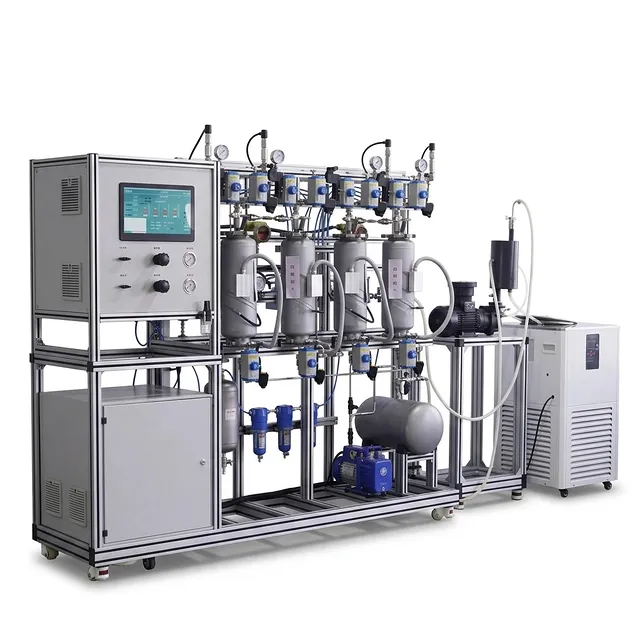
Educational Chemical Engineering Pilot Plants
Multi-Component Gas Pressure Swing Adsorption Pilot Plant for Unit Operations Education
Item Number : LPK-CBPA
Price varies based on specs and customizations
- Process Configuration
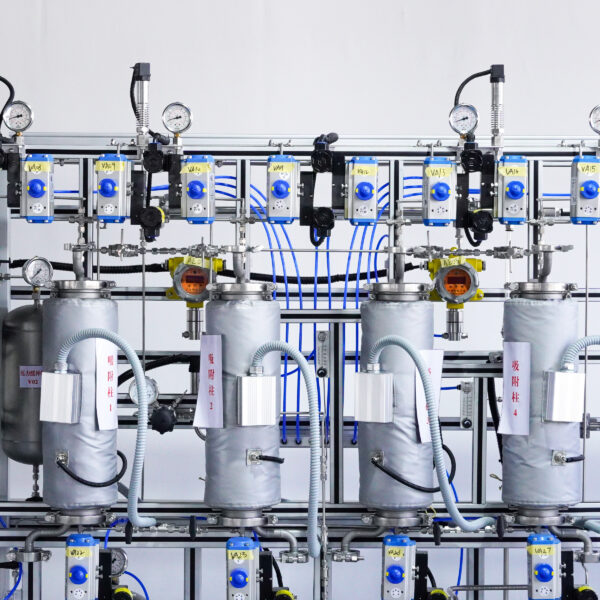
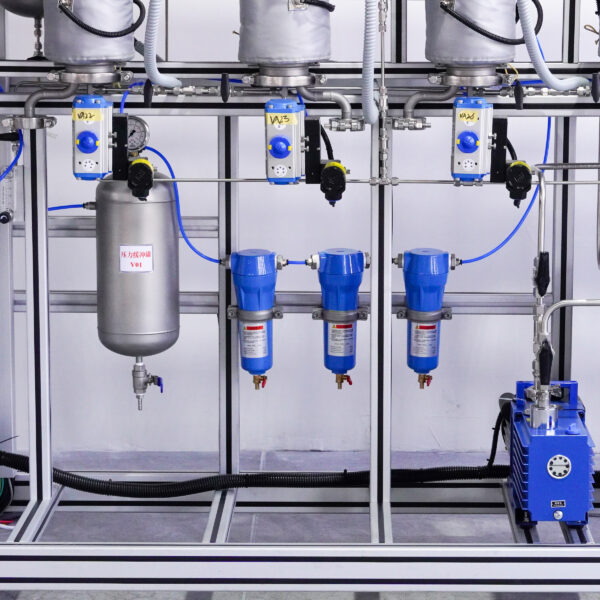
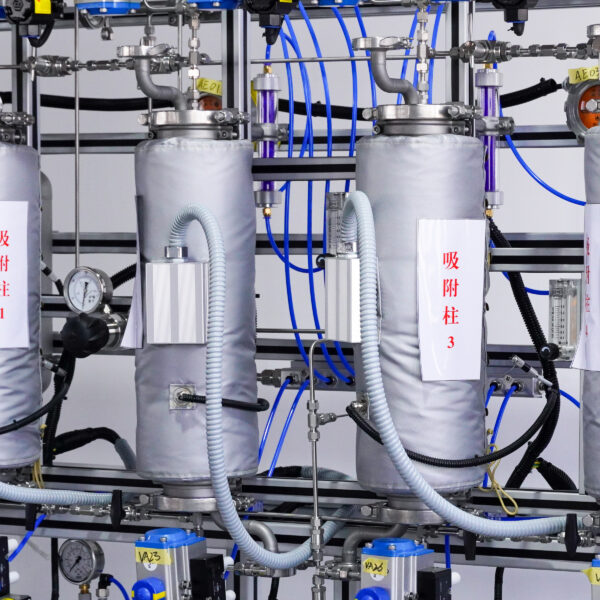
- Four-tower adsorption system with multi-valve routing
- Regeneration Modes
- Thermal purging, vacuum desorption
- Control Interface
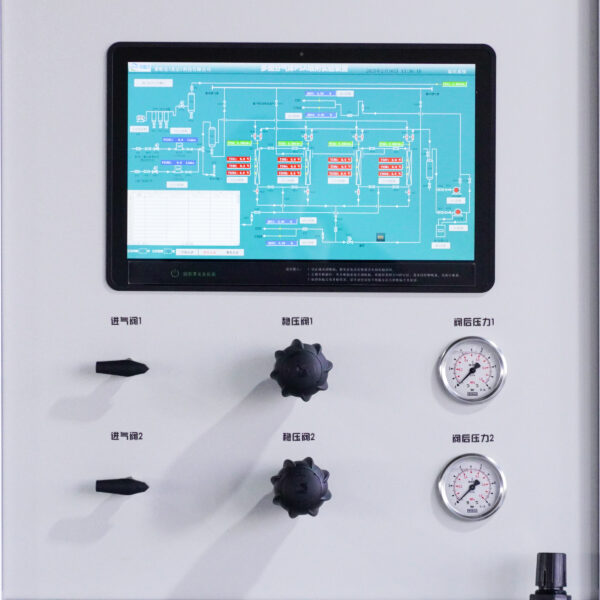
- 15.6-inch IoT-compatible industrial touchscreen

Shipping:
Contact us to get shipping details Enjoy On-time Dispatch Guarantee.
Why Choose Us
Easy ordering process, quality products, and dedicated support for your business success.
Introduction
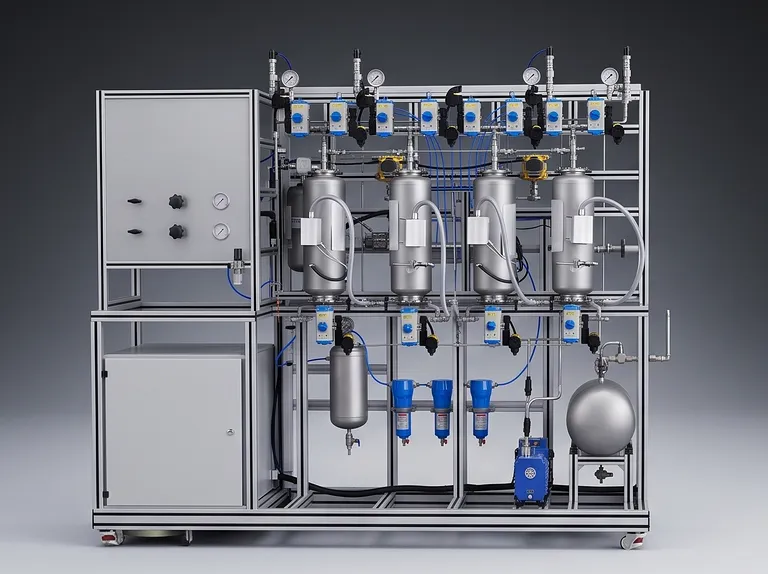
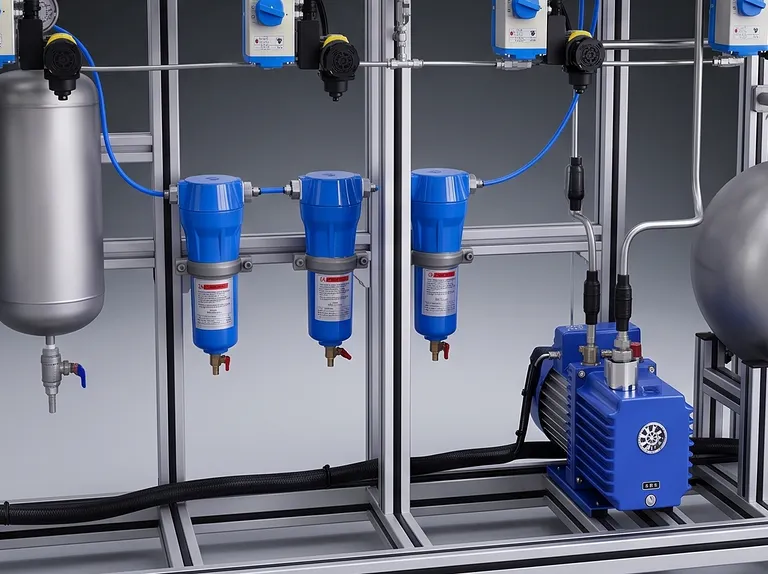
The Multi-component Gas Pressure Swing Adsorption Educational Unit Operations Pilot Plant is a bench-scale laboratory system designed to provide engineering students with practical training in gas-solid separation technologies. By simulating industrial pressure swing adsorption (PSA) processes, this unit enables the systematic study of gas purification, mixture separation, and dynamic adsorption behavior using a flexible four-tower configuration.
To ensure alignment with diverse academic requirements, both the hardware and software components of this unit can be fully customized. LABPARK offers flexible options to modify vessel dimensions, sensor placements, gas feed systems, and control software interfaces to fit the specific teaching objectives and space constraints of your department.
Key Educational Features and Advantages
- Process Adaptability: The system supports dynamic separation studies for multiple gas mixtures, such as ethylene/ethane and carbon dioxide/nitrogen, allowing students to compare adsorption selectivities and process efficiencies.
- Dual Regeneration Methods: Students can perform adsorbent activation and regeneration via high-temperature purging or vacuum pumping, providing practical insights into different industrial regeneration strategies.
- Digital Data Acquisition & IoT Control: The system features a 15.6-inch touchscreen terminal integrated with IoT capabilities, enabling wireless data transmission, real-time plotting of breakthrough curves, and automated process control.
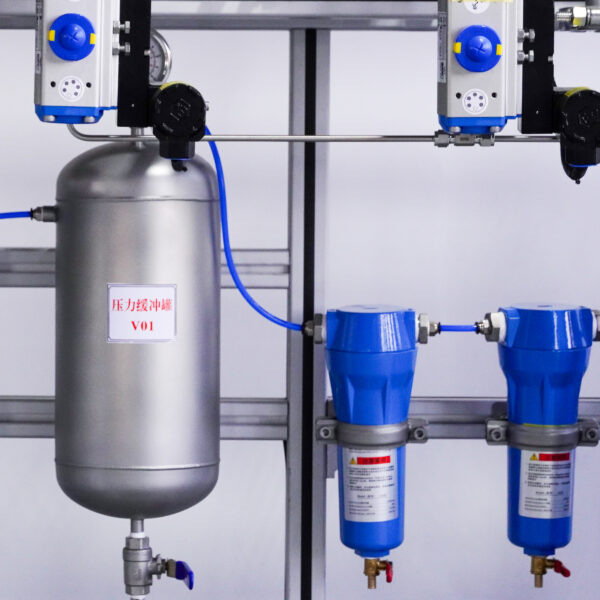
- Industrial Safety Standards: Equipped with dual online carbon dioxide analyzers, a pressure buffer vessel, and multiple overpressure safety valves, the unit emphasizes safe engineering practices during pressurized operations.
- Robust and Mobile Construction: Constructed with a high-strength aluminum alloy frame and heavy-duty adjustable casters, the pilot plant offers both physical durability and mobility within crowded laboratory spaces.
Detail & Parts
Technical Specifications
| Parameter | Specification |
|---|---|
| Process Configuration | Four-tower adsorption system with multi-valve routing |
| Applicable Gas Mixtures | Ethylene/Ethane, Carbon Dioxide/Nitrogen, etc. |
| Regeneration Modes | Thermal purging, vacuum desorption |
| Control Interface | 15.6-inch IoT-compatible industrial touchscreen |
| Analytical Instruments | Dual online carbon dioxide gas analyzers |
| Safety Features | Pressure relief valves, buffer vessel, system interlocks |
| Structural Frame | Mobile aluminum alloy profile frame with lockable casters |
| Overall Dimensions | ≤ 2200 mm × 580 mm × 1800 mm (L × W × H) |
Curricular Alignment and Textbook Integration
This educational pilot plant is designed to bridge the gap between abstract molecular theory and practical chemical engineering operations. It is directly applicable to undergraduate and graduate lab courses in Chemical Engineering, Environmental Engineering, and Process Control Engineering.
By working with this unit, students gain hands-on experience with core concepts detailed in major engineering curricula and standard reference textbooks:
- Unit Operations of Chemical Engineering: Practical study of fixed-bed adsorption, mass transfer zones, breakthrough curves, and the dynamics of gas-solid separation processes.
- Transport Processes and Separation Process Principles: Observation of gas diffusion in porous media, adsorption isotherms, and the thermodynamics of multi-component gas transport.
- Chemical Engineering Design: Exposure to process control loops, automated valve sequencing, process safety instrumentation, and pilot-scale system layout.
Experimental Modules and Academic Mapping
| Educational Experimental Module | Core Learning Objectives | Textbook Concept / Terminology |
|---|---|---|
| Breakthrough Curve Determination | Measure concentration profiles over time to determine adsorbent saturation capacity. | Mass Transfer Zone (MTZ), Breakthrough Point, Adsorption Capacity |
| PSA Cycle Optimization | Analyze the effect of cycle times, pressure levels, and step sequences on product purity. | Pressure Swing Adsorption Cycle, Desorption, Purge Step |
| Adsorbent Regeneration Study | Compare thermal swing regeneration against vacuum desorption in terms of energy and recovery. | Thermal Regeneration, Vacuum Desorption, Sorbent Aging |
| Multi-Component Selectivity | Evaluate separation factors for different gas mixtures under varying feed compositions. | Adsorption Isotherms, Selectivity Coefficient, Co-adsorption |
Tailored Solutions for Academic Laboratories
Recognizing that every university laboratory has distinct spatial and academic needs, LABPARK provides comprehensive customization for this pilot plant. Engineering departments can request modifications to hardware components—such as different column materials, alternative sensor ranges, and supplementary gas inlet lines—as well as software updates, including custom user interfaces, specialized data logging protocols, and integration with existing campus networks.
About LABPARK
LABPARK has been dedicated to serving higher education for over 20 years, focusing on delivering advanced educational and research equipment across six core fields: Chemistry, Chemical Engineering, Biology, Food Science, Pharmacy, and Environmental Engineering.
With a state-of-the-art 49,000-square-meter manufacturing and R&D base, the company holds 209 technical patents and has established successful partnerships with more than 289 universities and colleges worldwide.
Trusted by Industry Leaders
REQUEST A QUOTE
Our professional team will reply to you within one business day. Please feel free to contact us!
Related Products
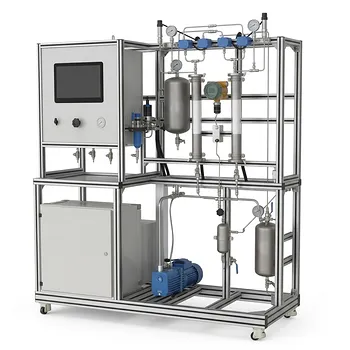
Pressure Swing Adsorption Educational Unit Operations Pilot Plant
Integrated bench-scale pressure swing adsorption pilot plant for hands-on teaching of gas-solid separation, mass transfer, and process optimization using nitrogen-oxygen model, featuring dual-column design, industrial touchscreen control, digital assessment suite, and customizable hardware and software configurations for educational laboratories.
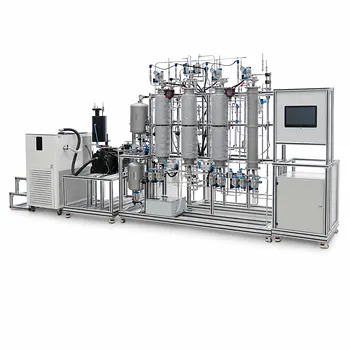
Educational Pressure Swing Adsorption Ethylene Capture Unit Operations Pilot Plant
Advanced educational pilot plant for pressure swing adsorption ethylene capture provides comprehensive hands-on training in industrial gas separation processes, featuring an eight-column PSA system, real-time data acquisition, and fully customizable design for chemical engineering unit operations laboratories and research.
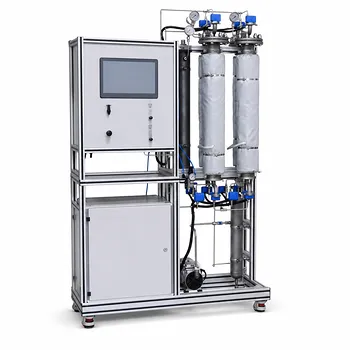
Low Concentration Carbon Dioxide Capture Pressure Swing Adsorption Educational Pilot Plant
Low-concentration CO2 capture pilot plant using Pressure Swing Adsorption for engineering education. Students gain practical experience in breakthrough curve measurement, adsorption dynamics, and variable analysis in a hands-on lab setting. Ideal for unit operations, mass transfer, and chemical engineering labs.

Multimodal Absorption and Desorption Pilot Plant for Unit Operations Training
Multimodal absorption and desorption pilot plant for higher education labs. Bridges theory and industrial practice with transparent packed columns, three operational modes (real-material, simulated, semi-physical), and SCADA control. Students explore mass transfer, column hydraulics, and process control. Customizable.

Absorption and Desorption Educational Unit Operations Pilot Plant
Dual packed column absorption and desorption pilot plant for chemical engineering education, offering real-time mass transfer coefficient measurement, durable mobile frame, industrial touch-screen interface, and customizable design for varied laboratory curricula, enabling hands-on study of gas absorption and stripping.
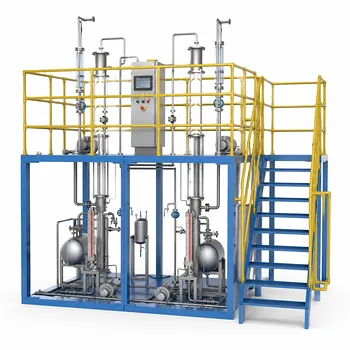
Dual-Mode Gas Absorption and Desorption Unit Operations Training Pilot Plant
Industrial-scale pilot plant for gas absorption and desorption training in chemical engineering. Features dual-mode operation with real and simulated materials, transparent columns for flow visualization, and customizable design. Supports independent or combined loops for hands-on unit operations experiments.
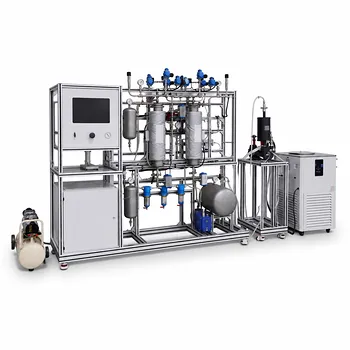
Bench Scale Dual Column Gas Separation and Capture Educational Pilot Plant
This dual-column educational pilot plant provides hands-on teaching of gas adsorption, separation, and capture processes. It features stainless steel columns, regeneration up to 400°C, and a 15.6-inch touchscreen PLC for TSA and PSA studies in chemical engineering curricula, process simulation.
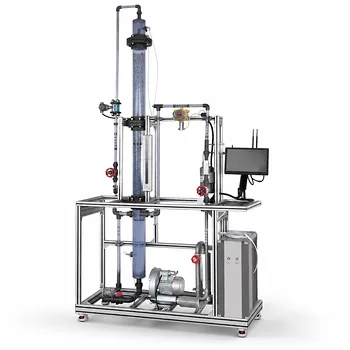
Packed Bed Absorption Educational Unit Operations Pilot Plant
Study gas-liquid absorption, pressure drop, flooding, and mass transfer coefficients with this pilot plant. Transparent packed column, industrial touchscreen, real-time sensor data, automated analysis. Investigate two-phase flow, loading points, column efficiency. Comprehensive data logging and assessment software included.
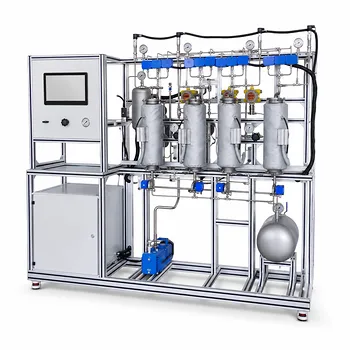
Carbon Dioxide Adsorption and Capture Educational Unit Operations Pilot Plant
Advanced laboratory pilot plant for teaching carbon dioxide adsorption and capture unit operations. Features four-tower adsorption system with 400°C heating jackets, high-precision CO2 and O2 sensors, and 15.6-inch touchscreen with wireless data logging. Ideal for chemical engineering education.
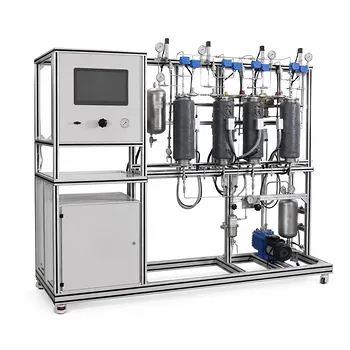
Bench Scale Carbon Dioxide Capture Educational Unit Operations Pilot Plant
This bench-scale educational pilot plant simulates industrial CO₂ separation using a multi-tower adsorption system for hands-on engineering training. Students achieve ≥90% CO₂ purity while studying pressure swing adsorption, desorption kinetics, and process control in gas purification experiments.
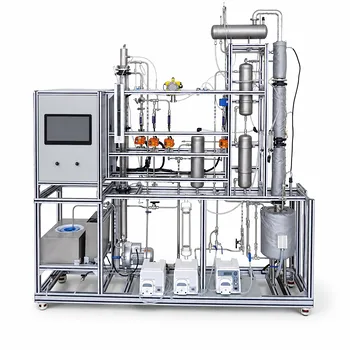
Carbon Dioxide Absorption and Desorption Educational Pilot Plant for Carbon Capture Studies
Explore carbon dioxide absorption and desorption with this educational pilot plant. Transparent columns visualize mass transfer; electric heating simulates industrial solvent regeneration; touchscreen interface enables data monitoring. Ideal for chemical engineering, bridging theory and practice.

Fixed-Bed Chemical Reaction and Gas Dust Tar Removal Unit Operations Pilot Plant
Integrated educational pilot plant for studying catalytic gas-solid reactions and downstream gas purification. Features dual fixed-bed reactor, three-stage heating, and touchscreen control for hands-on engineering training. Ideal for chemical and environmental engineering curricula.
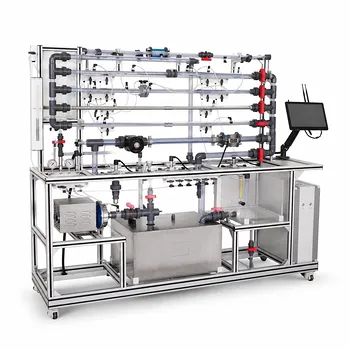
Comprehensive Fluid Mechanics Educational Unit Operations Pilot Plant
Hands-on fluid mechanics pilot plant for engineering education covering over 13 principles including pipe flow, minor losses, flowmeter calibration, and pump performance with industrial-grade components, smooth and rough piping, venturi and orifice flowmeters, and centrifugal pump testing and analysis.

Micro-Scale Gas-Solid Catalytic Reaction Educational Pilot Plant
Explore heterogeneous catalysis with this micro-scale gas-solid catalytic reaction educational pilot plant. Designed for university labs, it enables hands-on study of reaction kinetics and transport phenomena in a benchtop packed bed reactor with high-precision flow control and touchscreen automation.

Constant Pressure Filtration Educational Unit Operations Pilot Plant
Hands-on educational pilot plant for constant pressure filtration. Classic plate and frame filter press allows students to study kinetics, determine specific cake resistance, perform cake washing and evaluate washing rates. Ideal for chemical engineering curriculum. Mobile, customizable, safety-compliant design.
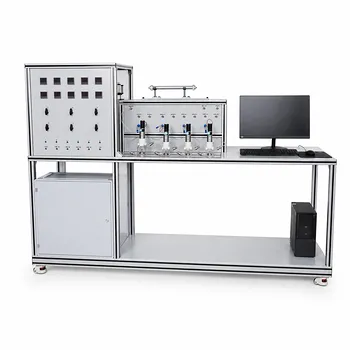
Gas Phase Mixing and Residence Time Distribution Determination Educational Unit Operations Pilot Plant
Integrated lab system for gas-phase mixing and RTD determination. Supports pulse and step tracer methods with dual CSTR and PFR reactors, industrial components, and PC data logging. Provides hands-on study of non-ideal flow and reactor behavior for university students.

Multi-Functional Special Distillation Educational Pilot Plant
Versatile multi-functional special distillation pilot plant for chemical engineering education. Supports continuous, vacuum, azeotropic, reactive, extractive distillation. Transparent glass columns enable real-time visual observation of hydrodynamics and separation processes.
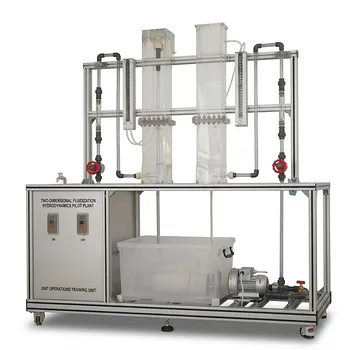
Two-Dimensional Fluidization Hydrodynamics Educational Pilot Plant for Unit Operations Training
Explore gas-solid and liquid-solid fluidization hydrodynamics with our transparent 2D educational pilot plant. Ideal for chemical engineering unit operations labs, it demonstrates fixed to fluidized bed regimes, measures pressure drop, and integrates QR-code digital learning for enhanced student training.

Fluidized Bed Gas Solid Catalytic Reaction Educational Pilot Plant
Our educational fluidized bed gas-solid catalytic reaction pilot plant is ideal for chemical engineering labs. Students study fluidization dynamics, catalyst evaluation, and process control hands-on. Features include a customizable reactor, touchscreen HMI, and safety interlocks for safe, curriculum-aligned experiments.
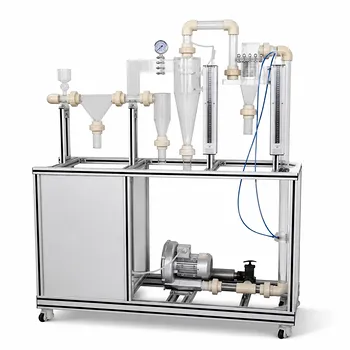
Gas-Solid Heterogeneous Separation Demonstration Educational Unit Operations Pilot Plant
Comprehensive visual transparent gas-solid separation pilot plant for chemical engineering labs. Demonstrates gravity settling inertial settling cyclone and bag filter technologies. Enables real-time analysis of fluid-particle mechanics pressure drop and collection efficiency. Ideal for undergraduate unit operations courses.
Related Articles
The Intuition You Can’t Simulate: Why the Best Bioprocess Education Still Lives on a Thin-Layer Plate
Before engineers trust a $500,000 bioreactor, they must trust their own hands. How thin-layer chromatography (TLC) builds the tacit knowledge that separates trained operators from true process engineers—and why LABPARK pilot plants preserve this irreplaceable skill.

The Brown Cloud and the Engineer’s Mind: Why Pilot Plants Don’t Just Dilute Danger, They Unmake It
Scaling toxic gas management beyond the fume hood is a leap from blind containment to engineered neutralization. Explore the mass-transfer psychology behind gas absorption columns.