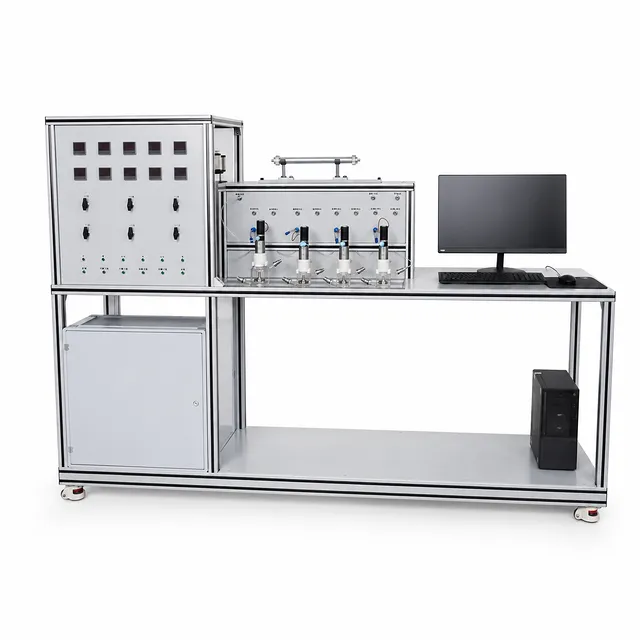
Educational Chemical Engineering Pilot Plants
Gas Phase Mixing and Residence Time Distribution Determination Educational Unit Operations Pilot Plant
Item Number : LPK-RTD
Price varies based on specs and customizations
- Reactor Configurations
- Kettle-type (CSTR) and tubular (PFR) reactors
- Tracer Injection Methods
- Pulse injection and step change methods
- Monitoring Instrumentation
- 6 pressure sensors, thermocouple transmitters, and A/D conversion modules

Shipping:
Contact us to get shipping details Enjoy On-time Dispatch Guarantee.
Why Choose Us
Easy ordering process, quality products, and dedicated support for your business success.
Introduction
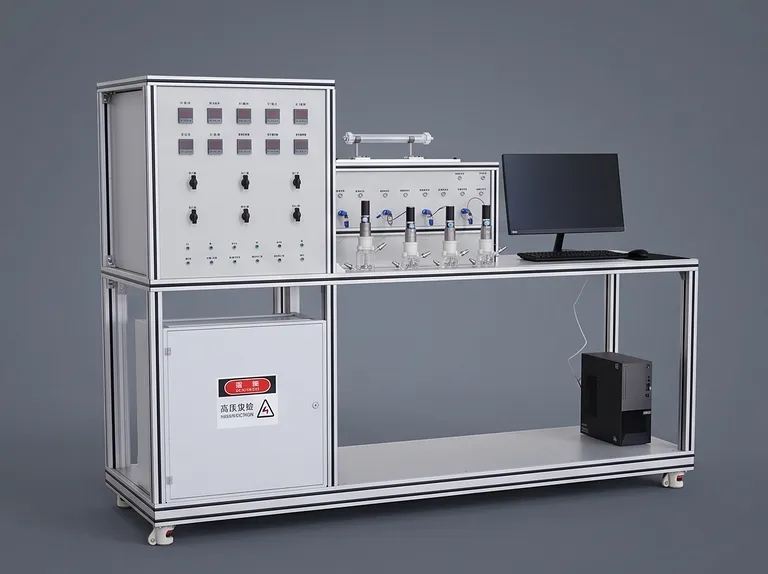
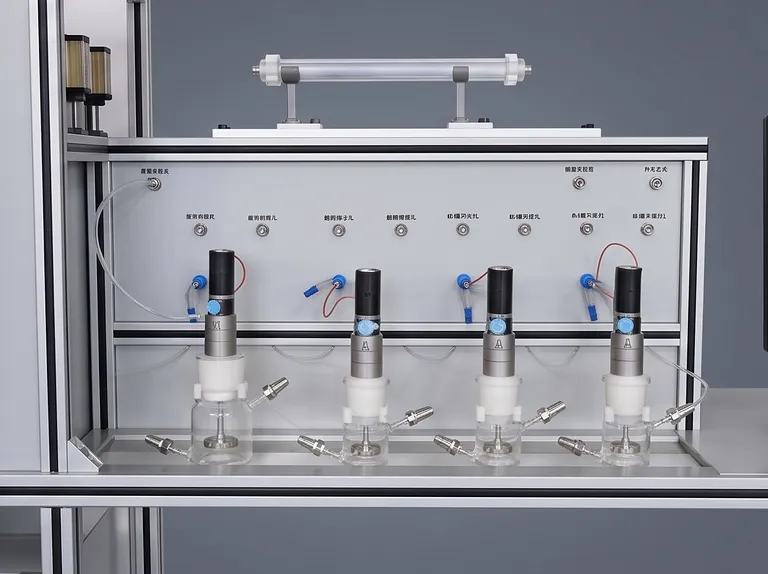
The Gas-Phase Mixing and Residence Time Distribution Determination Educational Unit Operations Pilot Plant is an integrated laboratory system designed for university-level chemical engineering and process engineering departments. This pilot plant provides a practical platform for undergraduate and graduate students to investigate non-ideal flow behavior, mixing characteristics, and residence time distribution (RTD) in gas phases. By offering hands-on interaction with industrial-grade components, the system helps students bridge the gap between abstract mathematical models of reactor behavior and physical process realities.
To ensure the equipment aligns with your specific curriculum requirements and laboratory constraints, LABPARK offers comprehensive customization options for this unit, spanning both hardware configurations and software control systems.
Key Features and Teaching Advantages
- Multi-Method Tracer Analysis: The system supports both the pulse tracer method and the step change method, allowing students to compare different experimental techniques for analyzing flow patterns.
- Dual Reactor Configurations: Equipped to determine RTD in both kettle-type (stirred tank) and tubular flow geometries, illustrating the operational differences between continuous stirred-tank reactors (CSTR) and plug flow reactors (PFR).
- Industrial-Grade Components: Utilizes pneumatic four-way and six-way valves along with durable 316L stainless steel and PTFE piping, exposing students to standard materials used in chemical manufacturing.
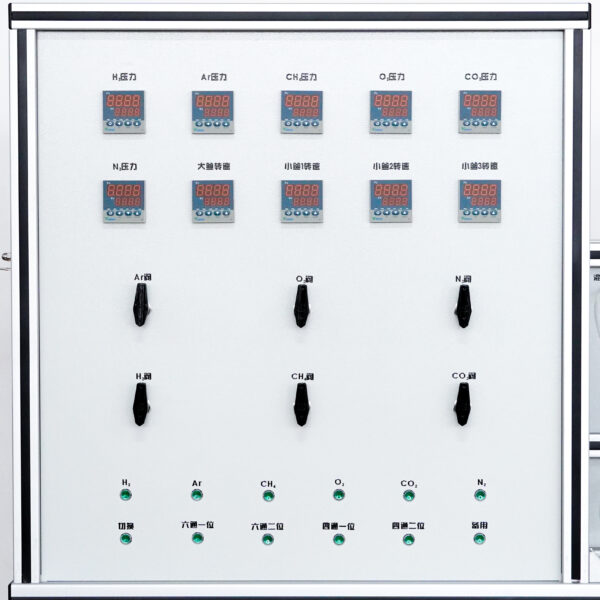
- High-Precision Digital Monitoring: Integrates six pressure sensors and multiple thermocouple modules linked to a centralized Windows-based terminal, delivering clear, real-time data visualization.
- Integrated Control & Data Logging: The central control unit houses advanced analog-to-digital (A/D) converters and pressure/temperature transmitters. The bundled software features self-diagnostic routines, real-time dual-screen data display, and automated data storage for post-experiment analysis.
- Robust and Mobile Framework: Constructed on an anodized aluminum alloy frame equipped with industrial caster wheels, allowing for easy relocation and flexible laboratory space utilization.
Detail & Parts
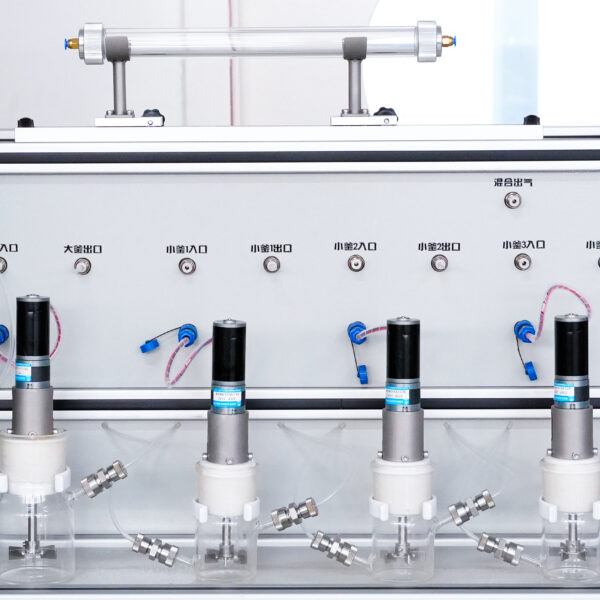
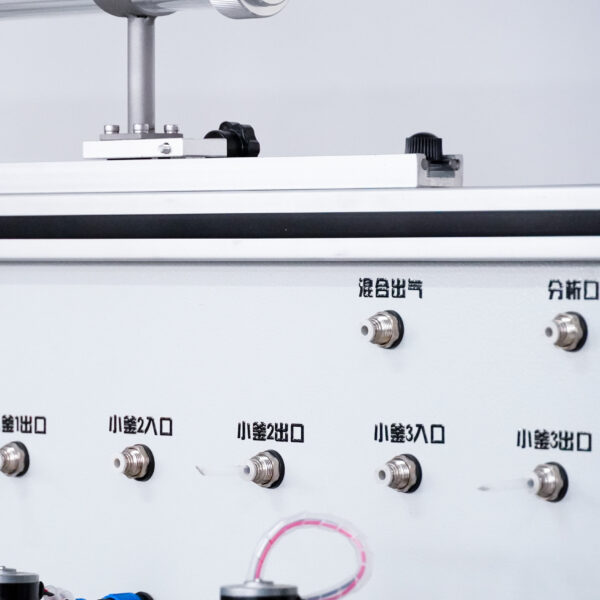
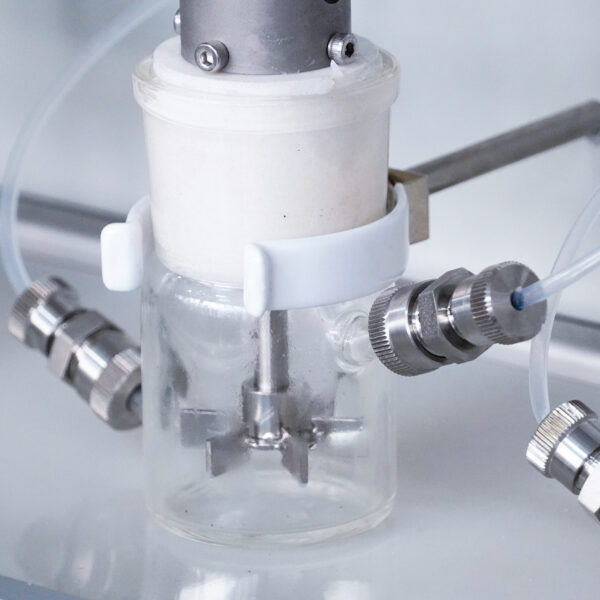
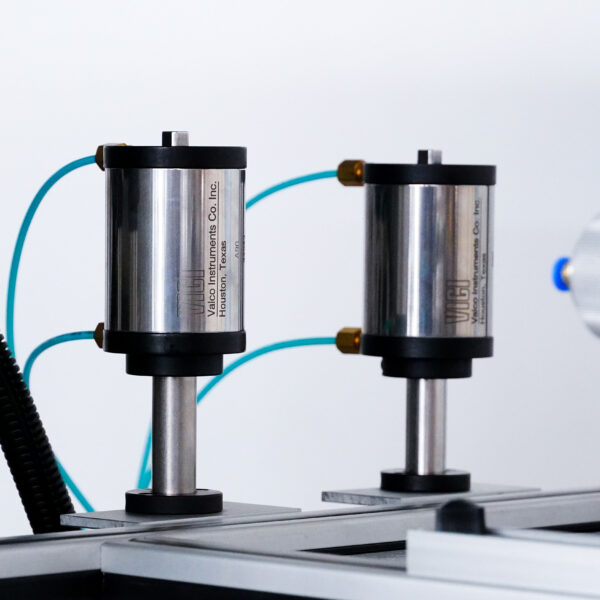
Technical Specifications and Experimental Modules
The following table details the technical parameters of the pilot plant and maps the executable experimental modules to core academic concepts:
| System Parameter / Module | Technical Specifications & Components | Associated Curricular Knowledge Points |
|---|---|---|
| Reactor Configurations | Kettle-type reactor (CSTR approximation) and tubular reactor (PFR approximation) | Ideal vs. non-ideal flow, reactor modeling, axial dispersion |
| Tracer Injection System | Pneumatic 4-way and 6-way switching valves; 316L/PTFE transport lines | Step input response, pulse input response, tracer mass balance |
| Monitoring Instrumentation | 6 high-precision pressure sensors, thermocouple transmitters (TC), and analog-to-digital (AD) conversion modules | Sensor calibration, process variable monitoring, signal conditioning |
| Control Interface | Dedicated Windows-based workstation with integrated self-check and data logging software | Real-time data acquisition, automated system diagnostics |
| Physical Dimensions | Width: $\le$ 2200 mm, Depth: $\le$ 580 mm, Height: $\le$ 1600 mm | Industrial plant layout, laboratory space optimization |
| Structural Frame | Industrial aluminum alloy profile with heavy-duty adjustable leveling casters | Pilot plant safety, structural ergonomics, mobility |
Academic Alignment and Curriculum Integration
This pilot plant is engineered to support coursework across multiple engineering disciplines, including Chemical Engineering, Environmental Engineering, and Food Process Engineering. By implementing hands-on RTD and mixing experiments, students gain a practical understanding of transport phenomena and reaction kinetics as taught in standard engineering curriculums.
The experimental procedures and theoretical calculations enabled by this unit directly correspond to key chapters and core topics in classic academic textbooks, such as:
- Unit Operations of Chemical Engineering: Practical application of gas mixing theories, mass transfer operations, and the fluid dynamics of continuous flow systems.
- Transport Processes and Unit Operations: Direct measurement of velocity profiles, mass transfer coefficients, and non-ideal flow behavior in closed conduits and packed beds.
- Chemical Engineering Design: Real-world evaluation of reactor sizing, piping and instrumentation diagram (P&ID) interpretation, and process safety standards in pilot-scale operations.
By linking experimental data (such as $E(t)$ and $F(t)$ curves) directly to these standard textbook formulations, instructors can easily integrate the pilot plant into existing lab syllabi, reinforcing lecture material with empirical evidence.
Customization Services
To accommodate diverse academic syllabi and varying physical laboratory layouts, LABPARK provides tailored customization options for this pilot plant:
- Hardware Customization: We can modify the dimensions of the structural frame, incorporate alternative reactor volumes or geometries, integrate additional sensor arrays, and select specialized piping materials to match specific experimental designs.
- Software Customization: The control software can be customized with institution-specific user interfaces, proprietary data analysis algorithms, custom step-by-step student guidance modules, and integrated data-sharing capabilities for remote learning environments.
About LABPARK
LABPARK has spent over 20 years serving the global higher education sector, specializing in the design, development, and manufacture of advanced laboratory equipment. Our product portfolio focuses on six critical disciplines: Chemistry, Chemical Engineering, Biotechnology, Food Engineering, Pharmaceutical Engineering, and Environmental Engineering. We aim to bridge the gap between classroom theory and industrial practice by providing safe, reliable, and curriculum-aligned training systems.
Driven by engineering innovation, LABPARK holds 209 technical patents and has established long-term partnerships with more than 289 universities and colleges worldwide. Our operations are supported by a state-of-the-art production and R&D base spanning 49,000 square meters, ensuring that every piece of educational equipment is manufactured to stringent quality and safety standards.
Trusted by Industry Leaders
REQUEST A QUOTE
Our professional team will reply to you within one business day. Please feel free to contact us!
Related Products

Multi-Stage Stirred Tanks in Series Residence Time Distribution and Mixing Performance Determination Educational Pilot Plant
Explore residence time distribution and mixing performance in series stirred tanks with this educational pilot plant. Real-time conductivity sensors, interactive 3D simulation, and industrial-grade PC for chemical engineering lab training. Customizable to curricula.

Residence Time Distribution and Reactor Flow Characteristics Determination Educational Pilot Plant
This versatile educational pilot plant is designed for comprehensive study of residence time distribution and reactor flow characteristics, featuring multiple CSTRs in series, a tubular reactor, variable recycle loop, and automated real-time data acquisition, perfect for hands-on chemical engineering education.
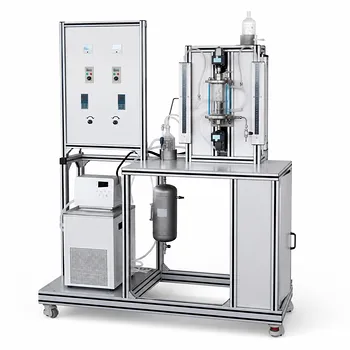
Dual-Drive Stirred Gas-Liquid Mass Transfer Coefficient Determination Pilot Plant
Pilot plant for determination of gas-liquid mass transfer coefficients with independent dual-drive agitation. Isolate gas and liquid film resistances via two-film theory control of speeds, flow rates, temperature. Borosilicate vessel provides visual access. Customizable for chemical, environmental, food, pharmaceutical engineering.
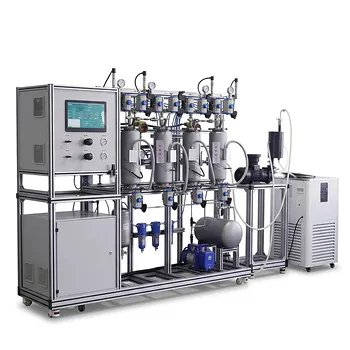
Multi-Component Gas Pressure Swing Adsorption Pilot Plant for Unit Operations Education
Multi-component gas pressure swing adsorption pilot plant designed for unit operations education. Features four-tower configuration, IoT touchscreen control, dual regeneration, and real-time breakthrough curve analysis for engineering training with safety interlocks and mobile frame simulates industrial PSA processes.
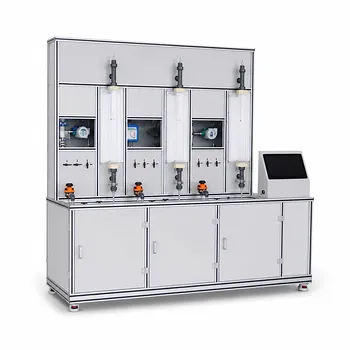
Two Phase Flow Pattern Velocity Resistance Measurement Educational Pilot Plant
Benchtop educational pilot plant for university labs studying gas-liquid two-phase flow patterns, velocity, and resistance across circular, square, and rectangular conduits. Features 15.6-inch touchscreen, 5G connectivity, differential pressure sensors, safe water-air operation. Supports chemical engineering curricula.
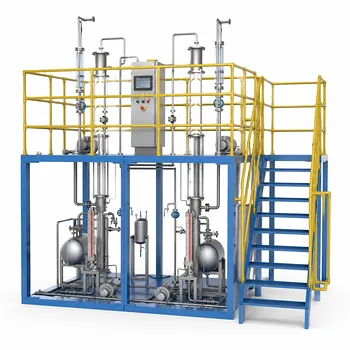
Dual-Mode Gas Absorption and Desorption Unit Operations Training Pilot Plant
Industrial-scale pilot plant for gas absorption and desorption training in chemical engineering. Features dual-mode operation with real and simulated materials, transparent columns for flow visualization, and customizable design. Supports independent or combined loops for hands-on unit operations experiments.
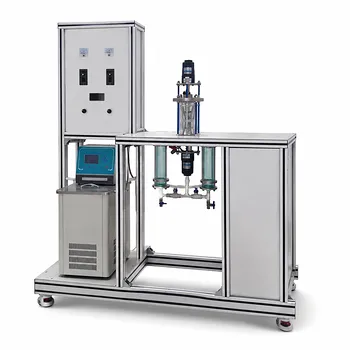
Liquid-Liquid Mass Transfer Coefficient Determination Educational Pilot Plant
This bench-scale educational pilot plant for liquid-liquid mass transfer coefficient determination offers precise control of phase boundary, temperature, and agitation, enabling hands-on study of transport phenomena and unit operations in chemical engineering labs for teaching.

Absorption and Desorption Educational Unit Operations Pilot Plant
Dual packed column absorption and desorption pilot plant for chemical engineering education, offering real-time mass transfer coefficient measurement, durable mobile frame, industrial touch-screen interface, and customizable design for varied laboratory curricula, enabling hands-on study of gas absorption and stripping.
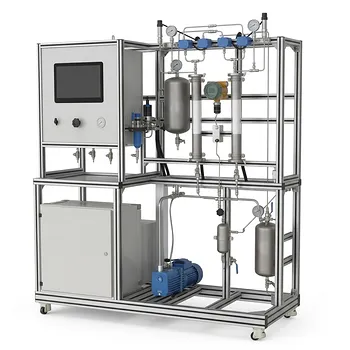
Pressure Swing Adsorption Educational Unit Operations Pilot Plant
Integrated bench-scale pressure swing adsorption pilot plant for hands-on teaching of gas-solid separation, mass transfer, and process optimization using nitrogen-oxygen model, featuring dual-column design, industrial touchscreen control, digital assessment suite, and customizable hardware and software configurations for educational laboratories.
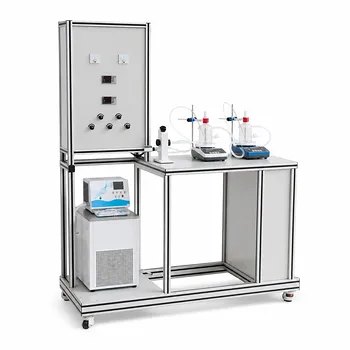
Ternary Liquid-Liquid Equilibrium Educational Pilot Plant
An integrated laboratory training system for engineering students to determine ternary liquid-liquid equilibrium data, construct phase diagrams, and gain hands-on experience with industrial instrumentation, including Abbe refractometer and magnetic stirrers, for precise data acquisition and curriculum-aligned experiments.
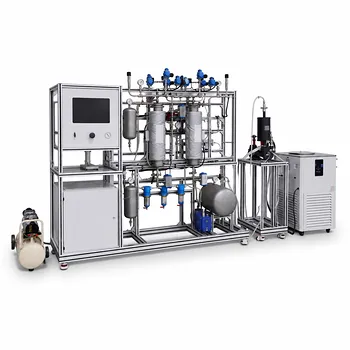
Bench Scale Dual Column Gas Separation and Capture Educational Pilot Plant
This dual-column educational pilot plant provides hands-on teaching of gas adsorption, separation, and capture processes. It features stainless steel columns, regeneration up to 400°C, and a 15.6-inch touchscreen PLC for TSA and PSA studies in chemical engineering curricula, process simulation.
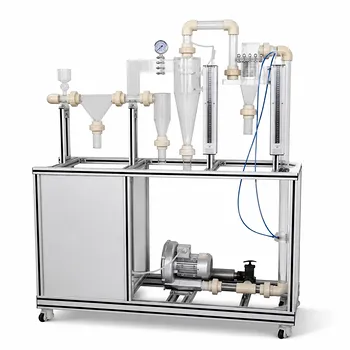
Gas-Solid Heterogeneous Separation Demonstration Educational Unit Operations Pilot Plant
Comprehensive visual transparent gas-solid separation pilot plant for chemical engineering labs. Demonstrates gravity settling inertial settling cyclone and bag filter technologies. Enables real-time analysis of fluid-particle mechanics pressure drop and collection efficiency. Ideal for undergraduate unit operations courses.

Fixed-Bed Chemical Reaction and Gas Dust Tar Removal Unit Operations Pilot Plant
Integrated educational pilot plant for studying catalytic gas-solid reactions and downstream gas purification. Features dual fixed-bed reactor, three-stage heating, and touchscreen control for hands-on engineering training. Ideal for chemical and environmental engineering curricula.

Fluidized Bed Gas Solid Catalytic Reaction Educational Pilot Plant
Our educational fluidized bed gas-solid catalytic reaction pilot plant is ideal for chemical engineering labs. Students study fluidization dynamics, catalyst evaluation, and process control hands-on. Features include a customizable reactor, touchscreen HMI, and safety interlocks for safe, curriculum-aligned experiments.

Educational Unit Operations Pilot Plant for Intraparticle Diffusion Effective Factor Measurement
Designed for chemical engineering university labs, this pilot plant allows hands-on determination of catalyst particle intraparticle diffusion effective factors and gas-solid reaction kinetics using a fixed-bed tubular reactor with industrial touchscreen control, bridging theory and practical reactor design.

Tubular Reactor Flow Characteristics Determination Educational Unit Operations Pilot Plant
Educational pilot plant for investigating tubular reactor flow characteristics and residence time distribution Features adjustable recycle for plug flow and backmixing studies industrial touchscreen interface and real-time data acquisition Ideal for chemical engineering unit operations laboratory training and education

Fixed Bed Gas Solid Catalytic Reaction Educational Pilot Plant
Fixed-bed gas-solid catalytic reaction unit operations pilot plant for chemical engineering education. Features split-furnace, mass flow controllers, PID control, safety interlocks. Ideal for heterogeneous catalysis, reactor dynamics, catalyst evaluation studies. Fully customizable configurations for university laboratories and academic research.
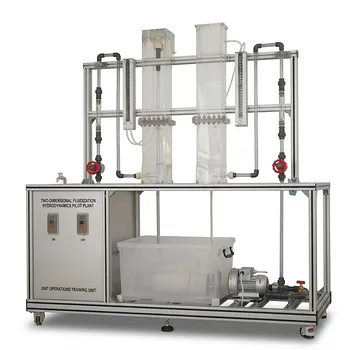
Two-Dimensional Fluidization Hydrodynamics Educational Pilot Plant for Unit Operations Training
Explore gas-solid and liquid-solid fluidization hydrodynamics with our transparent 2D educational pilot plant. Ideal for chemical engineering unit operations labs, it demonstrates fixed to fluidized bed regimes, measures pressure drop, and integrates QR-code digital learning for enhanced student training.

Micro-Scale Gas-Solid Catalytic Reaction Educational Pilot Plant
Explore heterogeneous catalysis with this micro-scale gas-solid catalytic reaction educational pilot plant. Designed for university labs, it enables hands-on study of reaction kinetics and transport phenomena in a benchtop packed bed reactor with high-precision flow control and touchscreen automation.
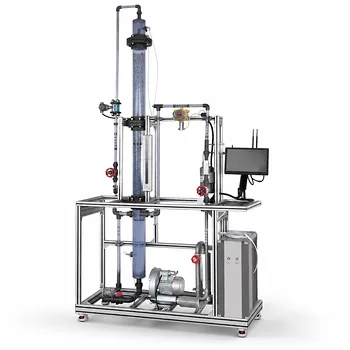
Packed Bed Absorption Educational Unit Operations Pilot Plant
Study gas-liquid absorption, pressure drop, flooding, and mass transfer coefficients with this pilot plant. Transparent packed column, industrial touchscreen, real-time sensor data, automated analysis. Investigate two-phase flow, loading points, column efficiency. Comprehensive data logging and assessment software included.