Educational Chemical Engineering Pilot Plants
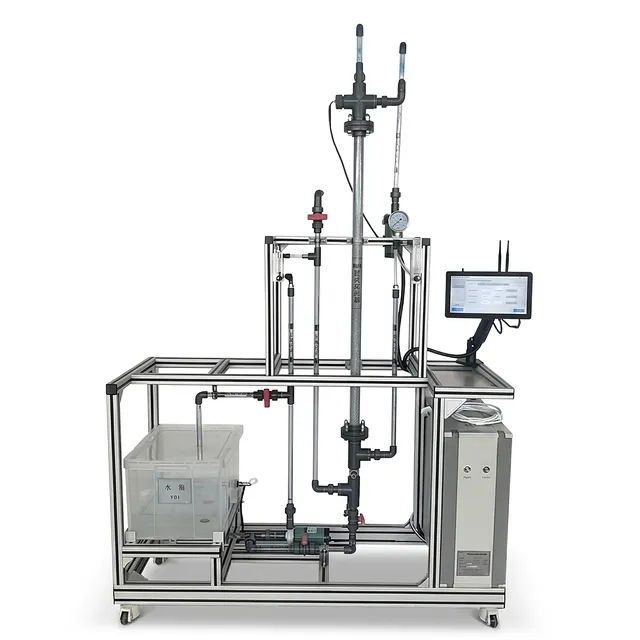
Tubular Reactor Flow Characteristics Determination Educational Unit Operations Pilot Plant
Item Number : LPK-GSFYQ
Price varies based on specs and customizations
- RTD Measurement Technique
- Pulse Injection Tracer Method
- Recycle Ratio Adjustment
- Adjustable for Plug Flow to Backmixing Studies
- Data Acquisition System
- Industrial Touchscreen with Real-Time Plotting

Shipping:
Contact us to get shipping details Enjoy On-time Dispatch Guarantee.
Why Choose Us
Easy ordering process, quality products, and dedicated support for your business success.
Introduction
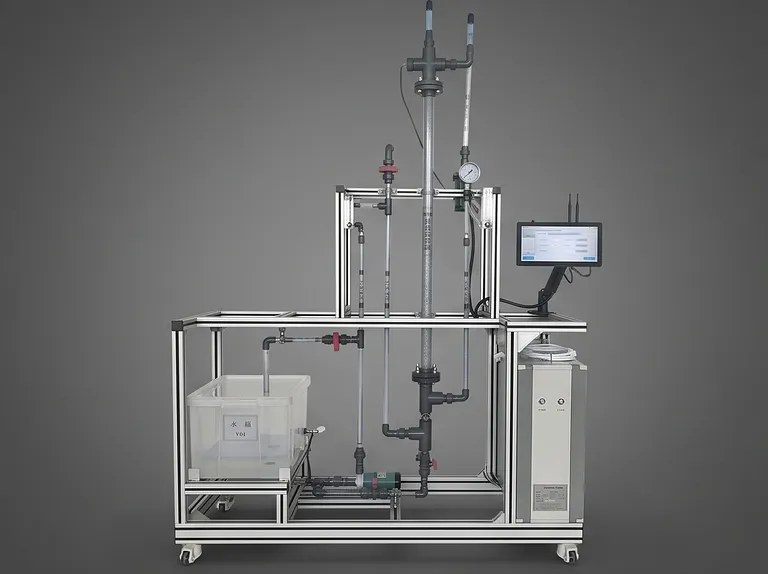
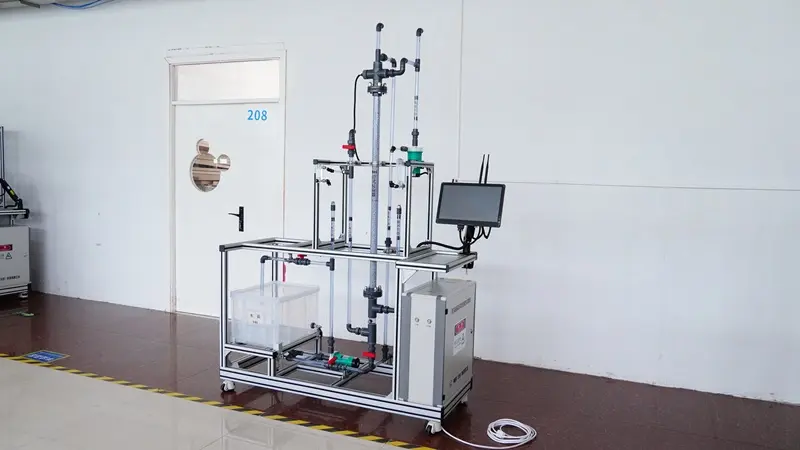
The Tubular Reactor Flow Characteristics Determination Educational Unit Operations Pilot Plant is an educational system designed for university engineering laboratories. This unit allows students to investigate non-ideal flow behavior, measure residence time distribution (RTD), and analyze the transition between plug flow and backmixed flow regimes. By utilizing a physical tubular reactor loop equipped with precise sensors and industrial control interfaces, the apparatus helps students bridge the gap between theoretical chemical kinetics and real-world reactor design.
Both the hardware components and the software features of this pilot plant can be customized to align with your specific curriculum objectives, laboratory space, or safety protocols.
Key Educational Functions and Advantages
- Quantitative RTD Analysis: Allows students to perform tracer experiments using the pulse injection method to determine the residence time distribution curve, mean residence time, and variance.
- Variable Backmixing Simulation: Features an adjustable recycle loop that lets students vary the recycle ratio ($R$) to observe how fluid dynamics shift between plug flow behavior and complete backmixing.
- Industrial Instrument Familiarization: Equipped with an industrial touch-screen panel PC (all-in-one workstation) for process control, introducing students to industrial data acquisition and human-machine interfaces (HMI).
- Real-Time Data Acquisition: High-precision conductivity sensors continuously measure tracer concentrations at the reactor outlet, feeding data directly to the workstation software for instant mathematical analysis.
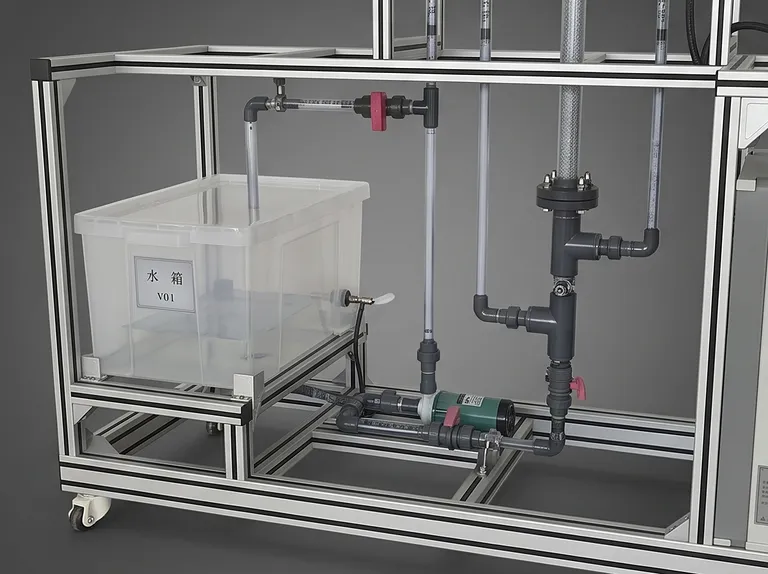
- Robust and Safe Design: Built on a durable, corrosion-resistant frame with transparent process lines, allowing clear visualization of fluid flow and tracer dispersion during laboratory sessions.
Detail & Parts
Technical Specifications and Experimental Modules
The following table details the key technical features, operational modules, and their corresponding academic concepts:
| System Component / Module | Technical Description | Educational & Curriculum Focus |
|---|---|---|
| Reactor & Flow Loop | Clear vertical tubular column with integrated bypass and recycle lines; variable speed pump for flow rate control. | Flow rate control, recycle ratio adjustments, and fluid velocity calculations. |
| Detection System | High-precision inline conductivity sensors located at key process points; pulse injection port for salt tracer. | Pulse tracer method, conductivity calibration, and signal processing. |
| Control Interface | Industrial all-in-one touchscreen workstation running dedicated data acquisition and analysis software. | Digital process monitoring, real-time plotting, and industrial control systems. |
| Plug Flow Experiment | Operation with the recycle loop closed ($R = 0$) to study ideal plug flow behavior. | Deviation from ideal plug flow, dispersion model, and Peclet number determination. |
| Recycle & Backmixing Experiment | Operation with varying recycle flows to simulate intermediate mixing levels. | Tanks-in-series model, backmixing degree, and reactor performance under recycle conditions. |
Alignment with Academic Curricula and Classic Textbooks
Understanding the fluid dynamics of chemical reactors is a core requirement in chemical engineering, environmental engineering, and food process technology. This pilot plant is designed to support the practical learning outcomes defined in widely adopted engineering textbooks, such as:
- Unit Operations of Chemical Engineering: Directly supports laboratory exercises related to fluid flow through conduits, mixing processes, and continuous reactor behavior.
- Transport Processes and Unit Operations: Complements theoretical derivations of mass transport, convective dispersion, and non-ideal flow patterns in process vessels.
- Chemical Engineering Design: Provides practical insight into reactor sizing, scale-up considerations, and the design of recycle systems for industrial processes.
By correlating physical laboratory observations—such as tracer dispersion curves—with the mathematical models presented in these classic texts, students develop a deeper intuitive understanding of reactor design and process optimization.
To ensure the equipment integrates with your existing laboratory experiments, we offer tailored modification services. Both the hardware (such as column dimensions, pump capacities, and sensor types) and the software (including data analysis templates and interface layouts) can be customized to meet the specific requirements of your department.
About LABPARK
LABPARK has been serving higher education for more than 20 years, focusing on the design and manufacture of specialized educational equipment for engineering laboratories. Our products are designed to meet the practical training needs of six primary fields: chemistry, chemical engineering, bioengineering, food engineering, pharmaceutical engineering, and environmental engineering. With a strong focus on engineering accuracy and educational utility, we hold 209 technical patents and have collaborated with over 289 universities globally to support hands-on technical education.
Our modern research, development, and manufacturing facility spans 49,000 square meters. This infrastructure allows us to control the entire production process, ensuring that every pilot plant meets high standards of durability, safety, and pedagogical value before arriving at your campus.
Trusted by Industry Leaders
REQUEST A QUOTE
Our professional team will reply to you within one business day. Please feel free to contact us!
Related Products

Residence Time Distribution and Reactor Flow Characteristics Determination Educational Pilot Plant
This versatile educational pilot plant is designed for comprehensive study of residence time distribution and reactor flow characteristics, featuring multiple CSTRs in series, a tubular reactor, variable recycle loop, and automated real-time data acquisition, perfect for hands-on chemical engineering education.

Gas Phase Mixing and Residence Time Distribution Determination Educational Unit Operations Pilot Plant
Integrated lab system for gas-phase mixing and RTD determination. Supports pulse and step tracer methods with dual CSTR and PFR reactors, industrial components, and PC data logging. Provides hands-on study of non-ideal flow and reactor behavior for university students.

Educational Unit Operations Pilot Plant for Intraparticle Diffusion Effective Factor Measurement
Designed for chemical engineering university labs, this pilot plant allows hands-on determination of catalyst particle intraparticle diffusion effective factors and gas-solid reaction kinetics using a fixed-bed tubular reactor with industrial touchscreen control, bridging theory and practical reactor design.
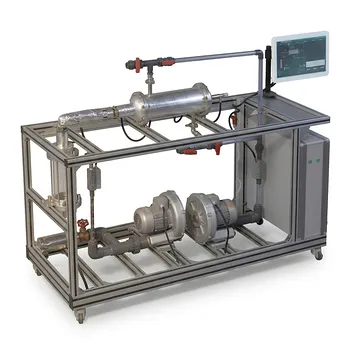
Shell and Tube Heat Exchanger Heat Transfer Coefficient Determination Educational Pilot Plant
LABPARK's shell and tube heat exchanger pilot plant enables students to investigate heat transfer coefficients, LMTD, co-current vs counter-current flow, bridging theory and industrial practice. Customizable for chemical, mechanical, environmental engineering curricula. Ideal for unit operations and process engineering labs.
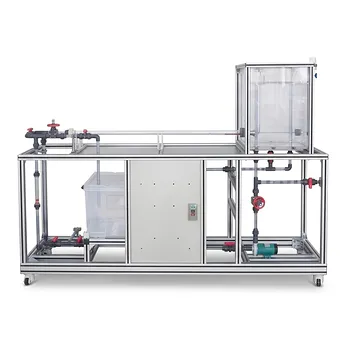
Fluid Reynolds Number Demonstration Educational Unit Operations Pilot Plant
Visual fluid dynamics pilot plant for engineering education demonstrating laminar, transitional, and turbulent flow regimes via dye injection in circular conduits. Verifies Reynolds number transitions and teaches dimensionless analysis. Modular design with digital simulation software enhances hands-on learning

Multi-Stage Stirred Tanks in Series Residence Time Distribution and Mixing Performance Determination Educational Pilot Plant
Explore residence time distribution and mixing performance in series stirred tanks with this educational pilot plant. Real-time conductivity sensors, interactive 3D simulation, and industrial-grade PC for chemical engineering lab training. Customizable to curricula.
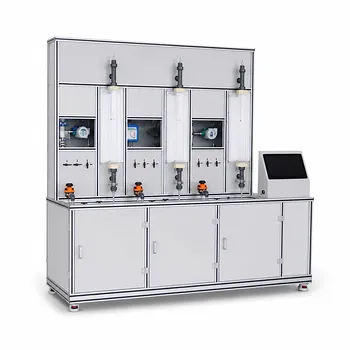
Two Phase Flow Pattern Velocity Resistance Measurement Educational Pilot Plant
Benchtop educational pilot plant for university labs studying gas-liquid two-phase flow patterns, velocity, and resistance across circular, square, and rectangular conduits. Features 15.6-inch touchscreen, 5G connectivity, differential pressure sensors, safe water-air operation. Supports chemical engineering curricula.

Fixed-Bed Chemical Reaction and Gas Dust Tar Removal Unit Operations Pilot Plant
Integrated educational pilot plant for studying catalytic gas-solid reactions and downstream gas purification. Features dual fixed-bed reactor, three-stage heating, and touchscreen control for hands-on engineering training. Ideal for chemical and environmental engineering curricula.
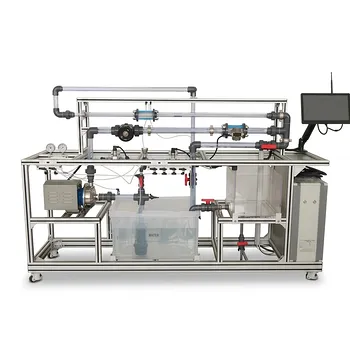
Centrifugal Pump Performance and Orifice Flowmeter Calibration Educational Pilot Plant
This versatile educational pilot plant enables engineering students to conduct centrifugal pump performance tests, orifice flowmeter calibration, and fluid mechanics experiments using a transparent flow loop, industrial HMI, and 3D virtual simulation for a comprehensive hands-on learning experience.

Multi-Reactor Educational Pilot Plant for Reaction Engineering Unit Operations
Integrated bench-scale educational pilot plant for chemical engineering teaching featuring fixed bed fluidized bed and stirred tank reactors with web-based digital twin controls and safety interlocks for hands-on unit operations and reaction engineering comparative studies in one compact system.

Multi Functional Catalytic Reaction and Reactor Evaluation Educational Unit Operations Pilot Plant
Bench-scale educational pilot plant for catalytic reaction and reactor evaluation, integrating fixed bed, fluidized bed, and stirred tank reactors. Students compare reactor designs, evaluate catalysts, and study reaction kinetics and hydrodynamics. Perfect for unit operations labs in chemical engineering curricula.
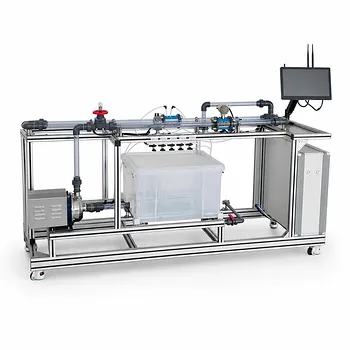
Orifice and Venturi Flowmeter Calibration Educational Pilot Plant for Fluid Mechanics Laboratory
Enhance fluid dynamics education with the Orifice and Venturi Flowmeter Calibration Educational Unit Operations Pilot Plant, featuring transparent orifice and Venturi meters, industrial sensors, touchscreen interface for real-time data analysis and automatic coefficient calculations in engineering student laboratories.
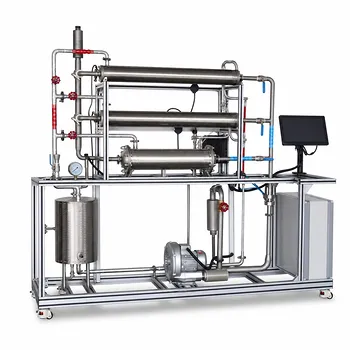
Comprehensive Heat Transfer Coefficient Determination Educational Unit Operations Pilot Plant
Advanced industrial-grade educational pilot plant for comprehensive heat transfer coefficient determination. Enables quantitative convective heat transfer analysis, evaluates double-pipe and shell-and-tube exchanger configurations, and includes digital data acquisition. Customizable for engineering curriculum. Ideal for engineering unit operations labs.
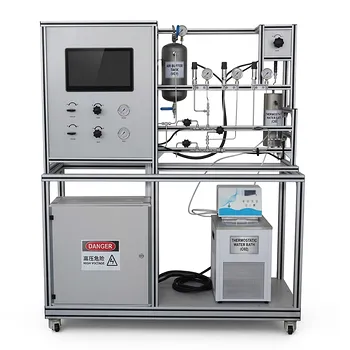
Throttling Effect Determination Educational Unit Operations Pilot Plant
Investigate the Joule-Thomson throttling effect with this educational unit operations pilot plant. Designed for engineering students, it enables hands-on comparative analysis of adiabatic gas expansion using precise process control, interactive digital interface, and eco-friendly operation, ensuring safe repeatable thermodynamic experiments.

Fluidized Bed Gas Solid Catalytic Reaction Educational Pilot Plant
Our educational fluidized bed gas-solid catalytic reaction pilot plant is ideal for chemical engineering labs. Students study fluidization dynamics, catalyst evaluation, and process control hands-on. Features include a customizable reactor, touchscreen HMI, and safety interlocks for safe, curriculum-aligned experiments.

Internal Circulation Gradient Free Catalytic Reaction Educational Pilot Plant
Internal circulation gradient free catalytic reaction educational pilot plant for chemical engineering unit operations. Provides isothermal gradient free operation and hands on study of heterogeneous catalysis kinetics and mass transfer with precise control. Ideal for academic labs.
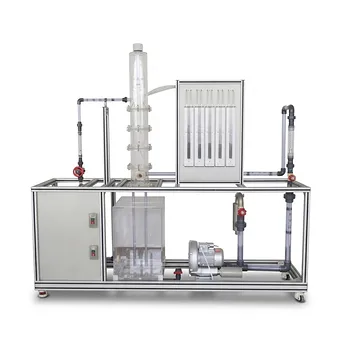
Plate Column Hydrodynamics Tray Demonstration Educational Pilot Plant
Advanced transparent educational pilot plant for chemical engineering labs demonstrates plate column hydrodynamics with industrial sieve bubble cap serrated valve trays for visual observation of gas-liquid contact pressure drop measurement and operational limit analysis including flooding weeping entrainment

Fixed Bed Gas Solid Catalytic Reaction Educational Pilot Plant
Fixed-bed gas-solid catalytic reaction unit operations pilot plant for chemical engineering education. Features split-furnace, mass flow controllers, PID control, safety interlocks. Ideal for heterogeneous catalysis, reactor dynamics, catalyst evaluation studies. Fully customizable configurations for university laboratories and academic research.

100L Continuous Loop Hydrogenation Educational Unit Operations Pilot Plant
This 100L continuous loop hydrogenation pilot plant is designed for chemical engineering education, featuring 316 stainless steel construction, advanced gas-liquid mass transfer components, explosion-proof safety systems, and a 15.6-inch touchscreen with 5G connectivity, cloud data logging, bridging theory and industry.

Methane Cracking Educational Unit Operations Pilot Plant
This bench-scale methane cracking educational pilot plant provides hands-on catalytic conversion training with a 1000°C furnace, seven mass flow controllers, and real-time automation for safe, curriculum-aligned experiments. Designed for university teaching of unit operations and reaction engineering.