Educational Applied Chemistry Pilot Plants
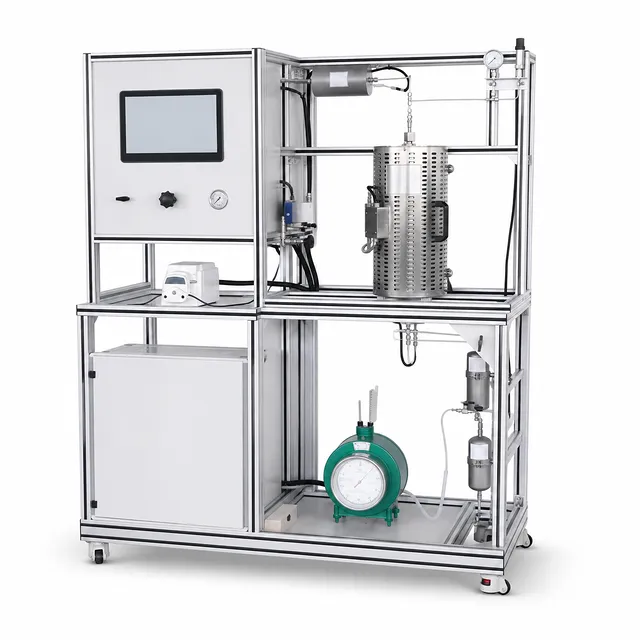
Educational Unit Operations Pilot Plant for Intraparticle Diffusion Effective Factor Measurement
Item Number : LPK-SRID
Price varies based on specs and customizations
- Reactor Configuration
- Fixed-bed tubular reactor optimized for gas-solid catalytic reactions
- Heating & Thermal Control
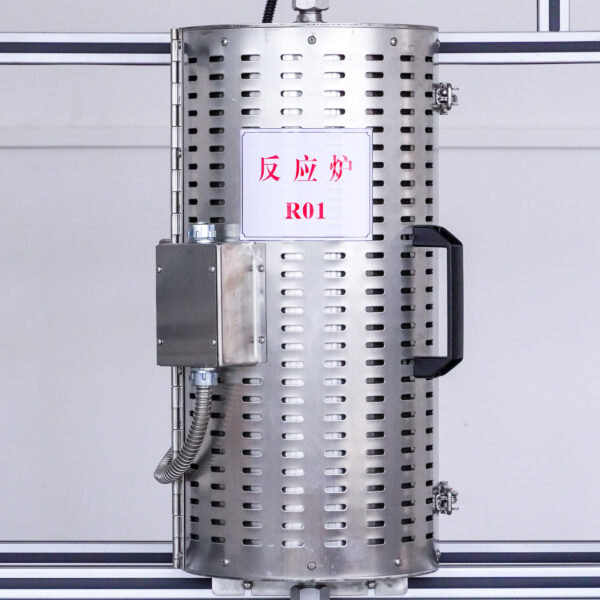
- Open-type furnace with programmable temperature controller for rapid reactor access
- Control System
- Industrial-grade all-in-one computer with touchscreen interface and data logging

Shipping:
Contact us to get shipping details Enjoy On-time Dispatch Guarantee.
Why Choose Us
Easy ordering process, quality products, and dedicated support for your business success.
Introduction
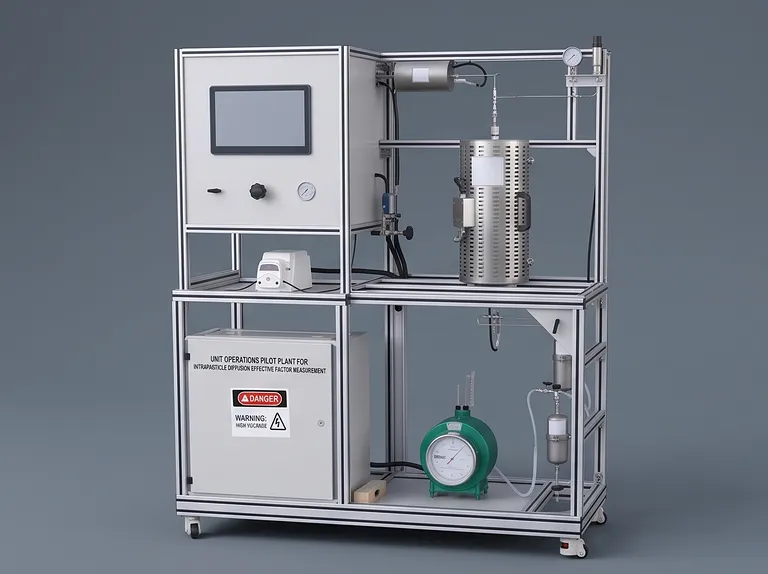
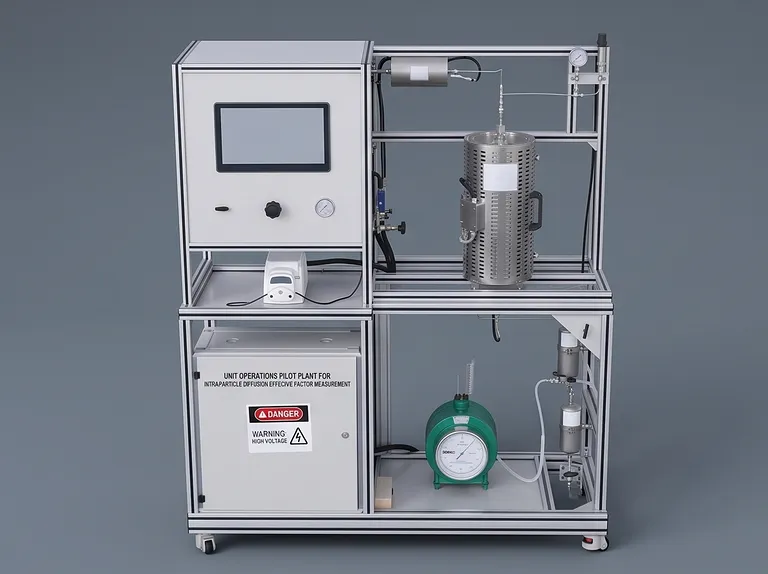
The Catalyst Particle Intraparticle Diffusion Effective Factor Determination Educational Unit Operations Pilot Plant is a specialized, pilot-scale laboratory system designed for engineering departments at the university level. This plant allows undergraduate and graduate students to experimentally determine the internal diffusion effective factor of catalyst particles and measure the intrinsic reaction kinetics of gas-solid catalytic systems. By integrating a commercial-grade fixed-bed tubular reactor with digital instrumentation, the system bridges the gap between theoretical reaction kinetics and practical process engineering.
Tailored Customization Options
To meet the diverse curriculum requirements and spatial layouts of global universities, this educational pilot plant features a highly adaptable design. We offer comprehensive customization across both hardware and software components. Hardware options—such as reactor dimensions, gas feed configurations, and sensor ranges—can be modified, while the control software interface can be customized to align with specific teaching methodologies and data acquisition standards.
Key Features & Pedagogical Benefits
Developed specifically for chemical engineering and process technology instructors, this pilot plant provides several distinct advantages for hands-on teaching:
- Comprehensive Kinetic Studies: Enables students to conduct quantitative experiments on catalyst activity, activation, thermal regeneration, and internal mass transfer resistance.
- Modern Industrial Control Interface: Equipped with an industrial touch-screen computer (HMI) for real-time data visualization and process control, giving students direct experience with modern industrial control interfaces.
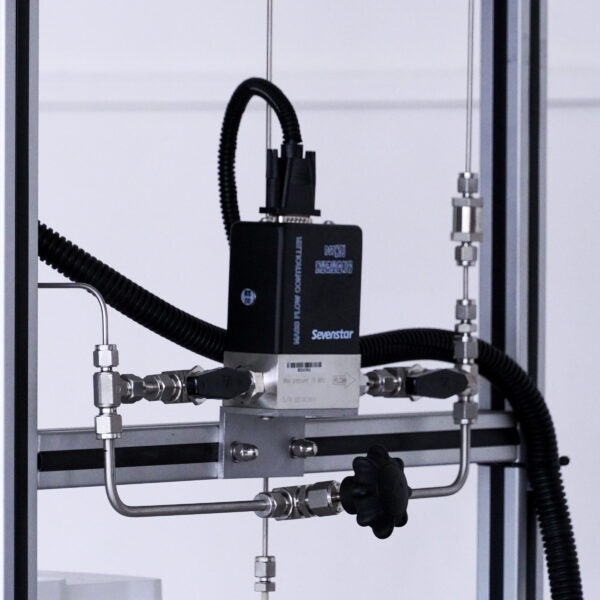
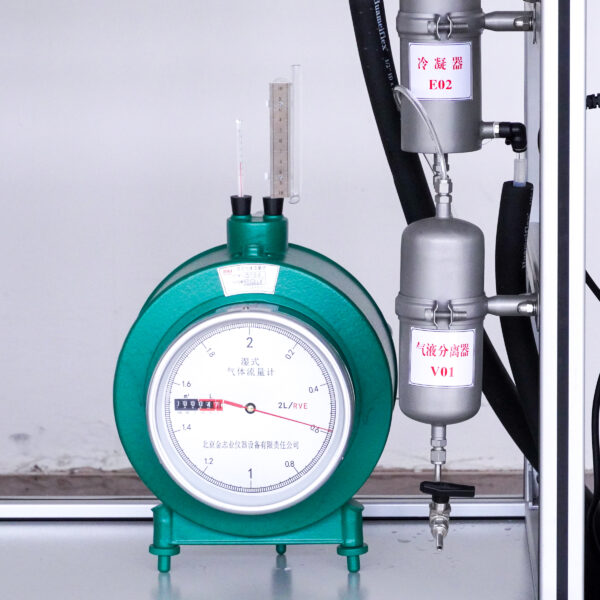
- Visible Process Design: Built with a highly organized layout and clear process pipelines, allowing students to easily trace flow paths and relate physical equipment to Piping and Instrumentation Diagrams (P&IDs).
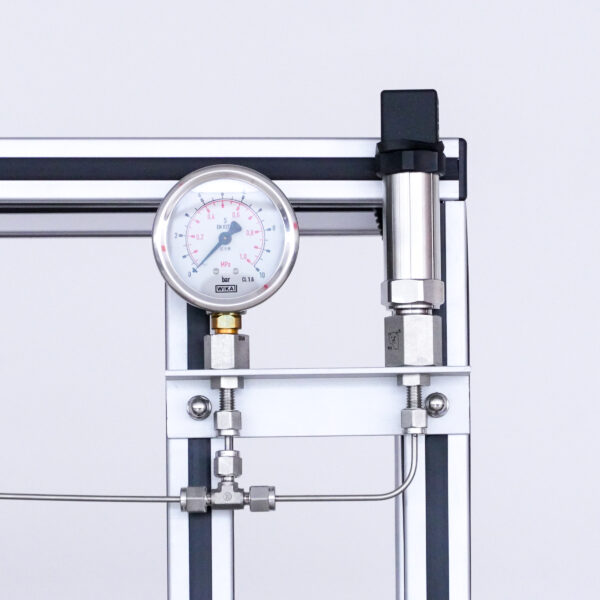
- Integrated Process Safety: Equipped with automatic over-temperature and over-pressure alarm systems to maintain a safe, reliable laboratory learning environment during high-temperature operations.
- Durable and Portable Construction: Constructed on a robust aluminum alloy frame with industrial-grade casters, ensuring long-term durability and flexible placement within university laboratories.
Detail & Parts
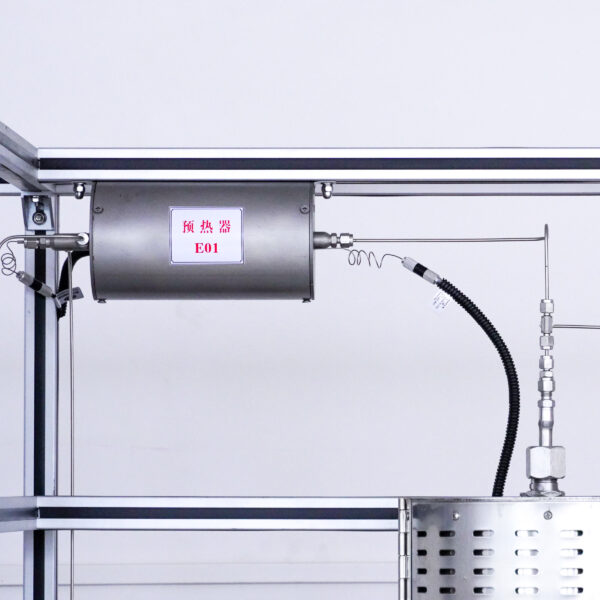
Technical Specifications & Experimental Modules
The following table summarizes the technical specifications of the pilot plant, alongside its main experimental modules:
| Parameter / Module | Details |
|---|---|
| Reactor Configuration | Fixed-bed tubular reactor optimized for gas-solid catalytic reactions |
| Heating & Thermal Control | Open-type furnace with programmable temperature controller for rapid reactor access |
| Control System | Industrial-grade all-in-one computer with touchscreen interface and data logging |
| Safety Interlocks | Built-in high-limit temperature shutdown and over-pressure relief system |
| Frame Material & Mobility | High-strength anodized aluminum alloy frame equipped with lockable casters |
| Physical Dimensions | $\le$ 1480 mm × 580 mm × 1780 mm (L × W × H) |
| Experimental Capabilities | Determination of the internal diffusion effective factor ($\eta$); Measurement of gas-solid intrinsic reaction kinetics; Performance of catalyst activation, evaluation, and regeneration cycles |
Academic Alignment & Textbook Integration
This educational pilot plant is designed to support core coursework in Chemical Engineering, Environmental Engineering, Industrial Chemistry, and Materials Science. It translates mathematical transport equations and kinetic models into physical, observable phenomena.
The experimental capabilities of this pilot plant correspond directly with standard terminology and fundamental principles found in leading academic textbooks:
- Unit Operations of Chemical Engineering: The system provides practical application for studying heterogeneous catalysis, gas-solid mass transfer, and the physical characteristics of porous catalysts, helping students connect theory with reactor design.
- Transport Processes and Unit Operations: Students can directly observe mass transfer with simultaneous chemical reaction, calculate the Thiele modulus, and analyze the effects of intraparticle diffusion limitations on overall reaction rates.
- Chemical Engineering Design: The unit serves as a practical model for teaching process control configurations, safety interlocks, thermal management in non-isothermal reactors, and the interpretation of industrial-standard engineering drawings.
To ensure the equipment fits seamlessly into your existing syllabus, both the hardware configurations and software control systems can be customized to match your specific laboratory manuals and course requirements.
About LABPARK
LABPARK has been dedicated to serving the higher education sector for more than 20 years, focusing on delivering specialized educational equipment across six core domains: chemistry, chemical engineering, biotechnology, food engineering, pharmaceutical engineering, and environmental engineering. Driven by innovation and quality, the company holds 209 technical patents and operates a state-of-the-art R&D and manufacturing base spanning 49,000 square meters.
To date, LABPARK has established successful partnerships with over 289 universities and higher education institutions worldwide, assisting educators in establishing robust practical training programs and preparing the next generation of engineers for industrial challenges.
Trusted by Industry Leaders
REQUEST A QUOTE
Our professional team will reply to you within one business day. Please feel free to contact us!
Related Products

Multi-Stage Stirred Tanks in Series Residence Time Distribution and Mixing Performance Determination Educational Pilot Plant
Explore residence time distribution and mixing performance in series stirred tanks with this educational pilot plant. Real-time conductivity sensors, interactive 3D simulation, and industrial-grade PC for chemical engineering lab training. Customizable to curricula.
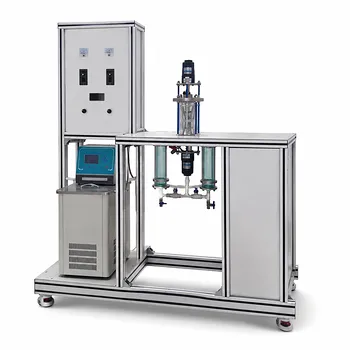
Liquid-Liquid Mass Transfer Coefficient Determination Educational Pilot Plant
This bench-scale educational pilot plant for liquid-liquid mass transfer coefficient determination offers precise control of phase boundary, temperature, and agitation, enabling hands-on study of transport phenomena and unit operations in chemical engineering labs for teaching.

Absorption and Desorption Educational Unit Operations Pilot Plant
Dual packed column absorption and desorption pilot plant for chemical engineering education, offering real-time mass transfer coefficient measurement, durable mobile frame, industrial touch-screen interface, and customizable design for varied laboratory curricula, enabling hands-on study of gas absorption and stripping.

Internal Circulation Gradient Free Catalytic Reaction Educational Pilot Plant
Internal circulation gradient free catalytic reaction educational pilot plant for chemical engineering unit operations. Provides isothermal gradient free operation and hands on study of heterogeneous catalysis kinetics and mass transfer with precise control. Ideal for academic labs.

Multi-Functional Special Distillation Educational Pilot Plant
Versatile multi-functional special distillation pilot plant for chemical engineering education. Supports continuous, vacuum, azeotropic, reactive, extractive distillation. Transparent glass columns enable real-time visual observation of hydrodynamics and separation processes.

Rising and Falling Film Evaporation Educational Unit Operations Pilot Plant
Hands-on educational pilot plant for studying rising and falling film evaporation, flow regimes, and heat transfer. Customizable for university labs with industrial instrumentation and data acquisition. Enables comparative evaluation of evaporation modes and energy efficiency.

Residence Time Distribution and Reactor Flow Characteristics Determination Educational Pilot Plant
This versatile educational pilot plant is designed for comprehensive study of residence time distribution and reactor flow characteristics, featuring multiple CSTRs in series, a tubular reactor, variable recycle loop, and automated real-time data acquisition, perfect for hands-on chemical engineering education.
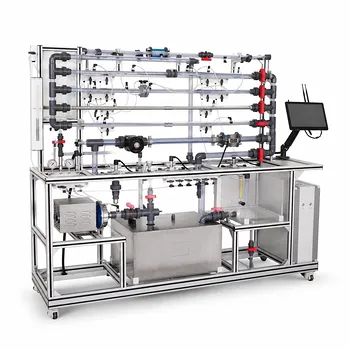
Comprehensive Fluid Mechanics Educational Unit Operations Pilot Plant
Hands-on fluid mechanics pilot plant for engineering education covering over 13 principles including pipe flow, minor losses, flowmeter calibration, and pump performance with industrial-grade components, smooth and rough piping, venturi and orifice flowmeters, and centrifugal pump testing and analysis.
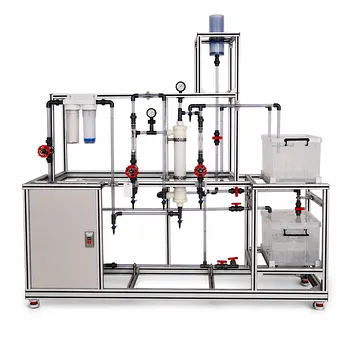
Ultrafiltration Membrane Separation Educational Pilot Plant
This ultrafiltration membrane separation educational pilot plant enables undergraduate students to process PVA solutions, study hollow fiber membrane dynamics, and perform quantitative analysis with spectrophotometry for hands-on learning of unit operations and industrial maintenance and membrane cleaning protocols.

Natural Product Extraction Unit Operations Training Pilot Plant
Integrated natural product extraction pilot plant for chemical engineering training bridges theory and industrial practice with modular extraction and evaporation/concentration units, hybrid touchscreen and manual control, realistic process simulation, and self-contained softened water and vacuum utilities.
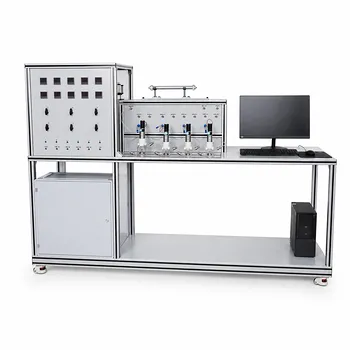
Gas Phase Mixing and Residence Time Distribution Determination Educational Unit Operations Pilot Plant
Integrated lab system for gas-phase mixing and RTD determination. Supports pulse and step tracer methods with dual CSTR and PFR reactors, industrial components, and PC data logging. Provides hands-on study of non-ideal flow and reactor behavior for university students.
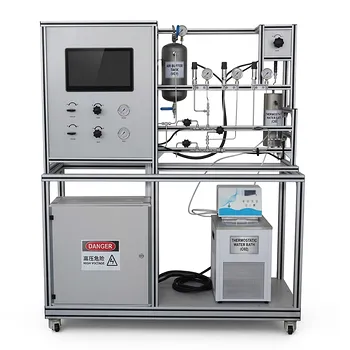
Throttling Effect Determination Educational Unit Operations Pilot Plant
Investigate the Joule-Thomson throttling effect with this educational unit operations pilot plant. Designed for engineering students, it enables hands-on comparative analysis of adiabatic gas expansion using precise process control, interactive digital interface, and eco-friendly operation, ensuring safe repeatable thermodynamic experiments.
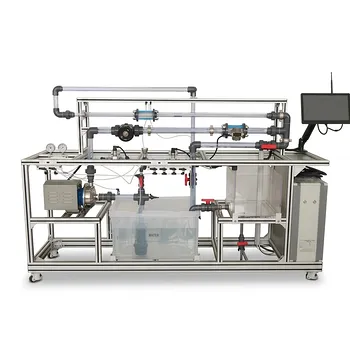
Centrifugal Pump Performance and Orifice Flowmeter Calibration Educational Pilot Plant
This versatile educational pilot plant enables engineering students to conduct centrifugal pump performance tests, orifice flowmeter calibration, and fluid mechanics experiments using a transparent flow loop, industrial HMI, and 3D virtual simulation for a comprehensive hands-on learning experience.
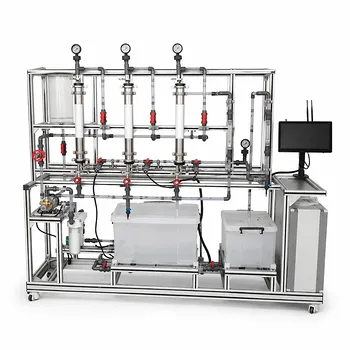
Multifunctional Membrane Separation Educational Pilot Plant with Ultrafiltration, Nanofiltration, Reverse Osmosis
An integrated laboratory bench-scale membrane separation system for higher education engineering labs combining Ultrafiltration, Nanofiltration, and Reverse Osmosis processes. Features industrial PLC control with touch-screen HMI, transparent piping, and academic assessment software. Ideal for chemical and environmental engineering curricula.

Multi-Reactor Educational Pilot Plant for Reaction Engineering Unit Operations
Integrated bench-scale educational pilot plant for chemical engineering teaching featuring fixed bed fluidized bed and stirred tank reactors with web-based digital twin controls and safety interlocks for hands-on unit operations and reaction engineering comparative studies in one compact system.

Dual-Mode Rectification Pilot Plant for Practical Training Unit Operations
Industrial-scale dual-mode rectification pilot plant for chemical engineering practical training. Features real-material and simulated-material operation modes, sieve-plate column with sight glasses for visual observation of hydrodynamics, and customizable SCADA control for safe, hands-on learning of unit operations and mass transfer.

Continuous Batch Extractive Distillation Educational Pilot Plant
Versatile pilot plant for continuous, batch, and extractive distillation training. High-borosilicate glass column for visualizing hydraulics, 15.6-inch touchscreen with data logging, precise reflux ratio control 1-99, and durable corrosion-resistant frame. Ideal for chemical engineering education and process research.

Constant Pressure Filtration Educational Unit Operations Pilot Plant
Hands-on educational pilot plant for constant pressure filtration. Classic plate and frame filter press allows students to study kinetics, determine specific cake resistance, perform cake washing and evaluate washing rates. Ideal for chemical engineering curriculum. Mobile, customizable, safety-compliant design.
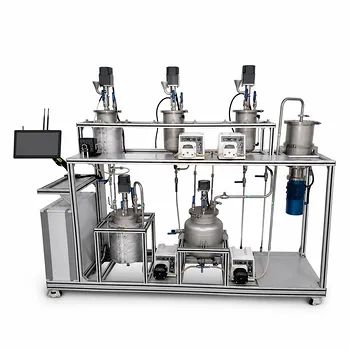
High-Gravity Emulsification and Mass Transfer Educational Pilot Plant
This integrated educational pilot plant utilizes rotating packed bed technology to demonstrate high-gravity emulsification and mass transfer, providing engineering students with hands-on experience in process intensification and unit operations through a modular, customizable design with digital monitoring.
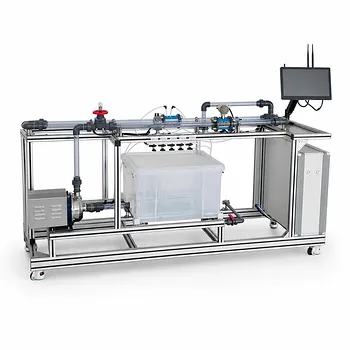
Orifice and Venturi Flowmeter Calibration Educational Pilot Plant for Fluid Mechanics Laboratory
Enhance fluid dynamics education with the Orifice and Venturi Flowmeter Calibration Educational Unit Operations Pilot Plant, featuring transparent orifice and Venturi meters, industrial sensors, touchscreen interface for real-time data analysis and automatic coefficient calculations in engineering student laboratories.
Related Articles
The Electric Ghost in Your Bioreactor: How Optical pH Sensors Are Ending a 50-Year Maintenance Ritual
Optical FRET-based pH and pCO₂ sensors eliminate ground-loop noise, slash response times to milliseconds, and survive repeated autoclaving—a step change for bioprocess pilot plants tired of nursing glass electrodes.
The Bridge Between a Material's Promise and a Carbon Capture Plant's Reality
A membrane pilot plant is not a scaled-down factory; it's a time machine for risk. Learn how hands-on testing exposes the hidden flaws—fouling, plasticization, and pressure penalties—that destroy the economics of CO₂ capture.
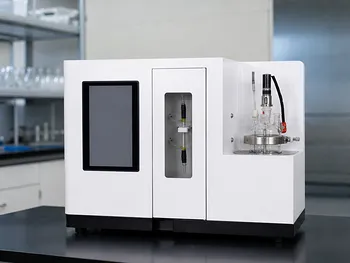
The 44% Error: Why Your Crystallization Pilot Plant is Lying About Yield
Ignoring water of hydration in crystal mass balances can inflate yield predictions by over 50%. A deep dive into the mass and energy balance coupling that separates an empirical observation from a predictable, scalable process.
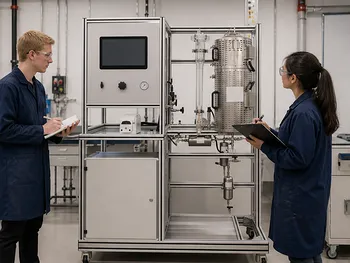
The Lever and the Leverage: Why a Pilot Plant Creates Engineers Who Build, Not Just Calculate
Catalytic reforming isn't a recipe; it's a war of trade-offs. Here’s how a pilot plant transforms abstract catalysis theory into the visceral, systems-thinking intuition that defines a great chemical engineer.
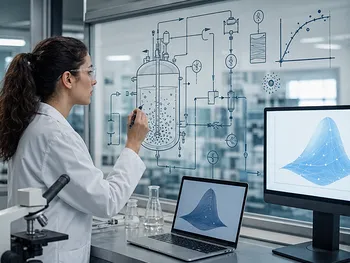
The Invisible Constraint: How First-Principles dCO₂ Modeling Turns Your Pilot Plant into a Predictive Engine
Learn how a first-principles dCO2 mass transfer model de-risks bioprocess scale-up. Validate with pilot plant data to predict manufacturing CO2 profiles, size spargers, and design control loops—eliminating costly full-scale trials.
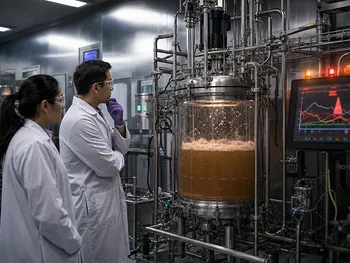
The Invisible Variable That Sinks Bioreactors—and How Pilot Plants Train You to See It
Dissolved CO₂ accumulation silently impairs cell growth and product quality. First-principles modelling, validated on pilot-scale training plants, turns this hidden risk into a controllable process parameter.