Blog The Electric Ghost in Your Bioreactor: How Optical pH Sensors Are Ending a 50-Year Maintenance Ritual
The Electric Ghost in Your Bioreactor: How Optical pH Sensors Are Ending a 50-Year Maintenance Ritual

The Electric Ghost in Your Bioreactor: How Optical pH Sensors Are Ending a 50-Year Maintenance Ritual

3 weeks ago

The 3 AM Panic Nobody Budgeted For

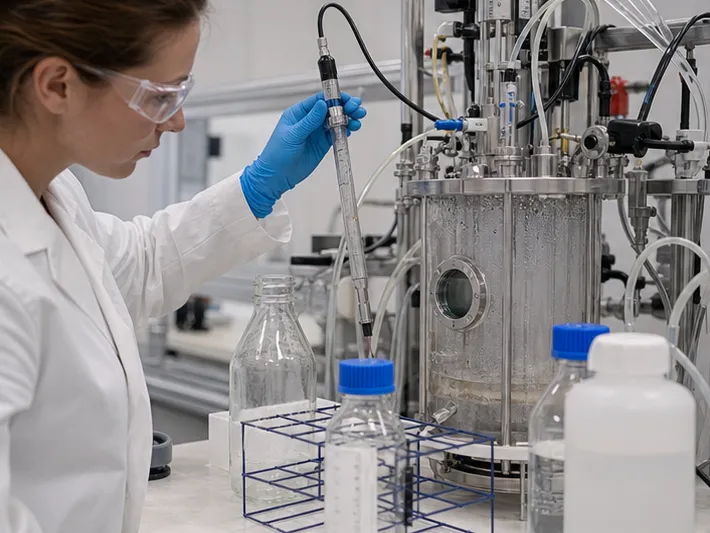
It always starts the same way. The pH on your fed‑batch run begins to drift—0.1, then 0.2 units—and you know the controller will compensate by adding acid or base. But you don’t know if the biology is changing or just the electrode. So you walk to the pilot plant at three in the morning, buffer solutions in hand, to retrace a ritual every fermentation engineer secretly dreads: pulling the probe, cleaning the junction, recalibrating against standards, and praying the noise disappears before the run collapses.

That ritual is not a personal failure. It’s a systemic one. And it lives inside the glass bulb you trust.

A Tiny Glass Wall Built to Fail

A traditional pH electrode is a beautiful, fragile machine. A hydrogen‑ion‑sensitive glass membrane develops a membrane potential proportional to the pH gradient between an internal chloride buffer and your broth. The signal travels through a reference junction—porous ceramic, a wet electrolyte path—to complete a galvanic cell. The Nernst equation then converts volts to pH.

In a quiet beaker, the design sings. In a fermentation pilot plant, it barely whispers.

Noise doesn’t come from the sensor—it comes from everything else around it

  • Variable‑speed drives from agitator motors induce ground‑loop currents that ride on the electrode’s high‑impedance signal.
  • Steam‑sterilization cycles crack the gel layer, shifting the glass’s hydration state and introducing offset errors you can’t predict.
  • The reference junction slowly fouls with proteins, cells, or just the slow drift of an electrolyte that’s trying to escape into a pressurized vessel.

Engineers have normalized this fragility for decades. Plants budget for drift acceptance, often settling for practical accuracy no better than ±0.25 pH. The mindset becomes: “pH is a suggestion, not a measurement.”

And then a run crashes not because the biology was wrong, but because nobody could trust the instrument that was supposed to watch it.

The Psychological Trap of a Noisy Sensor

Morgan Housel once wrote that risk is what you don’t see coming. In a pilot plant, the unseen risk is measurement anxiety—the creeping doubt that erodes your confidence in every control move, until you’re second‑guessing the data and operating the plant by feel.

That anxiety spikes every time:

  • You increase agitation and watch pH flicker.
  • You add a nutrient pulse and the signal momentarily saturates—not from metabolism, but from an electrical coupling nobody traced.
  • You need a tight glucose‑control cascade and realize the pH loop lags 90 seconds behind reality because the glass bulb can’t respond any faster.

The technical problem is noise, drift, and response time. The human problem is that you stop trusting the system you built.

What If You Could Fire the Entire Electrical Pathway?

Optical FRET‑based pH sensors flip a simple assumption. Instead of asking a glass electrode to survive a harsh electrical environment, they remove the electrical pathway completely.

The measurement becomes purely photonic.

The chemistry that replaces the galvanic cell

Inside a proton‑permeable sol‑gel matrix, two molecules are locked side by side:

  • A pH‑insensitive fluorescence donor (e.g., Texas Red Hydrazide) that glows when hit with low‑cost red light.
  • A pH‑sensitive, non‑fluorescent acceptor (e.g., Bromothymol Blue) that changes its absorption spectrum with pH.

When the acceptor’s absorption overlaps the donor’s emission, the donor’s energy transfers to the acceptor through Fluorescence Resonance Energy Transfer (FRET)—a non‑radiative quench. More quenching means higher pH. The intensity of light coming back from the sensor becomes a direct report of proton concentration.

There is no wire. No reference junction. No electrolyte. Just glass, gel, light, and a response that happens in milliseconds.

pCO₂ follows the same elegant logic

Add a gas‑permeable membrane over the same FRET layer and dissolve CO₂ in the process. The gas crosses the membrane, shifts the pH of an internal bicarbonate film, and the dye pair reports the change. One optical platform, two critical analytes, zero electrochemical vulnerabilities.

The Engineer’s Romance of a Clean Signal

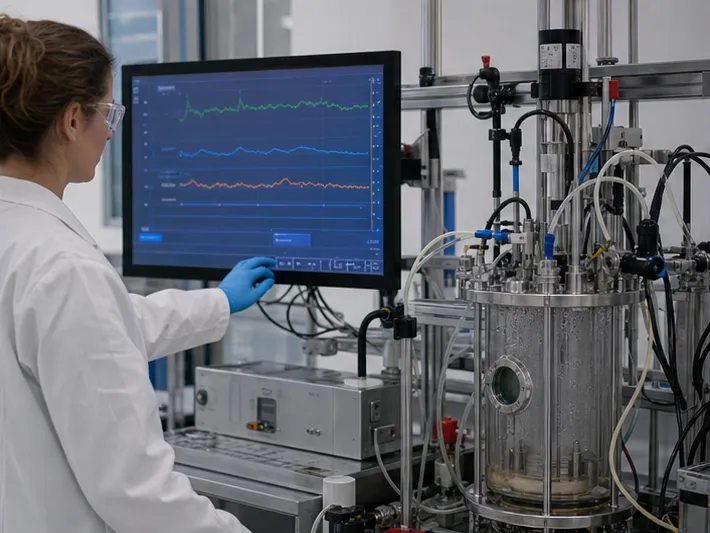
There is a quiet joy in watching a real‑time pH trace that doesn’t flinch when a 37 kW drive ramps up. It feels like a promise kept: what you measure is what the cells actually feel.

That emotional shift—from doubting to trusting the instrument—is not a soft metric. It changes how you run the plant.

  • You can design dynamic feeding strategies that react to true metabolic transients, not electrode hysteresis.
  • You can autoclave the sensor in place without breaking the measurement chain, turning sterilization from a calibration‑killer into a one‑button event.
  • You stop budgeting 45 minutes of operator time per day for probe maintenance and re‑assign that skill to process development.

Engineers don’t talk about it at conferences, but the relief is real: you finally get to sleep through the night.

What Optical Sensors Really Demand From You
The Electric Ghost in Your Bioreactor: How Optical pH Sensors Are Ending a 50-Year Maintenance Ritual 1

The switch isn’t free. But the price tag is not in cash—it’s in a handful of mental shifts.

Photobleaching is a gradual, predictable fade

Over weeks of continuous illumination, the trapped dyes can photobleach. The solution is elegantly simple: lower the excitation intensity or pulse the measurement. A good optical design stretches dye lifetime to match a full cultivation campaign, and then some.

Calibration still matters—but it sticks longer

You calibrate with standard buffers, just as before. The difference? The sol‑gel matrix holds calibration so reliably that verification intervals shift from hours to days or weeks. GMP environments still require documentation, but the urgency disappears.

Retrofitting isn’t always plug‑and‑play

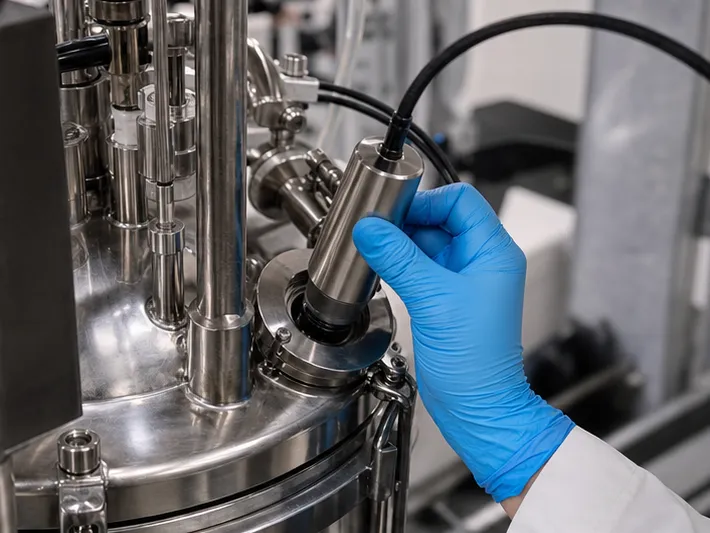
An optical probe may need a new bioreactor port, a fiber‑optic connection, and a control‑system interface. But most modern pilot‑plant designs from suppliers who understand bioprocess integration make this straightforward—especially when the vessel is built for optical windows from the start.

Where Optical FRET Probes Win (And Where They Wait)
The Electric Ghost in Your Bioreactor: How Optical pH Sensors Are Ending a 50-Year Maintenance Ritual 2

Not every vessel needs to abandon glass. The decision tree is surprisingly simple once you map the pain.

Your Dominant Pain Point The Right Technology
Ground‑loop currents and electrical noise corrupting pH Optical FRET sensor—physically decoupled from the electrical system
Frequent calibration during weeks‑long runs Optical pH/CO₂ probe—slashes maintenance windows
Missing fast metabolic dynamics for advanced control Millisecond‑range FRET sensor—catches what glass cannot see
Tight budget, fleet of older small‑scale glass reactors Glass electrodes remain workable, but you accept skilled‑labor costs

The table is not a battle of good versus bad. It’s a mapping of tolerance. If your operation’s ambition outruns the glass electrode’s reliability envelope, optics are no longer a novelty—they’re the default engineering choice.

Building the Plant That Doesn’t Apologize for Its Sensors
The Electric Ghost in Your Bioreactor: How Optical pH Sensors Are Ending a 50-Year Maintenance Ritual 3

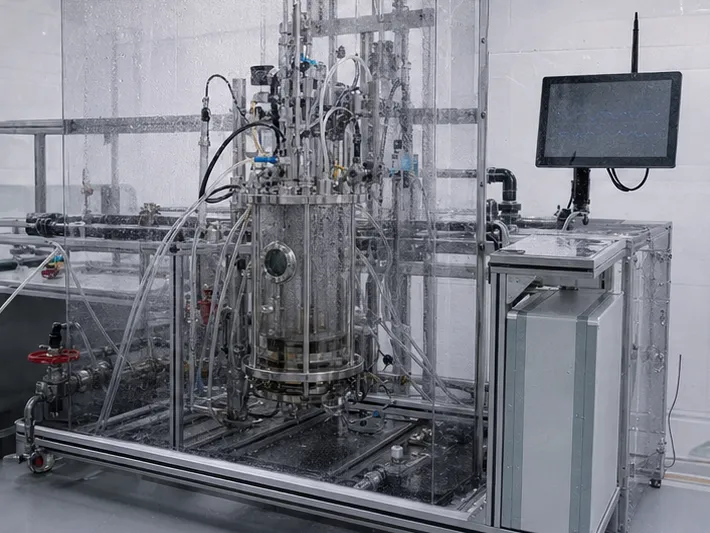
Integrating optical pH and pCO₂ monitoring is most rewarding when the entire pilot‑plant architecture is designed around the data pipeline, not retrofitted around an old electrical paradigm. That’s where LABPARK’s Educational and Vocational Unit Operations Pilot Plants enter the picture.

LABPARK builds bioprocess, chemical engineering, and environmental treatment pilot systems that are engineered to accept the best measurement technology available. Whether it’s a university teaching lab that needs zero‑maintenance reliability across 20 student groups, or a research institute chasing a publication‑grade metabolic flux study, the plant’s sensor integration is treated as a first‑class design constraint—not an afterthought.

When your vessel arrives with optical ports, integrated data buses, and sterilization cycles validated for sol‑gel probes, the gap between wanting optical precision and having it shrinks to a few days of commissioning. You don’t have to be the sensor expert; you just have to run the fermentation and trust your readings.

That trust is what makes advanced sensor technology finally feel like a productive tool rather than a research project.

Ready to stop babysitting glass electrodes and start trusting your data? Contact Our Experts

Related Products

Related Articles

Related Products

Orifice and Venturi Flowmeter Calibration Educational Pilot Plant for Fluid Mechanics Laboratory
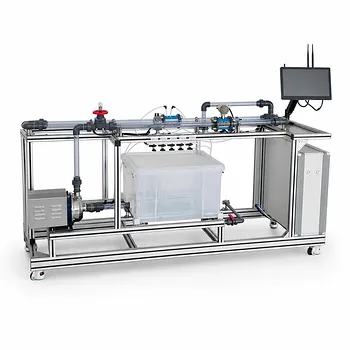
Orifice and Venturi Flowmeter Calibration Educational Pilot Plant for Fluid Mechanics Laboratory
Enhance fluid dynamics education with the Orifice and Venturi Flowmeter Calibration Educational Unit Operations Pilot Plant, featuring transparent orifice and Venturi meters, industrial sensors, touchscreen interface for real-time data analysis and automatic coefficient calculations in engineering student laboratories.

Photocatalytic Membrane Separation and Degradation Unit Operations Pilot Plant

Photocatalytic Membrane Separation and Degradation Unit Operations Pilot Plant

Bench-scale pilot plant integrating photocatalytic degradation with membrane separation for engineering education. Study advanced oxidation, microfiltration, and hybrid processes using industrial sensors. Features safety light-blocking curtain, low-noise compressor, and durable stainless-steel construction.

Constant Pressure Filtration Educational Unit Operations Pilot Plant

Constant Pressure Filtration Educational Unit Operations Pilot Plant

Hands-on educational pilot plant for constant pressure filtration. Classic plate and frame filter press allows students to study kinetics, determine specific cake resistance, perform cake washing and evaluate washing rates. Ideal for chemical engineering curriculum. Mobile, customizable, safety-compliant design.

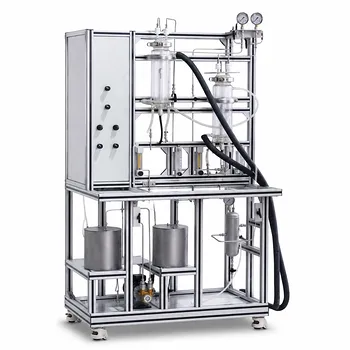
Carbon Dioxide PVT Curve Determination Educational Unit Operations Pilot Plant

Carbon Dioxide PVT Curve Determination Educational Unit Operations Pilot Plant

Enable hands-on learning of thermodynamic principles with this carbon dioxide PVT curve determination pilot plant. Students visualize critical opalescence, phase transitions, and generate P-V isotherms across liquid, gas, and supercritical regions. Robust safety features, adaptable for university engineering labs.

Centrifugal Pump Performance and Orifice Flowmeter Calibration Educational Pilot Plant

Centrifugal Pump Performance and Orifice Flowmeter Calibration Educational Pilot Plant
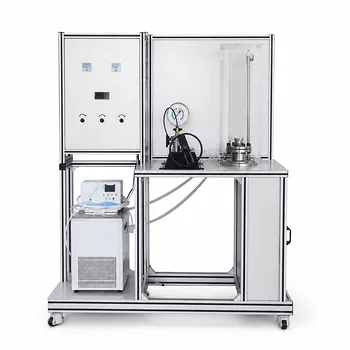
This versatile educational pilot plant enables engineering students to conduct centrifugal pump performance tests, orifice flowmeter calibration, and fluid mechanics experiments using a transparent flow loop, industrial HMI, and 3D virtual simulation for a comprehensive hands-on learning experience.

Cavitation Phenomenon Demonstration and Analysis Educational Unit Operations Pilot Plant

Cavitation Phenomenon Demonstration and Analysis Educational Unit Operations Pilot Plant

Advanced educational pilot plant for demonstrating and analyzing cavitation phenomena in fluid systems. Features a transparent acrylic Venturi test section, high-precision pressure and flow sensors, digital data acquisition, and integrated safety relief valves for engineering curricula.

Fluid Friction Resistance Determination Educational Unit Operations Pilot Plant

Fluid Friction Resistance Determination Educational Unit Operations Pilot Plant

Engineered bench-scale system for university engineering labs. Provides hands-on fluid mechanics experience: quantitative energy loss analysis, flow regime observation, friction coefficient determination. Features four-point pressure measurement, transparent sections, industrial touchscreen PLC, 3D virtual simulation. Ideal for chemical, mechanical, civil engineering.

Multifunctional Membrane Separation Educational Pilot Plant with Ultrafiltration, Nanofiltration, Reverse Osmosis

Multifunctional Membrane Separation Educational Pilot Plant with Ultrafiltration, Nanofiltration, Reverse Osmosis
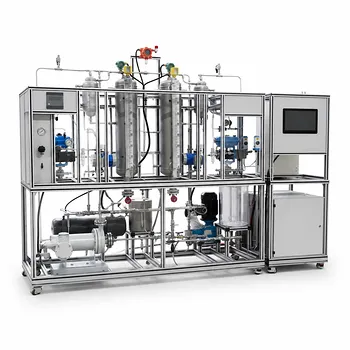
An integrated laboratory bench-scale membrane separation system for higher education engineering labs combining Ultrafiltration, Nanofiltration, and Reverse Osmosis processes. Features industrial PLC control with touch-screen HMI, transparent piping, and academic assessment software. Ideal for chemical and environmental engineering curricula.

Two Phase Flow Pattern Velocity Resistance Measurement Educational Pilot Plant

Two Phase Flow Pattern Velocity Resistance Measurement Educational Pilot Plant

Benchtop educational pilot plant for university labs studying gas-liquid two-phase flow patterns, velocity, and resistance across circular, square, and rectangular conduits. Features 15.6-inch touchscreen, 5G connectivity, differential pressure sensors, safe water-air operation. Supports chemical engineering curricula.

Ion Exchange Water Purification Educational Pilot Plant for Engineering Unit Operations
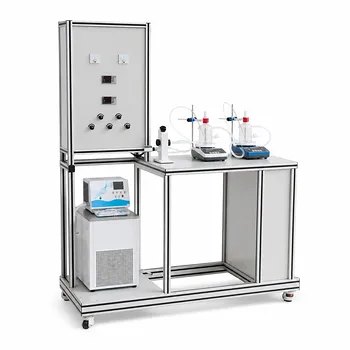
Ion Exchange Water Purification Educational Pilot Plant for Engineering Unit Operations

This bench-scale ion exchange pilot plant trains engineering students in water purification. Dual transparent columns simulate industrial softening and demineralization. Students observe fluid dynamics, perform resin regeneration, and analyze breakthrough curves. The corrosion-resistant frame ensures durability in unit operations experiments.

Alkaline Membrane Water Electrolysis Educational Pilot Plant Unit Operations Training System

Alkaline Membrane Water Electrolysis Educational Pilot Plant Unit Operations Training System

Hands-on educational pilot plant for alkaline membrane water electrolysis hydrogen production, integrating unit operations training with industrial PLC control, real-time data logging, customizable design, durable 316L stainless steel construction, explosion-proof safety, and modern 5G connectivity for university laboratories.

Ternary Liquid-Liquid Equilibrium Educational Pilot Plant

Ternary Liquid-Liquid Equilibrium Educational Pilot Plant

An integrated laboratory training system for engineering students to determine ternary liquid-liquid equilibrium data, construct phase diagrams, and gain hands-on experience with industrial instrumentation, including Abbe refractometer and magnetic stirrers, for precise data acquisition and curriculum-aligned experiments.

Rising and Falling Film Evaporation Educational Unit Operations Pilot Plant

Rising and Falling Film Evaporation Educational Unit Operations Pilot Plant

Hands-on educational pilot plant for studying rising and falling film evaporation, flow regimes, and heat transfer. Customizable for university labs with industrial instrumentation and data acquisition. Enables comparative evaluation of evaporation modes and energy efficiency.

Ultrafiltration Membrane Separation Educational Pilot Plant
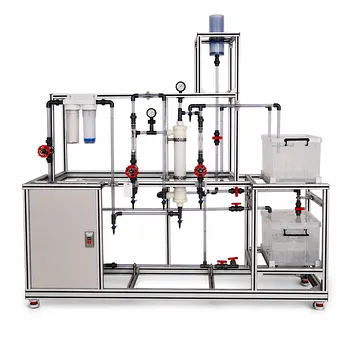
Ultrafiltration Membrane Separation Educational Pilot Plant
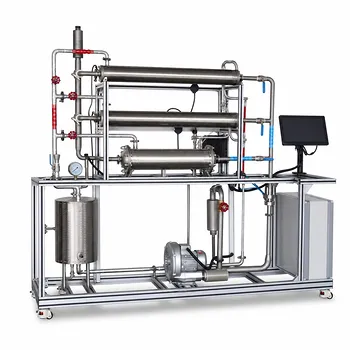
This ultrafiltration membrane separation educational pilot plant enables undergraduate students to process PVA solutions, study hollow fiber membrane dynamics, and perform quantitative analysis with spectrophotometry for hands-on learning of unit operations and industrial maintenance and membrane cleaning protocols.

Comprehensive Heat Transfer Coefficient Determination Educational Unit Operations Pilot Plant

Comprehensive Heat Transfer Coefficient Determination Educational Unit Operations Pilot Plant

Advanced industrial-grade educational pilot plant for comprehensive heat transfer coefficient determination. Enables quantitative convective heat transfer analysis, evaluates double-pipe and shell-and-tube exchanger configurations, and includes digital data acquisition. Customizable for engineering curriculum. Ideal for engineering unit operations labs.

Multi-Functional Membrane Separation Educational Pilot Plant for Unit Operations Lab

Multi-Functional Membrane Separation Educational Pilot Plant for Unit Operations Lab
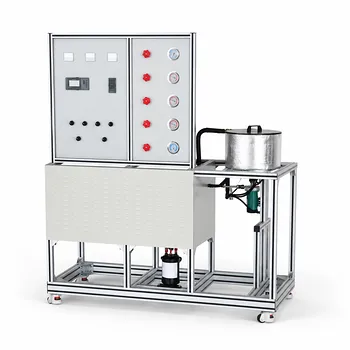
The Multi-functional Membrane Separation Educational Unit Operations Pilot Plant is an integrated bench-scale laboratory system designed for teaching undergraduate engineering education. It features Ultrafiltration, Nanofiltration, and Reverse Osmosis modules in a compact, mobile unit for practical hands-on learning.

Educational Compression Refrigeration Performance Determination Unit Operations Pilot Plant

Educational Compression Refrigeration Performance Determination Unit Operations Pilot Plant

This educational pilot plant for compression refrigeration performance determination offers dual COP evaluation, regenerative cycle comparison, and calorimeter calibration. Customizable for curriculum integration, it features environmentally conscious design. Supports thermodynamic mapping on pressure-enthalpy diagrams and synchronous monitoring with centralized instrumentation.

Electrolyte Distillation Purification and Formulation Educational Pilot Plant

Electrolyte Distillation Purification and Formulation Educational Pilot Plant

Integrated bench-to-pilot scale educational pilot plant for electrolyte distillation, purification, and formulation with borosilicate glass construction, PLC automation, touchscreen HMI, and advanced industrial safety features for hands-on chemical process training, ideal for chemical engineering and materials science curricula.

Educational Unit Operations Pilot Plant for Intraparticle Diffusion Effective Factor Measurement

Educational Unit Operations Pilot Plant for Intraparticle Diffusion Effective Factor Measurement

Designed for chemical engineering university labs, this pilot plant allows hands-on determination of catalyst particle intraparticle diffusion effective factors and gas-solid reaction kinetics using a fixed-bed tubular reactor with industrial touchscreen control, bridging theory and practical reactor design.

Electrolytic Hydrogen Production Educational Unit Operations Pilot Plant

Electrolytic Hydrogen Production Educational Unit Operations Pilot Plant

Bench-scale electrolytic hydrogen production pilot plant designed for university engineering labs. Provides hands-on training in water electrolysis, gas-liquid separation, and process safety. Fully customizable system with digital PID control, corrosion-resistant components, and hydrogen gas detector. Ideal for chemical engineering curricula.


Leave Your Message