Educational Environmental & Water Treatment Pilot Plants
Photocatalytic Membrane Separation and Degradation Unit Operations Pilot Plant
Item Number : LPK-CMBS
Price varies based on specs and customizations
- Xenon Lamp Power
- 300 W
- Maximum Operating Pressure
- 16 bar
- Liquid Flow Rate
- 0-10 L/h

Shipping:
Contact us to get shipping details Enjoy On-time Dispatch Guarantee.
Why Choose Us
Easy ordering process, quality products, and dedicated support for your business success.
Introduction
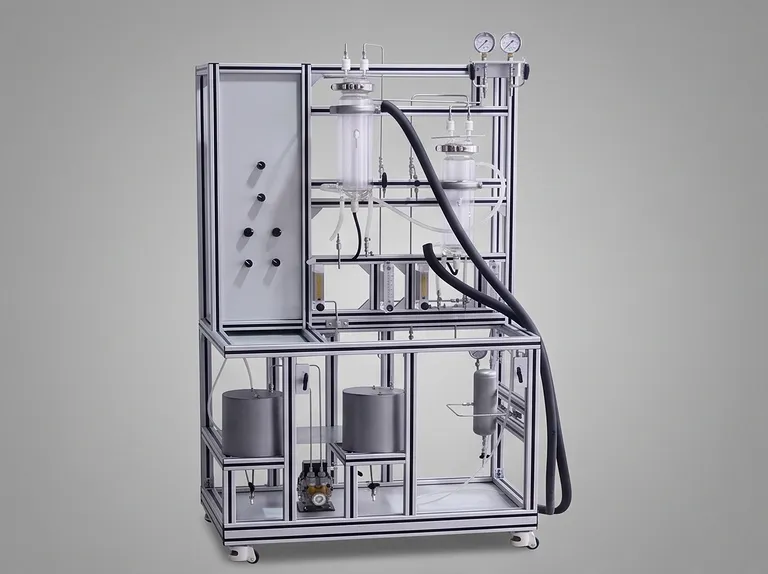
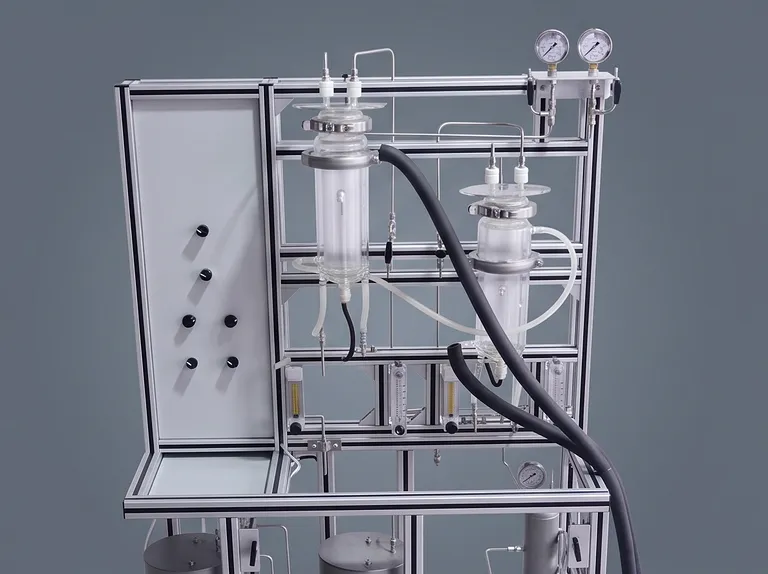
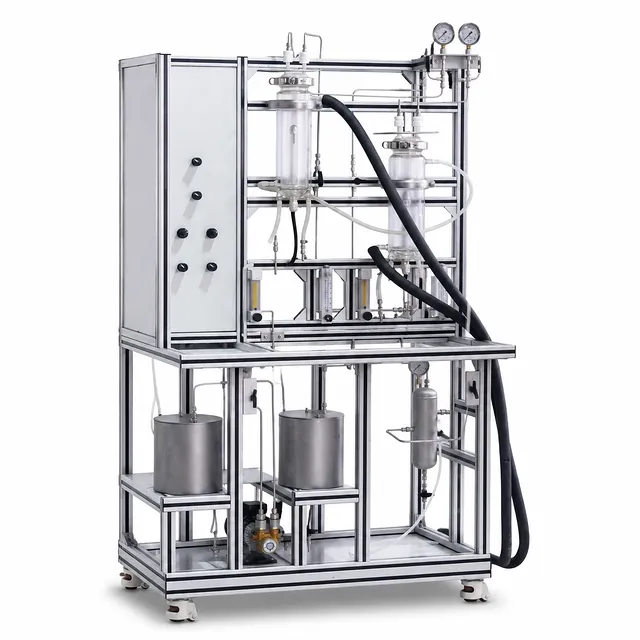
The Photocatalytic Membrane Separation and Degradation Educational Unit Operations Pilot Plant is an integrated, bench-scale training system designed for engineering laboratories in higher education. This unit seamlessly combines advanced oxidation processes (AOPs) with physical membrane separation, allowing students to investigate synergistic degradation and filtration mechanisms. By providing a tangible platform to study photocatalysis alongside microfiltration or ultrafiltration, this pilot plant helps bridge the gap between theoretical transport phenomena and practical environmental process engineering.
Customization and Flexibility
To accommodate diverse laboratory spaces, curriculum requirements, and specific teaching goals, this pilot plant is fully adaptable. Both the hardware components and the software interfaces can be customized to align with your department’s specific course structures, enabling educators to tailor the system to their unique pedagogical and research needs.
Key Pedagogical Features and Advantages
- Integrated Multi-Process Training: Allows students to study photocatalytic reaction kinetics and membrane separation as separate operations or as a single, continuous hybrid process.
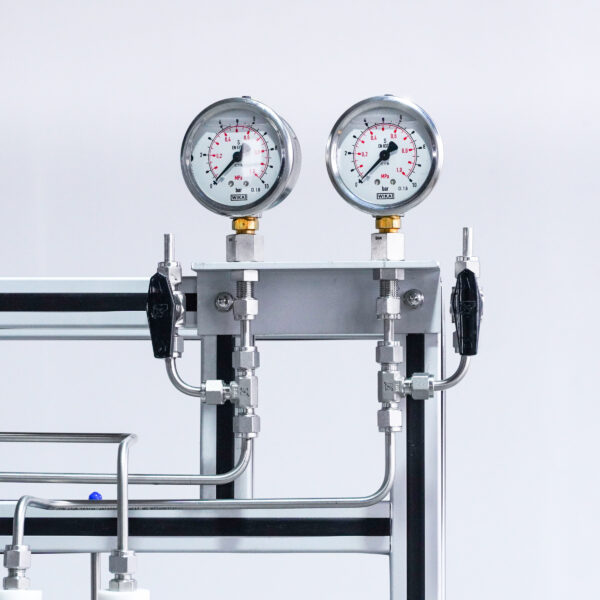
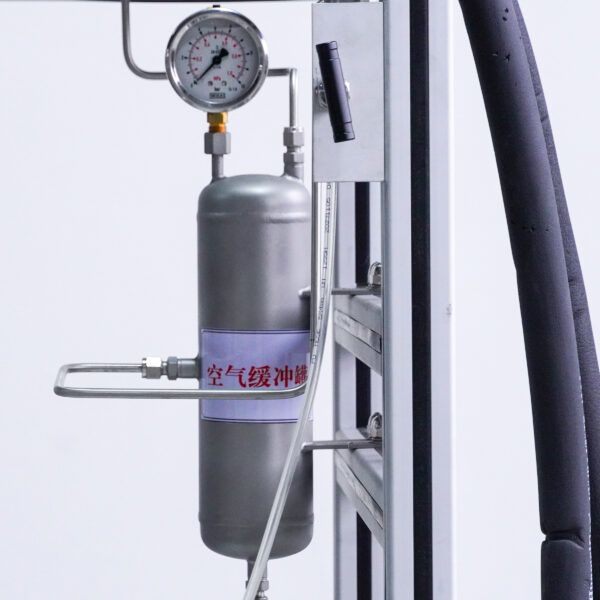
- Engineering-Scale Instrumentation: Equipped with industrial-standard sensors, flow meters, and pressure-regulating systems that introduce students to real-world process monitoring and control.
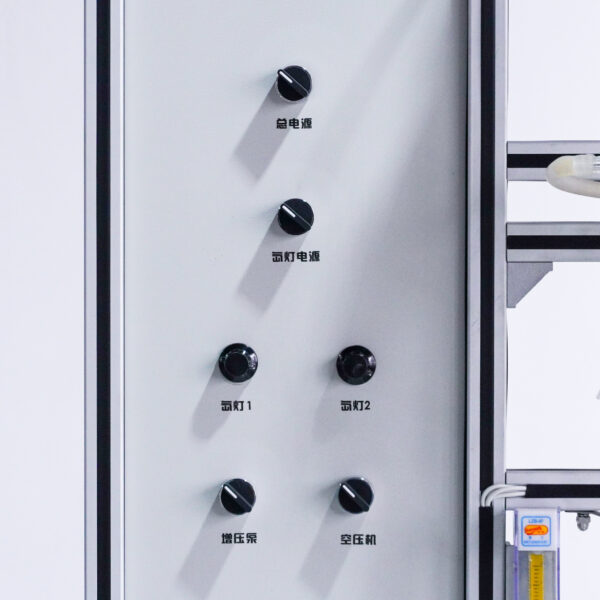
- Enhanced Laboratory Safety: Designed with comprehensive safety features, including electrical leakage protection, a low-noise air compressor (≤65 dB), and a manually adjustable light-blocking curtain to shield students from direct UV/visible light exposure.
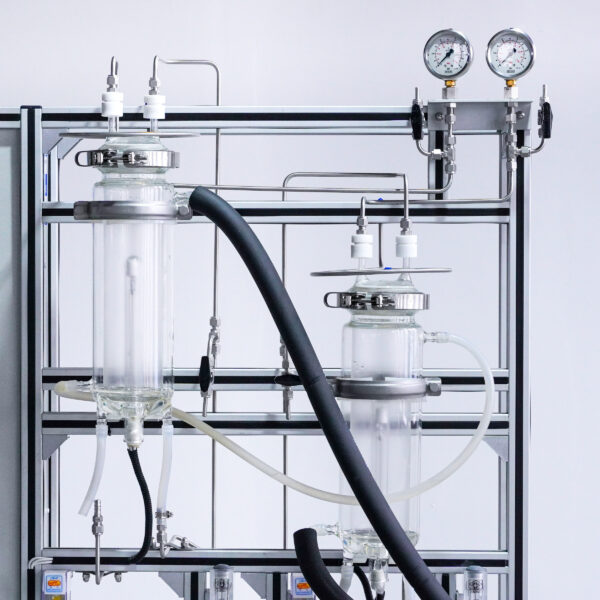
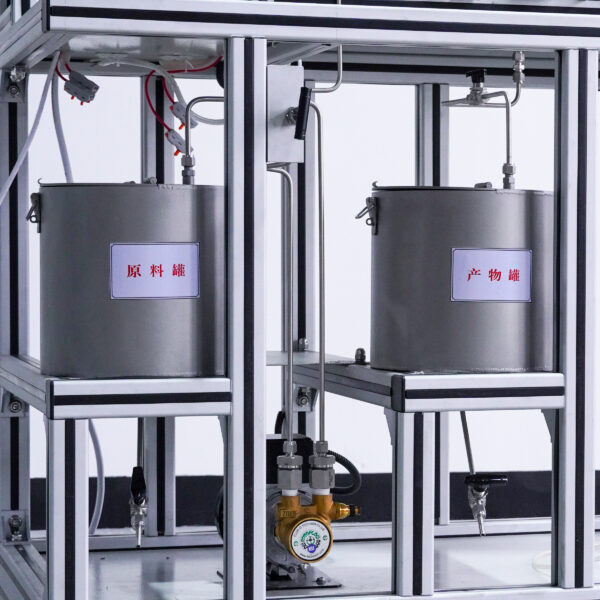
- Durable and Visual Design: Constructed with high-grade 304 stainless steel tanks and a robust, mobile aluminum alloy frame. Transparent reaction vessels allow clear visualization of fluid dynamics and photocatalytic reactions in real time.
Detail & Parts
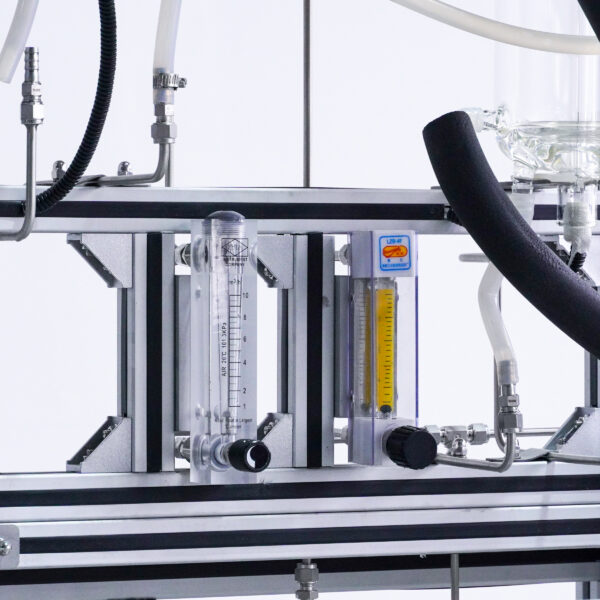
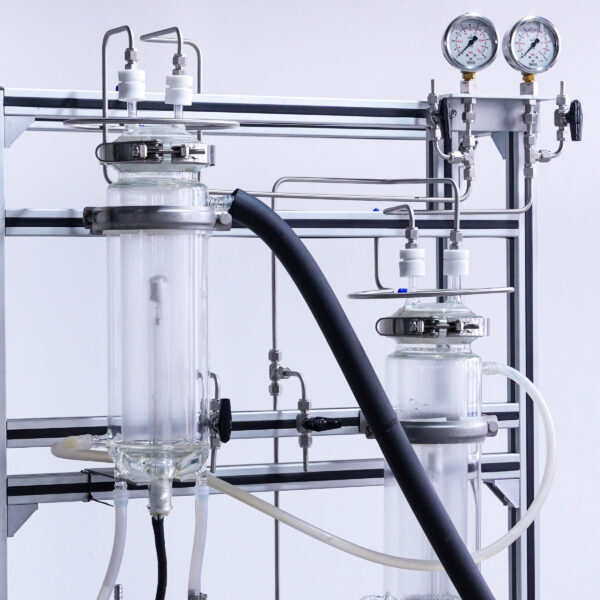
Technical Specifications and Curricular Integration
The system’s technical components are specifically paired with key academic concepts to reinforce textbook-based learning through physical experimentation.
| System Component / Experimental Module | Technical Parameters / Operational Capabilities | Core Concepts & Academic Alignment |
|---|---|---|
| Xenon Light Source Assembly | 300 W Xenon lamp simulating solar spectrum, complete with adjustable intensity and a protective light-shielding curtain. | Photo-activation energy, reaction kinetics, and catalyst absorption characteristics. |
| Feed and Product Management | Corrosion-resistant 304 stainless steel tanks with high-accuracy gas (0–160 mL/min) and liquid (0–10 L/h) rotameters. | Material balances, volumetric flow rates, and residence time distribution (RTD). |
| Pressurized Membrane System | Pressure-regulating pump operating up to 16 bar, supported by shock-resistant mechanical pressure gauges. | Transmembrane pressure (TMP), membrane permeability, and hydraulic resistance. |
| Photocatalytic Degradation Module | Batch or continuous degradation of organic model compounds using suspended or immobilized catalysts. | Heterogeneous catalysis, reaction rate constants, and mass transfer limitations. |
| Membrane Separation Module | Filtration and concentration of treated effluents with active monitoring of flux decline. | Membrane fouling, concentration polarization, and solute rejection coefficients. |
Alignment with Academic Curricula and Classic Textbooks
This pilot plant is engineered to support core laboratory courses in chemical engineering, environmental engineering, water treatment, and materials science. By executing experiments on this unit, students gain firsthand experience with the mathematical models and physical principles described in leading academic textbooks:
- Unit Operations of Chemical Engineering: The pilot plant provides practical visualization of membrane separation processes, enabling students to calculate flux, membrane resistance, and rejection rates, directly reinforcing the chapters dedicated to membrane separations and filtration.
- Transport Processes and Unit Operations: Students can study mass transfer and diffusion through porous membranes, validating empirical equations for liquid-phase transport under varying pressure and concentration gradients.
- Chemical Engineering Design: The integrated setup demonstrates process synthesis and safety standards in pilot-scale operations. It serves as an excellent case study for reactor design, instrumentation selection, and the scaling up of continuous-flow chemical systems.
Using these textbook-aligned terminology and exercises, professors can easily integrate this unit into existing course syllabi, ensuring that laboratory sessions directly complement classroom lectures.
Software and Hardware Customization Services
To support evolving academic programs, we provide extensive custom engineering options. On the hardware side, the system can be modified to support different membrane module configurations (such as tubular, hollow fiber, or flat sheet) and alternative light sources. On the software side, we offer customizable data acquisition and control systems, ranging from manual analog control panels to fully digitized, computer-integrated interfaces with real-time data logging and analytical software.
About LABPARK
LABPARK has spent over 20 years serving higher education, delivering specialized laboratory equipment designed to foster engineering excellence. We focus on providing robust, curriculum-aligned training solutions across six key academic domains: Chemistry, Chemical Engineering, Biotechnology, Food Engineering, Pharmaceutical Engineering, and Environmental Engineering.
Driven by innovation and pedagogical utility, LABPARK holds 209 technical patents and has established collaborative partnerships with more than 289 universities and colleges worldwide. All our products are developed and manufactured within our modern, 49,000-square-meter production and R&D base, ensuring high quality control and dependable long-term support for academic institutions globally.
Trusted by Industry Leaders
REQUEST A QUOTE
Our professional team will reply to you within one business day. Please feel free to contact us!
Related Products

Multi-Functional Membrane Separation Educational Pilot Plant for Unit Operations Lab
The Multi-functional Membrane Separation Educational Unit Operations Pilot Plant is an integrated bench-scale laboratory system designed for teaching undergraduate engineering education. It features Ultrafiltration, Nanofiltration, and Reverse Osmosis modules in a compact, mobile unit for practical hands-on learning.

Multifunctional Membrane Separation Educational Pilot Plant with Ultrafiltration, Nanofiltration, Reverse Osmosis
An integrated laboratory bench-scale membrane separation system for higher education engineering labs combining Ultrafiltration, Nanofiltration, and Reverse Osmosis processes. Features industrial PLC control with touch-screen HMI, transparent piping, and academic assessment software. Ideal for chemical and environmental engineering curricula.
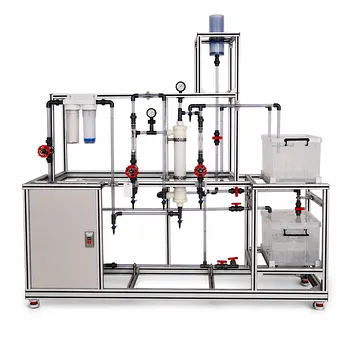
Ultrafiltration Membrane Separation Educational Pilot Plant
This ultrafiltration membrane separation educational pilot plant enables undergraduate students to process PVA solutions, study hollow fiber membrane dynamics, and perform quantitative analysis with spectrophotometry for hands-on learning of unit operations and industrial maintenance and membrane cleaning protocols.

Multi Functional Membrane Crystallization Educational Unit Operations Pilot Plant
Integrated bench-scale membrane crystallization pilot plant for engineering education. Provides hands-on training in advanced separation technologies, combining membrane distillation crystallization and process intensification. Features variable scaling vessels, industrial-grade flow control, and interactive digital data acquisition. Customizable for university labs.
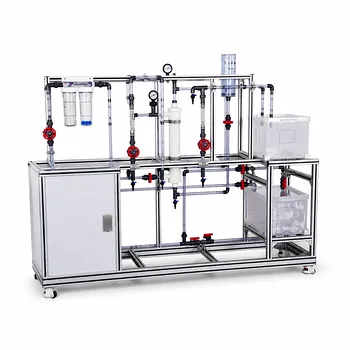
Hollow Fiber Ultrafiltration Membrane Separation Educational Pilot Plant
Explore our hollow fiber ultrafiltration membrane separation educational pilot plant for hands-on learning of industrial ultrafiltration processes, flux analysis, fouling mitigation, and process control. Compact, customizable, and built for engineering labs.
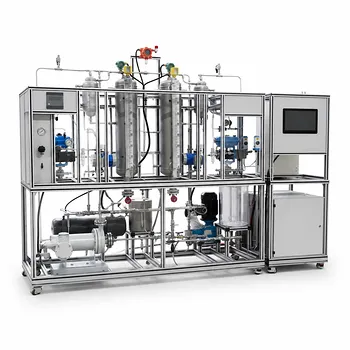
Alkaline Membrane Water Electrolysis Educational Pilot Plant Unit Operations Training System
Hands-on educational pilot plant for alkaline membrane water electrolysis hydrogen production, integrating unit operations training with industrial PLC control, real-time data logging, customizable design, durable 316L stainless steel construction, explosion-proof safety, and modern 5G connectivity for university laboratories.

Fixed-Bed Chemical Reaction and Gas Dust Tar Removal Unit Operations Pilot Plant
Integrated educational pilot plant for studying catalytic gas-solid reactions and downstream gas purification. Features dual fixed-bed reactor, three-stage heating, and touchscreen control for hands-on engineering training. Ideal for chemical and environmental engineering curricula.

Dual-Mode Rectification Pilot Plant for Practical Training Unit Operations
Industrial-scale dual-mode rectification pilot plant for chemical engineering practical training. Features real-material and simulated-material operation modes, sieve-plate column with sight glasses for visual observation of hydrodynamics, and customizable SCADA control for safe, hands-on learning of unit operations and mass transfer.

Multi-Reactor Educational Pilot Plant for Reaction Engineering Unit Operations
Integrated bench-scale educational pilot plant for chemical engineering teaching featuring fixed bed fluidized bed and stirred tank reactors with web-based digital twin controls and safety interlocks for hands-on unit operations and reaction engineering comparative studies in one compact system.
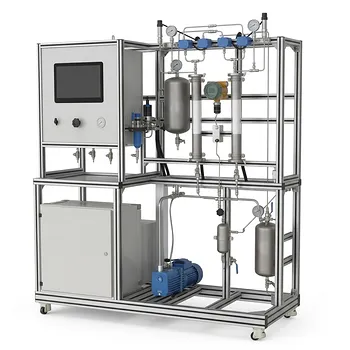
Pressure Swing Adsorption Educational Unit Operations Pilot Plant
Integrated bench-scale pressure swing adsorption pilot plant for hands-on teaching of gas-solid separation, mass transfer, and process optimization using nitrogen-oxygen model, featuring dual-column design, industrial touchscreen control, digital assessment suite, and customizable hardware and software configurations for educational laboratories.

Methane Cracking Educational Unit Operations Pilot Plant
This bench-scale methane cracking educational pilot plant provides hands-on catalytic conversion training with a 1000°C furnace, seven mass flow controllers, and real-time automation for safe, curriculum-aligned experiments. Designed for university teaching of unit operations and reaction engineering.

Gas-Solid Heterogeneous Separation Demonstration Educational Unit Operations Pilot Plant
Comprehensive visual transparent gas-solid separation pilot plant for chemical engineering labs. Demonstrates gravity settling inertial settling cyclone and bag filter technologies. Enables real-time analysis of fluid-particle mechanics pressure drop and collection efficiency. Ideal for undergraduate unit operations courses.

Bio-fermentation Ethanol Production Practical Training Unit Operations Pilot Plant
Bio-fermentation ethanol production pilot plant for hands-on training in unit operations: fermentation, solid-liquid filtration, membrane separation, and distillation. Bridges theory with industrial practice using industrial-grade components, customizable for university labs. Hybrid automated and manual control for comprehensive learning.

Polymerization Granulation and Pellet Processing Educational Unit Operations Pilot Plant
Integrated pilot plant for teaching polymer processing from polymerization to pelletizing. Includes 30L reactor, hydrolyzer, extruder-granulator, vibration dryer, crusher, and sieve. Atmospheric pressure operation for safety, corrosion-resistant SS, customizable for chemical and polymer engineering education. Ideal for university labs.

Multi Functional Catalytic Reaction and Reactor Evaluation Educational Unit Operations Pilot Plant
Bench-scale educational pilot plant for catalytic reaction and reactor evaluation, integrating fixed bed, fluidized bed, and stirred tank reactors. Students compare reactor designs, evaluate catalysts, and study reaction kinetics and hydrodynamics. Perfect for unit operations labs in chemical engineering curricula.

Multi-Functional Drying Educational Unit Operations Pilot Plant
Versatile multi-functional drying educational unit operations pilot plant integrating tunnel, fluidized bed, and spray drying. Enables hands-on study of drying curves, psychrometry, and gas-solid separation for chemical engineering curriculum in higher education labs.
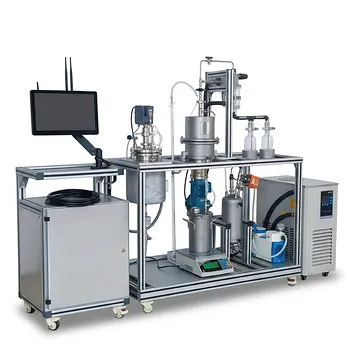
Supercritical High-Gravity Flash Evaporation Educational Unit Operations Pilot Plant
Bench-scale integrated teaching system for advanced separation and mass transfer, combining supercritical high-gravity flash evaporation with heating, chemical reaction, and material collection, featuring modular design, Stainless Steel 316L construction, transparent visualization, touchscreen control, and safety systems for chemical engineering education.

Dual-Mode Gas Absorption and Desorption Unit Operations Training Pilot Plant
Industrial-scale pilot plant for gas absorption and desorption training in chemical engineering. Features dual-mode operation with real and simulated materials, transparent columns for flow visualization, and customizable design. Supports independent or combined loops for hands-on unit operations experiments.

Educational Unit Operations Pilot Plant for Intraparticle Diffusion Effective Factor Measurement
Designed for chemical engineering university labs, this pilot plant allows hands-on determination of catalyst particle intraparticle diffusion effective factors and gas-solid reaction kinetics using a fixed-bed tubular reactor with industrial touchscreen control, bridging theory and practical reactor design.

Absorption and Desorption Educational Unit Operations Pilot Plant
Dual packed column absorption and desorption pilot plant for chemical engineering education, offering real-time mass transfer coefficient measurement, durable mobile frame, industrial touch-screen interface, and customizable design for varied laboratory curricula, enabling hands-on study of gas absorption and stripping.
Related Articles
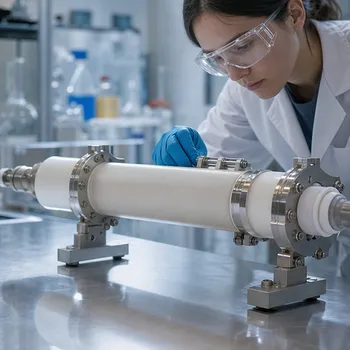
The Bridge Between a Material's Promise and a Carbon Capture Plant's Reality
A membrane pilot plant is not a scaled-down factory; it's a time machine for risk. Learn how hands-on testing exposes the hidden flaws—fouling, plasticization, and pressure penalties—that destroy the economics of CO₂ capture.
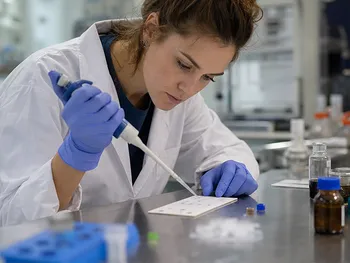
The Intuition You Can’t Simulate: Why the Best Bioprocess Education Still Lives on a Thin-Layer Plate
Before engineers trust a $500,000 bioreactor, they must trust their own hands. How thin-layer chromatography (TLC) builds the tacit knowledge that separates trained operators from true process engineers—and why LABPARK pilot plants preserve this irreplaceable skill.
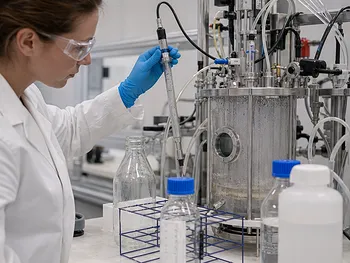
The Electric Ghost in Your Bioreactor: How Optical pH Sensors Are Ending a 50-Year Maintenance Ritual
Optical FRET-based pH and pCO₂ sensors eliminate ground-loop noise, slash response times to milliseconds, and survive repeated autoclaving—a step change for bioprocess pilot plants tired of nursing glass electrodes.
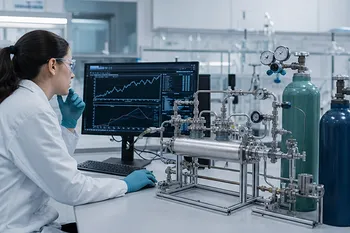
The Ideal-Selectivity Trap: How Pilot Plants Expose the Real Story of Membrane CO₂ Capture
A lab cell measures a membrane’s ideal selectivity; only a pilot plant reveals how it behaves under real flue gas stress, impurities, and economics. Uncover the truth before scaling up.
The Invisible Variable That Sinks Bioreactors—and How Pilot Plants Train You to See It
Dissolved CO₂ accumulation silently impairs cell growth and product quality. First-principles modelling, validated on pilot-scale training plants, turns this hidden risk into a controllable process parameter.