Vocational Chemical Engineering Pilot Plants
Dual-Mode Gas Absorption and Desorption Unit Operations Training Pilot Plant
Item Number : LPK-SMTXS
Price varies based on specs and customizations
- Footprint Dimensions
- 3930 x 2560 x 4060 mm (L x W x H)
- Control System
- PC-based SCADA with dual-mode simulation
- Column Construction
- Transparent, corrosion-resistant packed sections

Shipping:
Contact us to get shipping details Enjoy On-time Dispatch Guarantee.
Why Choose Us
Easy ordering process, quality products, and dedicated support for your business success.
Introduction
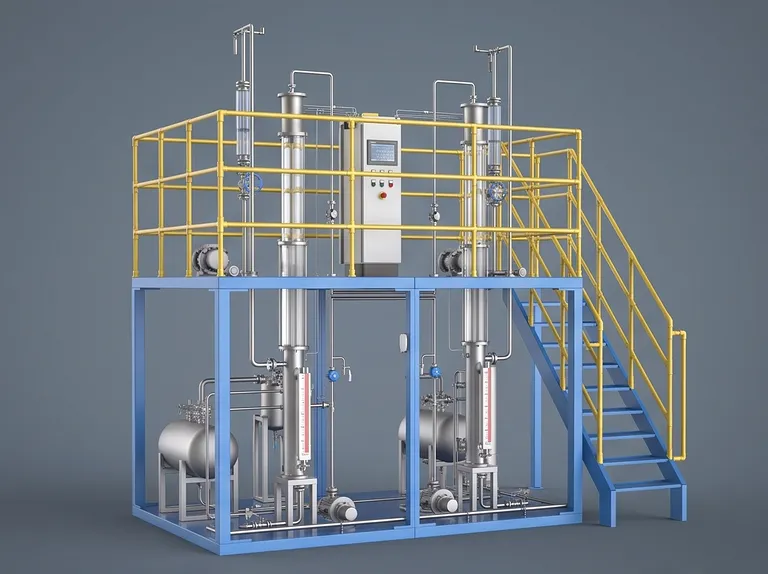
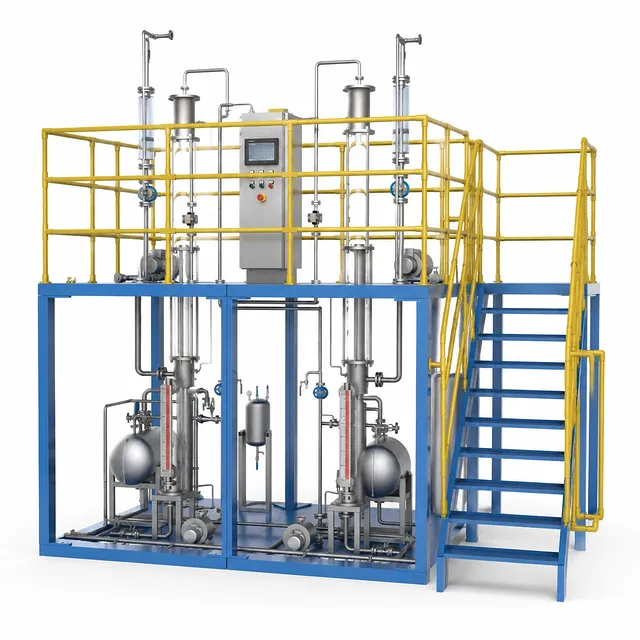
The Dual-Mode Gas Absorption and Desorption Practical Training Unit Operations Pilot Plant is an industrial-scale, two-story laboratory system designed for chemical engineering and related academic disciplines. It provides a hands-on environment for undergraduate students to investigate gas-liquid mass transfer processes, specifically packed-tower absorption and desorption (stripping). Built on a robust, double-tier steel framework with integrated safety handrails and an access staircase, this pilot plant bridges the gap between theoretical classroom concepts and industrial process operations.
To align with diverse laboratory spaces and specific curriculum goals, this pilot plant features a fully customizable design. Both the hardware components—such as column dimensions, piping configurations, and structural footprints—and the software systems—including control interfaces and mathematical simulation models—can be tailored to meet individual institutional requirements.
Key Features and Educational Advantages
- Dual-Mode Operation System:
- Real-Material Mode: The SCADA software collects real-time data from actual physical sensors and controls active hardware components such as pumps and flow control valves, enabling students to run physical mass transfer experiments.
- Simulated-Material Mode: The system operates using benign materials (such as water and air) while the software runs mathematical process models. By reading physical valve positions and instrument signals, the software dynamically simulates the behavior of complex or hazardous chemical systems, allowing safe, cost-effective, and green laboratory sessions.
- Visualized Mass Transfer: The absorption and desorption columns feature transparent packed sections, allowing students to visually observe critical two-phase flow phenomena, such as gas-liquid contact, wetting, loading, and the onset of flooding.
- Versatile Process Configurations: The system supports independent absorption, independent desorption, or combined absorption-desorption loops. In the combined mode, the liquid solvent can be run in a closed loop (recirculation) or an open loop (continuous feed and discharge).
- Industrial-Grade Engineering Experience: Operating on a two-story structure equipped with a safety staircase and 1.2-meter guardrails, students practice standard industrial tasks, including unit startup, shutdown, steady-state monitoring, maintenance checks, and process troubleshooting.
Technical Specifications
| Parameter / Component | Specification / Detail |
|---|---|
| Footprint Dimensions | Approximately 3930 mm × 2560 mm × 4060 mm (L × W × H) [Customizable to fit lab space] |
| Structural Frame | Steel construction with powder-coated finish; 3 mm checkered plate flooring for non-slip operation |
| Safety Features | 1.2 m high safety handrails on the upper platform; integrated angled safety ladder |
| Columns Included | 1 × Packed Absorption Column, 1 × Packed Desorption Column |
| Column Construction | Transparent, corrosion-resistant sections for visual observation of packing and fluid dynamics |
| Control System | PC-based SCADA system supporting real-time data acquisition and dual-mode simulation |
Curriculum Integration and Textbook Alignment
This pilot plant is designed to seamlessly integrate with core engineering curricula. By performing experiments on this unit, students gain practical insight into the transport phenomena and design principles covered in standard reference textbooks.
The experiments performed on this unit map directly to fundamental topics in key chemical engineering textbooks, including:
- Mass Transfer Theories: Directly relates to topics on diffusion, interphase mass transfer, and the determination of individual and overall mass transfer coefficients ($K_y a$, $K_x a$) found in Unit Operations of Chemical Engineering.
- Equilibrium-Stage Operations: Helps students visualize operating lines, equilibrium curves, and the concept of HTU (Height of a Transfer Unit) and NTU (Number of Transfer Units) described in Transport Processes and Unit Operations.
- Packed Column Design & Hydraulics: Illustrates pressure drop profiles, gas-liquid loading, and column flooding limits, which are critical parameters discussed in Chemical Engineering Design.
Syllabus Mapping
| Experimental Module | Core Textbook Topic | Key Learning Outcome |
|---|---|---|
| Hydrodynamics of Packed Columns | Pressure Drop & Flooding | Determine pressure drop as a function of gas and liquid flow rates; identify loading and flooding points. |
| Absorption Coefficient Determination | Interphase Mass Transfer | Calculate volumetric mass transfer coefficients under varying liquid spray densities. |
| Desorption (Stripping) Operations | Stripping & Solvent Regeneration | Evaluate the efficiency of solute removal from the liquid phase using gas stripping. |
| Closed-Loop Absorption-Desorption | Continuous Unit Operations | Understand steady-state recycle systems, solvent regeneration loops, and material balances. |
To ensure that the equipment continuously aligns with evolving academic standards and laboratory spaces, LABPARK offers comprehensive hardware and software modifications. This adaptability ensures long-term educational utility and allows instructors to update experimental parameters in step with regional curriculum updates.
About LABPARK
LABPARK is a dedicated manufacturer of higher education laboratory equipment, with over 20 years of experience serving universities and technical colleges worldwide. We specialize in providing comprehensive practical training systems across six key academic disciplines: Chemistry, Chemical Engineering, Biology, Food Engineering, Pharmaceutical Engineering, and Environmental Engineering.
Driven by continuous innovation, LABPARK holds 209 technical patents and has established successful partnerships with more than 289 universities and institutes globally. Our state-of-the-art research, development, and manufacturing base spans 49,000 square meters, ensuring that all equipment is manufactured to rigorous engineering standards for reliable and safe performance in educational environments.
Trusted by Industry Leaders
REQUEST A QUOTE
Our professional team will reply to you within one business day. Please feel free to contact us!
Related Products

Absorption and Desorption Educational Unit Operations Pilot Plant
Dual packed column absorption and desorption pilot plant for chemical engineering education, offering real-time mass transfer coefficient measurement, durable mobile frame, industrial touch-screen interface, and customizable design for varied laboratory curricula, enabling hands-on study of gas absorption and stripping.
Carbon Dioxide Absorption and Desorption Educational Pilot Plant for Carbon Capture Studies
Explore carbon dioxide absorption and desorption with this educational pilot plant. Transparent columns visualize mass transfer; electric heating simulates industrial solvent regeneration; touchscreen interface enables data monitoring. Ideal for chemical engineering, bridging theory and practice.
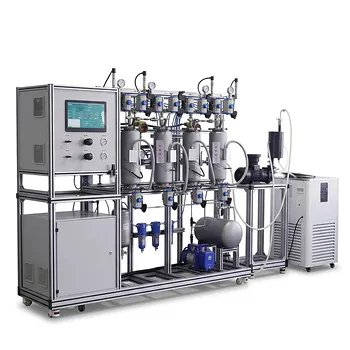
Multi-Component Gas Pressure Swing Adsorption Pilot Plant for Unit Operations Education
Multi-component gas pressure swing adsorption pilot plant designed for unit operations education. Features four-tower configuration, IoT touchscreen control, dual regeneration, and real-time breakthrough curve analysis for engineering training with safety interlocks and mobile frame simulates industrial PSA processes.

Multimodal Absorption and Desorption Pilot Plant for Unit Operations Training
Multimodal absorption and desorption pilot plant for higher education labs. Bridges theory and industrial practice with transparent packed columns, three operational modes (real-material, simulated, semi-physical), and SCADA control. Students explore mass transfer, column hydraulics, and process control. Customizable.
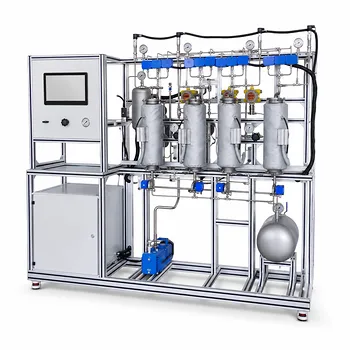
Carbon Dioxide Adsorption and Capture Educational Unit Operations Pilot Plant
Advanced laboratory pilot plant for teaching carbon dioxide adsorption and capture unit operations. Features four-tower adsorption system with 400°C heating jackets, high-precision CO2 and O2 sensors, and 15.6-inch touchscreen with wireless data logging. Ideal for chemical engineering education.
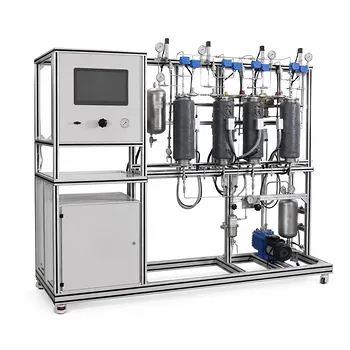
Bench Scale Carbon Dioxide Capture Educational Unit Operations Pilot Plant
This bench-scale educational pilot plant simulates industrial CO₂ separation using a multi-tower adsorption system for hands-on engineering training. Students achieve ≥90% CO₂ purity while studying pressure swing adsorption, desorption kinetics, and process control in gas purification experiments.
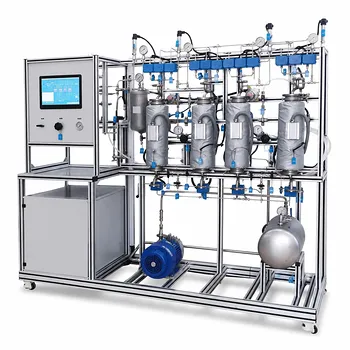
Carbon Dioxide Capture and Utilization Educational Pilot Plant for Unit Operations
Educational pilot plant for carbon dioxide capture and utilization featuring four-tower adsorption, high-temperature regeneration, precise CO2 analysis, modern touchscreen control, real-time data, and robust construction for hands-on unit operations training in university labs with curriculum alignment and safe operation.
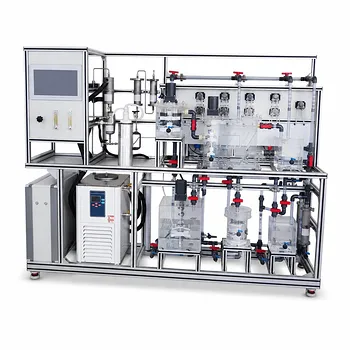
Thermal Desorption Exhaust Gas and Tail Water Treatment Educational Pilot Plant
Bench-scale educational pilot plant for treating thermal desorption exhaust gas and tail water integrates condensation, Fenton oxidation, precipitation, filtration, and carbon adsorption. Ideal for chemical engineering and environmental labs, teaching unit operations, process control, and real-time data analysis.
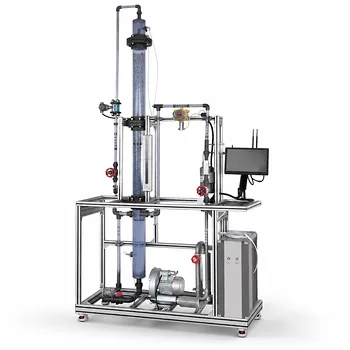
Packed Bed Absorption Educational Unit Operations Pilot Plant
Study gas-liquid absorption, pressure drop, flooding, and mass transfer coefficients with this pilot plant. Transparent packed column, industrial touchscreen, real-time sensor data, automated analysis. Investigate two-phase flow, loading points, column efficiency. Comprehensive data logging and assessment software included.

Bench Scale Dual Column Gas Separation and Capture Educational Pilot Plant
This dual-column educational pilot plant provides hands-on teaching of gas adsorption, separation, and capture processes. It features stainless steel columns, regeneration up to 400°C, and a 15.6-inch touchscreen PLC for TSA and PSA studies in chemical engineering curricula, process simulation.

Two-Dimensional Fluidization Hydrodynamics Educational Pilot Plant for Unit Operations Training
Explore gas-solid and liquid-solid fluidization hydrodynamics with our transparent 2D educational pilot plant. Ideal for chemical engineering unit operations labs, it demonstrates fixed to fluidized bed regimes, measures pressure drop, and integrates QR-code digital learning for enhanced student training.

Multi Pump Fluid Transport Process Piping Unit Operations Training Pilot Plant
Industrial-scale multi-pump pilot plant for unit operations training in fluid transport and process piping, featuring real-material and semi-physical simulation modes, comprehensive pump and flowmeter calibration, and safety-enhanced two-tier platform, bridging academic theory and industrial practice for chemical engineering education.

Multi-Reactor Educational Pilot Plant for Reaction Engineering Unit Operations
Integrated bench-scale educational pilot plant for chemical engineering teaching featuring fixed bed fluidized bed and stirred tank reactors with web-based digital twin controls and safety interlocks for hands-on unit operations and reaction engineering comparative studies in one compact system.

Dual-Mode Rectification Pilot Plant for Practical Training Unit Operations
Industrial-scale dual-mode rectification pilot plant for chemical engineering practical training. Features real-material and simulated-material operation modes, sieve-plate column with sight glasses for visual observation of hydrodynamics, and customizable SCADA control for safe, hands-on learning of unit operations and mass transfer.
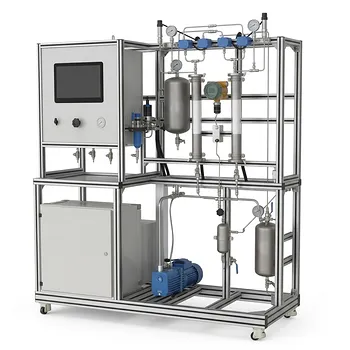
Pressure Swing Adsorption Educational Unit Operations Pilot Plant
Integrated bench-scale pressure swing adsorption pilot plant for hands-on teaching of gas-solid separation, mass transfer, and process optimization using nitrogen-oxygen model, featuring dual-column design, industrial touchscreen control, digital assessment suite, and customizable hardware and software configurations for educational laboratories.
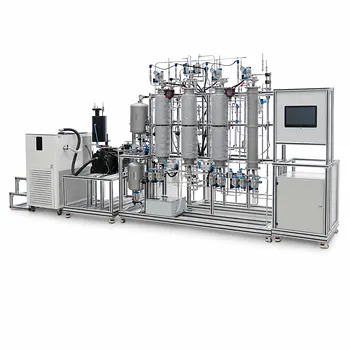
Educational Pressure Swing Adsorption Ethylene Capture Unit Operations Pilot Plant
Advanced educational pilot plant for pressure swing adsorption ethylene capture provides comprehensive hands-on training in industrial gas separation processes, featuring an eight-column PSA system, real-time data acquisition, and fully customizable design for chemical engineering unit operations laboratories and research.

Multi-Modal Distillation Unit Operations Training Pilot Plant
Multi-modal distillation pilot plant for practical unit operations training in chemical engineering education. Features real, analog, and semi-physical simulation modes, industrial construction, customizable for university labs. Hands-on fractionation columns, SCADA control, safety systems. Includes sight glasses, sampling ports, closed-loop recycling.
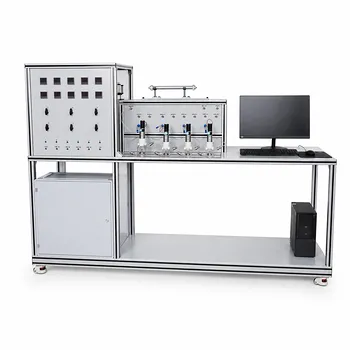
Gas Phase Mixing and Residence Time Distribution Determination Educational Unit Operations Pilot Plant
Integrated lab system for gas-phase mixing and RTD determination. Supports pulse and step tracer methods with dual CSTR and PFR reactors, industrial components, and PC data logging. Provides hands-on study of non-ideal flow and reactor behavior for university students.

Fixed-Bed Chemical Reaction and Gas Dust Tar Removal Unit Operations Pilot Plant
Integrated educational pilot plant for studying catalytic gas-solid reactions and downstream gas purification. Features dual fixed-bed reactor, three-stage heating, and touchscreen control for hands-on engineering training. Ideal for chemical and environmental engineering curricula.

Natural Product Extraction Unit Operations Training Pilot Plant
Integrated natural product extraction pilot plant for chemical engineering training bridges theory and industrial practice with modular extraction and evaporation/concentration units, hybrid touchscreen and manual control, realistic process simulation, and self-contained softened water and vacuum utilities.
Related Articles
The Brown Cloud and the Engineer’s Mind: Why Pilot Plants Don’t Just Dilute Danger, They Unmake It
Scaling toxic gas management beyond the fume hood is a leap from blind containment to engineered neutralization. Explore the mass-transfer psychology behind gas absorption columns.
The Ideal-Selectivity Trap: How Pilot Plants Expose the Real Story of Membrane CO₂ Capture
A lab cell measures a membrane’s ideal selectivity; only a pilot plant reveals how it behaves under real flue gas stress, impurities, and economics. Uncover the truth before scaling up.
The Invisible Constraint: How First-Principles dCO₂ Modeling Turns Your Pilot Plant into a Predictive Engine
Learn how a first-principles dCO2 mass transfer model de-risks bioprocess scale-up. Validate with pilot plant data to predict manufacturing CO2 profiles, size spargers, and design control loops—eliminating costly full-scale trials.
The Solvent That Disappears: Supercritical CO₂ and the New Logic of Pilot Plant Operations
Supercritical CO₂ extraction doesn’t just replace toxic solvents—it fundamentally reshapes mass transfer, preservation, and teachable moments in chemical engineering pilot plants. Here’s how that changes what an education-focused pilot unit can deliver.
The Physics of Safety: Why Supercritical CO2 Turns a Pilot Plant into a Classroom Without a Poison Cabinet
Supercritical CO₂ extraction eliminates toxic solvents, zeroes out hazardous waste, and operates near room temperature — making it the ultimate teaching tool for process safety and green chemistry.