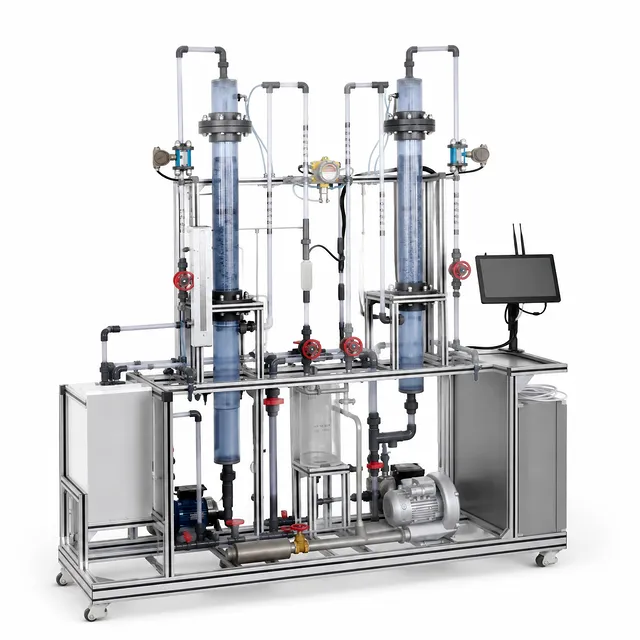
Educational Chemical Engineering Pilot Plants
Absorption and Desorption Educational Unit Operations Pilot Plant
Item Number : LPK-BABD-C
Price varies based on specs and customizations
- System Columns
- Packed absorption column and packed desorption column
- Dimensions
- ≤ 2200 mm × 580 mm × 2300 mm (L × W × H)
- Control Unit
- Industrial touch-screen all-in-one PC

Shipping:
Contact us to get shipping details Enjoy On-time Dispatch Guarantee.
Why Choose Us
Easy ordering process, quality products, and dedicated support for your business success.
Introduction
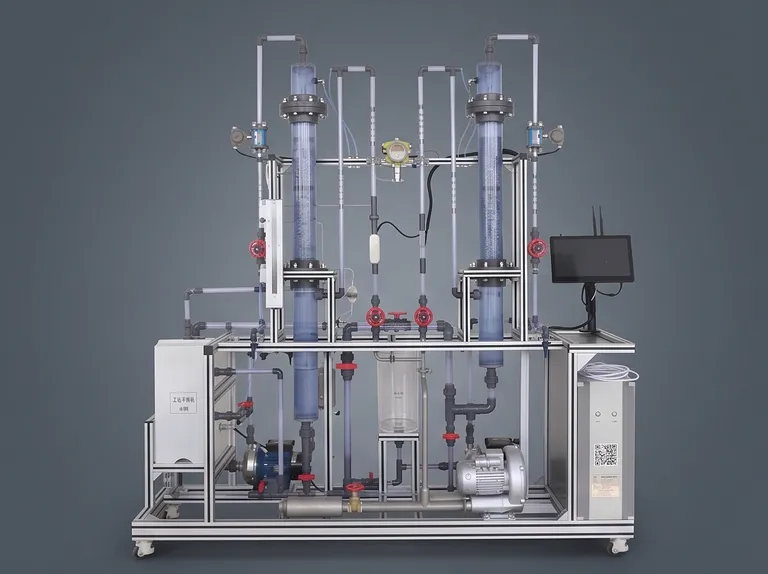
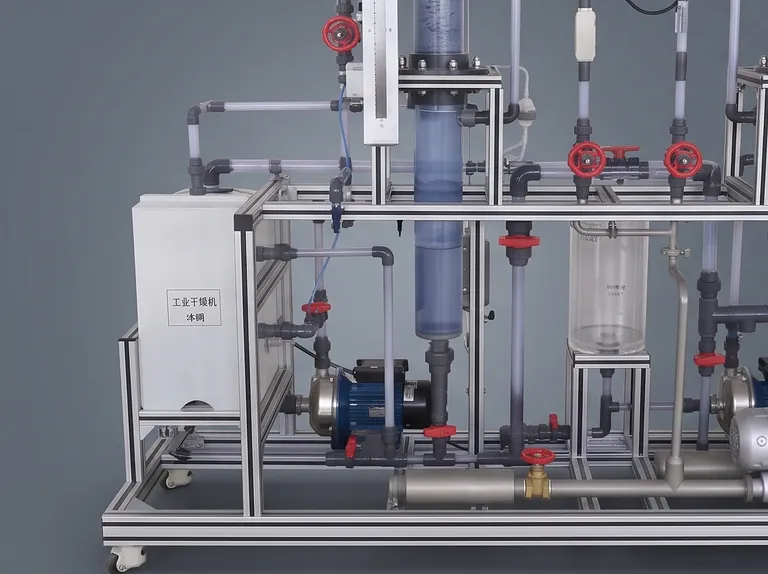
The Absorption and Desorption Educational Unit Operations Pilot Plant is an integrated, bench-scale laboratory system designed to facilitate practical instruction in gas-liquid mass transfer processes. Featuring a dual-column configuration—comprising a packed absorption column and a packed desorption column—the unit allows undergraduate students to study gas absorption and stripping dynamics. By measuring volumetric mass transfer coefficients under varying spray densities, students gain firsthand experience with the principles of liquid film control, fluid dynamics, and column packing performance, bridging the gap between theoretical classroom concepts and industrial process engineering.
Customization and Adaptability
Recognizing that different academic institutions have unique curriculum structures and space constraints, this pilot plant is designed with flexibility in mind. Both the hardware components and the software interfaces can be fully customized to align with your department’s specific laboratory syllabus, space limitations, and research-integrated teaching requirements.
Key Educational Features and Advantages
- Engineering-Scale Practice: The equipment is built to reflect industrial standards, helping students prepare for real-world engineering challenges and supporting program accreditation processes.
- Real-Time Data Acquisition: The integrated instrumentation allows process variables to be displayed online in real time, with automated calculations of mass transfer coefficients executed immediately upon completion of the runs.
- Interactive Visualization: The system is complemented by multi-angle 3D animations and visual representations of the column internals, helping students visualize gas-liquid contact, fluid flow paths, and concentration gradients that are otherwise difficult to observe.
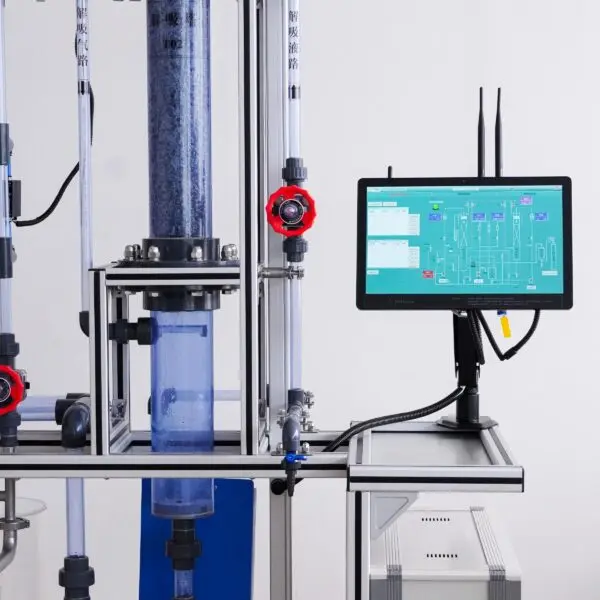
- Industrial Control Interface: Utilizing an industrial-grade touch-screen all-in-one computer for control and data acquisition, the unit introduces students to standard industrial automation interfaces and modern data-handling tools.
- Durable and Mobile Design: Constructed on a high-grade, corrosion-resistant aluminum alloy frame equipped with heavy-duty casters, the pilot plant offers both physical stability and easy mobility within the laboratory.
Detail & Parts
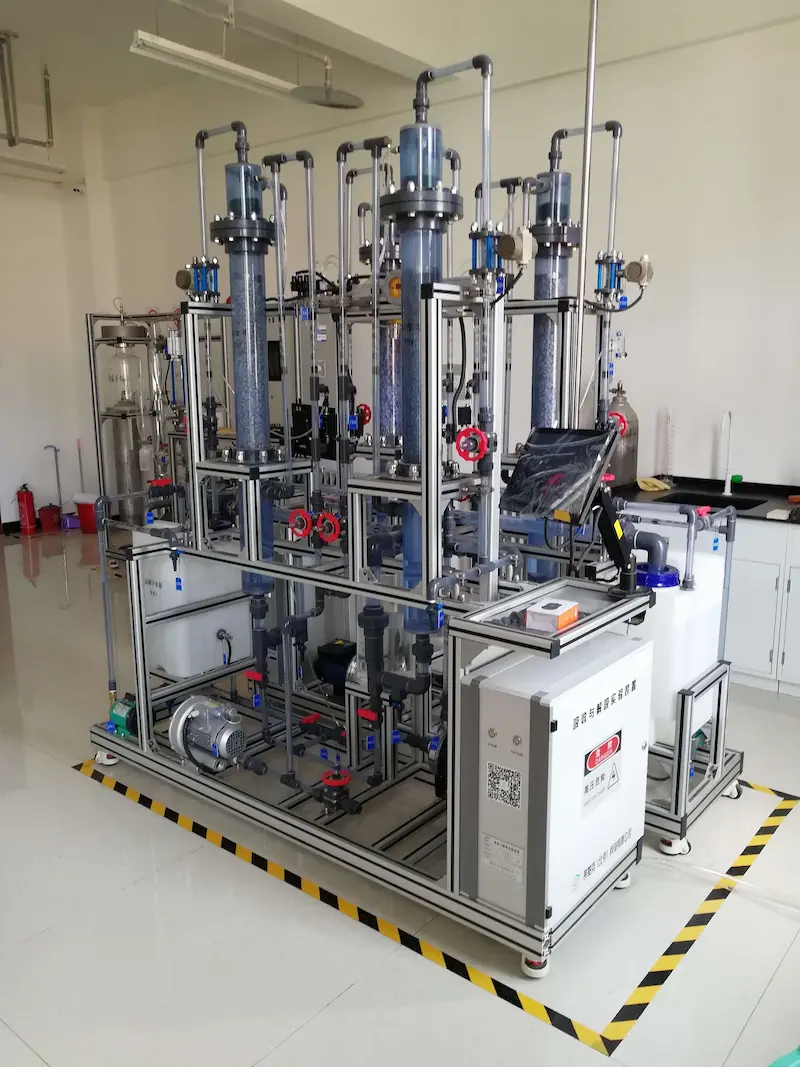
Technical Specifications
| Parameter | Description / Specification | Educational / Operational Value |
|---|---|---|
| System Columns | Packed absorption column and packed desorption column | Supports side-by-side study of absorption and stripping mechanisms. |
| Frame Material | High-quality industrial aluminum alloy with locking casters | Ensures durability and allows flexible laboratory floor plan layouts. |
| Dimensions | ≤ 2200 mm × 580 mm × 2300 mm (L × W × H) | Compact footprint suitable for standard university teaching laboratories. |
| Control Unit | Industrial touch-screen all-in-one PC | Exposes students to professional Human-Machine Interfaces (HMI). |
| Data Handing | Real-time online data display and automated software calculation | Enhances data accuracy and reduces manual calculation errors during lab sessions. |
Curricular Alignment and Textbook Integration
This pilot plant is engineered to support core laboratory curricula across several engineering disciplines, including Chemical Engineering, Environmental Engineering, Food Engineering, and Biotechnology.
By conducting experiments on this unit, students directly apply the fundamental principles detailed in standard academic textbooks. The table below outlines how the plant’s operating modules correspond to classical concepts in widely utilized engineering literature.
| Experimental Module | Key Unit Operation / Physical Concept | Academic Textbook Reference |
|---|---|---|
| Absorption Column Dynamics | Gas absorption in packed towers, determination of volumetric mass transfer coefficients ($K_y a$), liquid film resistance. | Unit Operations of Chemical Engineering |
| Desorption & Stripping | Solute removal from liquid phases, mass transfer driving force, counter-current flow patterns. | Transport Processes and Separation Process Principles (formerly Transport Processes and Unit Operations) |
| Hydrodynamics of Packed Columns | Pressure drop measurement, determination of flooding and loading points, spray density effects. | Chemical Engineering Design |
Through these practical modules, instructors can easily reference theoretical derivations of the Height of a Transfer Unit (HTU) and the Number of Transfer Units (NTU), allowing students to validate textbook equations with empirical data collected from a physical, pilot-scale process.
Hardware and Software Tailoring
To ensure that the equipment integrates into your laboratory space, we offer complete customization services. Whether you require specific instrumentation upgrades, alternative packing materials, or tailored software dashboards to match your existing laboratory network, both our hardware and software engineering teams can adapt the pilot plant to meet your specific pedagogical goals.
About LABPARK
LABPARK has dedicated over 20 years to supporting higher education by designing and manufacturing high-quality laboratory equipment. We focus on delivering robust engineering pilot plants across six major disciplines: chemistry, chemical engineering, biology, food science, pharmaceutical engineering, and environmental engineering.
Driven by innovation and quality, LABPARK holds 209 technical patents and has established collaborative partnerships with more than 289 universities and colleges worldwide. Our operations are supported by a modern 49,000-square-meter production and research-and-development base, ensuring that every piece of educational equipment is manufactured to high standards of reliability, safety, and academic utility.
Trusted by Industry Leaders
REQUEST A QUOTE
Our professional team will reply to you within one business day. Please feel free to contact us!
Related Products
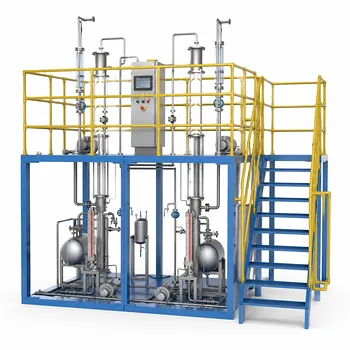
Dual-Mode Gas Absorption and Desorption Unit Operations Training Pilot Plant
Industrial-scale pilot plant for gas absorption and desorption training in chemical engineering. Features dual-mode operation with real and simulated materials, transparent columns for flow visualization, and customizable design. Supports independent or combined loops for hands-on unit operations experiments.

Multimodal Absorption and Desorption Pilot Plant for Unit Operations Training
Multimodal absorption and desorption pilot plant for higher education labs. Bridges theory and industrial practice with transparent packed columns, three operational modes (real-material, simulated, semi-physical), and SCADA control. Students explore mass transfer, column hydraulics, and process control. Customizable.
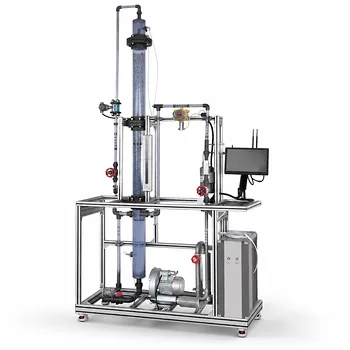
Packed Bed Absorption Educational Unit Operations Pilot Plant
Study gas-liquid absorption, pressure drop, flooding, and mass transfer coefficients with this pilot plant. Transparent packed column, industrial touchscreen, real-time sensor data, automated analysis. Investigate two-phase flow, loading points, column efficiency. Comprehensive data logging and assessment software included.
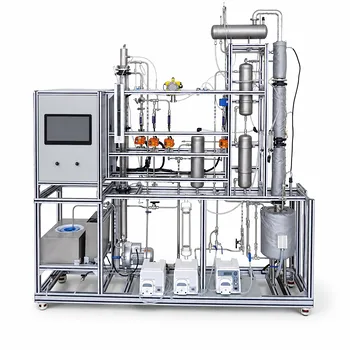
Carbon Dioxide Absorption and Desorption Educational Pilot Plant for Carbon Capture Studies
Explore carbon dioxide absorption and desorption with this educational pilot plant. Transparent columns visualize mass transfer; electric heating simulates industrial solvent regeneration; touchscreen interface enables data monitoring. Ideal for chemical engineering, bridging theory and practice.
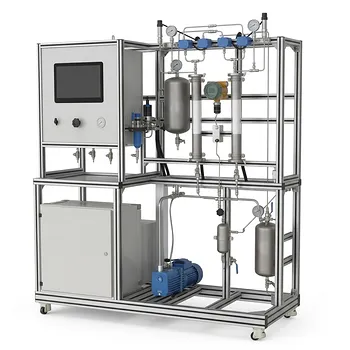
Pressure Swing Adsorption Educational Unit Operations Pilot Plant
Integrated bench-scale pressure swing adsorption pilot plant for hands-on teaching of gas-solid separation, mass transfer, and process optimization using nitrogen-oxygen model, featuring dual-column design, industrial touchscreen control, digital assessment suite, and customizable hardware and software configurations for educational laboratories.
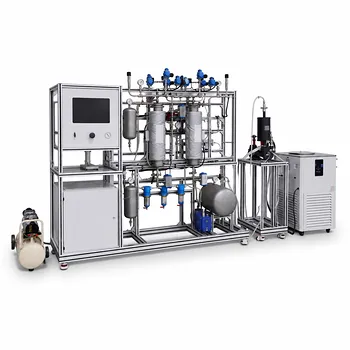
Bench Scale Dual Column Gas Separation and Capture Educational Pilot Plant
This dual-column educational pilot plant provides hands-on teaching of gas adsorption, separation, and capture processes. It features stainless steel columns, regeneration up to 400°C, and a 15.6-inch touchscreen PLC for TSA and PSA studies in chemical engineering curricula, process simulation.
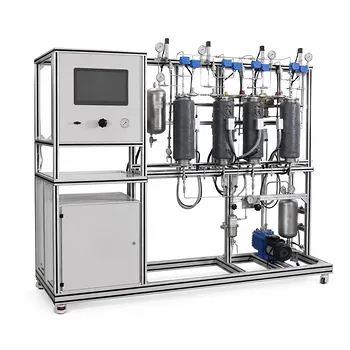
Bench Scale Carbon Dioxide Capture Educational Unit Operations Pilot Plant
This bench-scale educational pilot plant simulates industrial CO₂ separation using a multi-tower adsorption system for hands-on engineering training. Students achieve ≥90% CO₂ purity while studying pressure swing adsorption, desorption kinetics, and process control in gas purification experiments.
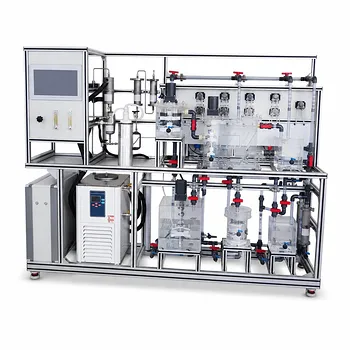
Thermal Desorption Exhaust Gas and Tail Water Treatment Educational Pilot Plant
Bench-scale educational pilot plant for treating thermal desorption exhaust gas and tail water integrates condensation, Fenton oxidation, precipitation, filtration, and carbon adsorption. Ideal for chemical engineering and environmental labs, teaching unit operations, process control, and real-time data analysis.
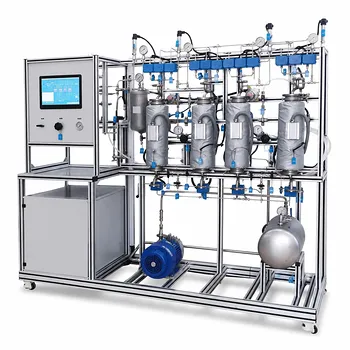
Carbon Dioxide Capture and Utilization Educational Pilot Plant for Unit Operations
Educational pilot plant for carbon dioxide capture and utilization featuring four-tower adsorption, high-temperature regeneration, precise CO2 analysis, modern touchscreen control, real-time data, and robust construction for hands-on unit operations training in university labs with curriculum alignment and safe operation.

Dual-Mode Rectification Pilot Plant for Practical Training Unit Operations
Industrial-scale dual-mode rectification pilot plant for chemical engineering practical training. Features real-material and simulated-material operation modes, sieve-plate column with sight glasses for visual observation of hydrodynamics, and customizable SCADA control for safe, hands-on learning of unit operations and mass transfer.
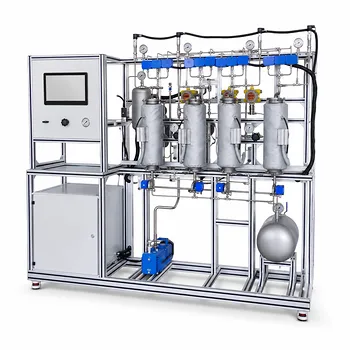
Carbon Dioxide Adsorption and Capture Educational Unit Operations Pilot Plant
Advanced laboratory pilot plant for teaching carbon dioxide adsorption and capture unit operations. Features four-tower adsorption system with 400°C heating jackets, high-precision CO2 and O2 sensors, and 15.6-inch touchscreen with wireless data logging. Ideal for chemical engineering education.
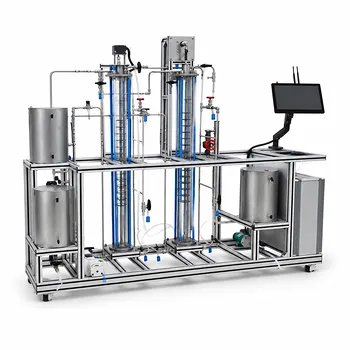
Comprehensive Liquid-Liquid Extraction Pilot Plant for Engineering Education
Comprehensive liquid-liquid extraction pilot plant for engineering education, integrating rotary and vibratory columns for hands-on observation of phase behavior, flooding limits, and mass transfer efficiency, enabling precise HTU and mass transfer coefficient calculations.
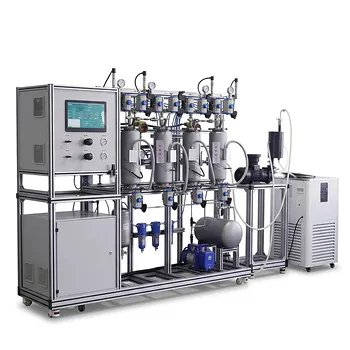
Multi-Component Gas Pressure Swing Adsorption Pilot Plant for Unit Operations Education
Multi-component gas pressure swing adsorption pilot plant designed for unit operations education. Features four-tower configuration, IoT touchscreen control, dual regeneration, and real-time breakthrough curve analysis for engineering training with safety interlocks and mobile frame simulates industrial PSA processes.
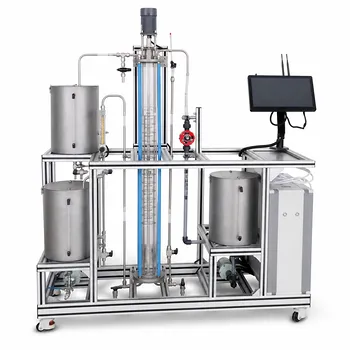
Educational Rotary Disc Liquid-Liquid Extraction Pilot Plant
A transparent rotary disc column for educational liquid-liquid extraction experiments. This pilot plant enables students to study mass transfer, droplet dynamics, and flooding behavior, bridging theory and practice in chemical engineering unit operations education. Features variable-speed agitation and PLC control.
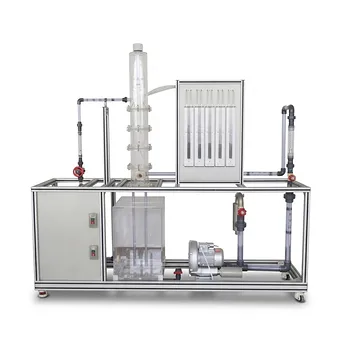
Plate Column Hydrodynamics Tray Demonstration Educational Pilot Plant
Advanced transparent educational pilot plant for chemical engineering labs demonstrates plate column hydrodynamics with industrial sieve bubble cap serrated valve trays for visual observation of gas-liquid contact pressure drop measurement and operational limit analysis including flooding weeping entrainment

Multi-Functional Special Distillation Educational Pilot Plant
Versatile multi-functional special distillation pilot plant for chemical engineering education. Supports continuous, vacuum, azeotropic, reactive, extractive distillation. Transparent glass columns enable real-time visual observation of hydrodynamics and separation processes.

Multi-Modal Distillation Unit Operations Training Pilot Plant
Multi-modal distillation pilot plant for practical unit operations training in chemical engineering education. Features real, analog, and semi-physical simulation modes, industrial construction, customizable for university labs. Hands-on fractionation columns, SCADA control, safety systems. Includes sight glasses, sampling ports, closed-loop recycling.

Natural Product Extraction Unit Operations Training Pilot Plant
Integrated natural product extraction pilot plant for chemical engineering training bridges theory and industrial practice with modular extraction and evaporation/concentration units, hybrid touchscreen and manual control, realistic process simulation, and self-contained softened water and vacuum utilities.
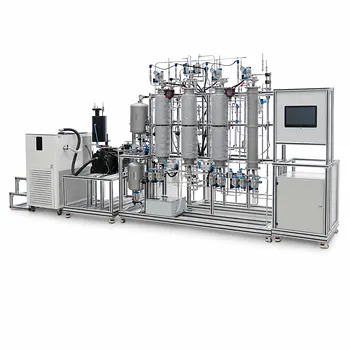
Educational Pressure Swing Adsorption Ethylene Capture Unit Operations Pilot Plant
Advanced educational pilot plant for pressure swing adsorption ethylene capture provides comprehensive hands-on training in industrial gas separation processes, featuring an eight-column PSA system, real-time data acquisition, and fully customizable design for chemical engineering unit operations laboratories and research.
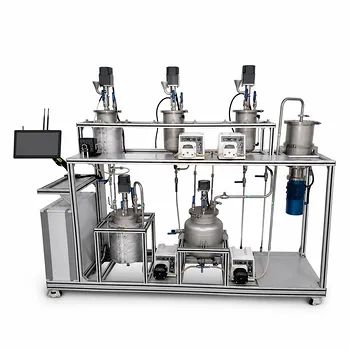
High-Gravity Emulsification and Mass Transfer Educational Pilot Plant
This integrated educational pilot plant utilizes rotating packed bed technology to demonstrate high-gravity emulsification and mass transfer, providing engineering students with hands-on experience in process intensification and unit operations through a modular, customizable design with digital monitoring.
Related Articles

The Brown Cloud and the Engineer’s Mind: Why Pilot Plants Don’t Just Dilute Danger, They Unmake It
Scaling toxic gas management beyond the fume hood is a leap from blind containment to engineered neutralization. Explore the mass-transfer psychology behind gas absorption columns.
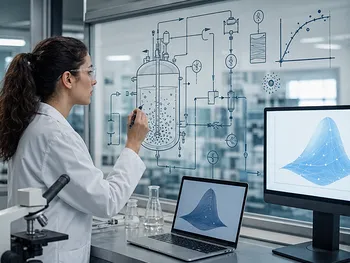
The Invisible Constraint: How First-Principles dCO₂ Modeling Turns Your Pilot Plant into a Predictive Engine
Learn how a first-principles dCO2 mass transfer model de-risks bioprocess scale-up. Validate with pilot plant data to predict manufacturing CO2 profiles, size spargers, and design control loops—eliminating costly full-scale trials.
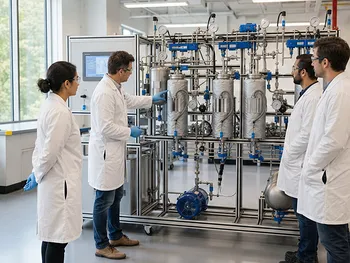
The Physics of Safety: Why Supercritical CO2 Turns a Pilot Plant into a Classroom Without a Poison Cabinet
Supercritical CO₂ extraction eliminates toxic solvents, zeroes out hazardous waste, and operates near room temperature — making it the ultimate teaching tool for process safety and green chemistry.
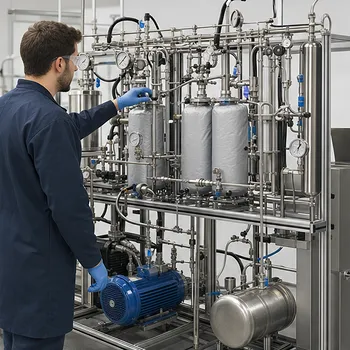
The Solvent That Disappears: Supercritical CO₂ and the New Logic of Pilot Plant Operations
Supercritical CO₂ extraction doesn’t just replace toxic solvents—it fundamentally reshapes mass transfer, preservation, and teachable moments in chemical engineering pilot plants. Here’s how that changes what an education-focused pilot unit can deliver.
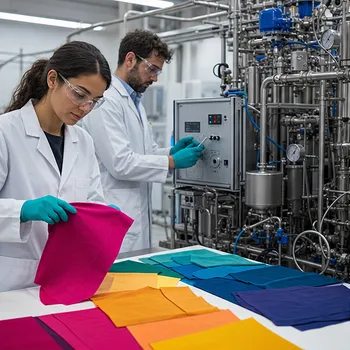
The Invisible Thread: How Supercritical CO₂ Weaves a Future Without Water
Explore the high-pressure physics and critical unit operations behind waterless dyeing. A deep dive into why supercritical CO₂ pilot plants are the non-negotiable bridge to sustainable textile manufacturing.
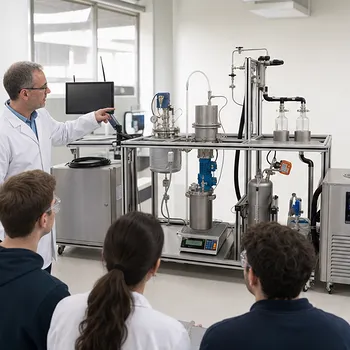
The Machine That Teaches Green Chemistry by Making Pressure Visible
How supercritical CO₂ pilot plants turn the safer-solvent principle into a hands-on, trade-off-driven lesson in chemical engineering—and why memorizing green chemistry isn’t enough.
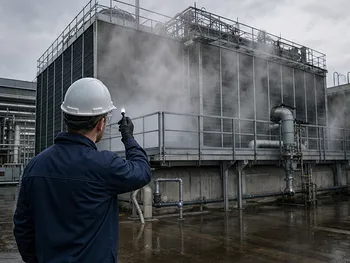
The Two Temperatures Your Cooling Tower Relies On (And Why They Betray a Solvent Column)
Wet-bulb and adiabatic saturation temperatures appear identical in water-air systems, but for organic solvents the divergence can corrupt pilot-plant data. Discover the hidden transport coincidence that makes (or breaks) your energy balance.