A Story in the Pilot Hall
A student stands before a high-pressure autoclave. The pump’s hum deepens as the pressure needle climbs past 80 bar. Inside, carbon dioxide—a gas she has known since childhood as something exhaled, something weightless—crosses its critical point and becomes something else entirely. The fluid turns opalescent, a shimmering in the sight glass. She sees the solvent that is not a liquid and not a gas, a solvent with the density of a liquid and the diffusivity of a gas, and she understands for the first time that green chemistry is not a set of rules to memorize. It is a physical transformation she can feel, adjust, and optimize.
That moment is why a pilot plant exists.
The Cognitive Gap Between Principle and Practice
Most of us believe that to know a principle is to be able to use it. This is the quiet illusion that haunts engineering education. The safer-solvent principle says: Replace volatile organic compounds with benign alternatives like supercritical CO₂. In a lecture hall, that sentence lands softly. It makes sense. It feels obvious.
But knowing is not the same as making it work under pressure—literal pressure—with real heat transfer wicking away from hot surfaces, with mass transfer coefficients that refuse to cooperate at scale, and with the knowledge that if a seal fails, the room fills with a gas that can displace oxygen. The gap between concept and competence is a gap that reading cannot bridge. A pilot plant bridges it by demanding that the student become the operator, the troubleshooter, the decision-maker.
The Hands-On Revelation: Thermodynamics You Can Touch
When you turn a knob that adjusts back-pressure on a supercritical CO₂ stream, solubility does not remain abstract. A small change of 5 bar near the critical region can swing extraction yield by twenty percent. The student measures this directly—collecting fractions, weighing extracts, plotting the solubility curve with her own data.
She is not memorizing that CO₂’s density can be tuned with pressure. She is watching density become solvating power in real time. She records mass transfer coefficients and compares them with acetone or hexane benchmarks. The data tells her something no textbook can: that the safer solvent can also be the smarter solvent, but only when you respect the physics that govern it.
The Invisible Waste Stream
Run an extraction with hexane, and you finish with a drum of solvent-laden waste. That waste will be distilled, maybe incinerated, always carrying its own energy and toxicity burden. The cost is visible, but the visibility normalizes the harm.
Now watch the supercritical CO₂ process. After the separator, the pressure drops and the CO₂ flashes back into a gas, leaving the extracted compound behind. That gas gets recompressed and returns to the loop. The student sees the flow meter on the recovery line and realizes there is no solvent effluent, no incineration, no tall stack. The only waste stream is a vent of nearly pure CO₂—a fraction of what the hexane process would demand. Measuring waste elimination firsthand implants a truth that shapes future decisions: sustainability is not a label; it is a mass balance you can close.
The Scale-Up Calculus
From benchtop glassware to commercial production, material intensity plummets. Preclinically, it can be 185 kilograms of material per kilogram of API. At commercial scale, that number often drops below 45. A pilot plant sits in this drop, forcing students to confront the real variables: raw-material feeding rates that fluctuate, heat exchangers that must be integrated across high-pressure circuits, and safety systems that would never fit on a lab bench.
They learn that scale-up is not linear multiplication. The habit of lifecycle thinking begins when a student has to justify the energy penalty of compression against the elimination of toxic solvent handling. She sees that the same green principle can fail if scaled without engineering empathy—a lesson that stays with her long after graduation.
The Trade-Offs No Textbook Can Prepare You For
Engineering education loves best-case stories. The pilot plant refuses to tell one. Supercritical CO₂ is not a magic bullet, and a good educational system makes its limitations obvious because the most dangerous engineer is the one who believes in clean perfection.
The Energy Double-Count
Compressing CO₂ demands work. Cooling the stream to maintain supercritical conditions demands more. A student might calculate that the energy per kilogram of product is, in some cases, higher than for a conventional solvent. The educational gold is not in hiding this fact but in weighing it: energy input versus zero VOC emissions, no residual solvent in the product, and elimination of post-process incineration. Lifecycle assessment tools become visceral when you have operated the machine that generates the data going into the model.
The Safety and Solvency Ceiling
High pressure is a language of rupture disks, relief systems, and asphyxiation risk. Students must master it. Additionally, scCO₂ is non-polar; many polar compounds will barely dissolve. The search for cosolvents or higher pressures becomes a design problem rather than a failure of the principle. These constraints teach that a safer solvent requires a safer system, and that adopting green chemistry without managing new process risks is just swapping one hazard for another.
Inside a Supercritical CO₂ Pilot Plant for Education
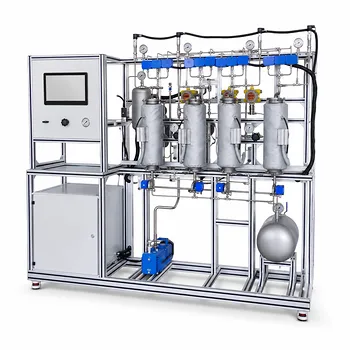
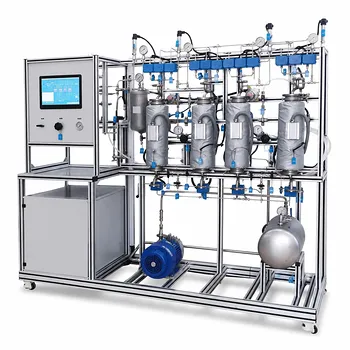
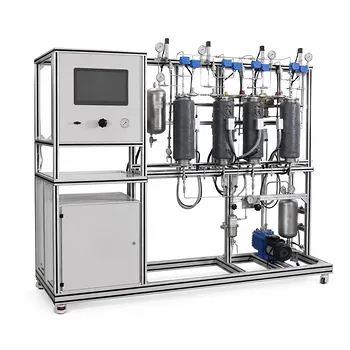
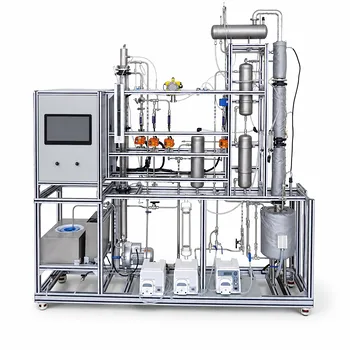
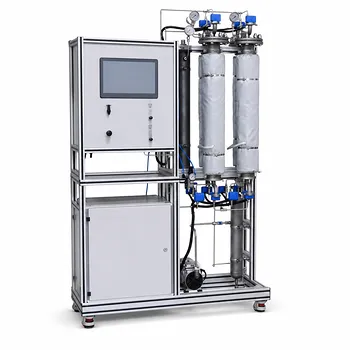
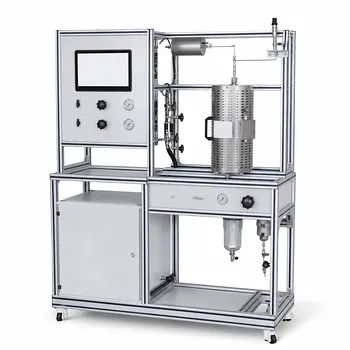
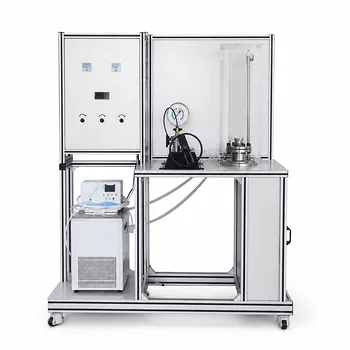
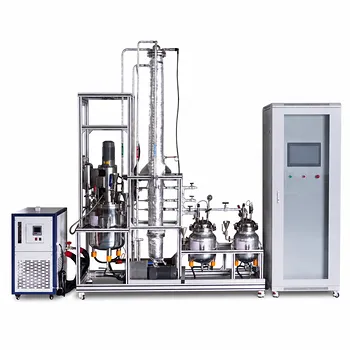
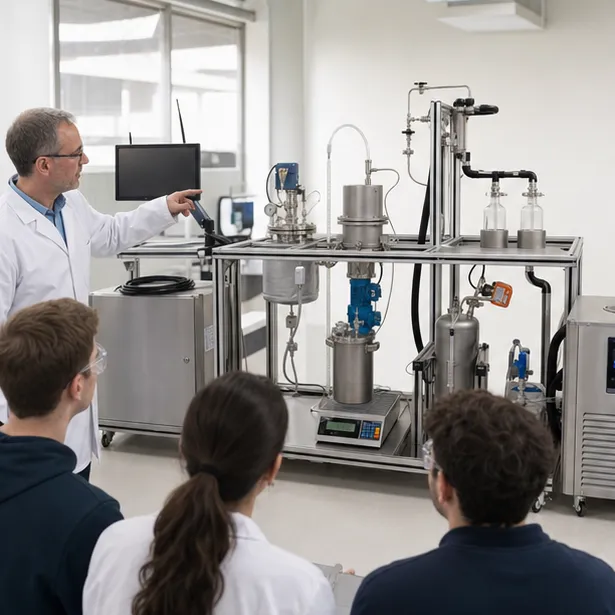
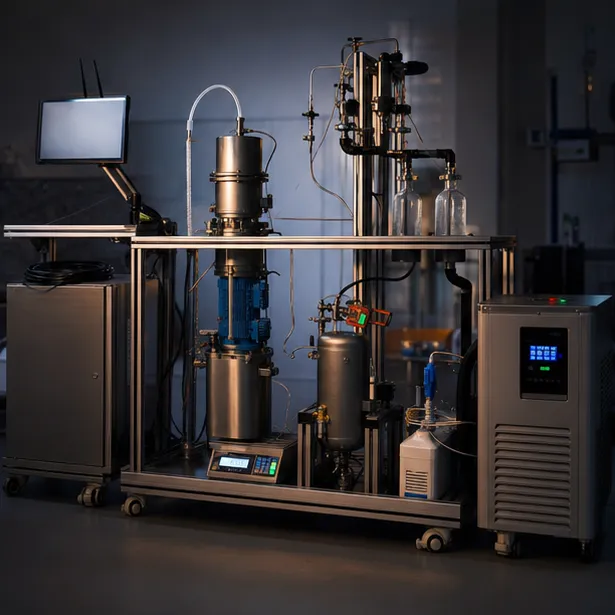
To deliver these lessons, the equipment must itself be a teacher. A well-configured pilot plant integrates specific unit operations that make the invisible visible:
- CO₂ storage and supply – liquefied gas held under controlled conditions.
- High-pressure positive-displacement pumps – the muscle that lifts CO₂ past 73.8 bar.
- Preheating and heating jackets – to maintain the supercritical temperature profile.
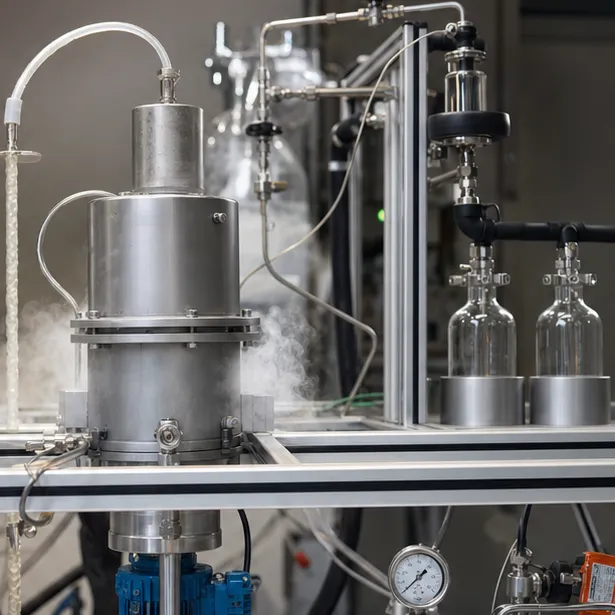
- Autoclave or extraction vessel – where the solvent meets the substrate, often with a sight glass to observe phase behavior.
- Separator system – where depressurization recovers extract and closes the CO₂ loop.
- Integrated sensors and flowmeters – turning every experiment into a dataset for green metrics.
Operating this train teaches pressure-rated equipment selection, process control logic, and energy management—all while demonstrating that the only “waste” solvent is a gas with minimal environmental impact.
Choosing Your Educational Battle
How you use the pilot plant depends on what you need most to teach. Use these heuristics to guide your program:
- If you must demonstrate green waste reduction: design experiments around closed‑loop CO₂ recovery. Run a direct comparison with organic solvent extraction, measuring waste mass and solvent loss.
- If you must teach industrial scale-up: stress the high‑pressure engineering challenge. Require students to integrate heat exchange networks and calculate the true energy cost per unit product.
- If you must instill lifecycle thinking: have students collect data on solvent production, compression energy, and end‑of‑life CO₂ release, then compare cradle‑to‑grave impacts against hexane.
- If you must ground students in safer-chemistry fundamentals: let them map solubility landscapes and mass transfer coefficients, seeing how scCO₂ selectivity avoids toxic residues in final products.
| Educational Focus | Key Lesson / Metric | Equipment Involved |
|---|---|---|
| Waste Elimination | Closed‑loop CO₂ recovery & E‑factor drop | Separator system & recovery loop |
| Thermodynamics | Pressure/temperature effect on solubility | High‑pressure pumps & autoclave |
| Process Trade‑offs | Energy consumption vs. solvent hazard | Integrated sensors & flowmeters |
The Engineer’s Romanticism: Falling in Love with a Gas
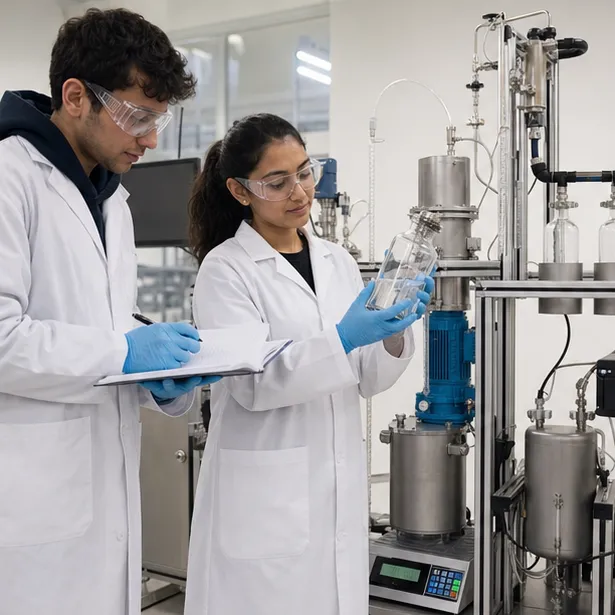
There is a moment—quiet, specific—when a student looks at the sight glass and sees the supercritical phase with her own eyes. She may have calculated phase diagrams in a thousand problem sets, but this is different. The pump’s vibration travels through the skid, through her hands on the valve, and into a part of her brain that understands by feeling. She realizes that the solvent she once thought of as “just CO₂” is a substance that can be tuned like an instrument. This is the engineer’s romance: not sentimental, but a deep recognition that the physical world rewards those who engage with it directly.
From Intuition to Industrial Impact
The future of chemical manufacturing will not be built on good intentions. It will be built by engineers who have felt the pressure, balanced the energy, and measured the waste. A pilot plant that puts supercritical CO₂ into their hands does not just teach green chemistry—it builds the intuition that sustainability is an engineering decision, not a chemical label. That is why well-designed educational pilot plants are not optional; they are the shortest path to competence.
Bringing this experience to your institution requires a partner that understands both pedagogy and process engineering. LABPARK offers precisely this: educational and vocational unit operations pilot plants tailored for chemical engineering, bioprocess, biotech, and environmental treatment. Our high‑pressure supercritical fluid systems are built to transform green chemistry principles into measurable, repeatable experiments—giving your students the hands‑on intuition that textbooks alone cannot provide. Contact Our Experts
Related Products
- Supercritical High-Gravity Flash Evaporation Educational Unit Operations Pilot Plant
- Carbon Dioxide Adsorption and Capture Educational Unit Operations Pilot Plant
- Carbon Dioxide Capture and Utilization Educational Pilot Plant for Unit Operations
- Bench Scale Carbon Dioxide Capture Educational Unit Operations Pilot Plant
- Carbon Dioxide Absorption and Desorption Educational Pilot Plant for Carbon Capture Studies
Related Articles
- The Invisible Thread: How Supercritical CO₂ Weaves a Future Without Water
- The Physics of Safety: Why Supercritical CO2 Turns a Pilot Plant into a Classroom Without a Poison Cabinet
- The Solvent That Disappears: Supercritical CO₂ and the New Logic of Pilot Plant Operations
- The Vanishing Solvent: How a Single, Recyclable Fluid Solves the Oldest Problem in Chemistry
- The Bridge Between a Material's Promise and a Carbon Capture Plant's Reality