Educational Applied Chemistry Pilot Plants
Carbon Dioxide PVT Curve Determination Educational Unit Operations Pilot Plant
Item Number : LPK-SPVT
Price varies based on specs and customizations
- Working Fluid
- Carbon Dioxide (CO₂)
- Key Instrumentation
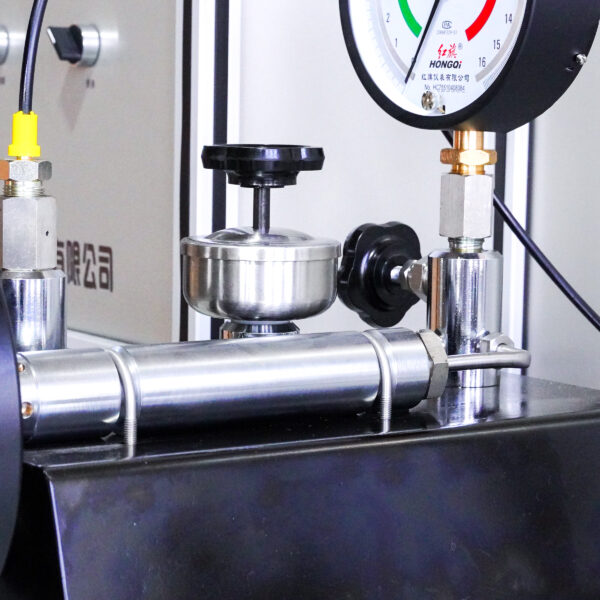
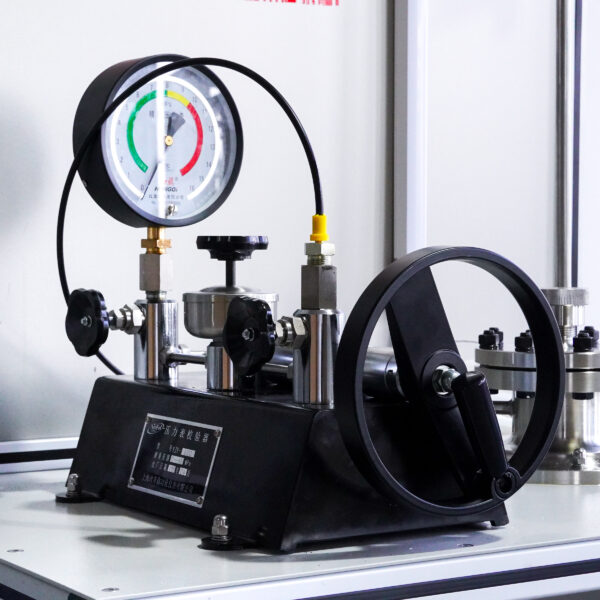
- Piston manometer, constant-temperature circulating water bath, digital temperature display
- Safety Features
- Protective high-pressure acrylic shield, over-temperature protection, dual pressure gauges

Shipping:
Contact us to get shipping details Enjoy On-time Dispatch Guarantee.
Why Choose Us
Easy ordering process, quality products, and dedicated support for your business success.
Introduction
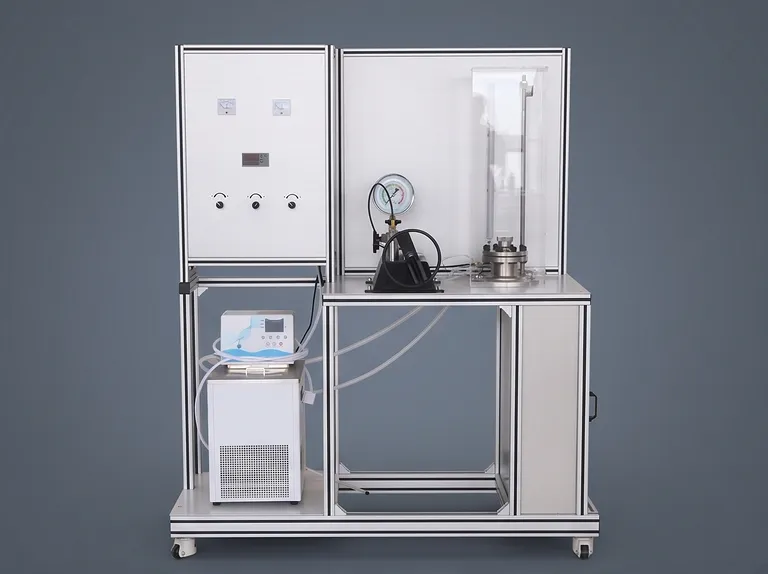
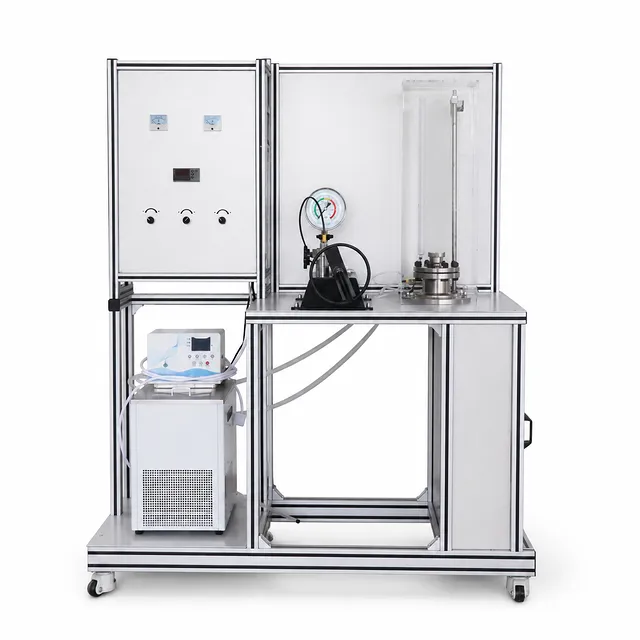
The Carbon Dioxide PVT Curve Determination Educational Unit Operations Pilot Plant is an advanced laboratory training system designed for university-level engineering and science departments. This unit allows students to investigate the thermodynamic behavior of pure substances using carbon dioxide ($CO_2$) as the working medium. By facilitating the measurement of pressure, volume, and temperature (PVT) data near the critical region, the plant bridges the gap between theoretical thermodynamics and physical engineering applications. To accommodate diverse curriculum requirements and laboratory layouts, LABPARK offers customizable configurations for this pilot plant, including both hardware components and software data-acquisition systems.
Key Features and Educational Benefits
Designed specifically for university professors and laboratory instructors, this educational pilot plant simplifies the instruction of complex thermodynamic phenomena through hands-on operation and clear visual evidence.
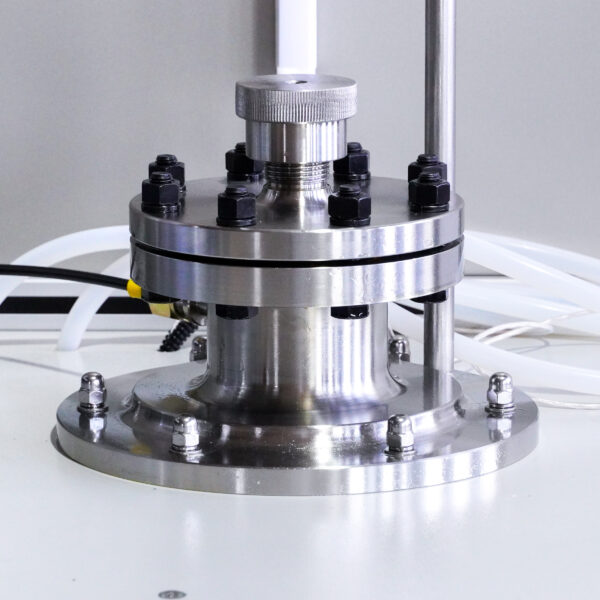
- Direct Visualization of Critical Phenomena: The integrated, high-visibility observation chamber allows students to witness critical opalescence, phase transition boundaries, and the characteristic transition of gas-liquid phases as they merge at the critical point.
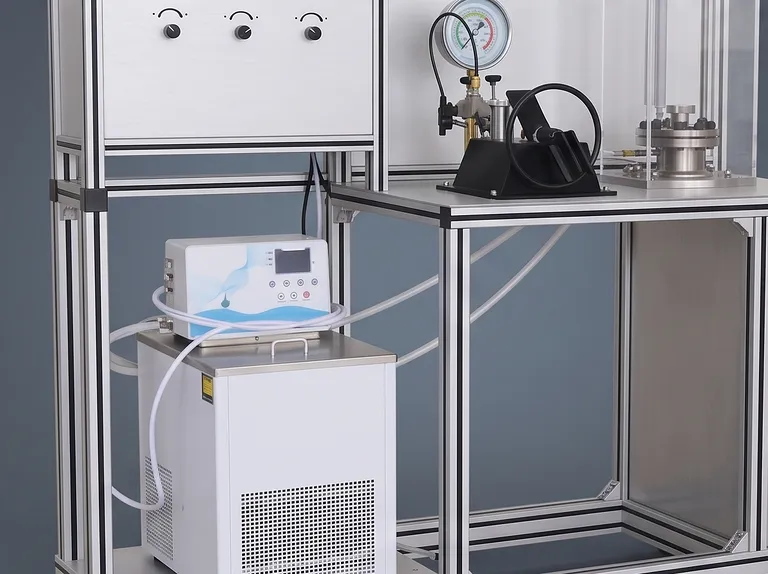
- Precision Measurement Instruments: Equipped with a reliable piston manometer and high-accuracy thermal control systems, the plant ensures stable, reproducible data collection for plotting isothermal curves.
- Comprehensive Isotherm Mapping: Students can systematically gather and analyze thermodynamic data across liquid, gas, and supercritical regions, facilitating the manual or digital construction of $CO_2$ P-V diagrams.
- Engineering-Grade Construction: Built with an industrial aluminum alloy frame and lockable casters, the unit combines robust structural integrity with ease of mobility within the laboratory.
- Safety-First Design: The system includes transparent safety shields around high-pressure components and clear analog pressure indicators to maintain a secure teaching environment during pressurized operations.
Detail & Parts
Technical Specifications and Experimental Scope
The following tables detail the technical parameters of the pilot plant and show how the experimental modules map to fundamental engineering principles.
Technical Specifications
| Parameter | Description |
|---|---|
| Working Fluid | Carbon Dioxide ($CO_2$) |
| Frame Material | High-strength industrial aluminum alloy with integrated caster wheels |
| Overall Dimensions | $\le$ 1480 mm × 580 mm × 1780 mm (L × W × H) |
| Key Instrumentation | Piston manometer, constant-temperature circulating water bath, digital temperature display |
| Safety Features | Protective high-pressure acrylic shield, over-temperature protection, dual pressure gauges |
Experimental Modules and Curriculum Mapping
| Experimental Module | Lab Activity | Key Physical Concepts Covered |
|---|---|---|
| PVT Data Determination | Measuring pressure, volume, and temperature coordinates under constant temperature conditions. | P-V-T state relations, phase envelopes, compressibility factor |
| Critical State Observation | Heating the system to the critical temperature of $CO_2$ ($31.1^\circ\text{C}$) to observe the vanishing meniscus. | Critical point, critical pressure, critical temperature, critical opalescence |
| Isothermal Curve Plotting | Recording pressure-volume steps at multiple temperatures to construct P-V isotherms. | Subcooled liquid region, superheated vapor region, saturation curve, vapor pressure |
Curriculum Integration and Professional Fields
This pilot plant is an essential asset for academic departments focused on Chemical Engineering, Thermal Energy Engineering, Environmental Engineering, and Food Process Engineering (particularly where supercritical fluid technologies are utilized).
By integrating this equipment into the laboratory curriculum, instructors can directly support topics found in widely recognized academic textbooks:
- Thermodynamic Principles: The unit serves as a physical counterpart to topics in Introduction to Chemical Engineering Thermodynamics, allowing students to validate equations of state (such as Van der Waals, Redlich-Kwong) and explore phase equilibria, critical properties, and PVT behavior of pure fluids.
- Unit Operations: In alignment with Unit Operations of Chemical Engineering, the plant introduces students to the practical handling of pressurized systems, fluid properties under variable temperatures, and the phase behaviors that govern industrial separation processes.
- Transport Phenomena and Process Design: Concepts discussed in Transport Processes and Unit Operations and Chemical Engineering Design—such as physical property estimation, phase behavior in fluid flow, and pressure vessel monitoring—are demonstrated through the physical instrumentation and operation of this pilot scale unit.
Customization Services
To ensure seamless alignment with your institution's specific laboratory space and teaching objectives, both the hardware architecture and software control systems of this pilot plant can be customized upon request. Whether you require specific digital sensor integrations, tailored computer interface software, or modified physical footprints to fit existing bench spaces, LABPARK provides engineering support to meet your department’s exact specifications.
About LABPARK
LABPARK has spent over 20 years serving the global higher education sector, specializing in the design and manufacture of advanced educational equipment. We focus on providing robust engineering trainers and pilot plants across six primary academic fields: Chemistry, Chemical Engineering, Biotechnology, Food Engineering, Pharmaceutical Engineering, and Environmental Engineering.
Driven by innovation and academic alignment, LABPARK holds 209 technical patents and has established successful partnerships with more than 289 universities and colleges worldwide. All research, development, and manufacturing activities are conducted within our modern 49,000-square-meter production base, ensuring that every piece of laboratory equipment meets rigorous engineering standards before delivery.
Trusted by Industry Leaders
REQUEST A QUOTE
Our professional team will reply to you within one business day. Please feel free to contact us!
Related Products
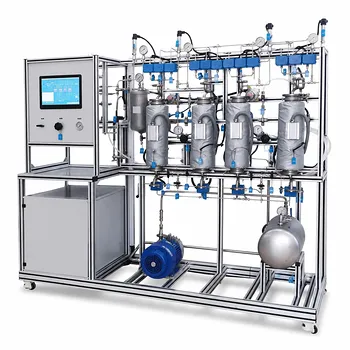
Carbon Dioxide Capture and Utilization Educational Pilot Plant for Unit Operations
Educational pilot plant for carbon dioxide capture and utilization featuring four-tower adsorption, high-temperature regeneration, precise CO2 analysis, modern touchscreen control, real-time data, and robust construction for hands-on unit operations training in university labs with curriculum alignment and safe operation.
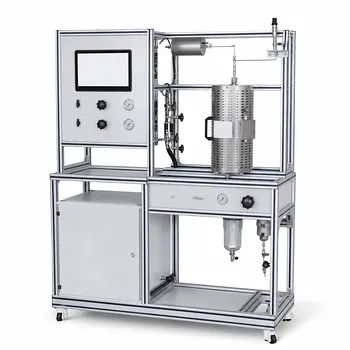
Carbon Dioxide Hydrogenation Methanol Synthesis Educational Unit Operations Pilot Plant
Pilot-scale educational system for carbon dioxide hydrogenation to methanol. Designed for unit operations teaching, it features a fixed-bed reactor, three-stage heating, dual mass flow controllers, and a 15.6-inch touchscreen with data acquisition. Perfect for chemical engineering and sustainable energy courses.
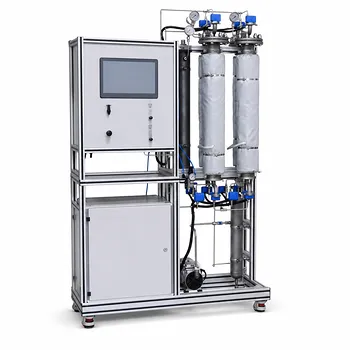
Low Concentration Carbon Dioxide Capture Pressure Swing Adsorption Educational Pilot Plant
Low-concentration CO2 capture pilot plant using Pressure Swing Adsorption for engineering education. Students gain practical experience in breakthrough curve measurement, adsorption dynamics, and variable analysis in a hands-on lab setting. Ideal for unit operations, mass transfer, and chemical engineering labs.
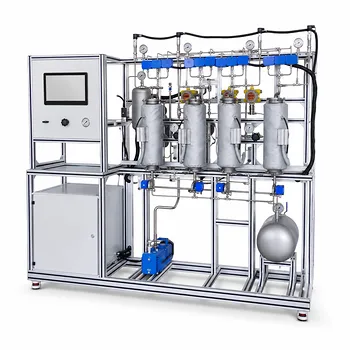
Carbon Dioxide Adsorption and Capture Educational Unit Operations Pilot Plant
Advanced laboratory pilot plant for teaching carbon dioxide adsorption and capture unit operations. Features four-tower adsorption system with 400°C heating jackets, high-precision CO2 and O2 sensors, and 15.6-inch touchscreen with wireless data logging. Ideal for chemical engineering education.

Carbon Dioxide Hydrogen Methanol Synthesis Educational Unit Operations Pilot Plant
Hands-on educational pilot plant for methanol synthesis from carbon dioxide and hydrogen. Enables practical study of high-pressure catalysis, unit operations, and process control. Features real-time data acquisition, safety systems, and customizable experiment modules for undergraduate and graduate chemical engineering laboratories.
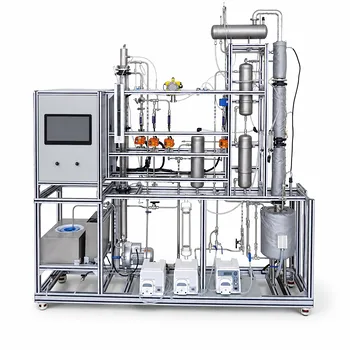
Carbon Dioxide Absorption and Desorption Educational Pilot Plant for Carbon Capture Studies
Explore carbon dioxide absorption and desorption with this educational pilot plant. Transparent columns visualize mass transfer; electric heating simulates industrial solvent regeneration; touchscreen interface enables data monitoring. Ideal for chemical engineering, bridging theory and practice.
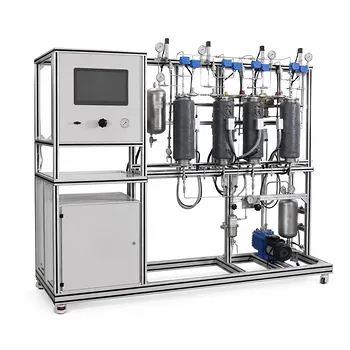
Bench Scale Carbon Dioxide Capture Educational Unit Operations Pilot Plant
This bench-scale educational pilot plant simulates industrial CO₂ separation using a multi-tower adsorption system for hands-on engineering training. Students achieve ≥90% CO₂ purity while studying pressure swing adsorption, desorption kinetics, and process control in gas purification experiments.
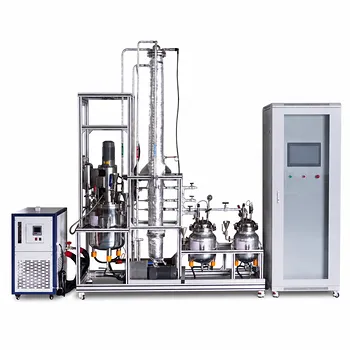
Carbon Material Thermal Pretreatment Multiphase Separation Educational Pilot Plant
Educational pilot plant for carbon material thermal pretreatment and multiphase separation. Features jacketed agitated reactor, separation column, and modern controls for hands-on unit operations training in heat transfer, fluid flow, and process safety with industrial-grade materials and wireless data acquisition.

Educational Unit Operations Pilot Plant for Intraparticle Diffusion Effective Factor Measurement
Designed for chemical engineering university labs, this pilot plant allows hands-on determination of catalyst particle intraparticle diffusion effective factors and gas-solid reaction kinetics using a fixed-bed tubular reactor with industrial touchscreen control, bridging theory and practical reactor design.
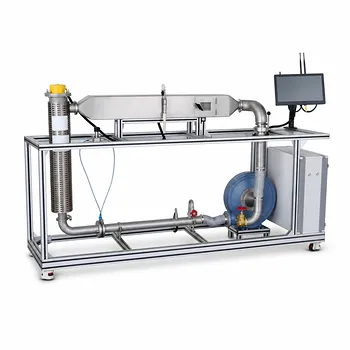
Circulating Wind Tunnel Drying and Convective Heat Transfer Coefficient Determination Educational Pilot Plant
This educational pilot plant enables engineering students to study convective drying, air-water vapor systems, and heat transfer by determining drying curves, drying rate curves, and convective heat transfer coefficients under variable conditions.
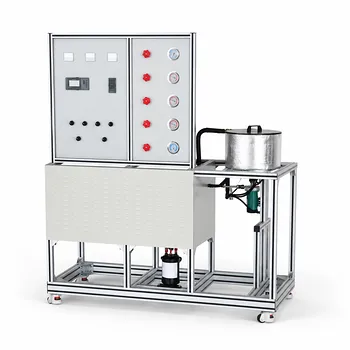
Educational Compression Refrigeration Performance Determination Unit Operations Pilot Plant
This educational pilot plant for compression refrigeration performance determination offers dual COP evaluation, regenerative cycle comparison, and calorimeter calibration. Customizable for curriculum integration, it features environmentally conscious design. Supports thermodynamic mapping on pressure-enthalpy diagrams and synchronous monitoring with centralized instrumentation.

Fixed-Bed Chemical Reaction and Gas Dust Tar Removal Unit Operations Pilot Plant
Integrated educational pilot plant for studying catalytic gas-solid reactions and downstream gas purification. Features dual fixed-bed reactor, three-stage heating, and touchscreen control for hands-on engineering training. Ideal for chemical and environmental engineering curricula.

Constant Pressure Filtration Educational Unit Operations Pilot Plant
Hands-on educational pilot plant for constant pressure filtration. Classic plate and frame filter press allows students to study kinetics, determine specific cake resistance, perform cake washing and evaluate washing rates. Ideal for chemical engineering curriculum. Mobile, customizable, safety-compliant design.

Multi-Reactor Educational Pilot Plant for Reaction Engineering Unit Operations
Integrated bench-scale educational pilot plant for chemical engineering teaching featuring fixed bed fluidized bed and stirred tank reactors with web-based digital twin controls and safety interlocks for hands-on unit operations and reaction engineering comparative studies in one compact system.

Solid Waste Pyrolysis and Refining Educational Pilot Plant for Unit Operations
This pilot plant for solid waste pyrolysis and refining integrates pyrolysis, separation, distillation, and catalytic hydrogenation into one educational unit. It provides visual process observation, smart data logging, and industrial safety for hands-on learning of engineering unit operations.
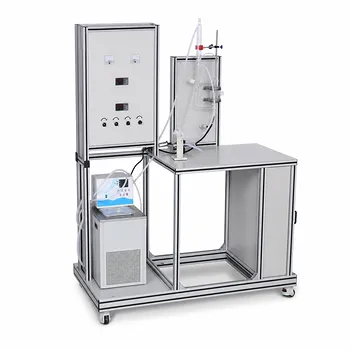
Binary System Vapor Liquid Equilibrium Data Determination Educational Unit Operations Pilot Plant
This educational pilot plant determines vapor-liquid equilibrium data for binary systems under atmospheric pressure. Students observe phase behavior, measure T-P-X-Y, and construct phase diagrams for unit operations labs. Features transparent cell, dual circulation. Ideal for chemical engineering curricula.
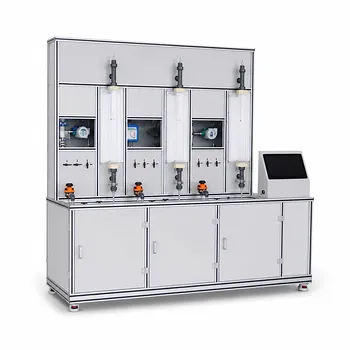
Two Phase Flow Pattern Velocity Resistance Measurement Educational Pilot Plant
Benchtop educational pilot plant for university labs studying gas-liquid two-phase flow patterns, velocity, and resistance across circular, square, and rectangular conduits. Features 15.6-inch touchscreen, 5G connectivity, differential pressure sensors, safe water-air operation. Supports chemical engineering curricula.

Tubular Reactor Flow Characteristics Determination Educational Unit Operations Pilot Plant
Educational pilot plant for investigating tubular reactor flow characteristics and residence time distribution Features adjustable recycle for plug flow and backmixing studies industrial touchscreen interface and real-time data acquisition Ideal for chemical engineering unit operations laboratory training and education
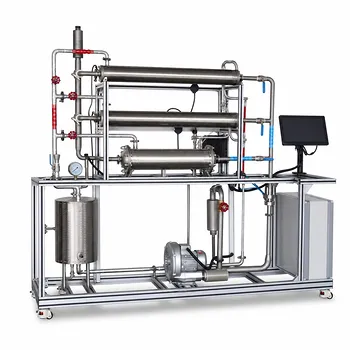
Comprehensive Heat Transfer Coefficient Determination Educational Unit Operations Pilot Plant
Advanced industrial-grade educational pilot plant for comprehensive heat transfer coefficient determination. Enables quantitative convective heat transfer analysis, evaluates double-pipe and shell-and-tube exchanger configurations, and includes digital data acquisition. Customizable for engineering curriculum. Ideal for engineering unit operations labs.

Absorption and Desorption Educational Unit Operations Pilot Plant
Dual packed column absorption and desorption pilot plant for chemical engineering education, offering real-time mass transfer coefficient measurement, durable mobile frame, industrial touch-screen interface, and customizable design for varied laboratory curricula, enabling hands-on study of gas absorption and stripping.
Related Articles
The Electric Ghost in Your Bioreactor: How Optical pH Sensors Are Ending a 50-Year Maintenance Ritual
Optical FRET-based pH and pCO₂ sensors eliminate ground-loop noise, slash response times to milliseconds, and survive repeated autoclaving—a step change for bioprocess pilot plants tired of nursing glass electrodes.
The Invisible Constraint: How First-Principles dCO₂ Modeling Turns Your Pilot Plant into a Predictive Engine
Learn how a first-principles dCO2 mass transfer model de-risks bioprocess scale-up. Validate with pilot plant data to predict manufacturing CO2 profiles, size spargers, and design control loops—eliminating costly full-scale trials.
The Machine That Teaches Green Chemistry by Making Pressure Visible
How supercritical CO₂ pilot plants turn the safer-solvent principle into a hands-on, trade-off-driven lesson in chemical engineering—and why memorizing green chemistry isn’t enough.
The Invisible Thread: How Supercritical CO₂ Weaves a Future Without Water
Explore the high-pressure physics and critical unit operations behind waterless dyeing. A deep dive into why supercritical CO₂ pilot plants are the non-negotiable bridge to sustainable textile manufacturing.
The Physics of Safety: Why Supercritical CO2 Turns a Pilot Plant into a Classroom Without a Poison Cabinet
Supercritical CO₂ extraction eliminates toxic solvents, zeroes out hazardous waste, and operates near room temperature — making it the ultimate teaching tool for process safety and green chemistry.
The Solvent That Disappears: Supercritical CO₂ and the New Logic of Pilot Plant Operations
Supercritical CO₂ extraction doesn’t just replace toxic solvents—it fundamentally reshapes mass transfer, preservation, and teachable moments in chemical engineering pilot plants. Here’s how that changes what an education-focused pilot unit can deliver.
The Ideal-Selectivity Trap: How Pilot Plants Expose the Real Story of Membrane CO₂ Capture
A lab cell measures a membrane’s ideal selectivity; only a pilot plant reveals how it behaves under real flue gas stress, impurities, and economics. Uncover the truth before scaling up.
The Vanishing Solvent: How a Single, Recyclable Fluid Solves the Oldest Problem in Chemistry
Exploring the closed-loop physics of supercritical CO2. It’s not just extraction; it’s a masterclass in thermal dynamics where the solvent disappears, leaving a pure product and a zero-waste cycle.