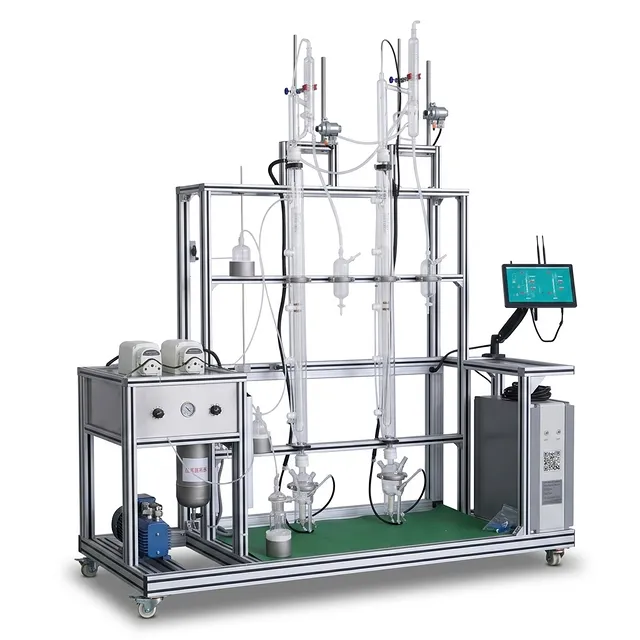
Educational Chemical Engineering Pilot Plants
Multi-Functional Special Distillation Educational Pilot Plant
Item Number : LPK-SDMC
Price varies based on specs and customizations
- Distillation Modes
- Vacuum, Azeotropic, Reactive, Extractive
- Column Construction
- Double transparent glass columns with conductive film insulation
- Reflux Ratio Range
- 1 to 99

Shipping:
Contact us to get shipping details Enjoy On-time Dispatch Guarantee.
Why Choose Us
Easy ordering process, quality products, and dedicated support for your business success.
Introduction
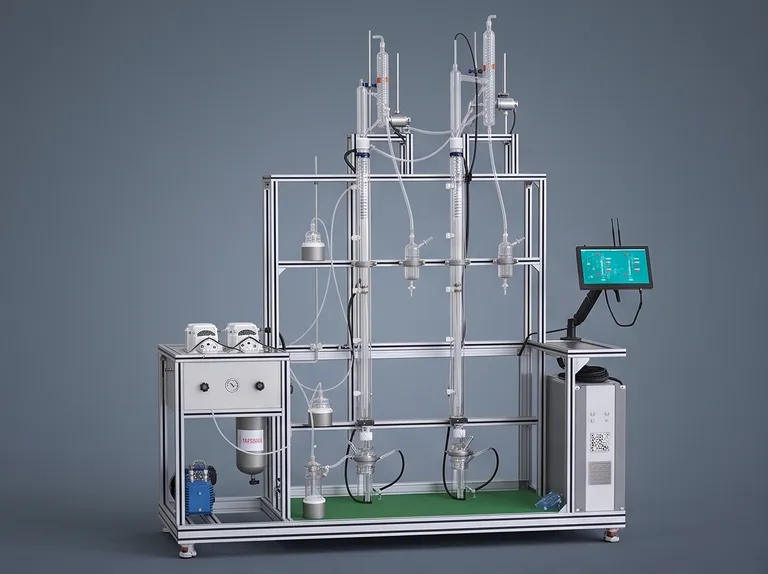
The Multi-functional Special Distillation Educational Unit Operations Pilot Plant is a versatile laboratory system designed to bridge the gap between theoretical chemical engineering principles and practical industrial applications. Featuring a transparent, double-column glass structure with conductive film insulation, this integrated plant allows university students to directly observe hydrodynamic behaviors and thermodynamic separations. It provides a comprehensive platform for studying continuous, vacuum, azeotropic, reactive, and extractive distillation operations, giving students hands-on experience with process control parameters such as reflux ratios and column feed locations.
Tailored Customization Services
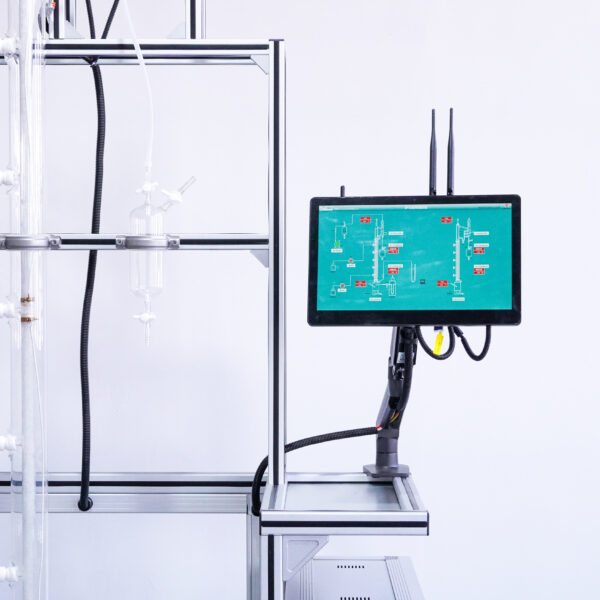
To meet the diverse pedagogical objectives of different universities, this pilot plant features a fully customizable design. Both the hardware components (such as column dimensions, packing types, feeding arrangements, and sensor configurations) and the software control interface can be customized to align precisely with your curriculum requirements and laboratory space constraints.
Detail & Parts
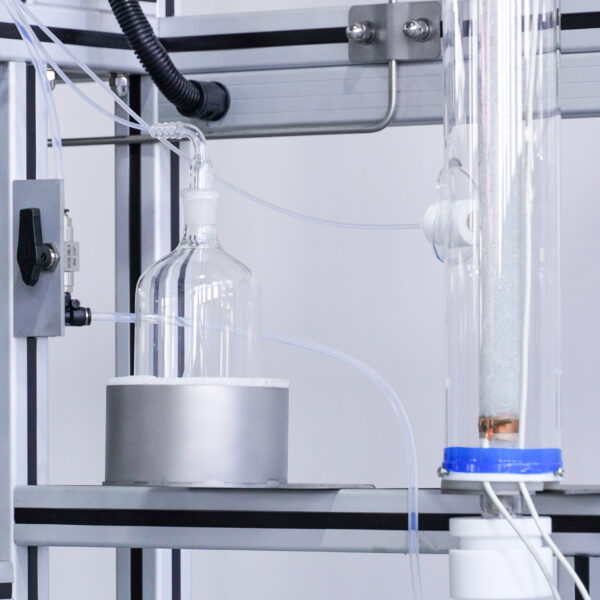
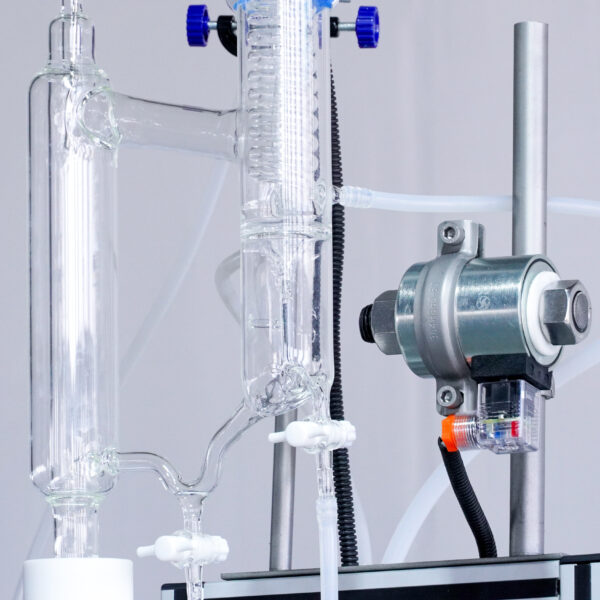
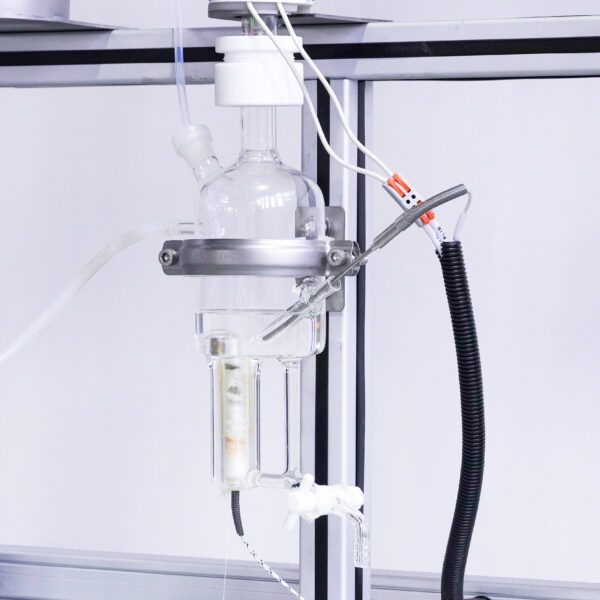
Key Teaching Functions and Engineering Advantages
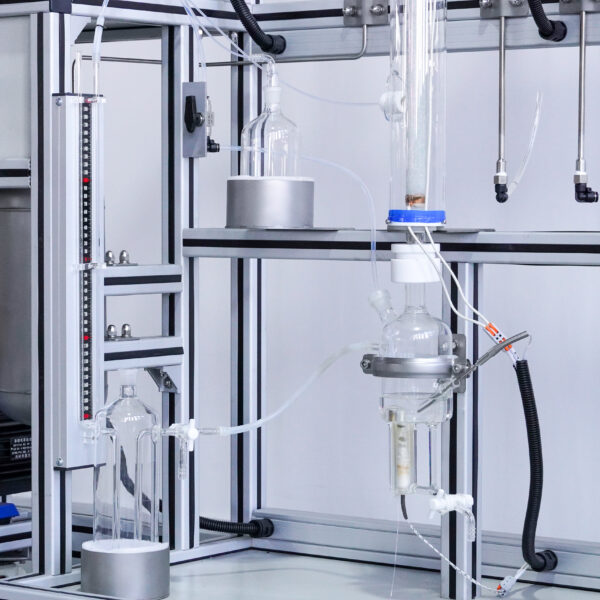
- Visualized Process Hydrodynamics: The transparent glass column body, equipped with outer wall insulation via a transparent conductive film, allows students to observe liquid-vapor contact, weeping, entrainment, and flooding phenomena in real time.
- Multi-operational Flexibility: A single pilot plant supports multiple complex distillation processes—including vacuum, azeotropic, reactive, and extractive modes—maximizing laboratory utility and optimizing space.
- Variable Feeding and Sampling Options: Multiple side ports along the column columns facilitate versatile feed locations, side-stream withdrawals, temperature monitoring, and composition sampling for profiling concentration gradients.
- Precise Process Control: Features a wide, adjustable reflux ratio range (1 to 99) and digital flow, pressure, and temperature measurements to help students analyze separation efficiency under varying operating conditions.
- Robust, Lab-friendly Construction: Built on a high-grade aluminum alloy frame with heavy-duty casters (dimensions within 2200mm × 580mm × 2590mm), providing easy mobility and stability in university teaching laboratories.
Technical Specifications and Curriculum Integration
The following table details the key experimental modules, technical parameters, and their direct alignment with fundamental concepts in widely recognized chemical engineering textbooks:
| Experimental Module / System Component | Technical & Operational Specifications | Associated Textbook Concepts & Unit Operations |
|---|---|---|
| Column Assembly & Packing | Double transparent glass columns; insulated outer walls; configurable with structured or random packing; 3–5 side ports per column for multi-point sampling and feed tray selection. | Chemical Engineering Design: Packed column hydraulics, HETP (Height Equivalent to a Theoretical Plate) calculations, feed tray optimization, and column internal selection. |
| Continuous & Vacuum Distillation System | Integrated vacuum pump, pressure gauges, and digital reflux ratio controller adjustable from 1 to 99. | Unit Operations of Chemical Engineering: McCabe-Thiele method, reflux ratio optimization, boiling point elevation, and vacuum distillation calculations. |
| Azeotropic & Extractive Distillation Modules | Dual feeding pumps with auxiliary solvent/entrainer introduction systems; precise temperature-controlled reboilers. | Transport Processes and Unit Operations: Vapor-Liquid Equilibrium (VLE) modifications, separation of close-boiling systems, and the selection criteria for solvents/entrainers. |
| Reactive Distillation Module | Dedicated catalytic packing zone with integrated temperature sensors to monitor exothermic/endothermic profiles. | Unit Operations of Chemical Engineering: Simultaneous mass transfer and chemical reaction, shifting chemical equilibrium, and reaction conversion enhancement. |
Professional Curriculum Alignment
This educational pilot plant is designed to translate abstract mathematical models into physical, measurable data. By operating this unit, students can gain practical insights into the core topics covered in standard academic curricula:
- Separation Process Principles: Students can verify non-ideal vapor-liquid equilibrium (VLE) behavior, determine activity coefficients, and analyze the impact of entrainers and extractants on relative volatility.
- Process Dynamics & Control: The adjustable reflux ratio system and variable feed points allow students to evaluate transient response times, steady-state startup curves, and the sensitivity of distillate purity to external perturbations.
- Engineering Design Scale-up: Integrating this unit with coursework in Chemical Engineering Design helps students understand material and energy balances, pressure drop calculations in packed columns, and heat loss management.
Custom Hardware and Software Adaptability
To ensure the pilot plant integrates smoothly into your specific engineering program, we offer flexible configurations for both the physical and digital components. Hardware can be adapted to include specific sensor packages (such as digital flow meters, differential pressure transmitters, or online refractive index analyzers), while the data acquisition software can be customized to support various industry-standard communication protocols, data logging formats, and user interface designs.
About LABPARK
With over 20 years of dedicated service to higher education, LABPARK specializes in providing state-of-the-art laboratory equipment and pilot plants. Our core focus spans six key fields: Chemistry, Chemical Engineering, Biotechnology, Food Engineering, Pharmaceutical Engineering, and Environmental Engineering.
Backed by a strong scientific foundation, LABPARK holds 209 technical patents and has partnered with more than 289 universities and colleges worldwide. Our operations are supported by a modern 49,000-square-meter production and R&D base, ensuring high-quality manufacturing and engineering standards for academic institutions globally.
Trusted by Industry Leaders
REQUEST A QUOTE
Our professional team will reply to you within one business day. Please feel free to contact us!
Related Products

Multi-Modal Distillation Unit Operations Training Pilot Plant
Multi-modal distillation pilot plant for practical unit operations training in chemical engineering education. Features real, analog, and semi-physical simulation modes, industrial construction, customizable for university labs. Hands-on fractionation columns, SCADA control, safety systems. Includes sight glasses, sampling ports, closed-loop recycling.

Multi Functional Membrane Crystallization Educational Unit Operations Pilot Plant
Integrated bench-scale membrane crystallization pilot plant for engineering education. Provides hands-on training in advanced separation technologies, combining membrane distillation crystallization and process intensification. Features variable scaling vessels, industrial-grade flow control, and interactive digital data acquisition. Customizable for university labs.
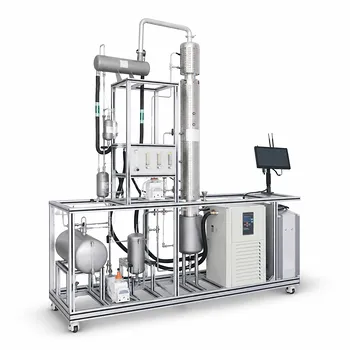
Continuous Sieve-Plate Distillation Pilot Plant for Unit Operations Laboratory Education
Integrated pilot-scale teaching system for continuous sieve-plate distillation studies. Visual demonstration of tray hydraulics, flexible feed positions, and automatic reflux control for hands-on unit operations education in engineering labs. Designed for higher education engineering laboratories.

Electrolyte Distillation Purification and Formulation Educational Pilot Plant
Integrated bench-to-pilot scale educational pilot plant for electrolyte distillation, purification, and formulation with borosilicate glass construction, PLC automation, touchscreen HMI, and advanced industrial safety features for hands-on chemical process training, ideal for chemical engineering and materials science curricula.

Multi-Reactor Educational Pilot Plant for Reaction Engineering Unit Operations
Integrated bench-scale educational pilot plant for chemical engineering teaching featuring fixed bed fluidized bed and stirred tank reactors with web-based digital twin controls and safety interlocks for hands-on unit operations and reaction engineering comparative studies in one compact system.

Continuous Batch Extractive Distillation Educational Pilot Plant
Versatile pilot plant for continuous, batch, and extractive distillation training. High-borosilicate glass column for visualizing hydraulics, 15.6-inch touchscreen with data logging, precise reflux ratio control 1-99, and durable corrosion-resistant frame. Ideal for chemical engineering education and process research.

Green Anhydrous Ethanol Refining Practical Training Pilot Plant
Advanced integrated pilot plant for university labs demonstrating extractive distillation to produce high-purity absolute ethanol from crude feedstock, featuring multi-column continuous operation, closed-loop solvent recycling, and customizable controls for hands-on engineering education, ideal for chemical engineering training and research.
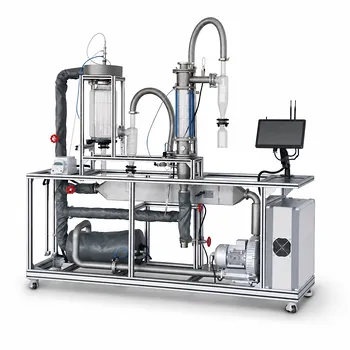
Multi-Functional Drying Educational Unit Operations Pilot Plant
Versatile multi-functional drying educational unit operations pilot plant integrating tunnel, fluidized bed, and spray drying. Enables hands-on study of drying curves, psychrometry, and gas-solid separation for chemical engineering curriculum in higher education labs.

Multi-Functional Membrane Separation Educational Pilot Plant for Unit Operations Lab
The Multi-functional Membrane Separation Educational Unit Operations Pilot Plant is an integrated bench-scale laboratory system designed for teaching undergraduate engineering education. It features Ultrafiltration, Nanofiltration, and Reverse Osmosis modules in a compact, mobile unit for practical hands-on learning.

Ethyl Acetate Synthesis Unit Operations Pilot Plant for Practical Training
Modular and customizable pilot plant for ethyl acetate synthesis practical training. Integrates esterification reaction, liquid-liquid extraction, neutralization, and sieve-plate distillation unit operations. Bridging theory and real-world industrial processes. Designed for university chemical engineering labs
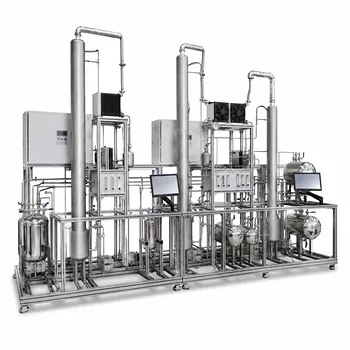
Green Anhydrous Ethanol Purification Extractive Distillation Unit Operations Training Pilot Plant
Modular pilot plant produces high-purity anhydrous ethanol from crude ethanol via extractive distillation in a zero-emission closed-loop process providing hands-on training in unit operations with PLC-based control SCADA software and digitalized process management focusing on green engineering principles

Dual-Mode Rectification Pilot Plant for Practical Training Unit Operations
Industrial-scale dual-mode rectification pilot plant for chemical engineering practical training. Features real-material and simulated-material operation modes, sieve-plate column with sight glasses for visual observation of hydrodynamics, and customizable SCADA control for safe, hands-on learning of unit operations and mass transfer.
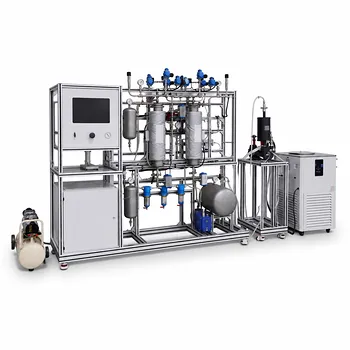
Bench Scale Dual Column Gas Separation and Capture Educational Pilot Plant
This dual-column educational pilot plant provides hands-on teaching of gas adsorption, separation, and capture processes. It features stainless steel columns, regeneration up to 400°C, and a 15.6-inch touchscreen PLC for TSA and PSA studies in chemical engineering curricula, process simulation.

Absorption and Desorption Educational Unit Operations Pilot Plant
Dual packed column absorption and desorption pilot plant for chemical engineering education, offering real-time mass transfer coefficient measurement, durable mobile frame, industrial touch-screen interface, and customizable design for varied laboratory curricula, enabling hands-on study of gas absorption and stripping.
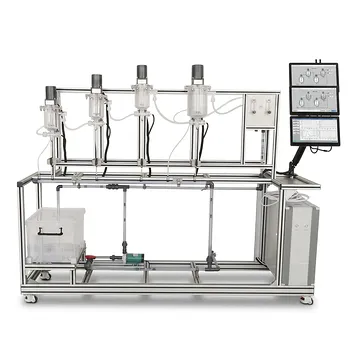
Multi-Stage Stirred Tanks in Series Residence Time Distribution and Mixing Performance Determination Educational Pilot Plant
Explore residence time distribution and mixing performance in series stirred tanks with this educational pilot plant. Real-time conductivity sensors, interactive 3D simulation, and industrial-grade PC for chemical engineering lab training. Customizable to curricula.

Comprehensive Fluid Mechanics Educational Unit Operations Pilot Plant
Hands-on fluid mechanics pilot plant for engineering education covering over 13 principles including pipe flow, minor losses, flowmeter calibration, and pump performance with industrial-grade components, smooth and rough piping, venturi and orifice flowmeters, and centrifugal pump testing and analysis.

Solid Waste Pyrolysis and Refining Educational Pilot Plant for Unit Operations
This pilot plant for solid waste pyrolysis and refining integrates pyrolysis, separation, distillation, and catalytic hydrogenation into one educational unit. It provides visual process observation, smart data logging, and industrial safety for hands-on learning of engineering unit operations.
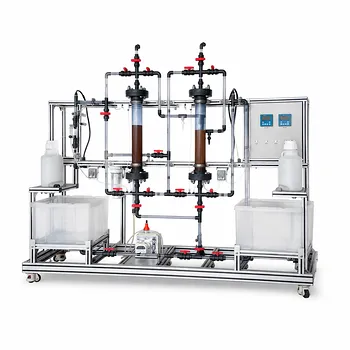
Ion Exchange Water Purification Educational Pilot Plant for Engineering Unit Operations
This bench-scale ion exchange pilot plant trains engineering students in water purification. Dual transparent columns simulate industrial softening and demineralization. Students observe fluid dynamics, perform resin regeneration, and analyze breakthrough curves. The corrosion-resistant frame ensures durability in unit operations experiments.

Residence Time Distribution and Reactor Flow Characteristics Determination Educational Pilot Plant
This versatile educational pilot plant is designed for comprehensive study of residence time distribution and reactor flow characteristics, featuring multiple CSTRs in series, a tubular reactor, variable recycle loop, and automated real-time data acquisition, perfect for hands-on chemical engineering education.

Electrolytic Hydrogen Production Educational Unit Operations Pilot Plant
Bench-scale electrolytic hydrogen production pilot plant designed for university engineering labs. Provides hands-on training in water electrolysis, gas-liquid separation, and process safety. Fully customizable system with digital PID control, corrosion-resistant components, and hydrogen gas detector. Ideal for chemical engineering curricula.
Related Articles
The Intuition You Can’t Simulate: Why the Best Bioprocess Education Still Lives on a Thin-Layer Plate
Before engineers trust a $500,000 bioreactor, they must trust their own hands. How thin-layer chromatography (TLC) builds the tacit knowledge that separates trained operators from true process engineers—and why LABPARK pilot plants preserve this irreplaceable skill.
The 44% Error: Why Your Crystallization Pilot Plant is Lying About Yield
Ignoring water of hydration in crystal mass balances can inflate yield predictions by over 50%. A deep dive into the mass and energy balance coupling that separates an empirical observation from a predictable, scalable process.
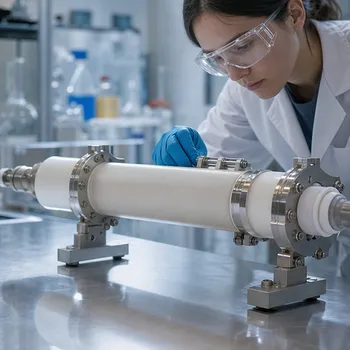
The Bridge Between a Material's Promise and a Carbon Capture Plant's Reality
A membrane pilot plant is not a scaled-down factory; it's a time machine for risk. Learn how hands-on testing exposes the hidden flaws—fouling, plasticization, and pressure penalties—that destroy the economics of CO₂ capture.
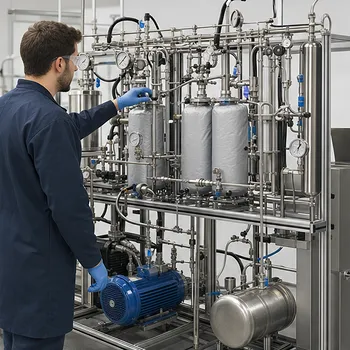
The Solvent That Disappears: Supercritical CO₂ and the New Logic of Pilot Plant Operations
Supercritical CO₂ extraction doesn’t just replace toxic solvents—it fundamentally reshapes mass transfer, preservation, and teachable moments in chemical engineering pilot plants. Here’s how that changes what an education-focused pilot unit can deliver.
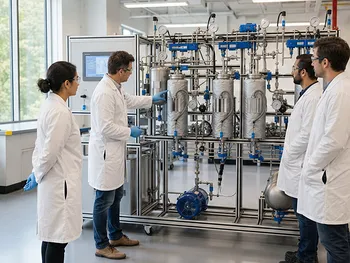
The Physics of Safety: Why Supercritical CO2 Turns a Pilot Plant into a Classroom Without a Poison Cabinet
Supercritical CO₂ extraction eliminates toxic solvents, zeroes out hazardous waste, and operates near room temperature — making it the ultimate teaching tool for process safety and green chemistry.
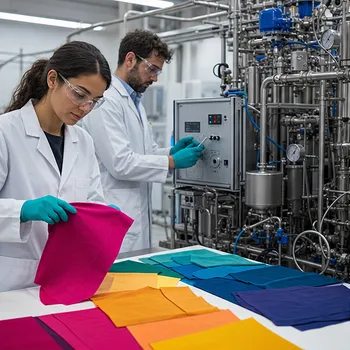
The Invisible Thread: How Supercritical CO₂ Weaves a Future Without Water
Explore the high-pressure physics and critical unit operations behind waterless dyeing. A deep dive into why supercritical CO₂ pilot plants are the non-negotiable bridge to sustainable textile manufacturing.
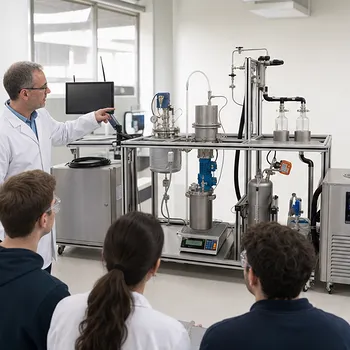
The Machine That Teaches Green Chemistry by Making Pressure Visible
How supercritical CO₂ pilot plants turn the safer-solvent principle into a hands-on, trade-off-driven lesson in chemical engineering—and why memorizing green chemistry isn’t enough.
The Brown Cloud and the Engineer’s Mind: Why Pilot Plants Don’t Just Dilute Danger, They Unmake It
Scaling toxic gas management beyond the fume hood is a leap from blind containment to engineered neutralization. Explore the mass-transfer psychology behind gas absorption columns.
The Two Temperatures Your Cooling Tower Relies On (And Why They Betray a Solvent Column)
Wet-bulb and adiabatic saturation temperatures appear identical in water-air systems, but for organic solvents the divergence can corrupt pilot-plant data. Discover the hidden transport coincidence that makes (or breaks) your energy balance.