Educational Chemical Engineering Pilot Plants
Fluid Friction Resistance Determination Educational Unit Operations Pilot Plant
Item Number : LPK-LTZL
Price varies based on specs and customizations
- Measurement Technique
- Four-point differential pressure
- Flow Visualization
- Transparent test sections
- Control Interface
- Industrial touchscreen PLC

Shipping:
Contact us to get shipping details Enjoy On-time Dispatch Guarantee.
Why Choose Us
Easy ordering process, quality products, and dedicated support for your business success.
Introduction
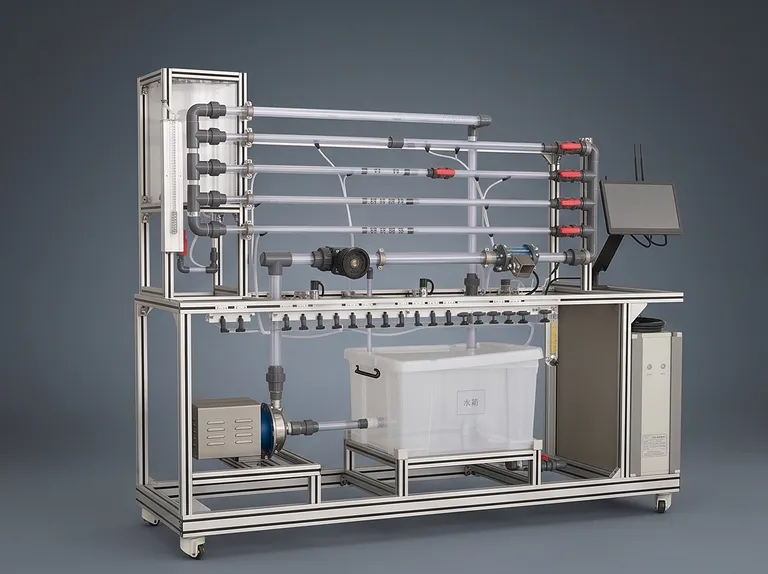
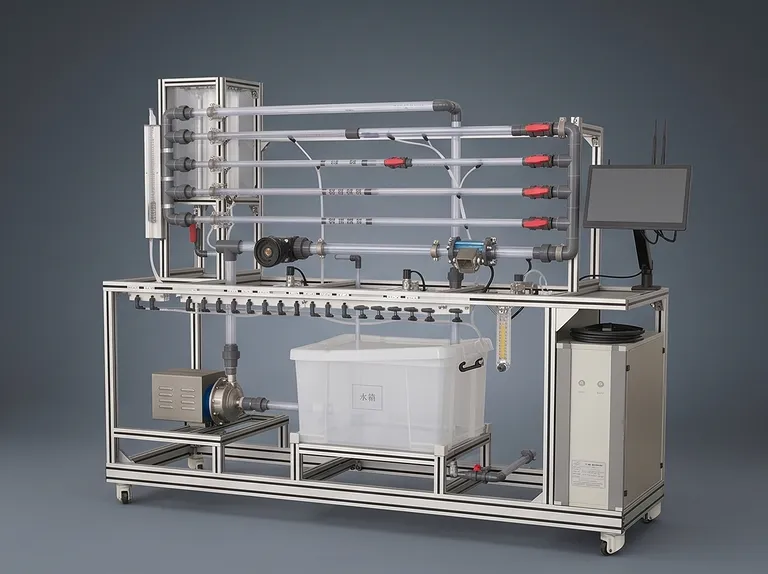
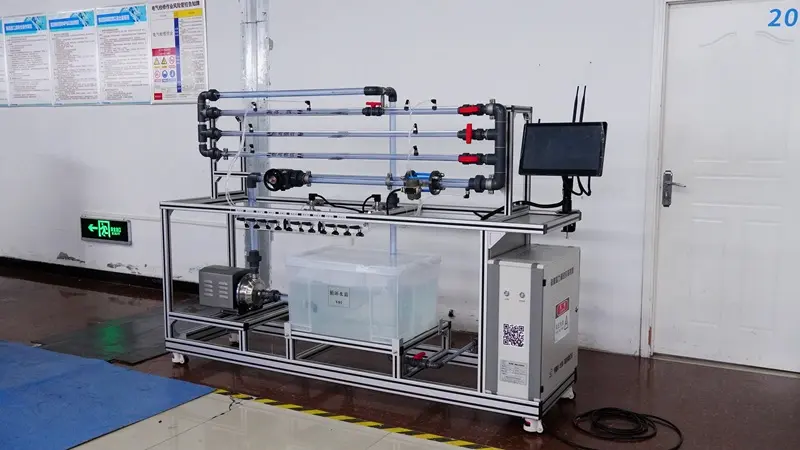
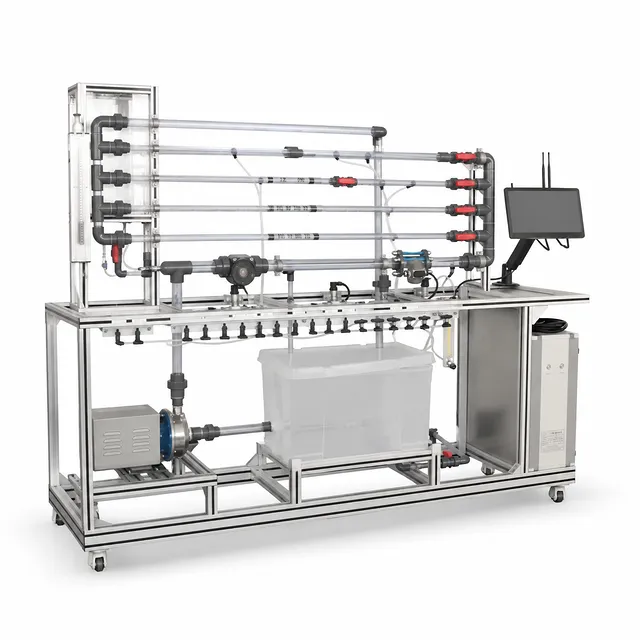
The Fluid Friction Resistance Determination Educational Unit Operations Pilot Plant is an engineered, bench-scale learning system designed specifically for university engineering laboratories. It provides undergraduate students with hands-on, practical experience in fluid mechanics and pipeline hydraulics. By utilizing industrial-grade sensors, transparent observation conduits, and advanced data acquisition systems, the plant allows students to quantitatively analyze energy losses in fluid transport. The system bridges theoretical classroom concepts—such as laminar and turbulent flow regimes, pressure drops, and frictional loss coefficients—with physical, real-world engineering practices.
Customizable Solutions for Diverse Curricula
To accommodate different university laboratory spaces, teaching scopes, and course structures, this pilot plant features a modular design that is fully customizable. LABPARK offers tailorable configurations for both software and hardware. Hardware adjustments can include variations in pipe diameters, piping materials, and sensor configurations, while the control and monitoring software can be adapted to match specific data acquisition protocols and institutional learning management systems (LMS).
Key Educational Functions and Advantages
The pilot plant is equipped with features designed to enhance pedagogical efficiency, student engagement, and assessment accuracy:
- Four-Point Pressure Measurement Technique: Utilizes a highly reliable four-point differential pressure measurement method to determine local resistance (minor losses) across valves and fittings, reducing measurement error and improving data consistency.
- Visual Fluid Flow Observation: Integrates clear, transparent test sections within the pipeline assembly, enabling students to visually correlate calculated flow regimes (laminar vs. turbulent) with physical fluid behavior.
- Industrial Touchscreen Interface: Features an industrial-grade touch-screen PLC unit for remote monitoring and real-time data logging. This design exposes students to standard industrial process control interfaces and automated data computation.
- Intelligent 3D Virtual System Platform: Provides a digital-twin simulation environment. Students can practice operating the pilot plant in a 3D offline mode to prepare for physical lab sessions. The system supports automatic version updates and synchronizes practice scores with student accounts.
- Comprehensive Assessment Software: Includes an integrated instructor dashboard for online question database management, automated test generation (supporting multiple-choice, true/false, and analytical questions), and automated grading analytics to simplify course administration.
Technical Specifications and Experimental Modules
The table below outlines the key technical capabilities of the pilot plant, the practical experiments students can perform, and the corresponding core academic concepts.
| Experimental Module | Technical Parameters & Instrumentation | Core Academic Concepts & Textbook Associations |
|---|---|---|
| Straight Pipe Resistance Determination | Stainless steel & transparent pipelines; high-accuracy differential pressure transmitters; variable-speed centrifugal circulation pump. | Darcy-Weisbach Equation; friction factor ($\lambda$ or $f$) vs. Reynolds number ($Re$) relationship; turbulent flow regime verification. |
| Local Resistance (Minor Loss) Analysis | Selected industrial valves (e.g., globe valve, gate valve); four-point pressure tap configurations; digital flow meters. | Local resistance coefficient ($K$); equivalent length method ($L_e/D$); flow contraction and expansion losses. |
| Process Control & Automation | Touchscreen PLC interface; digital sensor feedback loops; USB/Wi-Fi data export utilities. | Industrial instrumentation; automated data acquisition; real-time sensor calibration and logging. |
| 3D Virtual Simulation Practice | Interactive 3D modeling platform; offline capability; online learning management integration. | Pre-lab preparation; digital twin applications; interactive process simulation. |
Curricular Alignment and Academic Integration
This pilot plant is specifically structured to complement core engineering curricula. The experiments conducted on the system directly correspond to fundamental concepts found in globally recognized textbook resources used in chemical, civil, environmental, and mechanical engineering departments:
- Unit Operations of Chemical Engineering: The equipment provides physical validation of fluid statics and dynamics. Students can directly generate data to construct the classical Moody diagram, analyzing skin friction and the relationship between the friction factor and Reynolds number across the laminar, transition, and fully turbulent regions.
- Transport Processes and Separation Process Principles: The pilot plant supports core coursework in momentum transfer, specifically the study of incompressible flow in pipes, pressure drop calculations for Newtonian fluids, and friction losses through system fittings, valves, and sudden expansions or contractions.
- Chemical Engineering Design: By interacting with the industrial-grade components, touchscreen interfaces, and sensor arrays, students gain practical insight into process piping design, hydraulic sizing, pump selection criteria, and standard process instrumentation.
Tailored Implementations for Higher Education
Recognizing that every engineering department operates under unique curriculum guidelines, LABPARK remains committed to providing highly flexible equipment configurations. We collaborate directly with academic faculty to modify either the physical layout (such as adding alternative pipe materials for comparison studies) or the software interface (including custom mathematical modeling modules) to ensure the pilot plant integrates smoothly into your specific laboratory syllabus.
About LABPARK
LABPARK has spent over 20 years dedicated to supporting higher education by designing and manufacturing high-quality laboratory teaching equipment. We focus on delivering robust, pedagogically effective solutions across six primary academic domains: Chemistry, Chemical Engineering, Biology, Food Engineering, Pharmaceutical Engineering, and Environmental Engineering.
With a strong commitment to engineering innovation, LABPARK holds 209 technical patents and has established collaborative partnerships with more than 289 universities and colleges worldwide. Our state-of-the-art research, development, and manufacturing base spans 49,000 square meters, allowing us to maintain rigorous quality control standards and deliver dependable educational tools that prepare the next generation of engineers.
Trusted by Industry Leaders
REQUEST A QUOTE
Our professional team will reply to you within one business day. Please feel free to contact us!
Related Products
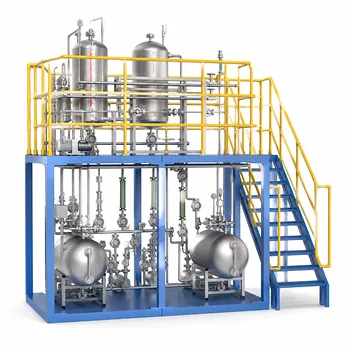
Fluid Transport and Piping Dynamics Practical Training Unit Operations Pilot Plant
This industrial-scale fluid transport and piping dynamics training pilot plant provides essential hands-on experience with pump operations, cavitation, piping resistance, flow metering, and process control. Customizable to fit specific academic engineering curricula.

Comprehensive Fluid Mechanics Educational Unit Operations Pilot Plant
Hands-on fluid mechanics pilot plant for engineering education covering over 13 principles including pipe flow, minor losses, flowmeter calibration, and pump performance with industrial-grade components, smooth and rough piping, venturi and orifice flowmeters, and centrifugal pump testing and analysis.

Multi-Reactor Educational Pilot Plant for Reaction Engineering Unit Operations
Integrated bench-scale educational pilot plant for chemical engineering teaching featuring fixed bed fluidized bed and stirred tank reactors with web-based digital twin controls and safety interlocks for hands-on unit operations and reaction engineering comparative studies in one compact system.
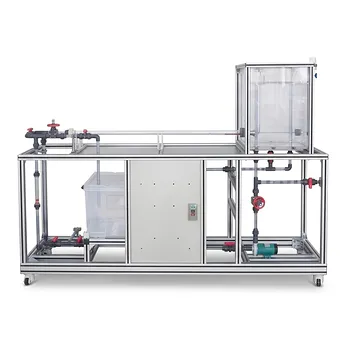
Fluid Reynolds Number Demonstration Educational Unit Operations Pilot Plant
Visual fluid dynamics pilot plant for engineering education demonstrating laminar, transitional, and turbulent flow regimes via dye injection in circular conduits. Verifies Reynolds number transitions and teaches dimensionless analysis. Modular design with digital simulation software enhances hands-on learning

Two-Dimensional Fluidization Hydrodynamics Educational Pilot Plant for Unit Operations Training
Explore gas-solid and liquid-solid fluidization hydrodynamics with our transparent 2D educational pilot plant. Ideal for chemical engineering unit operations labs, it demonstrates fixed to fluidized bed regimes, measures pressure drop, and integrates QR-code digital learning for enhanced student training.

Tubular Reactor Flow Characteristics Determination Educational Unit Operations Pilot Plant
Educational pilot plant for investigating tubular reactor flow characteristics and residence time distribution Features adjustable recycle for plug flow and backmixing studies industrial touchscreen interface and real-time data acquisition Ideal for chemical engineering unit operations laboratory training and education
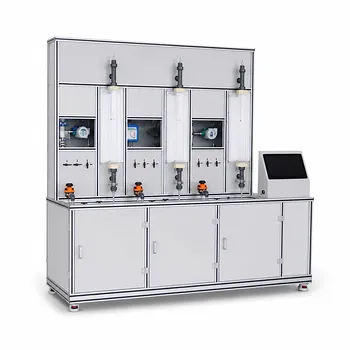
Two Phase Flow Pattern Velocity Resistance Measurement Educational Pilot Plant
Benchtop educational pilot plant for university labs studying gas-liquid two-phase flow patterns, velocity, and resistance across circular, square, and rectangular conduits. Features 15.6-inch touchscreen, 5G connectivity, differential pressure sensors, safe water-air operation. Supports chemical engineering curricula.

Constant Pressure Filtration Educational Unit Operations Pilot Plant
Hands-on educational pilot plant for constant pressure filtration. Classic plate and frame filter press allows students to study kinetics, determine specific cake resistance, perform cake washing and evaluate washing rates. Ideal for chemical engineering curriculum. Mobile, customizable, safety-compliant design.
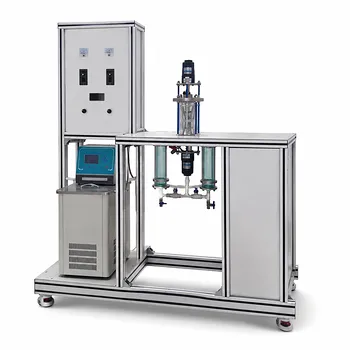
Liquid-Liquid Mass Transfer Coefficient Determination Educational Pilot Plant
This bench-scale educational pilot plant for liquid-liquid mass transfer coefficient determination offers precise control of phase boundary, temperature, and agitation, enabling hands-on study of transport phenomena and unit operations in chemical engineering labs for teaching.

Educational Unit Operations Pilot Plant for Intraparticle Diffusion Effective Factor Measurement
Designed for chemical engineering university labs, this pilot plant allows hands-on determination of catalyst particle intraparticle diffusion effective factors and gas-solid reaction kinetics using a fixed-bed tubular reactor with industrial touchscreen control, bridging theory and practical reactor design.
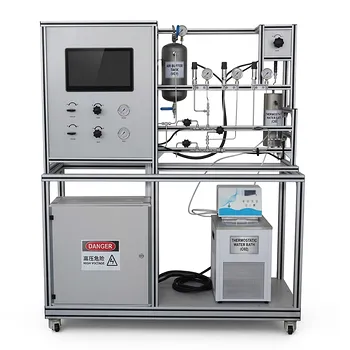
Throttling Effect Determination Educational Unit Operations Pilot Plant
Investigate the Joule-Thomson throttling effect with this educational unit operations pilot plant. Designed for engineering students, it enables hands-on comparative analysis of adiabatic gas expansion using precise process control, interactive digital interface, and eco-friendly operation, ensuring safe repeatable thermodynamic experiments.
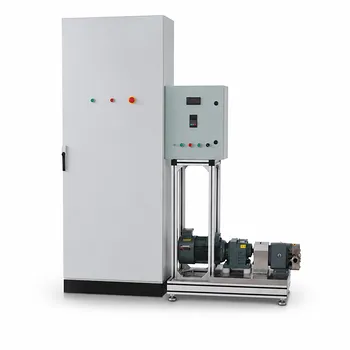
Quantitative Dosing and Liquid Flow Control Educational Unit Operations Pilot Plant
Explore industrial fluid transport and automated process control with this quantitative dosing and liquid flow control educational pilot plant, featuring local and remote control cabinets, variable speed metering pump, high-precision flow sensors, and PLC-based SCADA integration for engineering students.

Multi Pump Fluid Transport Process Piping Unit Operations Training Pilot Plant
Industrial-scale multi-pump pilot plant for unit operations training in fluid transport and process piping, featuring real-material and semi-physical simulation modes, comprehensive pump and flowmeter calibration, and safety-enhanced two-tier platform, bridging academic theory and industrial practice for chemical engineering education.
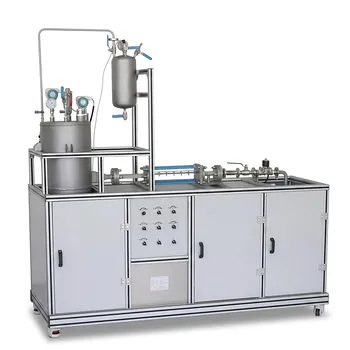
Cavitation Phenomenon Demonstration and Analysis Educational Unit Operations Pilot Plant
Advanced educational pilot plant for demonstrating and analyzing cavitation phenomena in fluid systems. Features a transparent acrylic Venturi test section, high-precision pressure and flow sensors, digital data acquisition, and integrated safety relief valves for engineering curricula.
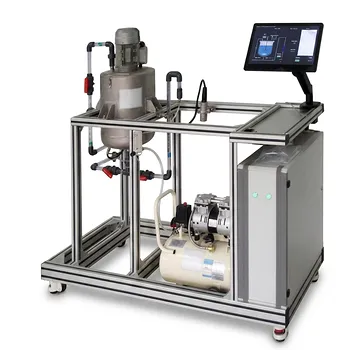
Agitation and Mixing Educational Unit Operations Pilot Plant
This bench-scale educational pilot plant enables investigation of agitation and mixing characteristics through real-time torque, speed, and conductivity measurements, supporting power number, Reynolds number, and scale-up experiments for chemical engineering students with customizable impellers and interactive control for practical education.

Multi-Functional Drying Educational Unit Operations Pilot Plant
Versatile multi-functional drying educational unit operations pilot plant integrating tunnel, fluidized bed, and spray drying. Enables hands-on study of drying curves, psychrometry, and gas-solid separation for chemical engineering curriculum in higher education labs.
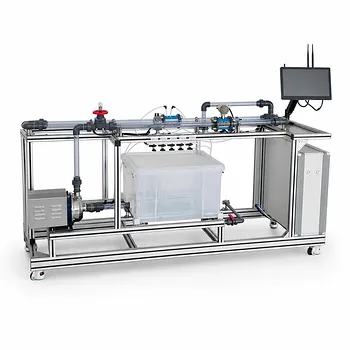
Orifice and Venturi Flowmeter Calibration Educational Pilot Plant for Fluid Mechanics Laboratory
Enhance fluid dynamics education with the Orifice and Venturi Flowmeter Calibration Educational Unit Operations Pilot Plant, featuring transparent orifice and Venturi meters, industrial sensors, touchscreen interface for real-time data analysis and automatic coefficient calculations in engineering student laboratories.
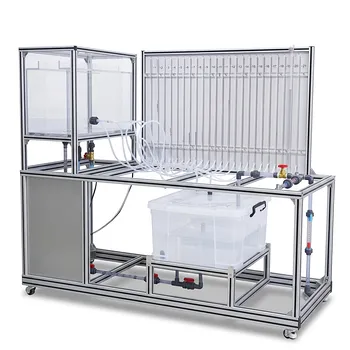
Bernoulli Equation Demonstration Unit Operations Pilot Plant
Laboratory pilot plant for Bernoulli's equation demonstration with transparent PVC pipes, 23 piezometer tubes for pressure measurement, and hands-on experiments. Designed for engineering education to study energy conservation, hydraulic grade line, and localized losses in fluid steady-flow systems.
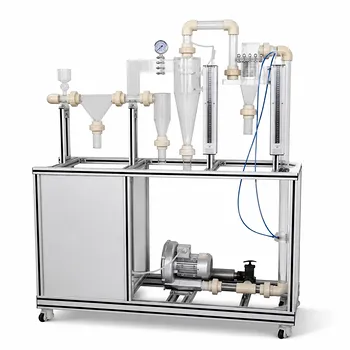
Gas-Solid Heterogeneous Separation Demonstration Educational Unit Operations Pilot Plant
Comprehensive visual transparent gas-solid separation pilot plant for chemical engineering labs. Demonstrates gravity settling inertial settling cyclone and bag filter technologies. Enables real-time analysis of fluid-particle mechanics pressure drop and collection efficiency. Ideal for undergraduate unit operations courses.
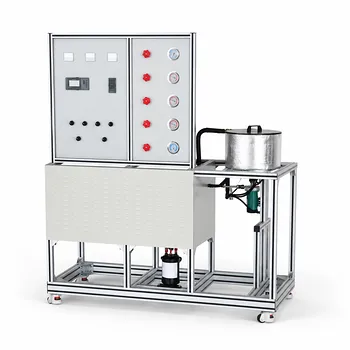
Educational Compression Refrigeration Performance Determination Unit Operations Pilot Plant
This educational pilot plant for compression refrigeration performance determination offers dual COP evaluation, regenerative cycle comparison, and calorimeter calibration. Customizable for curriculum integration, it features environmentally conscious design. Supports thermodynamic mapping on pressure-enthalpy diagrams and synchronous monitoring with centralized instrumentation.
Related Articles
The Single-Count Principle: How a Quiet VSEPR Rule Shapes the Molecules We Scrub, Absorb, and Teach
Why do CO₂, SO₂, and NOₓ behave so differently in a wet scrubber? The answer hinges on a surprisingly simple VSEPR shortcut—treating every multiple bond as one electron group—that predicts shape, polarity, and separation strategies in environmental and bioprocess training.
The Electric Ghost in Your Bioreactor: How Optical pH Sensors Are Ending a 50-Year Maintenance Ritual
Optical FRET-based pH and pCO₂ sensors eliminate ground-loop noise, slash response times to milliseconds, and survive repeated autoclaving—a step change for bioprocess pilot plants tired of nursing glass electrodes.