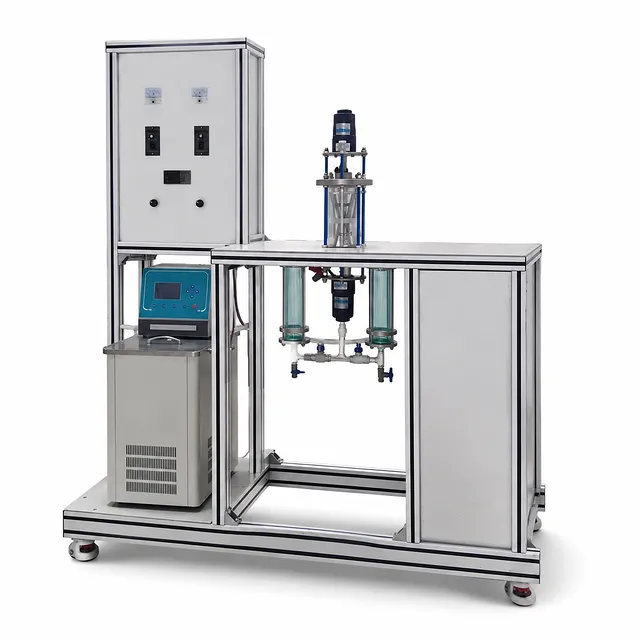
Educational Chemical Engineering Pilot Plants
Liquid-Liquid Mass Transfer Coefficient Determination Educational Pilot Plant
Item Number : LPK-YYCZ
Price varies based on specs and customizations
- Contactor Vessel
- Borosilicate glass cylinder with a fixed, measurable interfacial boundary
- Agitation System
- Dual independent variable-speed DC motors with digital rpm displays
- Temperature Control
- Constant-temperature water bath with external circulation pump

Shipping:
Contact us to get shipping details Enjoy On-time Dispatch Guarantee.
Why Choose Us
Easy ordering process, quality products, and dedicated support for your business success.
Introduction
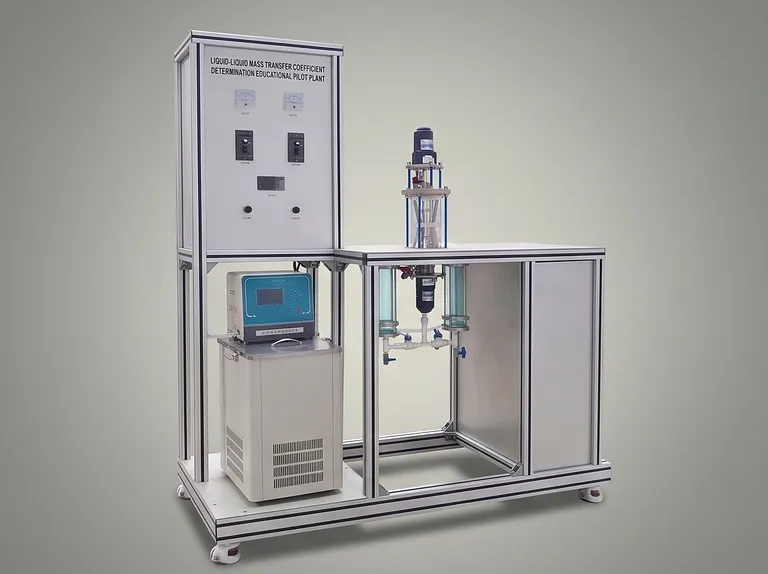
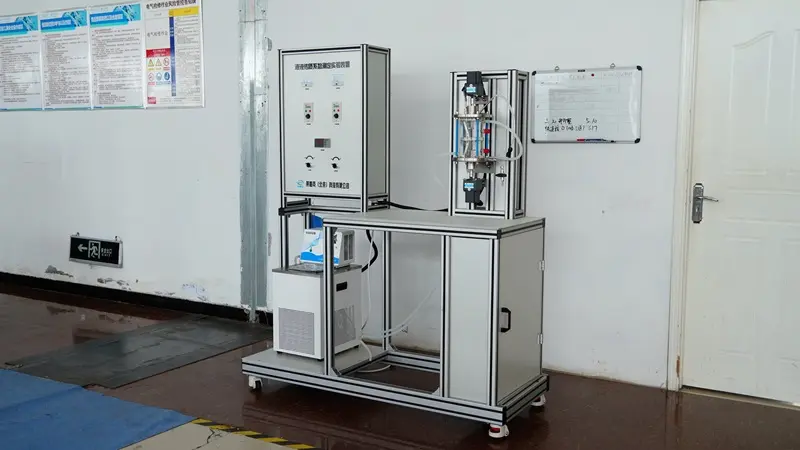
The Liquid-Liquid Mass Transfer Coefficient Determination Educational Unit Operations Pilot Plant is a specialized, bench-scale laboratory system designed for undergraduate and graduate engineering education. It provides students with practical, hands-on experience in investigating solute mass transfer mechanisms between two immiscible liquid phases. By enabling precise control over phase boundary conditions, temperature, and agitation speeds, the unit allows for the direct determination of mass transfer coefficients and the observation of concentration variations over time, bridging the gap between theoretical transport equations and physical reality.
To ensure this system aligns with specific pedagogical goals, laboratory space constraints, and safety guidelines, LABPARK offers comprehensive customization services. Both the hardware components and the software interface can be tailored to meet unique laboratory requirements, experimental protocols, or institutional standards.
Key Pedagogical Functions and Advantages
- Independent Agitation Control: Features separate, variable-speed drives for both the upper and lower liquid phases, allowing students to study how independent phase turbulence affects the overall mass transfer rate.
- Defined Interface Area: Utilizes a contactor vessel design that maintains a constant, known interfacial area, simplifying the mathematical modeling of the mass transfer process for students.
- Isothermal Testing Conditions: Equipped with a high-precision constant-temperature circulating bath to eliminate temperature-induced variations in viscosity, diffusivity, and solubility.
- Engineering-Scale Process Flow: Exposes students to realistic liquid-liquid process flows, sampling techniques, and analytical routines common in industrial unit operations.
- Compact, Skid-Mounted Design: Built on a robust aluminum frame with lockable casters, allowing the unit to be easily relocated and integrated into existing laboratory spaces.
Technical Specifications and Experimental Scope
| Feature / Module | Specification / Description | Corresponding Academic Concepts |
|---|---|---|
| Contactor Vessel | Borosilicate glass cylinder with a fixed, measurable interfacial boundary | Phase boundary determination; interfacial area calculations |
| Agitation System | Dual independent variable-speed DC motors with digital rpm displays | Convective mass transfer; turbulence and Reynolds number influence |
| Temperature Control | Constant-temperature water bath with external circulation pump | Thermal effects on diffusivity and solute solubility |
| Experimental Module 1 | Determination of individual and overall liquid-liquid mass transfer coefficients | Two-film theory; interphase mass transfer resistance |
| Experimental Module 2 | Kinetic study of concentration changes over time under constant agitation and temperature | Transient mass transfer; concentration-time curves |
| Experimental Module 3 | Demonstration of liquid-liquid extraction principles | Phase equilibrium; partition coefficients; solvent extraction design |
Curriculum Alignment and Academic Integration
This pilot plant is designed to integrate into the laboratory curricula of several engineering disciplines, including Chemical Engineering, Environmental Engineering, Materials Science, and Food Engineering. It acts as a physical counterpart to lecture-based instruction, allowing students to verify transport equations using empirical data.
The experimental capabilities of this unit directly support the core concepts found in standard engineering textbooks, such as:
- Unit Operations of Chemical Engineering: Supports practical coursework on liquid-liquid extraction processes, the validation of mass transfer theories (such as the double-film theory), and the calculation of overall mass transfer coefficients.
- Transport Processes and Unit Operations: Aligns with topics covering molecular diffusion in liquids, convective mass transfer coefficients, and the evaluation of concentration gradients across fluid boundaries.
- Chemical Engineering Design: Assists students in understanding the foundational scale-up principles, stage efficiencies, and thermodynamic behaviors necessary for designing industrial extraction columns.
By using this unit, students gain a deeper understanding of how abstract transport phenomena relate to practical equipment design and industrial-scale operations.
Flexible Customization and Engineering Support
Recognizing that every university laboratory has distinct space limitations, utility availability, and curricular focus, LABPARK offers tailored modification options for this unit. Our engineering team can customize the hardware (such as vessel volumes, material selections, and sensor integrations) as well as the software control systems (including data acquisition options, digital interfaces, and PLC integration) to ensure the pilot plant fits your instructional and safety requirements.
About LABPARK
LABPARK has been dedicated to serving the global higher education sector for over 20 years, focusing on delivering advanced laboratory solutions across six key fields: chemistry, chemical engineering, biotechnology, food engineering, pharmaceutical engineering, and environmental engineering. With a commitment to engineering quality and educational utility, the company holds 209 technical patents and has established successful partnerships with more than 289 universities and colleges worldwide.
Supported by a modern 49,000-square-meter manufacturing and R&D base, LABPARK integrates industrial-grade components with student-friendly interfaces. We ensure that our educational pilot plants meet rigorous academic standards, helping institutions train the next generation of engineers and researchers.
Trusted by Industry Leaders
REQUEST A QUOTE
Our professional team will reply to you within one business day. Please feel free to contact us!
Related Products
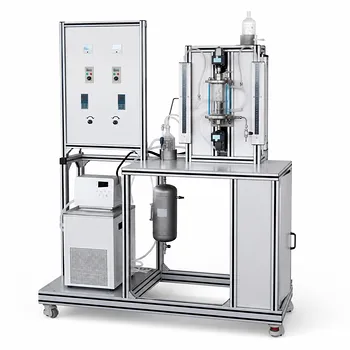
Dual-Drive Stirred Gas-Liquid Mass Transfer Coefficient Determination Pilot Plant
Pilot plant for determination of gas-liquid mass transfer coefficients with independent dual-drive agitation. Isolate gas and liquid film resistances via two-film theory control of speeds, flow rates, temperature. Borosilicate vessel provides visual access. Customizable for chemical, environmental, food, pharmaceutical engineering.
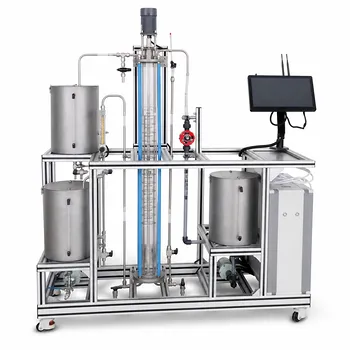
Educational Rotary Disc Liquid-Liquid Extraction Pilot Plant
A transparent rotary disc column for educational liquid-liquid extraction experiments. This pilot plant enables students to study mass transfer, droplet dynamics, and flooding behavior, bridging theory and practice in chemical engineering unit operations education. Features variable-speed agitation and PLC control.
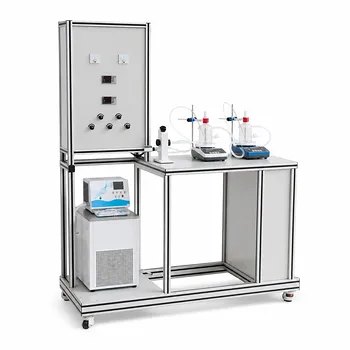
Ternary Liquid-Liquid Equilibrium Educational Pilot Plant
An integrated laboratory training system for engineering students to determine ternary liquid-liquid equilibrium data, construct phase diagrams, and gain hands-on experience with industrial instrumentation, including Abbe refractometer and magnetic stirrers, for precise data acquisition and curriculum-aligned experiments.
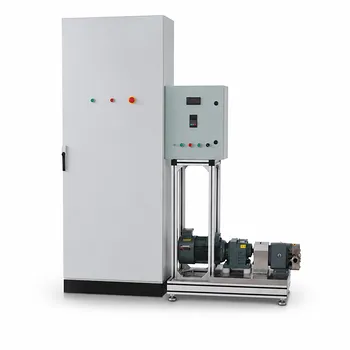
Quantitative Dosing and Liquid Flow Control Educational Unit Operations Pilot Plant
Explore industrial fluid transport and automated process control with this quantitative dosing and liquid flow control educational pilot plant, featuring local and remote control cabinets, variable speed metering pump, high-precision flow sensors, and PLC-based SCADA integration for engineering students.
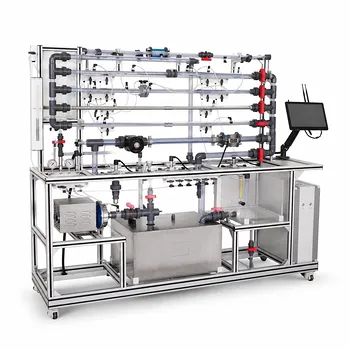
Comprehensive Fluid Mechanics Educational Unit Operations Pilot Plant
Hands-on fluid mechanics pilot plant for engineering education covering over 13 principles including pipe flow, minor losses, flowmeter calibration, and pump performance with industrial-grade components, smooth and rough piping, venturi and orifice flowmeters, and centrifugal pump testing and analysis.
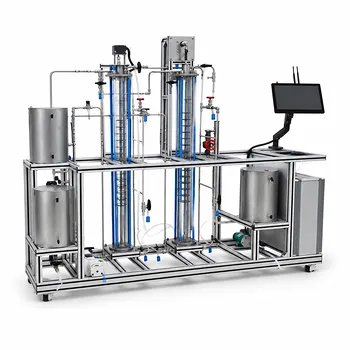
Comprehensive Liquid-Liquid Extraction Pilot Plant for Engineering Education
Comprehensive liquid-liquid extraction pilot plant for engineering education, integrating rotary and vibratory columns for hands-on observation of phase behavior, flooding limits, and mass transfer efficiency, enabling precise HTU and mass transfer coefficient calculations.
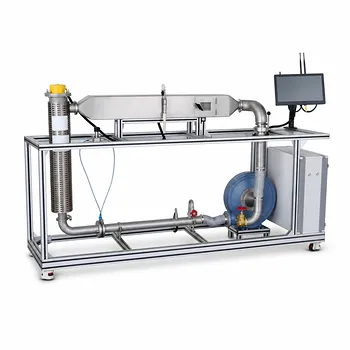
Circulating Wind Tunnel Drying and Convective Heat Transfer Coefficient Determination Educational Pilot Plant
This educational pilot plant enables engineering students to study convective drying, air-water vapor systems, and heat transfer by determining drying curves, drying rate curves, and convective heat transfer coefficients under variable conditions.
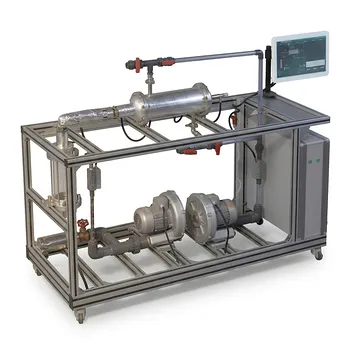
Shell and Tube Heat Exchanger Heat Transfer Coefficient Determination Educational Pilot Plant
LABPARK's shell and tube heat exchanger pilot plant enables students to investigate heat transfer coefficients, LMTD, co-current vs counter-current flow, bridging theory and industrial practice. Customizable for chemical, mechanical, environmental engineering curricula. Ideal for unit operations and process engineering labs.

Absorption and Desorption Educational Unit Operations Pilot Plant
Dual packed column absorption and desorption pilot plant for chemical engineering education, offering real-time mass transfer coefficient measurement, durable mobile frame, industrial touch-screen interface, and customizable design for varied laboratory curricula, enabling hands-on study of gas absorption and stripping.
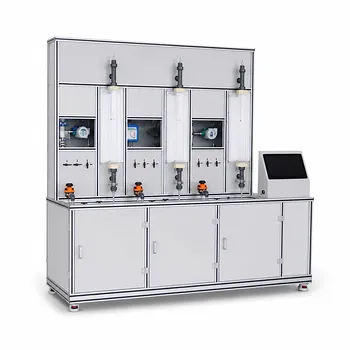
Two Phase Flow Pattern Velocity Resistance Measurement Educational Pilot Plant
Benchtop educational pilot plant for university labs studying gas-liquid two-phase flow patterns, velocity, and resistance across circular, square, and rectangular conduits. Features 15.6-inch touchscreen, 5G connectivity, differential pressure sensors, safe water-air operation. Supports chemical engineering curricula.
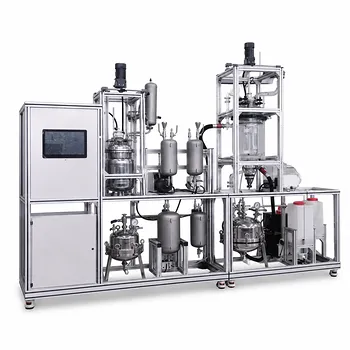
Gallium and Indium Selective Extraction Educational Pilot Plant
Integrated pilot-scale laboratory system for engineering education bridging theoretical concepts with industrial practice enabling hands-on study of liquid liquid extraction reaction kinetics and mass transfer for selective gallium and indium separation featuring real-time IoT connectivity with integrated safety
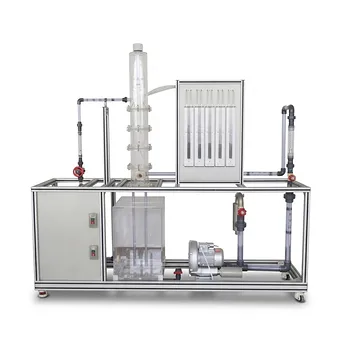
Plate Column Hydrodynamics Tray Demonstration Educational Pilot Plant
Advanced transparent educational pilot plant for chemical engineering labs demonstrates plate column hydrodynamics with industrial sieve bubble cap serrated valve trays for visual observation of gas-liquid contact pressure drop measurement and operational limit analysis including flooding weeping entrainment

Multi-Functional Special Distillation Educational Pilot Plant
Versatile multi-functional special distillation pilot plant for chemical engineering education. Supports continuous, vacuum, azeotropic, reactive, extractive distillation. Transparent glass columns enable real-time visual observation of hydrodynamics and separation processes.
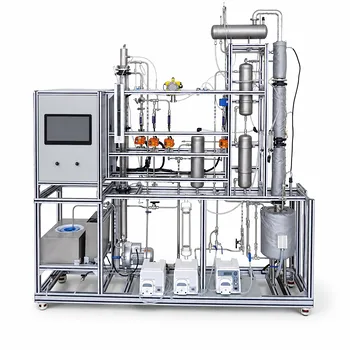
Carbon Dioxide Absorption and Desorption Educational Pilot Plant for Carbon Capture Studies
Explore carbon dioxide absorption and desorption with this educational pilot plant. Transparent columns visualize mass transfer; electric heating simulates industrial solvent regeneration; touchscreen interface enables data monitoring. Ideal for chemical engineering, bridging theory and practice.

Tubular Reactor Flow Characteristics Determination Educational Unit Operations Pilot Plant
Educational pilot plant for investigating tubular reactor flow characteristics and residence time distribution Features adjustable recycle for plug flow and backmixing studies industrial touchscreen interface and real-time data acquisition Ideal for chemical engineering unit operations laboratory training and education
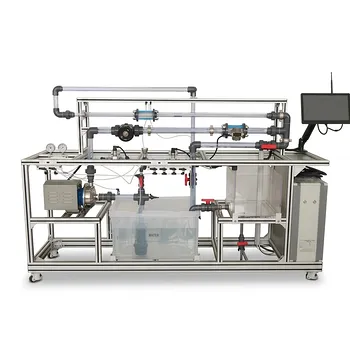
Centrifugal Pump Performance and Orifice Flowmeter Calibration Educational Pilot Plant
This versatile educational pilot plant enables engineering students to conduct centrifugal pump performance tests, orifice flowmeter calibration, and fluid mechanics experiments using a transparent flow loop, industrial HMI, and 3D virtual simulation for a comprehensive hands-on learning experience.
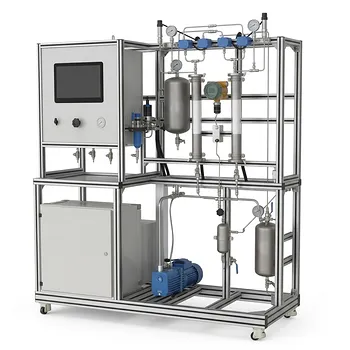
Pressure Swing Adsorption Educational Unit Operations Pilot Plant
Integrated bench-scale pressure swing adsorption pilot plant for hands-on teaching of gas-solid separation, mass transfer, and process optimization using nitrogen-oxygen model, featuring dual-column design, industrial touchscreen control, digital assessment suite, and customizable hardware and software configurations for educational laboratories.

Educational Unit Operations Pilot Plant for Intraparticle Diffusion Effective Factor Measurement
Designed for chemical engineering university labs, this pilot plant allows hands-on determination of catalyst particle intraparticle diffusion effective factors and gas-solid reaction kinetics using a fixed-bed tubular reactor with industrial touchscreen control, bridging theory and practical reactor design.

Dual-Mode Rectification Pilot Plant for Practical Training Unit Operations
Industrial-scale dual-mode rectification pilot plant for chemical engineering practical training. Features real-material and simulated-material operation modes, sieve-plate column with sight glasses for visual observation of hydrodynamics, and customizable SCADA control for safe, hands-on learning of unit operations and mass transfer.
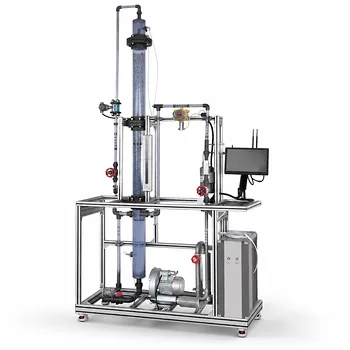
Packed Bed Absorption Educational Unit Operations Pilot Plant
Study gas-liquid absorption, pressure drop, flooding, and mass transfer coefficients with this pilot plant. Transparent packed column, industrial touchscreen, real-time sensor data, automated analysis. Investigate two-phase flow, loading points, column efficiency. Comprehensive data logging and assessment software included.
Related Articles
The Intuition You Can’t Simulate: Why the Best Bioprocess Education Still Lives on a Thin-Layer Plate
Before engineers trust a $500,000 bioreactor, they must trust their own hands. How thin-layer chromatography (TLC) builds the tacit knowledge that separates trained operators from true process engineers—and why LABPARK pilot plants preserve this irreplaceable skill.

The Invisible Constraint: How First-Principles dCO₂ Modeling Turns Your Pilot Plant into a Predictive Engine
Learn how a first-principles dCO2 mass transfer model de-risks bioprocess scale-up. Validate with pilot plant data to predict manufacturing CO2 profiles, size spargers, and design control loops—eliminating costly full-scale trials.