Educational Chemical Engineering Pilot Plants
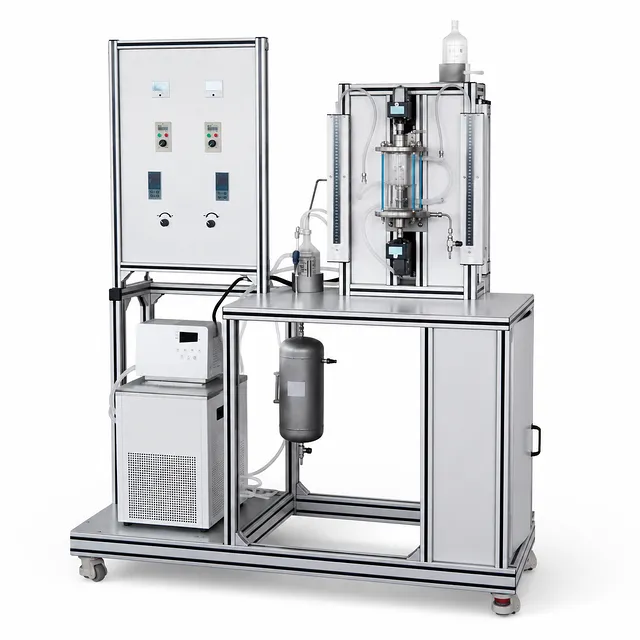
Dual-Drive Stirred Gas-Liquid Mass Transfer Coefficient Determination Pilot Plant
Item Number : LPK-DSA
Price varies based on specs and customizations
- Agitation System
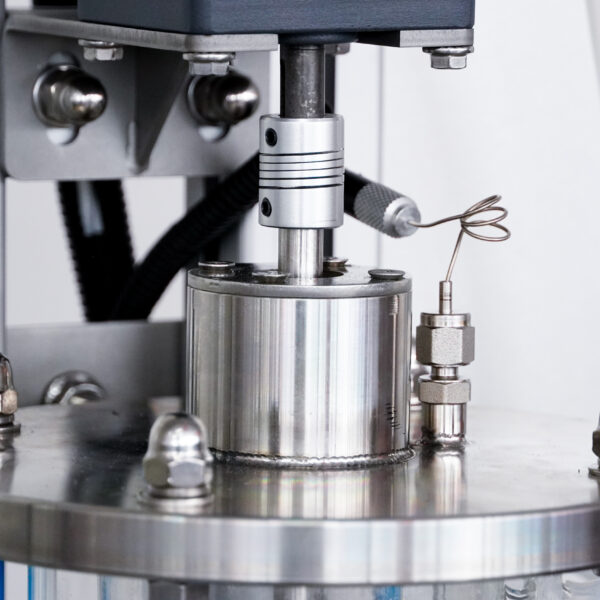
- Dual independent variable-speed motors with digital tachometer readouts
- Absorber Vessel
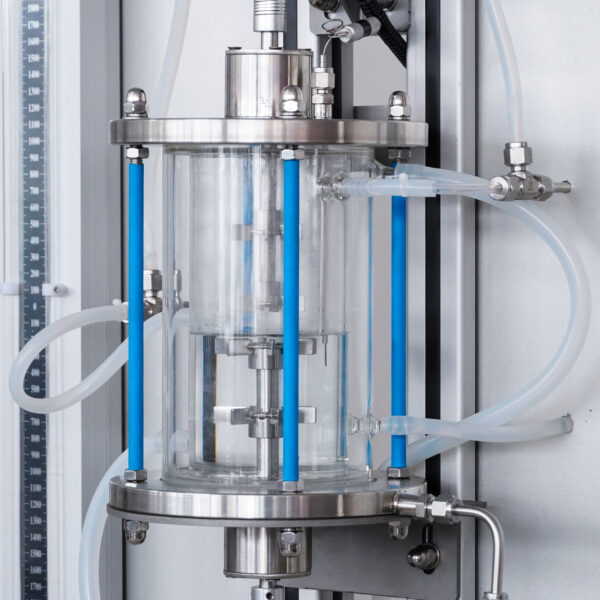
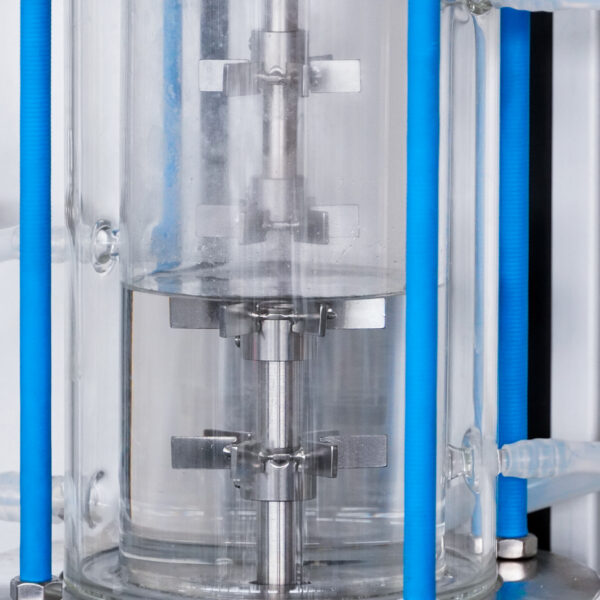
- Borosilicate glass cell with dual-drive mechanical agitation
- Thermal Control
- Integrated heating/cooling constant-temperature bath circulator

Shipping:
Contact us to get shipping details Enjoy On-time Dispatch Guarantee.
Why Choose Us
Easy ordering process, quality products, and dedicated support for your business success.
Introduction
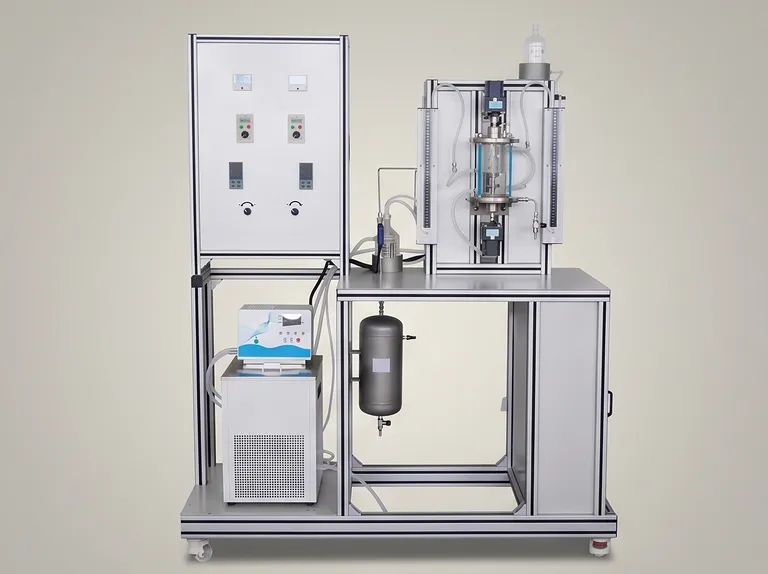
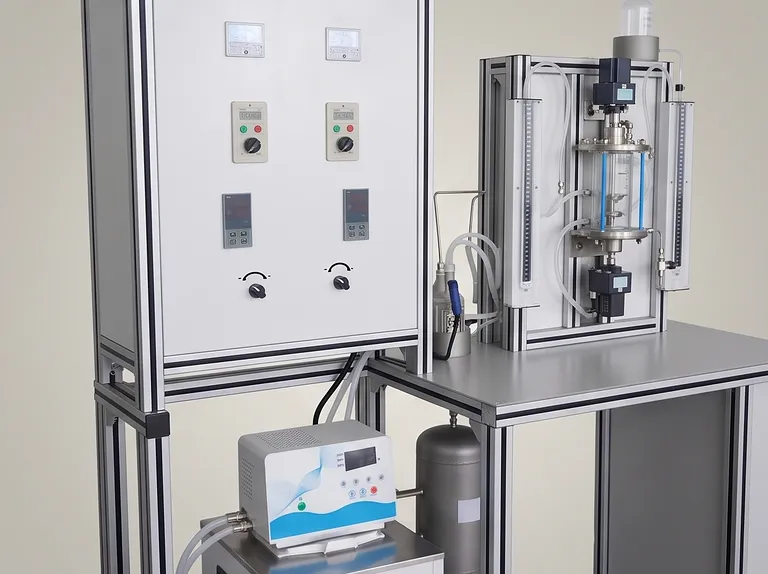
The Dual-Drive Stirred Gas-Liquid Mass Transfer Coefficient Determination Educational Unit Operations Pilot Plant is an advanced, fully integrated instructional apparatus designed for university engineering laboratories. By incorporating independently controlled drive systems for both gas and liquid phases, this pilot plant provides engineering students with hands-on exposure to fundamental mass transfer mechanisms and interphase transport phenomena. The unit allows precise evaluation of absorption rates, gas-film resistance, and liquid-film resistance across varying hydrodynamic regimes. To align seamlessly with diverse laboratory curricula and research goals, both the hardware architecture and software control systems are fully customizable to meet specific academic requirements.
Key Features & Educational Value
- Independent Phase Agitation Control: Separate variable-speed drives for gas and liquid impellers enable complete decoupling of phase turbulence, allowing students to isolate and investigate individual phase mass transfer coefficients.
- Mechanistic Mass Transfer Determination: Supports experimental determination of overall and individual mass transfer coefficients ($k_L$, $k_G$, $K_L$, $K_G$) under varied hydrodynamic conditions, demonstrating two-film theory principles in practice.
- Comprehensive Parameter Control: Precise adjustment of rotational speeds, gas flow rates, phase concentrations, and system temperatures facilitates broad experimental adaptability and robust data analysis.
- Transparent Visualization Column: A high-clarity borosilicate glass reaction chamber offers complete visual access to gas-liquid interface dynamics, vortex formation, and mixing behavior during operation.
- Integrated Process Utilities: Equipped with a closed-loop temperature control circulation system, differential pressure manometers, precision flow meters, and intuitive control instrumentation for reproducible experimental conditions.
Detail & Parts
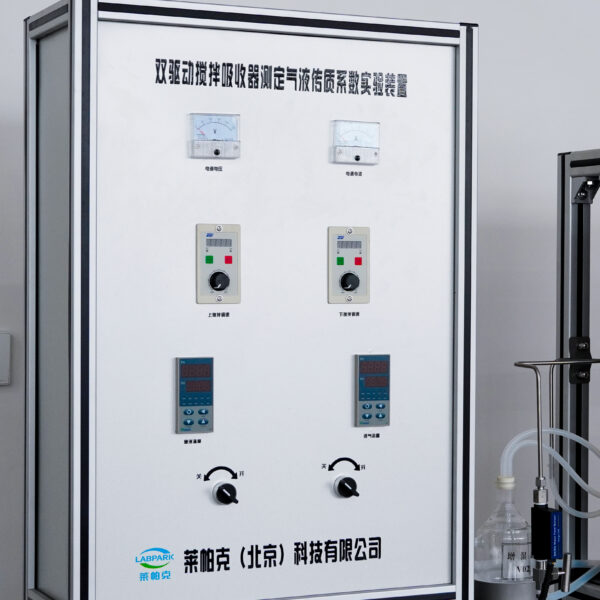
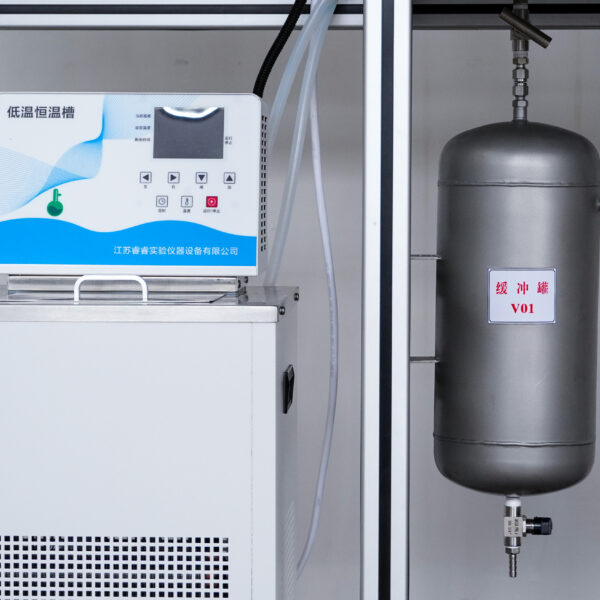
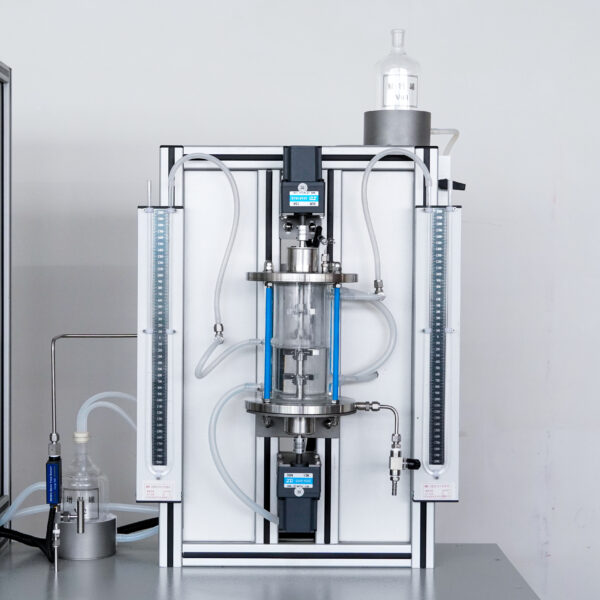
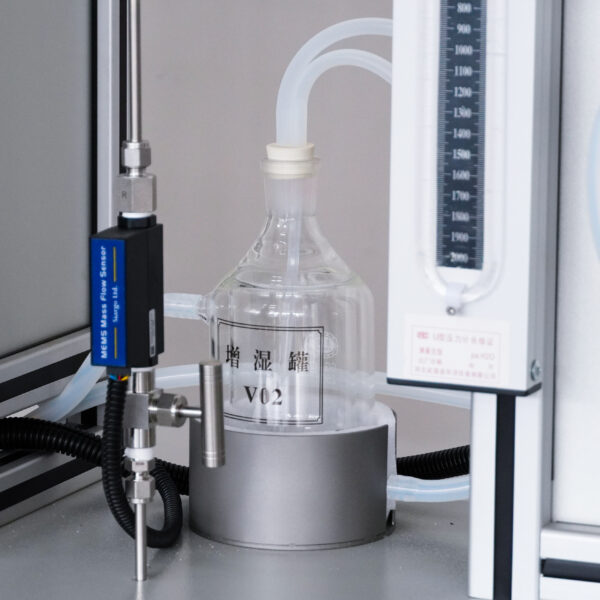
System Technical Specifications
| Component / Subsystem | Technical Description |
|---|---|
| Absorber Vessel | Borosilicate glass cell with dual-drive mechanical agitation |
| Agitation System | Dual independent variable-speed motors with digital tachometer readouts |
| Thermal Control | Integrated heating/cooling constant-temperature bath circulator |
| Flow Measurement | Calibrated gas rotameters and precision fluid delivery system |
| Pressure & Level Gauges | Dual vertical differential liquid manometers and pressure buffer vessels |
| Framework & Mounting | Industrial anodized aluminum profile frame with heavy-duty lockable casters |
Curriculum Alignment & Experimental Capabilities
This pilot plant bridges theoretical fluid mechanics and transport phenomena with real-world unit operations teaching. By facilitating direct measurement of transport parameters, the apparatus supports laboratory courses across Chemical Engineering, Environmental Engineering, Food Engineering, and Pharmaceutical Engineering.
The experimental capabilities directly correspond to core topics established in standard engineering reference texts:
| Academic Field | Associated Reference Textbooks | Corresponding Unit Operations & Core Concepts |
|---|---|---|
| Chemical Engineering | Unit Operations of Chemical Engineering | Gas Absorption, Interphase Mass Transfer, Two-Film Theory, Determination of Volumetric Mass Transfer Coefficients |
| Biochemical & Food Engineering | Transport Processes and Unit Operations | Gas-Liquid Dissolution, Aeration Hydrodynamics, Liquid-Film Controlled Resistance |
| Process & Environmental Engineering | Chemical Engineering Design | Absorber Sizing Principles, Stirred Tank Mass Transfer Correlations, Process Scale-Up Fundamentals |
Typical Laboratory Experiments
- Determination of gas-liquid mass transfer coefficients under varying gas/liquid stirring speeds.
- Investigation of the effect of gas flow rates and hydrodynamic turbulence on interphase mass flux.
- Separation and evaluation of gas-film side versus liquid-film side mass transfer resistance through concentration and speed adjustments.
- Evaluation of temperature impacts on gas solubility and kinetic absorption rates.
Modular Customization Options
Recognizing that every engineering faculty maintains unique pedagogical and research objectives, this pilot plant offers flexible custom configurations. Both hardware (including custom column geometries, specialized impeller designs, extended sensor arrays, and corrosion-resistant materials) and software (ranging from basic digital display interfaces to fully automated SCADA systems with real-time data acquisition and modeling software integration) can be customized to align perfectly with your departmental requirements.
About LABPARK
For over 20 years, LABPARK has been a trusted global partner in higher education engineering equipment, providing specialized pilot-scale units and educational systems. Focusing on six core disciplines—chemistry, chemical engineering, biology, food engineering, pharmaceutical engineering, and environmental engineering—LABPARK bridges the gap between academic theory and industrial practice.
Driven by innovation, the company holds 209 technical patents and operates a modern 49,000-square-meter manufacturing and R&D base. To date, LABPARK has successfully collaborated with more than 289 universities and academic institutions worldwide, delivering reliable, curriculum-aligned educational hardware to empower the next generation of engineers.
Trusted by Industry Leaders
REQUEST A QUOTE
Our professional team will reply to you within one business day. Please feel free to contact us!
Related Products
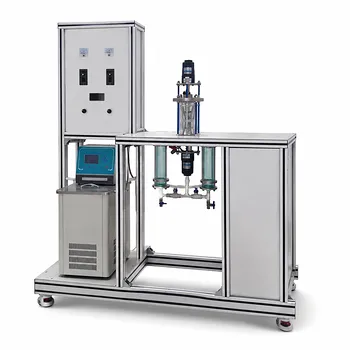
Liquid-Liquid Mass Transfer Coefficient Determination Educational Pilot Plant
This bench-scale educational pilot plant for liquid-liquid mass transfer coefficient determination offers precise control of phase boundary, temperature, and agitation, enabling hands-on study of transport phenomena and unit operations in chemical engineering labs for teaching.
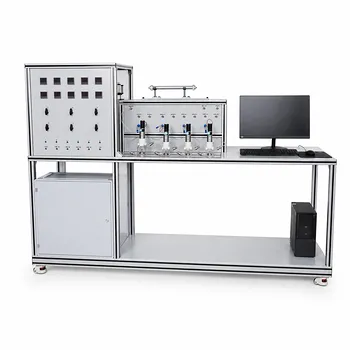
Gas Phase Mixing and Residence Time Distribution Determination Educational Unit Operations Pilot Plant
Integrated lab system for gas-phase mixing and RTD determination. Supports pulse and step tracer methods with dual CSTR and PFR reactors, industrial components, and PC data logging. Provides hands-on study of non-ideal flow and reactor behavior for university students.

Dual-Mode Rectification Pilot Plant for Practical Training Unit Operations
Industrial-scale dual-mode rectification pilot plant for chemical engineering practical training. Features real-material and simulated-material operation modes, sieve-plate column with sight glasses for visual observation of hydrodynamics, and customizable SCADA control for safe, hands-on learning of unit operations and mass transfer.

Multi-Stage Stirred Tanks in Series Residence Time Distribution and Mixing Performance Determination Educational Pilot Plant
Explore residence time distribution and mixing performance in series stirred tanks with this educational pilot plant. Real-time conductivity sensors, interactive 3D simulation, and industrial-grade PC for chemical engineering lab training. Customizable to curricula.

Absorption and Desorption Educational Unit Operations Pilot Plant
Dual packed column absorption and desorption pilot plant for chemical engineering education, offering real-time mass transfer coefficient measurement, durable mobile frame, industrial touch-screen interface, and customizable design for varied laboratory curricula, enabling hands-on study of gas absorption and stripping.
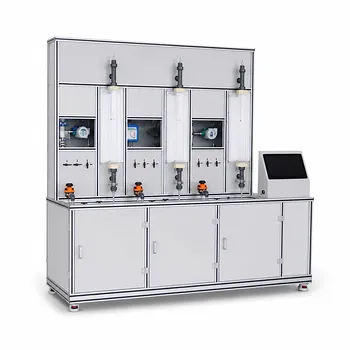
Two Phase Flow Pattern Velocity Resistance Measurement Educational Pilot Plant
Benchtop educational pilot plant for university labs studying gas-liquid two-phase flow patterns, velocity, and resistance across circular, square, and rectangular conduits. Features 15.6-inch touchscreen, 5G connectivity, differential pressure sensors, safe water-air operation. Supports chemical engineering curricula.
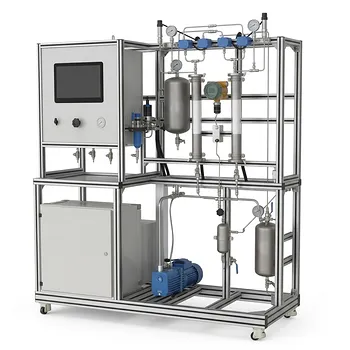
Pressure Swing Adsorption Educational Unit Operations Pilot Plant
Integrated bench-scale pressure swing adsorption pilot plant for hands-on teaching of gas-solid separation, mass transfer, and process optimization using nitrogen-oxygen model, featuring dual-column design, industrial touchscreen control, digital assessment suite, and customizable hardware and software configurations for educational laboratories.
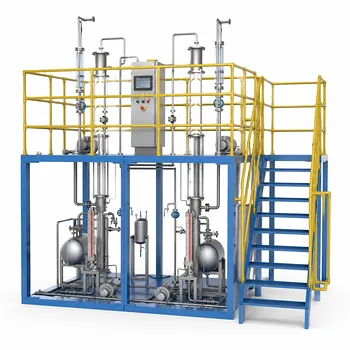
Dual-Mode Gas Absorption and Desorption Unit Operations Training Pilot Plant
Industrial-scale pilot plant for gas absorption and desorption training in chemical engineering. Features dual-mode operation with real and simulated materials, transparent columns for flow visualization, and customizable design. Supports independent or combined loops for hands-on unit operations experiments.

Multimodal Absorption and Desorption Pilot Plant for Unit Operations Training
Multimodal absorption and desorption pilot plant for higher education labs. Bridges theory and industrial practice with transparent packed columns, three operational modes (real-material, simulated, semi-physical), and SCADA control. Students explore mass transfer, column hydraulics, and process control. Customizable.
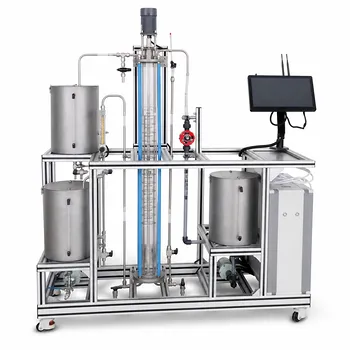
Educational Rotary Disc Liquid-Liquid Extraction Pilot Plant
A transparent rotary disc column for educational liquid-liquid extraction experiments. This pilot plant enables students to study mass transfer, droplet dynamics, and flooding behavior, bridging theory and practice in chemical engineering unit operations education. Features variable-speed agitation and PLC control.
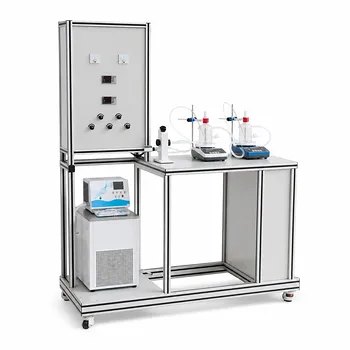
Ternary Liquid-Liquid Equilibrium Educational Pilot Plant
An integrated laboratory training system for engineering students to determine ternary liquid-liquid equilibrium data, construct phase diagrams, and gain hands-on experience with industrial instrumentation, including Abbe refractometer and magnetic stirrers, for precise data acquisition and curriculum-aligned experiments.
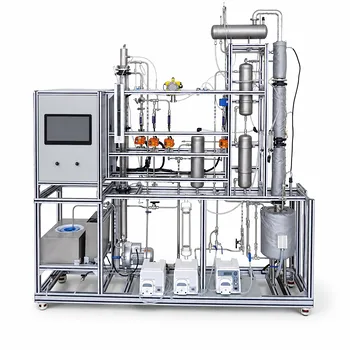
Carbon Dioxide Absorption and Desorption Educational Pilot Plant for Carbon Capture Studies
Explore carbon dioxide absorption and desorption with this educational pilot plant. Transparent columns visualize mass transfer; electric heating simulates industrial solvent regeneration; touchscreen interface enables data monitoring. Ideal for chemical engineering, bridging theory and practice.
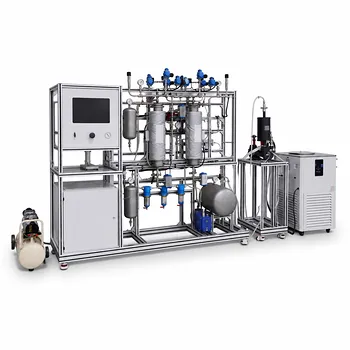
Bench Scale Dual Column Gas Separation and Capture Educational Pilot Plant
This dual-column educational pilot plant provides hands-on teaching of gas adsorption, separation, and capture processes. It features stainless steel columns, regeneration up to 400°C, and a 15.6-inch touchscreen PLC for TSA and PSA studies in chemical engineering curricula, process simulation.
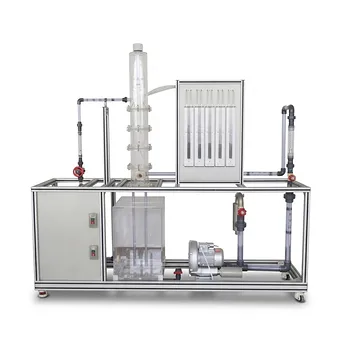
Plate Column Hydrodynamics Tray Demonstration Educational Pilot Plant
Advanced transparent educational pilot plant for chemical engineering labs demonstrates plate column hydrodynamics with industrial sieve bubble cap serrated valve trays for visual observation of gas-liquid contact pressure drop measurement and operational limit analysis including flooding weeping entrainment

High-Gravity Emulsification and Mass Transfer Educational Pilot Plant
This integrated educational pilot plant utilizes rotating packed bed technology to demonstrate high-gravity emulsification and mass transfer, providing engineering students with hands-on experience in process intensification and unit operations through a modular, customizable design with digital monitoring.

Multi Functional Catalytic Reaction and Reactor Evaluation Educational Unit Operations Pilot Plant
Bench-scale educational pilot plant for catalytic reaction and reactor evaluation, integrating fixed bed, fluidized bed, and stirred tank reactors. Students compare reactor designs, evaluate catalysts, and study reaction kinetics and hydrodynamics. Perfect for unit operations labs in chemical engineering curricula.

Tubular Reactor Flow Characteristics Determination Educational Unit Operations Pilot Plant
Educational pilot plant for investigating tubular reactor flow characteristics and residence time distribution Features adjustable recycle for plug flow and backmixing studies industrial touchscreen interface and real-time data acquisition Ideal for chemical engineering unit operations laboratory training and education

Multi-Modal Distillation Unit Operations Training Pilot Plant
Multi-modal distillation pilot plant for practical unit operations training in chemical engineering education. Features real, analog, and semi-physical simulation modes, industrial construction, customizable for university labs. Hands-on fractionation columns, SCADA control, safety systems. Includes sight glasses, sampling ports, closed-loop recycling.

Multi-Functional Special Distillation Educational Pilot Plant
Versatile multi-functional special distillation pilot plant for chemical engineering education. Supports continuous, vacuum, azeotropic, reactive, extractive distillation. Transparent glass columns enable real-time visual observation of hydrodynamics and separation processes.

Dual Mode Heat Transfer Pilot Plant for Unit Operations Training
Engineering-scale dual-mode heat transfer pilot plant for hands-on unit operations training in chemical engineering. Features real and simulated modes, multiple heat exchanger types, comprehensive coefficient determination, and advanced process control with data acquisition for engineering students and researchers.