The Real Engineer Sits at the Levers
There is a specific psychological shift that happens when a student stops solving an equation and starts operating a machine. Before that moment, catalysis is a diagram. A catalyst is a magic powder that lowers activation energy. A reactor is a box where things happen.
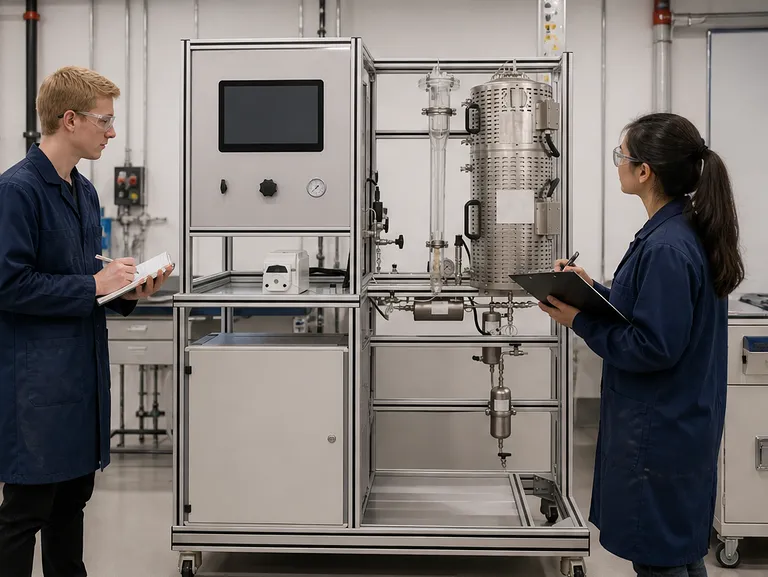
Then they touch the pilot plant.
Suddenly, nothing is abstract. The reactor has a hot spot. The pressure drop is rising. The octane number is falling. The magic powder is coking up and dying right before their eyes, turning expensive platinum into a lump of carbon-fouled scrap.
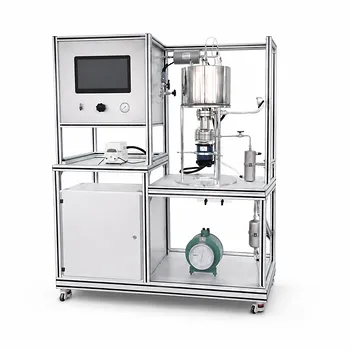
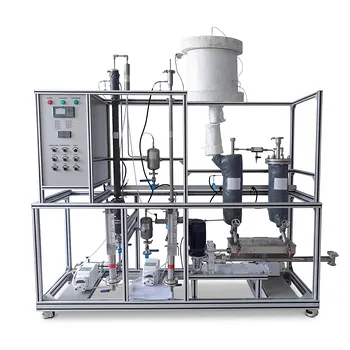
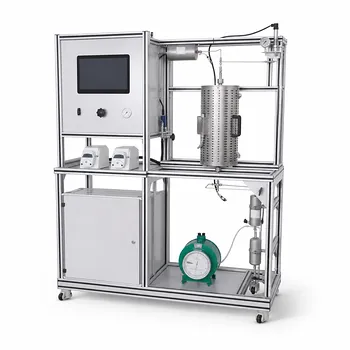
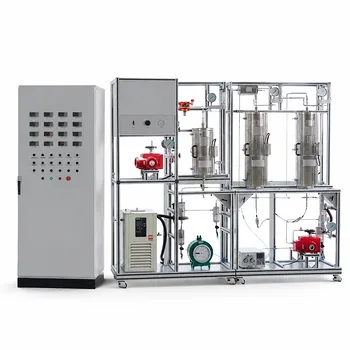
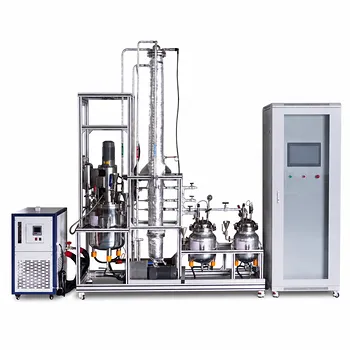
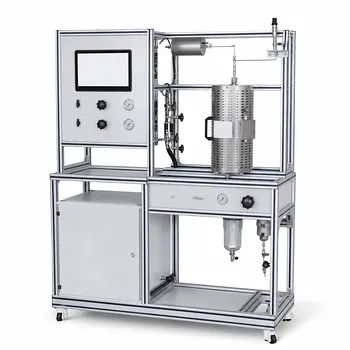
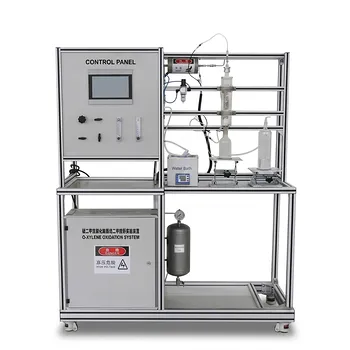
This is not a failure of theory. It is the birth of engineering judgment. And for that, you need a system complex enough to misbehave in the way real industrial systems do. A catalytic reforming unit operations pilot plant—like those designed by LABPARK for university labs—is exactly that: a systems-thinking gymnasium disguised as a chemical reactor.
The Machinery of a Compromise
Catalytic reforming is, at its heart, a high-wire act. You take low-value, straight-chain hydrocarbons and force them over a platinum-rhenium catalyst to make high-octane aromatics and valuable hydrogen.
But the wire is thin. Push too hard for product quality, and you kill the catalyst. Play it too safe, and you make nothing of value.
The pilot plant makes this dilemma visceral. It’s not a miniature refinery scaled for comfort; it’s a conflict rendered in stainless steel, where three forces are always at war.
The Three-Way War Inside Every Pellet
Every decision an operator makes is a negotiation between three stubborn parties:
- Thermodynamics, which sets the absolute ceiling. You cannot make more aromatics than equilibrium allows, no matter how fast your kinetics are.
- Kinetics, which dictates the speed of approach to that ceiling.
- Stability, which is the catalyst's will to live, constantly threatened by the carbon deposits (coke) that form as a natural byproduct of the main reaction.
A textbook presents these separately. A pilot plant makes them shout over each other in a single, real-time trend line. This is the education.
The Nanostructure You Can Measure
The catalyst in a reformer is an engineered nanostructure. Platinum and rhenium clusters, dispersed on a porous alumina support. The activity of this system has almost nothing to do with how much metal is present, and everything to do with how much of that metal a reactant molecule can actually see.
The Dispersed Truth
A student loads two batches of catalyst. One has poor metal dispersion: the platinum atoms are clumped together in large, lazy crystals. The other has high dispersion: fine, energetic clusters.
The feed is identical. The temperature is identical.
The high-dispersion catalyst produces a gush of aromatics. The poorly-dispersed one produces a sluggish stream. The student calculates the turnover frequency—molecules converted per active site per second—and a physical intuition locks into place. The critical variable isn't the spoonful of powder. It's the accessible architecture. A supplier who understands this architectural need—as LABPARK does when matching pilot plant units to curriculum goals—is providing a material science lesson, not just a piece of equipment.
The Hidden Brake Inside the Pore
The porous support is a highway system, but the pores are only nanometers wide. As the reaction consumes molecules at the active sites, a concentration gradient forms. The insides of the pellet starve while the outsides feast.
At high temperatures, the reaction wants to go faster, but the diffusion of reactants through the pore structure cannot keep up. The observed reaction rate becomes a diffusion problem, not a kinetic one. The effectiveness factor—the ratio of actual rate to the rate if the whole pellet were as active as its outer surface—plummets.
A pilot plant reveals this invisible limit. By changing the pellet size and watching the conversion flatten out, the student measures the point where diffusion steals the very speed that chemistry promised. This is the hidden brake, and no simulation on a screen exposes it as clearly as a physical unit with real catalyst pellets.
The Design Levers That Teach Systems Thinking
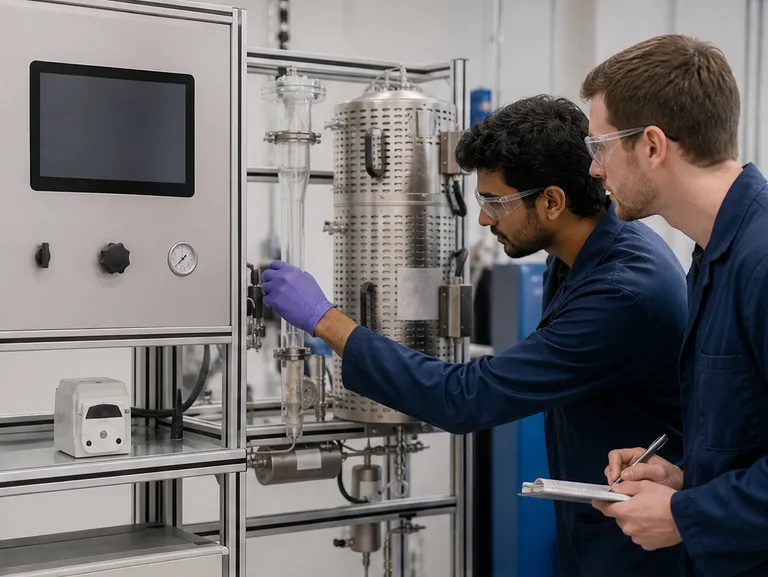
If the catalyst is the heart, the levers of the pilot plant are the brain. They teach a form of thinking that pure mathematics cannot: how to manipulate a system with no free lunches.
The Seductive Trap of Space Velocity
Space velocity (LHSV) is the throttle. Crank it up, and you push more feed through the bed every hour. This feels productive. The throughput is high. But the reactor is a residence-time device. The molecules now spend less time bathed in active sites, and per-pass conversion collapses.
You are making more total volume, but the liquid you make is terrible. Low octane. Unreformed.
The student maps the yield-versus-throughput curve and learns the first law of reactor design: you can have it fast, or you can have it good, but you cannot have both at the same time. This is the birth of economic reasoning in a technical mind.
The Tyranny of the Optimal Point
Reforming is endothermic at the core, but the side reactions that make aromatics from naphthenes are reversible and exothermic. This creates a cruel thermodynamic joke.
As you raise the temperature to speed up the kinetics, you actually lower the maximum possible equilibrium concentration of the aromatics you want. The reaction runs forward faster, but its ceiling drops. There is an inflection point, a precise axial temperature profile, where the product quality peaks.
Below it, kinetics are too slow. Above it, thermodynamics strangles the yield. The pilot plant lets a student find and measure this peak, watching the octane number climb, level off, and then fall as they push the heater too far. This is the death of linear thinking.
The Pressure Paradox
System pressure is the most elegant demonstration of industrial compromise. Running at high hydrogen partial pressure (a high system pressure) scavenges coke precursors. It scrubs the catalyst clean and extends its life beautifully. The pressure drop across the bed stays stable for hours.
The cost? High pressure pushes the thermodynamic equilibrium backward, away from the aromatic product you are trying to make. The reformate is weak.
Low pressure gives you a superb, high-octane product, but the catalyst chokes on coke and dies. The pressure drop gauge starts screaming upward as the bed plugs.
By running the LABPARK unit at 5 bar, then 15 bar, then 25 bar, and plotting product quality against pressure drop stability on the same graph, the student does not just learn a fact. They inhabit the central negotiation of a refinery engineer's career.
The Map to a Curriculum That Works
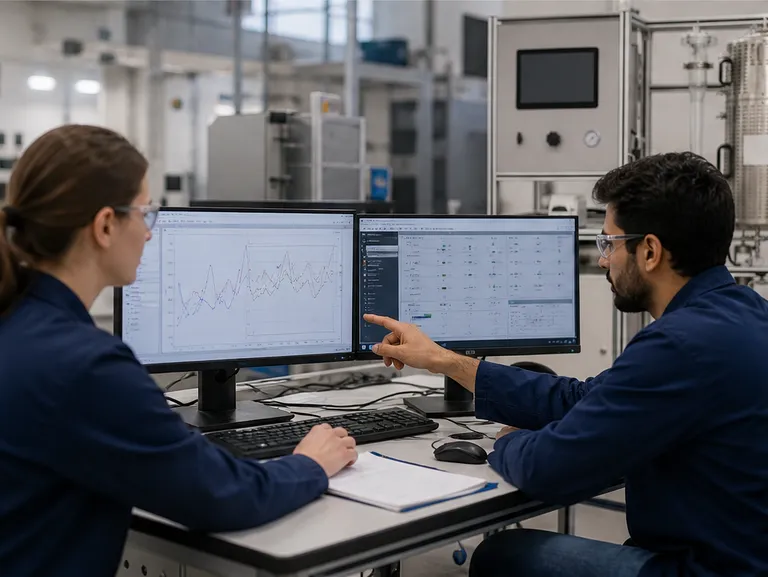
A catalytic reforming pilot plant is a general-purpose teaching tool. Its value is not in the specific hydrocarbons, but in the universal conflicts it exposes. The experiment can be tuned to three distinct educational objectives, depending on where you aim the student's focus.
For the Kinetics Student
Use the unit as a precision reactor. Sweep the temperature. Sweep the space velocity. Collect concentration data at the reactor outlet. Force the student to calculate an apparent activation energy from an Arrhenius plot using hard-won experimental points, not textbook numbers. The learning outcome is a respect for the messiness of real rate data.
For the Materials Scientist
Turn the focus inward to the catalyst itself. The student pre-characterizes the metal dispersion via chemisorption, then runs the reformer to measure the resulting turnover frequency. They hold a direct, quantitative link between the atomic-scale structure of the solid and the macroscopic performance of the plant. The catalyst is no longer a black box.
For the Future Process Manager
Frame the unit as a profit center. The assignment: maximize the product of octane number and throughput over a fixed operating window, subject to a maximum allowable pressure drop. The student must manage the H₂ recycle, the pre-heater temperature, and the flow rate simultaneously, using an online gas chromatograph to make real-time economic decisions. This is control room logic, built in a university lab.
The Case for the Engineered Unit
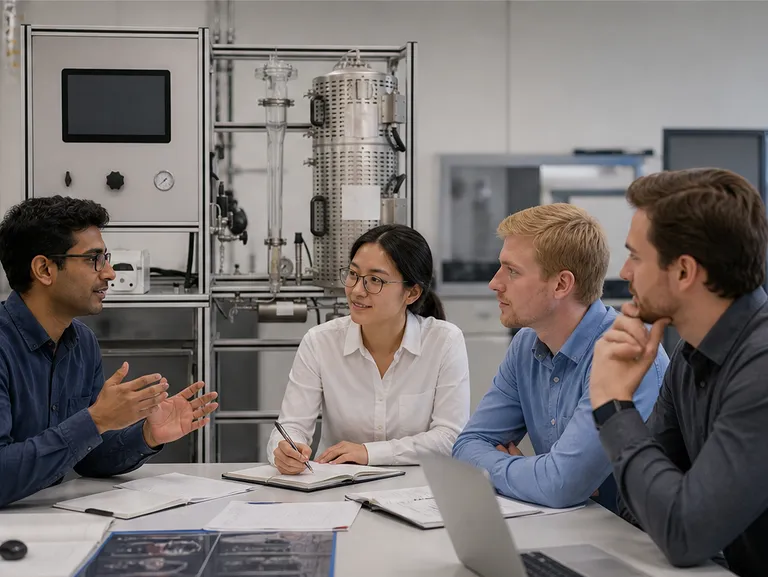
A pilot plant must be designed for the blunt force of human learning. Students will crash it. They will set the wrong temperature, flood the separator, and coke the catalyst out of existence in a single afternoon.
A unit built without robust, forgiving engineering will spend more time broken than teaching. This is where the specific design philosophy matters. The quality of sensors, the layout of the control interface, the accessibility of the reactor tube for rapid catalyst changes, and the safety interlock logic are not accessories—they are integral to the educational outcome. LABPARK’s focus on high-quality educational pilot plants means the hardware survives the learning process long enough for the deep, visceral lessons to actually stick.
Summary of the Core Operation
| The Lever You Pull | The System It Governs | The Intuition You Build |
|---|---|---|
| Space Velocity (LHSV) | Reactor Kinetics & Residence Time | The direct, measurable trade-off between making more product and making a product that is any good. |
| Axial Temperature Profile | Thermodynamics vs. Kinetics | The death of "higher is better" thinking; finding and defending the optimal peak against a shifting equilibrium ceiling. |
| System Pressure | Selectivity & Catalyst Stability | The negotiation between a long life and a high-quality output; measuring the coke on the pressure gauge. |
| Catalyst Dispersion | Nanostructure & Effectiveness | The physical link between a Pt atom's location and the revenue a barrel of feed can generate. |
The best engineers do not just know the right equations. They feel the direction a system is about to move before it gets there. This instinct is not taught. It is learned through the manipulation of a complex, responsive physical system that fights back.
A catalytic reforming pilot plant is that system. It forces a confrontation between elegant molecular theory and the ruthless, integrated reality of a chemical plant, bridging the gap from textbook to process and from student to professional systems thinker.
Begin building that capability in your engineering program. Contact Our Experts
Related Products
- Fluidized Bed Gas Solid Catalytic Reaction Educational Pilot Plant
- Fixed Bed Gas Solid Catalytic Reaction Educational Pilot Plant
- Internal Circulation Gradient Free Catalytic Reaction Educational Pilot Plant
- Micro-Scale Gas-Solid Catalytic Reaction Educational Pilot Plant
- Multi Functional Catalytic Reaction and Reactor Evaluation Educational Unit Operations Pilot Plant