Organic amines produce a slow-building, deceptively intense color that inflates your ammonia readings.
When you use Nessler’s reagent (measured at 420 nm) for colorimetric ammonia determination, common aliphatic and aromatic amines—such as aniline, triethylamine, di-amylamine, and diphenylamine—also react with the reagent. Their color develops more slowly than the ammonia reaction, but eventually becomes more intense, directly causing an overestimation of ammonia concentration.
The interference is not just a side reaction—it’s a kinetic trap. Amines generate a stronger final signal than ammonia itself, but it evolves gradually. If operators don’t account for this time-dependent color development, they get falsely high ammonia numbers, potentially derailing critical decisions in pilot‑plant water treatment.
How the Interference Actually Works
The Non‑Selective Nature of Nessler’s Reagent
Nessler’s reagent (alkaline mercury iodide) is a classic colorimetric probe, but it is not exclusive to ammonia.
It reacts with many nitrogenous compounds, including primary, secondary, and tertiary aliphatic and aromatic amines. In a water sample containing both ammonia and, for example, aniline, the reagent forms colored complexes with each analyte simultaneously.
The Kinetic Trap: Slow Development, Strong Signal
The heart of the problem is the reaction kinetics.
Ammonia reacts quickly, reaching a stable color intensity in a few minutes. Amine‑reagent complexes, however, form more slowly—often taking 10 to 20 minutes to fully develop—and the final absorbance is higher than that of an equivalent concentration of ammonia.
This means that a reading taken after the standard 5‑ to 10‑minute wait period might still be catching the amine color in mid‑growth.
If an operator assumes the color is fully developed and uses that absorbance to calculate ammonia, the result will be significantly inflated—sometimes by a factor of two or more, depending on the amine type and concentration.
The Real Cost in a Pilot Plant
Overestimation Leads to Wrong Process Decisions
In an environmental or chemical engineering pilot plant, ammonia data feeds directly into process control—aeration rates, nutrient dosing, discharge compliance checks.
A falsely high ammonia reading can trigger unnecessary air blower operation in a biological treatment system, wasting energy. It can also lead to incorrect chemical addition for ammonia stripping a waste stream, or even halt a pilot entirely because operators believe a consent limit has been breached.
Intermittent Interference Makes Diagnosis Harder
Amine contamination is rarely constant. If a pilot plant treats variable industrial influents, amines may appear only in certain batches or shifts.
You then get erratic data: some readings align with expected ammonium‑ion‑selective electrode or distillation results, while others show a sudden spike. This intermittent pattern often gets misdiagnosed as instrument drift or sampler error, rather than the chemical interference it truly is.
Detecting and Mitigating Amine Interference
Recognizing the Kinetic Fingerprint
The simplest in‑lab check is to watch the color develop over time.
Run your sample with Nessler’s reagent and record the absorbance at 1, 5, 10, and 20 minutes. A true ammonia standard will plateau quickly; a sample contaminated with amines will show a continuous slow rise and may end up with a final absorbance far beyond the 5‑minute value. This “creeping baseline” is the telltale sign.
Measurement Tactics That Reduce the Error
Use a kinetic reading window.
If your SOP allows, measure precisely at a short, fixed time (e.g., 2‑3 minutes after reagent addition) when the amine reaction has barely started. This suppresses the amine contribution but still captures most of the ammonia color. However, it demands strict timing and may sacrifice some precision for real‑world samples.
Pre‑distill the sample.
Distilling the water sample at a controlled pH liberates ammonia into the distillate while leaving non‑volatile amines behind. The distillate then reacts cleanly with Nessler’s reagent. This approach is robust but adds glassware, time, and potential ammonia loss through incomplete distillation.
Blank‑correct using an amine‑specific scavenger.
While no scavenger is perfectly selective, adding a weak aldehyde (e.g., formaldehyde) can preferentially bind ammonia at neutral pH before Nessler addition, leaving primarily the amine color. Running this treated sample in parallel with an untreated one gives a rough correction factor. This is a niche tactic best used when the amine identity is known and constant.
Understanding the Trade‑offs
No mitigation is free. Every option forces you to balance speed, simplicity, and accuracy.
- Kinetic readings demand high operator discipline and may still miss late‑blooming interferences from slowly reacting amines.
- Distillation is the gold standard for separation but consumes laboratory resources and risks losing volatile amines that can still distill over, depending on pH control.
- Blank‑correction methods assume the amine response is linear and reproducible, which can break down if the amine mixture varies day‑to‑day.
- Abandoning Nessler entirely in favor of an ion‑selective electrode or indophenol‑blue method eliminates the amine color interference but introduces its own set of interferences (volatile amines can still affect gas‑permeable electrodes) and might require new capital equipment.
Acknowledging these trade‑offs openly—and documenting the chosen strategy in your pilot plant’s QA/QC plan—is what separates a trusted advisor from a recipe‑follower.
Making the Right Choice for Your Pilot Plant
Your decision hinges on what matters most for your operation’s goals.
- If your primary focus is rapid, daily ammonia monitoring with minimal sample preparation: Adopt a strict kinetic reading protocol (e.g., read exactly at 2.5 minutes), and flag any sample whose absorbance continues to rise after the measurement.
- If your primary focus is absolute accuracy for regulatory reporting or peer‑reviewed research: Pre‑distill the sample and validate the distillation efficiency with spiked amine‑free ammonia standards.
- If your primary focus is managing a pilot plant with known, consistent amine contamination: Characterize the amine’s reaction curve once, then build a time‑based correction factor into your spreadsheet; verify monthly with a distillation check.
- If your primary focus is eliminating the interference entirely: Transition away from Nessler’s reagent to an ammonia‑selective electrode or a flow‑injection gas‑diffusion method, and phase out the colorimetric approach for routine use.
In every case, the key is to treat the colorimetric reading not as an absolute truth, but as a signal to be interpreted—with an awareness of what else might be developing color in your sample flask.
Summary Table:
| Mitigation Method | How it Works | Pros | Cons |
|---|---|---|---|
| Kinetic Reading | Measure absorbance at a short, fixed time (2-3 mins) | Quick, minimal prep | Requires strict timing; may miss late reactions |
| Pre-distillation | Distill sample at controlled pH to isolate ammonia | Gold standard, highly accurate | Time-consuming; requires extra glassware |
| Amine Scavenger | Use weak aldehyde (e.g., formaldehyde) to bind ammonia | Good for known amine profiles | Assumes linear reaction; complex validation |
| Alternative Methods | Use ion-selective electrodes or indophenol-blue | Eliminates color interference | Higher equipment cost; volatile amine risks |
Optimize Your Water Treatment Pilot Plants with LABPARK
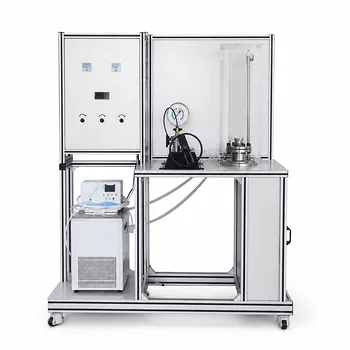
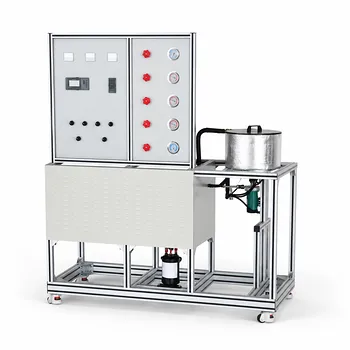
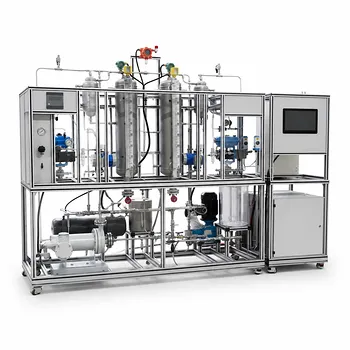
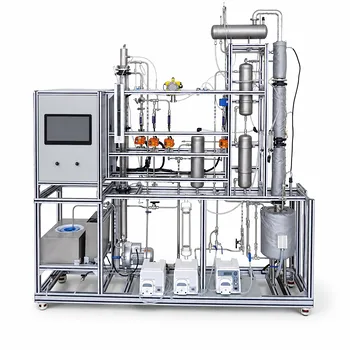
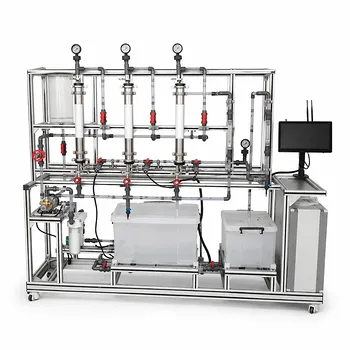
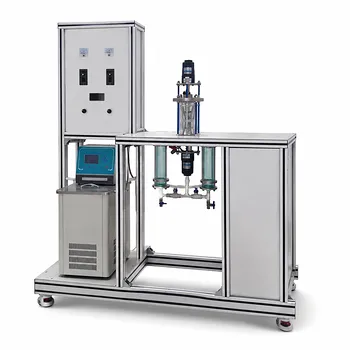
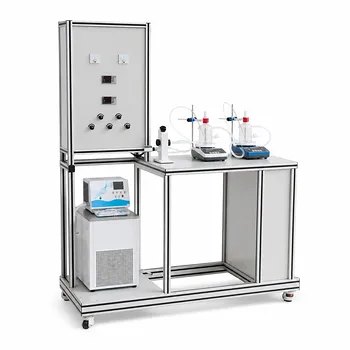
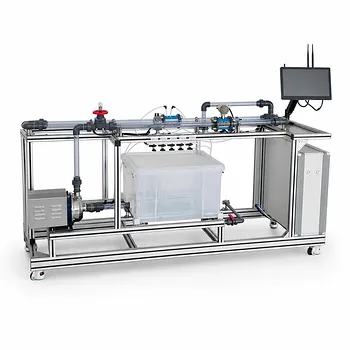
Accurate chemical analysis is critical for process control in environmental and chemical engineering. LABPARK provides state-of-the-art Educational and Vocational Unit Operations Pilot Plants in chemical engineering, bioprocess & biotech, and environmental & water treatment tailored for universities, research institutes, and enterprises.
Whether you need to upgrade your laboratory setup, train the next generation of engineers, or ensure precise wastewater process monitoring, our robust pilot plants deliver reliable, real-world experience.
Ready to elevate your research and training capabilities? Contact LABPARK today to discuss your custom pilot plant requirements!
Related Products
- Carbon Dioxide PVT Curve Determination Educational Unit Operations Pilot Plant
- Educational Compression Refrigeration Performance Determination Unit Operations Pilot Plant
- Ion Exchange Water Purification Educational Pilot Plant for Engineering Unit Operations
- Alkaline Membrane Water Electrolysis Educational Pilot Plant Unit Operations Training System
- Carbon Dioxide Absorption and Desorption Educational Pilot Plant for Carbon Capture Studies
People Also Ask
- How do temperature variations affect CO2 transport models in pilot plants? Model vs Reality
- What unit operations are critical for CCUS training pilot plants? Build hands-on engineering expertise.
- What are the applications and limitations of the Virial EOS? Enhance Your Pilot Plant Lab
- What precautions prevent sample loss when volatilizing silica with HF? Crucial Steps for Safe Lab Training
- Why is selecting the correct EOS critical in pilot plants? PR vs. SRK compared.