Knowledge Applied Chemistry Education What precautions prevent sample loss when volatilizing silica with HF? Crucial Steps for Safe Lab Training
Author avatar

Tech Team · LABPARK

Updated 2 months ago

What precautions prevent sample loss when volatilizing silica with HF? Crucial Steps for Safe Lab Training


Here’s the single most critical precaution: before adding hydrofluoric acid, the residue must be completely submerged under a sufficient layer of dilute sulfuric acid. Adding HF to a dry residue, or to one merely moistened with a few drops of concentrated sulfuric acid, triggers an explosive surge of heat and gas that physically ejects sample material from the crucible.

Sample loss during silica volatilization is almost always a mechanical spattering problem, not a chemical one. The violent reaction between concentrated sulfuric acid and HF generates extreme heat of dilution and rapid gas evolution. The only reliable way to suppress that violence is to pre-coat the entire residue with dilute sulfuric acid, which acts as both a heat sink and a rate-limiting diluent.

Why the Exact Sequence Matters

The order in which you add reagents is the dividing line between a clean volatilization and a ruined analysis. The underlying physics is straightforward, but the discipline required to follow it must become second nature in any training program.

The Root Cause of Spattering

When hydrofluoric acid hits a dry or nearly dry residue, it can react instantly with residual water in the acid, generating intense heat. If the residue is also in contact with concentrated sulfuric acid, the heat of dilution spikes further. This thermal shock flash-boils any trapped liquid, creating a burst of gas that scatters solid particles out of the vessel.

The Protective Blanket Effect

A generous cover of dilute sulfuric acid serves two purposes. First, it absorbs the reaction heat over a much larger liquid volume, preventing localized temperature spikes. Second, it physically quenches the gas bubbles before they can build enough momentum to carry solids away. The key is that every particle of the residue must be wetted and shielded.

Designing a Foolproof Training Protocol

For chemical engineering laboratory courses, the goal isn’t just to recite the rule; it’s to embed a habit that survives the pressure of a busy experimental schedule. The following breakdown turns the precaution into an observable, trainable skill.

The Pre-Coating Standard

After evaporating and gently igniting the sample to dryness, allow the crucible to cool. Then pour in enough dilute sulfuric acid—typically a 1:4 or 1:9 dilution, but the exact ratio matters less than the volume—to form a contiguous liquid layer over the entire bottom of the crucible. Swirl gently to ensure all edges and hidden pockets are touched. If any dry crust remains, add more dilute acid.

Incremental HF Addition

Even with the protective blanket, you should not dump hydrofluoric acid all at once. Add the HF dropwise along the inner wall of the crucible, letting each drop slide into the dilute sulfuric acid layer. This prevents a concentrated stream from momentarily breaking through the blanket and hitting a hot spot below.

The “Moistening Trap” to Avoid

A mistake even experienced analysts can make is to add only a few drops of concentrated sulfuric acid, thinking it will be enough to wet the residue. That small quantity can become instantaneously hot when HF is added. You must see a clear, free-flowing liquid layer—if all you see is damp residue, you haven’t added enough dilute acid.

Understanding the Trade-offs and Hidden Consequences

Preventing physical sample loss is your immediate goal, but the same precaution also guards against a more subtle chemical error that skews final results.

The Fluoride Interference Pitfall

If the residue is not adequately covered with sulfuric acid during HF treatment, a deficiency of sulfate ions can lead to the formation of metal fluorides instead of sulfates. During subsequent ignition, these fluorides convert slowly and incompletely back to oxides, leaving an artificially heavy residue. You might not see a spatter, but your recorded silica percentage will be erroneously low, because the final residue weight is inflated by undissolved, unconverted material.

False Economy of Speed

In training, students may try to rush the process by using minimal dilute acid to shorten the evaporation step. That impatience is precisely what introduces both the spattering risk and the fluoride formation trap. The precaution—a generous, patient pre-cover—is slower upfront but eliminates the need to restart the entire gravimetric determination.

Making the Right Choice for Your Goal

For a chemical engineering lab instructor or a trainee, the precaution translates into a few clear decision rules. Choose the technique that matches your priority.

  • If your primary focus is preventing sample loss from spattering: Ensure the entire residue is submerged under a visible layer of dilute sulfuric acid before any HF touches the crucible.
  • If your primary focus is accurate silica quantification: Make that submerging layer generous enough to provide an overwhelming sulfate excess, avoiding the formation of metal fluorides that inflate the final residue.
  • If your primary focus is training safe, repeatable habits: Standardize the dilute sulfuric acid volume (e.g., 2–5 mL for a typical 50 mL crucible), and require a visual sign-off before the first HF drop is dispensed.

Control the thermal environment before you add the driving force, and the sample stays exactly where it belongs.

Summary Table:

Step / Precaution Hazard Addressed Best Practice
Pre-coat with dilute H2SO4 Thermal shock & sample spattering Submerge residue completely in 2-5 mL of dilute acid before adding HF.
Dropwise HF addition Localized heat spikes Slide HF drops slowly down the inner wall of the crucible.
Adequate sulfate excess Metal fluoride interference (inflated weight) Avoid the "moistening trap"; ensure a visible, free-flowing liquid layer.

Elevate Your Chemical Engineering Laboratory Training

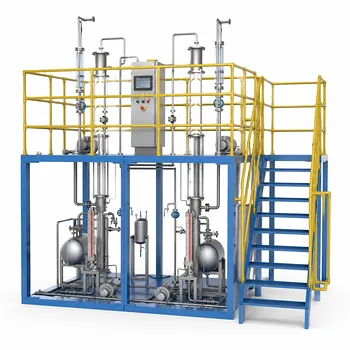
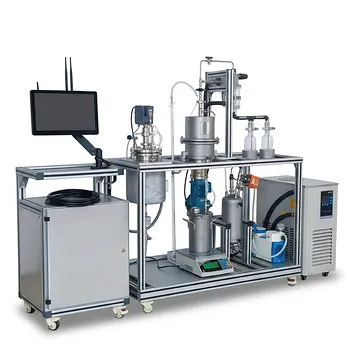
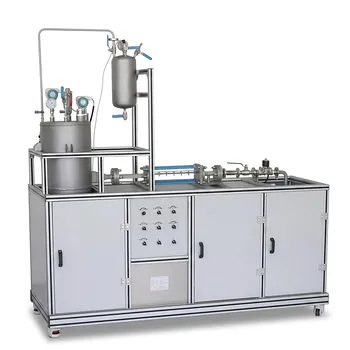
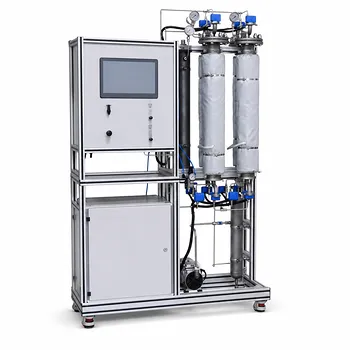
Teaching critical analytical skills requires reliable, high-performance equipment. LABPARK provides state-of-the-art Educational and Vocational Unit Operations Pilot Plants in chemical engineering, bioprocess & biotech, and environmental & water treatment tailored for universities, research institutes, and enterprises.

Help your students and researchers master safe chemical handling and process operations. Contact LABPARK today to find the perfect pilot plant solution for your institution!

Related Products

People Also Ask

Related Products

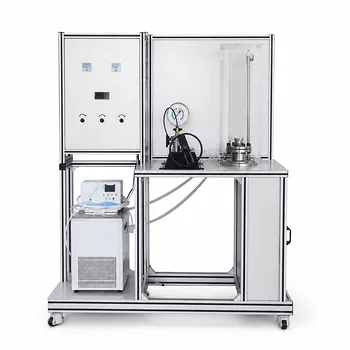
Carbon Dioxide PVT Curve Determination Educational Unit Operations Pilot Plant

Carbon Dioxide PVT Curve Determination Educational Unit Operations Pilot Plant

Enable hands-on learning of thermodynamic principles with this carbon dioxide PVT curve determination pilot plant. Students visualize critical opalescence, phase transitions, and generate P-V isotherms across liquid, gas, and supercritical regions. Robust safety features, adaptable for university engineering labs.

Multi-Functional Special Distillation Educational Pilot Plant

Multi-Functional Special Distillation Educational Pilot Plant

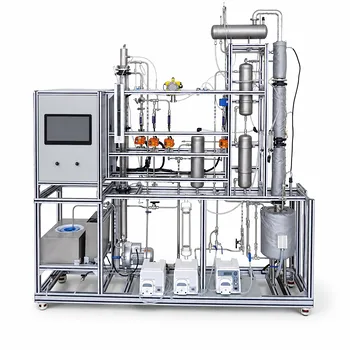
Versatile multi-functional special distillation pilot plant for chemical engineering education. Supports continuous, vacuum, azeotropic, reactive, extractive distillation. Transparent glass columns enable real-time visual observation of hydrodynamics and separation processes.

Continuous Batch Extractive Distillation Educational Pilot Plant

Continuous Batch Extractive Distillation Educational Pilot Plant

Versatile pilot plant for continuous, batch, and extractive distillation training. High-borosilicate glass column for visualizing hydraulics, 15.6-inch touchscreen with data logging, precise reflux ratio control 1-99, and durable corrosion-resistant frame. Ideal for chemical engineering education and process research.

Rising and Falling Film Evaporation Educational Unit Operations Pilot Plant

Rising and Falling Film Evaporation Educational Unit Operations Pilot Plant

Hands-on educational pilot plant for studying rising and falling film evaporation, flow regimes, and heat transfer. Customizable for university labs with industrial instrumentation and data acquisition. Enables comparative evaluation of evaporation modes and energy efficiency.

Binary System Vapor Liquid Equilibrium Data Determination Educational Unit Operations Pilot Plant

Binary System Vapor Liquid Equilibrium Data Determination Educational Unit Operations Pilot Plant

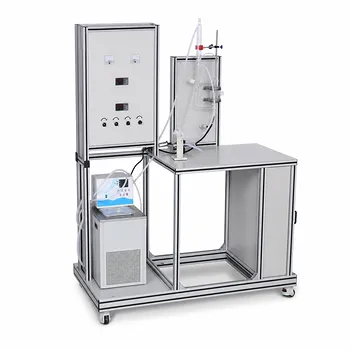
This educational pilot plant determines vapor-liquid equilibrium data for binary systems under atmospheric pressure. Students observe phase behavior, measure T-P-X-Y, and construct phase diagrams for unit operations labs. Features transparent cell, dual circulation. Ideal for chemical engineering curricula.

Carbon Dioxide Absorption and Desorption Educational Pilot Plant for Carbon Capture Studies

Carbon Dioxide Absorption and Desorption Educational Pilot Plant for Carbon Capture Studies

Explore carbon dioxide absorption and desorption with this educational pilot plant. Transparent columns visualize mass transfer; electric heating simulates industrial solvent regeneration; touchscreen interface enables data monitoring. Ideal for chemical engineering, bridging theory and practice.

Potassium Salt Thermal Dissolution and Crystallization Separation Educational Unit Operations Pilot Plant

Potassium Salt Thermal Dissolution and Crystallization Separation Educational Unit Operations Pilot Plant

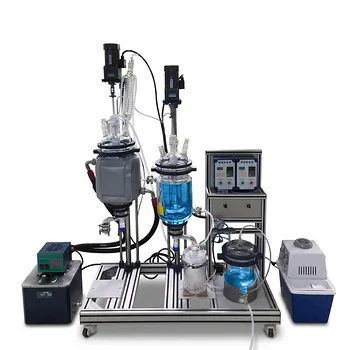
This educational pilot plant allows chemical engineering students to perform potassium salt thermal dissolution and cooling crystallization experiments, integrating solubility studies, supersaturation control, and solid-liquid separation in a safe, compact, and customizable laboratory system for hands-on unit operations learning.

Electrolyte Distillation Purification and Formulation Educational Pilot Plant

Electrolyte Distillation Purification and Formulation Educational Pilot Plant

Integrated bench-to-pilot scale educational pilot plant for electrolyte distillation, purification, and formulation with borosilicate glass construction, PLC automation, touchscreen HMI, and advanced industrial safety features for hands-on chemical process training, ideal for chemical engineering and materials science curricula.

Ion Exchange Water Purification Educational Pilot Plant for Engineering Unit Operations

Ion Exchange Water Purification Educational Pilot Plant for Engineering Unit Operations

This bench-scale ion exchange pilot plant trains engineering students in water purification. Dual transparent columns simulate industrial softening and demineralization. Students observe fluid dynamics, perform resin regeneration, and analyze breakthrough curves. The corrosion-resistant frame ensures durability in unit operations experiments.

Dual-Mode Gas Absorption and Desorption Unit Operations Training Pilot Plant

Dual-Mode Gas Absorption and Desorption Unit Operations Training Pilot Plant

Industrial-scale pilot plant for gas absorption and desorption training in chemical engineering. Features dual-mode operation with real and simulated materials, transparent columns for flow visualization, and customizable design. Supports independent or combined loops for hands-on unit operations experiments.

Supercritical High-Gravity Flash Evaporation Educational Unit Operations Pilot Plant

Supercritical High-Gravity Flash Evaporation Educational Unit Operations Pilot Plant

Bench-scale integrated teaching system for advanced separation and mass transfer, combining supercritical high-gravity flash evaporation with heating, chemical reaction, and material collection, featuring modular design, Stainless Steel 316L construction, transparent visualization, touchscreen control, and safety systems for chemical engineering education.

Cavitation Phenomenon Demonstration and Analysis Educational Unit Operations Pilot Plant

Cavitation Phenomenon Demonstration and Analysis Educational Unit Operations Pilot Plant

Advanced educational pilot plant for demonstrating and analyzing cavitation phenomena in fluid systems. Features a transparent acrylic Venturi test section, high-precision pressure and flow sensors, digital data acquisition, and integrated safety relief valves for engineering curricula.

Fixed-Bed Chemical Reaction and Gas Dust Tar Removal Unit Operations Pilot Plant

Fixed-Bed Chemical Reaction and Gas Dust Tar Removal Unit Operations Pilot Plant

Integrated educational pilot plant for studying catalytic gas-solid reactions and downstream gas purification. Features dual fixed-bed reactor, three-stage heating, and touchscreen control for hands-on engineering training. Ideal for chemical and environmental engineering curricula.

Multi Functional Catalytic Reaction and Reactor Evaluation Educational Unit Operations Pilot Plant

Multi Functional Catalytic Reaction and Reactor Evaluation Educational Unit Operations Pilot Plant

Bench-scale educational pilot plant for catalytic reaction and reactor evaluation, integrating fixed bed, fluidized bed, and stirred tank reactors. Students compare reactor designs, evaluate catalysts, and study reaction kinetics and hydrodynamics. Perfect for unit operations labs in chemical engineering curricula.

Low Concentration Carbon Dioxide Capture Pressure Swing Adsorption Educational Pilot Plant

Low Concentration Carbon Dioxide Capture Pressure Swing Adsorption Educational Pilot Plant

Low-concentration CO2 capture pilot plant using Pressure Swing Adsorption for engineering education. Students gain practical experience in breakthrough curve measurement, adsorption dynamics, and variable analysis in a hands-on lab setting. Ideal for unit operations, mass transfer, and chemical engineering labs.

Methanol Synthesis and Catalyst Performance Evaluation Educational Unit Operations Pilot Plant

Methanol Synthesis and Catalyst Performance Evaluation Educational Unit Operations Pilot Plant

Bench-scale methanol synthesis and catalyst evaluation educational pilot plant for chemical engineering labs to study catalytic kinetics, high-pressure operations, process control, and unit operations under realistic conditions with industrial safety features, precision gas delivery, data acquisition, and intelligent monitoring.

Educational Unit Operations Pilot Plant for Intraparticle Diffusion Effective Factor Measurement

Educational Unit Operations Pilot Plant for Intraparticle Diffusion Effective Factor Measurement

Designed for chemical engineering university labs, this pilot plant allows hands-on determination of catalyst particle intraparticle diffusion effective factors and gas-solid reaction kinetics using a fixed-bed tubular reactor with industrial touchscreen control, bridging theory and practical reactor design.

Hot Filtration Educational Unit Operations Pilot Plant Laboratory System

Hot Filtration Educational Unit Operations Pilot Plant Laboratory System

This integrated laboratory bench-scale hot filtration pilot plant enables students to study solid-liquid separation under thermal conditions, featuring a stainless steel vessel, removable heating jacket, and multi-layer filter plates for unit operations education, ideal for chemical engineering laboratory curriculum.

Multi-Modal Distillation Unit Operations Training Pilot Plant

Multi-Modal Distillation Unit Operations Training Pilot Plant

Multi-modal distillation pilot plant for practical unit operations training in chemical engineering education. Features real, analog, and semi-physical simulation modes, industrial construction, customizable for university labs. Hands-on fractionation columns, SCADA control, safety systems. Includes sight glasses, sampling ports, closed-loop recycling.

Gas-Solid Heterogeneous Separation Demonstration Educational Unit Operations Pilot Plant

Gas-Solid Heterogeneous Separation Demonstration Educational Unit Operations Pilot Plant

Comprehensive visual transparent gas-solid separation pilot plant for chemical engineering labs. Demonstrates gravity settling inertial settling cyclone and bag filter technologies. Enables real-time analysis of fluid-particle mechanics pressure drop and collection efficiency. Ideal for undergraduate unit operations courses.


Leave Your Message