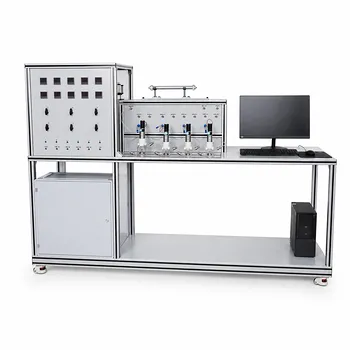
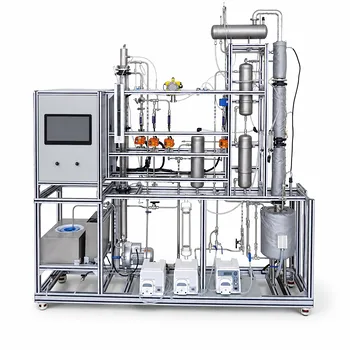
Online spectroscopic techniques empower chemical engineering and bioprocess pilot plants with real-time, in-situ reaction monitoring. By embedding probes directly into reactors or process streams, methods like ATR-FTIR, Raman, NIR, and UV-Vis spectroscopy continuously capture molecular data, allowing operators to track reaction progress, predict endpoints, and detect intermediates without removing samples. This shift from offline assays to Process Analytical Technology (PAT) eliminates hours of wait time, prevents unwanted side-product formation, and provides immediate insight into reaction kinetics.
The true power of online spectroscopy in pilot plants lies not just in replacing manual sampling, but in unlocking a dynamic understanding of the process. Real-time spectral data, combined with multivariate models, transforms a reaction from a black box into a transparent, controllable system—bridging the gap between theoretical principles and industrial-scale process optimization. However, success demands careful attention to sensor selection, spectral interferences, and model robustness.
The Core Principles of Online Reaction Monitoring
Online spectroscopic monitoring integrates analytical instrumentation directly with the reaction environment. The goal is to generate a continuous stream of chemical information that reflects the true state of the system.
From Periodic Sampling to Instantaneous Insight
Traditional reaction monitoring relies on extracting samples for offline analysis like chromatography. This approach introduces time delays and the risk of sample alteration. Online spectroscopy removes these barriers. The measurement happens inside the reactor, capturing transient intermediates and rapid concentration changes that offline methods simply miss. This continuous data stream is the foundation for real-time kinetic modeling and automated process control.
The Role of Process Analytical Technology (PAT)
PAT is a framework for designing, analyzing, and controlling manufacturing through timely measurements of critical quality and performance attributes. In a pilot plant, online spectroscopy is the eyes of a PAT strategy. It provides the data needed for real-time release testing and adaptive feedback loops. Students and researchers who work with PAT-equipped pilot plants gain competency that translates directly to modern pharmaceutical, chemical, and biotech manufacturing environments.
Key Spectroscopic Techniques for Chemical Reaction Monitoring
Each spectroscopic method offers a unique window into the molecular world. The choice depends on the chemical transformation, the phase of the reaction, and the specific information required.
ATR-FTIR: Fingerprinting Functional Group Changes
Attenuated Total Reflectance Fourier Transform Infrared (ATR-FTIR) is a workhorse for organic and aqueous-phase reactions. It detects the vibrational signatures of specific functional groups, making it ideal for tracking the disappearance of a reactant carbonyl peak or the appearance of a product amine band. The probe’s crystal is in direct contact with the reaction mixture, providing near-instantaneous spectral acquisition. In pilot plants, ATR-FTIR excels at endpoint determination for reactions like esterifications, amide couplings, or polymerizations.
Raman Spectroscopy: Seeing Through Water and Glass
Raman spectroscopy probes molecular vibrations via inelastic light scattering. Its greatest advantage in pilot plants is its insensitivity to water, making it invaluable for aqueous-phase reactions and bioprocesses. Since Raman excitation and collection can pass through glass or quartz, non-invasive, in-situ monitoring through a reactor sight glass is possible. This eliminates any need for a probe insertion that could disrupt flow or compromise sterility.
NIR Spectroscopy: Monitoring Polymorphs and Moisture Sensitivity
Near-Infrared spectroscopy captures overtones and combination bands, particularly sensitive to O-H, C-H, and N-H bonds. In crystallization pilot plants, NIR is a critical PAT tool for real-time polymorphic transformation monitoring. Different crystal lattices create distinct hydrogen-bonding environments that shift NIR absorption bands. NIR probes can track these transitions without sample pretreatment, preventing unwanted polymorph interconversion that could ruin a batch.
UV-Visible Spectroscopy: Quantifying Chromophores and Turbidity
Online UV-Vis probes measure absorbance at specific wavelengths. They are ideal for reactions involving colored species, conjugated systems, or metal complexes. In bioprocess pilot plants, UV-Vis can monitor cell density via turbidity. In chemical unit operations, it’s used to track the concentration of a light-absorbing reactant or product in real time, often with a simple Beer-Lambert law calibration.
Process NMR: Unparalleled Structural Detail on Line
Integrating compact NMR analyzers into reactor loops provides the gold standard for chemical structure elucidation in real time. Combining High-Resolution NMR for chemical composition and Time-Domain NMR for physical properties like viscosity (via T2 relaxation) offers a complete picture of complex mixtures. This is especially powerful in teaching pilot plants for analyzing non-linear reaction systems such as heavy petroleum streams or complex bioprocess fluids.
Spectroscopic Monitoring in Bioprocess Pilot Plants
Bioprocess environments present unique challenges—complex media, the need for sterility, and multiple simultaneous metabolic events. Online spectroscopy addresses these with non-invasive, multi-parameter monitoring.
In-Situ Raman for Metabolic Flux Analysis
In biotech pilot plants running Escherichia coli or CHO cell cultures, online Raman spectroscopy has become a cornerstone PAT tool. A single Raman probe immersed in the bioreactor can simultaneously quantify glucose, lactate, ammonia, and biomass directly in the culture medium. This eliminates the need for physical sampling that risks contamination. With this real-time data, researchers can implement advanced feedback control loops to optimize feeding strategies and instantly detect metabolic shifts.
Physical Sensor Integration as Surrogate Spectroscopic Methods
Beyond traditional spectroscopy, online physical sensors based on optical or electrical principles bridge the gap between chemical change and process control. In educational pilot plants, reaction rates are often monitored continuously by measuring changes in refractive index, electrical conductivity, color (via spectrophotometry), or system pressure. These physical properties correlate with concentration changes according to reaction kinetics, allowing students to calculate instantaneous reaction rates directly from the process control software. It’s a practical, robust method to visualize kinetic theory.
Data Analysis: Turning Spectra into Actionable Knowledge
Raw spectra are information-dense but unintelligible without proper processing. Multivariate data analysis is the engine that delivers concentration predictions and trend visualizations.
Building Calibration Models with PLS and SMC
Partial Least Squares (PLS) regression is the industry-standard method for correlating spectral data with concentration values. Spectra from calibration samples with known compositions train a model that can then predict concentrations in new, unknown samples. For reactions where pure component spectra overlap or unknown intermediates appear, Self-Modeling Curve Resolution (SMC) can extract pure component spectra and their concentration profiles directly from the evolving mixture data without any prior calibration.
Real-Time Visualization and Endpoint Detection
The power of online spectroscopy is realized when spectral trends are streamed to a control dashboard. A PLS-predicted concentration trace that plateaus signals the reaction endpoint. A peak shift in an ATR-FTIR profile indicates the conversion of one functional group to another. This information allows operators to stop a reaction at the perfect moment, preventing over-reaction that generates impurities.
Understanding the Trade-offs and Practical Limitations
Online spectroscopy is not a magic bullet. Every technique has limitations that must be managed to avoid misleading data and process upsets.
Spectral Interferences and Sample Condition
For IR-based techniques, free water and dissolved CO2 are notorious interferants. The broad O-H bending and stretching bands around 1640 cm⁻¹ and 3400 cm⁻¹, and CO2 peaks at 2350 cm⁻¹, can swamp analyte signals. In pilot plants, proper background subtraction, optical path purging, and careful probe positioning are essential. Sample concentration and path length must also be optimized to keep the baseline transmittance near 90%, preventing peak saturation from high concentration or a total loss of signal from low concentration.
Probe Robustness and Fouling
An immersion probe in a sticky polymerization or a bioprocess broth is susceptible to fouling. A coating of material on the optical window reduces signal intensity and introduces baseline drift. Regular automated cleaning jets or the use of retractable probe housings can mitigate this, but the fouling risk must be assessed for each process. Non-invasive Raman through a sight glass offers a way around this entirely.
Model Maintenance and Calibration Drift
Multivariate calibration models are sensitive to changes in the process matrix or instruments. A model built for one catalyst lot may fail when the raw material source changes. Model robustness requires periodic recalibration and careful selection of calibration samples that span the expected variation in temperature, concentration, and impurity profiles. This ongoing maintenance effort is the hidden cost of high-fidelity online monitoring.
Making the Right Choice for Your Pilot Plant Goal
How you apply online spectroscopy depends entirely on your primary objective—whether it’s kinetic research, biological process optimization, or student education.
- If your primary focus is kinetic mechanism research: Prioritize process NMR or ATR-FTIR for rich structural detail, and use SMC models to uncover transient intermediates without relying on extensive calibration libraries.
- If your primary focus is bioprocess development and feed control: Online Raman spectroscopy is the superior choice. Its water insensitivity and ability to simultaneously monitor multiple CQAs like glucose and lactate make it a complete PAT solution for bioreactors.
- If your primary focus is crystallization and solid-state reaction monitoring: NIR spectroscopy is indispensable due to its high sensitivity to hydrogen bonding and crystal lattice changes, enabling direct, non-destructive polymorph tracking.
- If your primary focus is undergraduate or graduate chemical engineering education: Start with the integration of online physical sensors (conductivity, refractive index) and a basic UV-Vis probe. This teaches the foundational link between physical properties and reaction kinetics without the steep learning curve of chemometrics, before advancing to more complex spectroscopic tools.
The successful application of online spectroscopy transforms a pilot plant from a simple scale-up testbed into a true process knowledge engine, embedding quality and efficiency directly into the development workflow.
Summary Table:
| Technique | Primary Application | Key Advantage | Key Challenge |
|---|---|---|---|
| ATR-FTIR | Organic synthesis & polymerization | Direct functional group tracking | Water & CO2 interference |
| Raman | Aqueous phase & bioprocesses | Insensitive to water; non-invasive | Baseline fluorescence interference |
| NIR | Crystallization monitoring | Sensitive to polymorphs & moisture | Requires complex PLS calibration |
| UV-Vis | Chromophores & turbidity (cell density) | Simple, cost-effective setup | Restricted to light-absorbing species |
| Process NMR | Complex chemical structures | High-resolution compositional detail | High cost & maintenance requirements |
Enhance Your Lab's Capabilities with LABPARK
Looking to equip your institution with advanced process monitoring? LABPARK provides state-of-the-art Educational and Vocational Unit Operations Pilot Plants in chemical engineering, bioprocess & biotech, and environmental & water treatment for universities, research institutes, and enterprises.
Bring hands-on Process Analytical Technology (PAT) training and real-time reaction kinetics research to your students and team. Contact LABPARK today to discuss your custom pilot plant requirements!
Related Products
- Multi-Reactor Educational Pilot Plant for Reaction Engineering Unit Operations
- 100L Continuous Loop Hydrogenation Educational Unit Operations Pilot Plant
- Multi Functional Catalytic Reaction and Reactor Evaluation Educational Unit Operations Pilot Plant
- Micro-Scale Gas-Solid Catalytic Reaction Educational Pilot Plant
- Multifunctional Membrane Separation Educational Pilot Plant with Ultrafiltration, Nanofiltration, Reverse Osmosis
People Also Ask
- How do educational unit operations pilot plants address safety and waste management when scaling up?
- How do educational unit operations pilot plants bridge theory and design? Bridge the Engineering Gap
- Why Compare Predicted and Experimental Excess Enthalpy? Key to Accurate Pilot Plant Scale-up
- How to study gasification in pilot plants? Compare exit gas composition & efficiency
- Why Use PTFE & Hastelloy in Chemical Pilot Plants? Prevent Corrosion & Ensure Safety