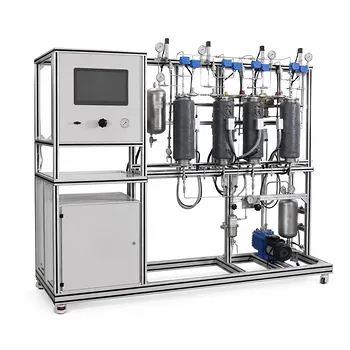
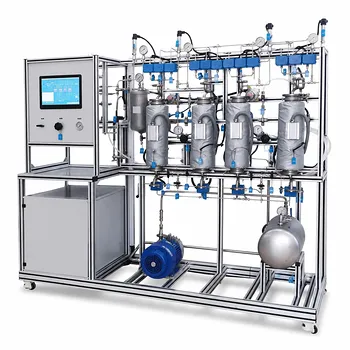
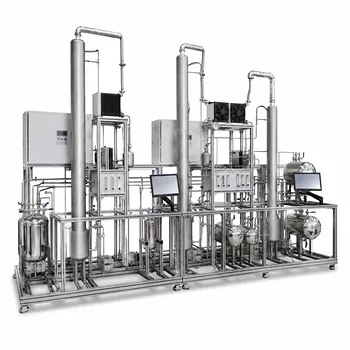
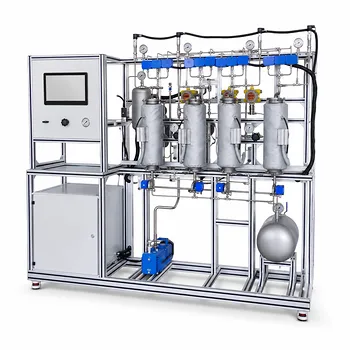
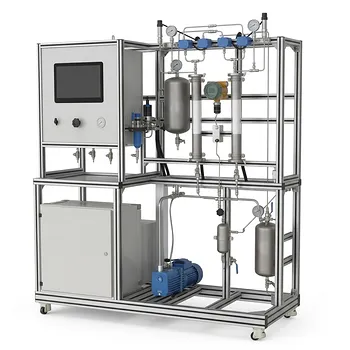
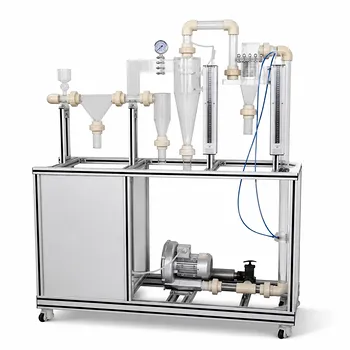
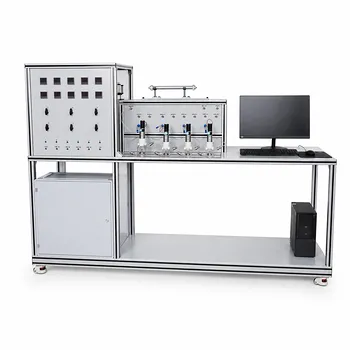
Without a dedicated purification stage, the catalyst bed in your SO₂ converter will fail—quickly and silently. The roasting gas feeding a sulfuric acid pilot plant is not pure sulfur dioxide. It carries a dangerous cocktail of dust, arsenic, fluorine, and selenium compounds. These impurities act as potent catalyst poisons, physically clog the bed, increase pressure drop, and release highly corrosive species like hydrogen fluoride that can destroy downstream equipment. A gas purification unit operation isn't an optional add-on; it is the essential shield that protects the catalyst, guarantees safe operation, and—most critically for an educational plant—teaches the industrial truth that feed gas conditioning defines the success of the entire conversion process.
Understanding why purification must precede conversion is the cornerstone of a meaningful pilot-plant education. The roasting gas is a dirty, toxic stream. Without a train of cooling, dust removal, and acid washing, you don’t simulate industrial reality—you demonstrate how to ruin a catalyst in a single lab session.
The Hidden Dangers Inside the Roaster Gas
What the Roasting Process Really Produces
When you roast sulfide ores to generate SO₂, you aren't producing a clean chemical reagent.
The raw gas stream contains solid particulates—fine dust from the ore—and a vapor-phase load of volatile metal and non-metal compounds. Arsenic, selenium, and fluorine are classic offenders, and they travel with the hot gas straight toward your converter.
In an industrial plant, these impurities are removed ruthlessly. In a pilot plant, their presence becomes a learning opportunity—but only if you let the students see the consequences of leaving them in.
Impurities Are Not Passive Spectators
Arsenic is a notorious catalyst poison. It chemically bonds to the active vanadium pentoxide sites in the SO₂ oxidation catalyst, destroying their ability to activate the reaction.
Dust doesn't just sit harmlessly. It fills the void spaces in the packed bed, creating a physical barrier that drives up the pressure drop and starves the catalyst of reactant gas.
Fluorine compounds, especially hydrogen fluoride, attack silica-based materials. In a pilot plant with glass components or refractory linings, HF corrosion causes rapid material failure—a safety hazard and a costly repair.
Selenium forms deposits that alter the catalyst’s surface chemistry, gradually deactivating it and distorting the kinetic data students rely on.
Without purification, your educational plant doesn’t demonstrate a working catalytic converter. It demonstrates a deactivation experiment you didn’t plan.
Why Purification Is the Real Learning Objective
Teaching the Principle: Feed Gas Conditioning Is Non-Negotiable
In industrial catalysis, what you remove before the reactor matters more than the reactor itself.
A dedicated purification sequence—quench cooling, electrostatic precipitation or cyclones for dust, and a wet acid scrubber—shows students that chemical engineering is a discipline of separation and preparation. The pilot plant’s unit operation of cleaning the gas is the practical embodiment of feed gas conditioning, a concept that will appear in every plant they ever design.
Protecting the Catalyst to Generate Trustworthy Data
Educational pilot plants exist to generate kinetic data, calculate mass transfer coefficients, and train operators.
A poisoned catalyst gives false low conversion, misleading temperature profiles, and meaningless results. Students cannot study reaction engineering if the catalyst is silently dying. The purification stage ensures the converter behaves predictably, making the educational objectives achievable.
Demonstrating the Full Industrial Sequence
The four-stage sequence—roasting, purification, conversion, absorption—is the backbone of contact-process sulfuric acid production.
Skipping purification in an educational plant would be like teaching a combustion course without a fuel filter. The students need to see, touch, and operate the gas cleaning train to appreciate the integrated nature of chemical processes. The purification unit is the bridge between raw material and pure reaction, and its absence hollows out the learning experience.
Understanding the Trade-offs
The Cost of Added Complexity
Yes, a gas purification unit operation adds complexity, cost, and maintenance.
A pilot plant requires heat-resistant materials for the cooling step, reliable dust removal equipment, and safe handling of acidic wash solutions. For a small teaching rig, this can feel like over-engineering.
However, the alternative is a plant that cannot sustain a catalytic conversion demonstration beyond a few hours—defeating the purpose entirely. The cost of a poisoned catalyst and a failed experiment is higher than the investment in proper pretreatment.
The Risk of Over-Reliance on Simulated Gases
Some educators bypass purification by directly feeding bottled SO₂ and air, skipping the roasting step.
While this simplifies the pilot plant and eliminates impurities, it also removes a core industrial reality. The educational value then focuses narrowly on conversion kinetics, missing the critical lesson that raw gases are never clean. A pilot plant that uses simulated clean feed can complement a purification study, but it cannot replace the integrated understanding that comes from operating the complete dirty-to-clean sequence.
Balancing Footprint with Educational Depth
A full-scale purification train (quench tower, electrostatic precipitator, scrubbing column) demands space and utility connections.
A practical pilot plant can be designed with scaled-down, transparent units that show each principle clearly without replicating industrial dimensions exactly. The goal is visibility and pedagogical clarity—every student should be able to trace the gas path and understand what each piece of equipment removes and why.
Making the Right Choice for Your Educational Pilot Plant
To build a plant that actually teaches the principles of catalytic SO₂ conversion and sulfuric acid production, align your purification design with your educational goals.
- If your primary focus is catalyst kinetics and reactor dynamics: Include a simplified but functional purification sequence (cooling, dust filter, acid mist eliminator) to stabilize the feed. This ensures the converter data is reproducible and allows clean kinetic analysis.
- If your primary focus is teaching the full industrial process: Implement a transparent, integrated purification unit operation complete with quench cooling, a visible dust collection stage, and a packed acid scrubber. Make the impurity removal visible so students can connect cause and effect.
- If your primary focus is process safety and materials selection: Exploit the corrosion risk from fluorine and acid mist to teach materials compatibility. Use the purification stage to demonstrate safe handling of toxic gases and acidic condensates.
A sulfuric acid pilot plant without a purification stage is like a microscope without a lens cleaner—the image you get is not the one you want to analyze. By making purification a dedicated unit operation, you protect the catalyst, ensure safe operation, and deliver the single most important lesson in industrial gas conversion: clean gas is not an accident; it is engineered.
Summary Table:
| Impurity | Effect on System & Catalyst | Purification Unit Solution |
|---|---|---|
| Arsenic | Poisons active catalyst sites | Wet acid scrubber / Quench tower |
| Dust / Particulates | Clogs catalyst bed, spikes pressure drop | Cyclone / Dust filter |
| Fluorine (HF) | Corrodes glass and refractory materials | Wet scrubber / Mist eliminator |
| Selenium | Deactivates catalyst, distorts kinetic data | Acid wash / Cooling stage |
Bring Industrial Reality to Your Chemical Engineering Lab
Building a reliable, educational pilot plant requires the right balance of safety, scale, and industrial accuracy. LABPARK designs and manufactures premium Educational and Vocational Unit Operations Pilot Plants in chemical engineering, bioprocess & biotech, and environmental & water treatment for universities, research institutes, and enterprises.
Whether you need to teach complex gas conditioning or gather precise kinetic data, our custom-engineered systems ensure maximum safety and catalyst longevity.
Ready to upgrade your laboratory? Contact our engineering experts today to discuss your pilot plant requirements!
Related Products
- Bench Scale Carbon Dioxide Capture Educational Unit Operations Pilot Plant
- Fixed-Bed Chemical Reaction and Gas Dust Tar Removal Unit Operations Pilot Plant
- Carbon Dioxide Capture and Utilization Educational Pilot Plant for Unit Operations
- Multi-Modal Distillation Unit Operations Training Pilot Plant
- Ion Exchange Water Purification Educational Pilot Plant for Engineering Unit Operations
People Also Ask
- What unit operations are critical for CCUS training pilot plants? Build hands-on engineering expertise.
- What are the differences between post- and pre-combustion carbon capture training pilot plants?
- How can pilot plants show tail gas vs flue gas CO2 capture differences? Key educational insights.
- How do temperature variations affect CO2 transport models in pilot plants? Model vs Reality
- How does operating pressure influence the transition between absorption and desorption in a CO2 pilot plant?