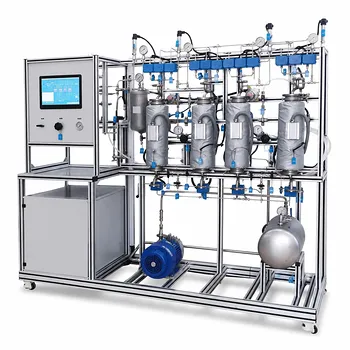
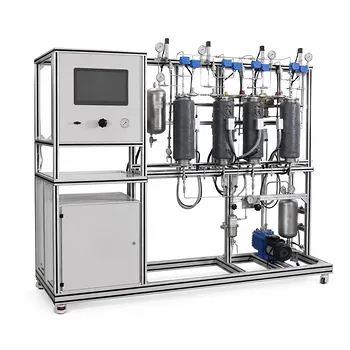
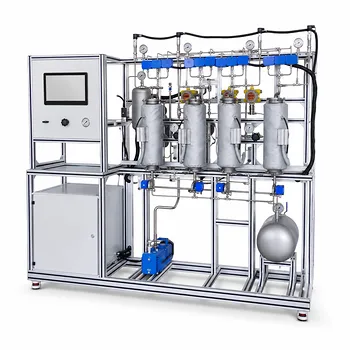
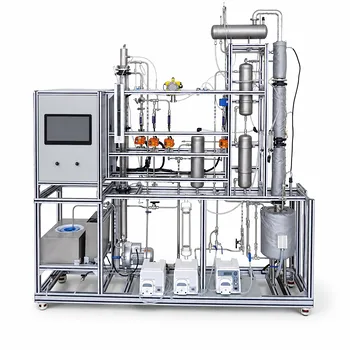
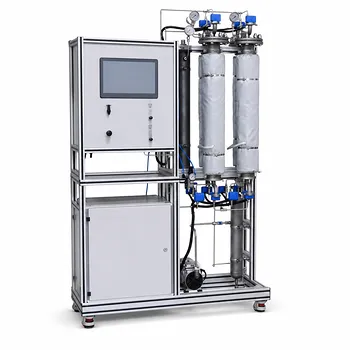
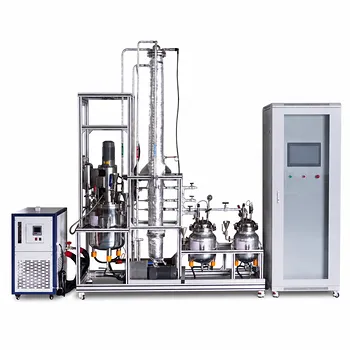
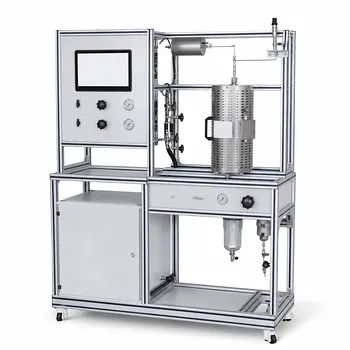
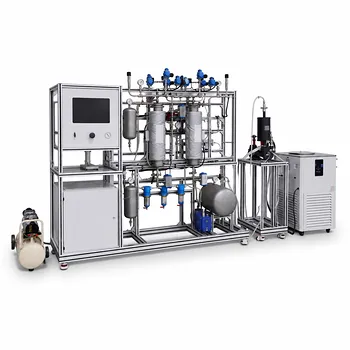
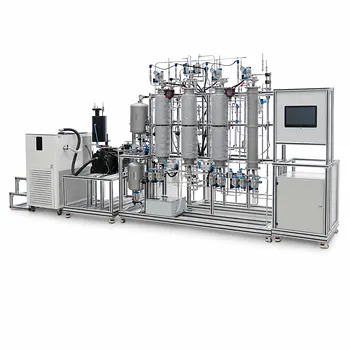
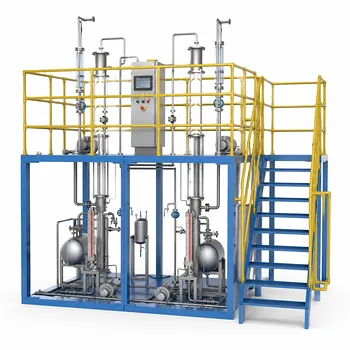
Carbon capture training pilot plants are miniature chemical factories that force engineers to confront the thermodynamic realities of separation processes firsthand. Post-combustion capture targets CO₂ from low-pressure, dilute flue gas—requiring large absorption columns and energy-hungry solvent regeneration. Pre-combustion capture, by contrast, generates a high-pressure, CO₂-rich stream after a water-gas shift reactor, which unlocks the use of smaller separation units like physical solvents, membranes, or pressure swing adsorption.
For training purposes, the fundamental process difference lies in where CO₂ is concentrated: after combustion (post) or before (pre). This single decision cascades into dramatically different unit operation requirements, equipment footprints, and energy integration strategies within the pilot plant.
The Two Pathways: Post-Combustion vs. Pre-Combustion Capture
Understanding each route’s core logic is essential before sizing equipment. The table you set in the pilot plant directly shapes what your trainees learn about process efficiency, mass transfer, and heat management.
Post-Combustion Capture: Recovering CO₂ from Dilute Flue Gas
Post-combustion systems treat flue gas after fuel is burned. The stream is at atmospheric pressure and typically contains less than 15% CO₂ by volume, diluted primarily by nitrogen and water vapor. This dilute, low-pressure nature defines every equipment choice.
The workhorse unit operation is chemical absorption using an amine solvent. A packed absorption column contacts the flue gas with a lean amine solution, selectively absorbing CO₂. Because the driving force for mass transfer is modest, column diameters and packing heights are large—even in a pilot plant, the column dominates the skid.
After absorption, the CO₂-rich solvent flows to a desorber (stripper) column. There, a reboiler applies thermal energy to reverse the reaction, releasing pure CO₂ and regenerating the lean solvent. This regeneration step is the primary energy penalty; trainees can directly measure the reboiler duty and correlate it to solvent flow, concentration, and lean loading.
Pre-Combustion Capture: Concentrating CO₂ Before Combustion
Pre-combustion capture intervenes before the fuel is burned. A carbonaceous fuel (like natural gas or coal) is first gasified or reformed into syngas—a mixture of CO and H₂. This syngas then enters a water-gas shift reactor, where CO reacts with steam over a catalyst to form CO₂ and more H₂.
The resulting stream leaves the shift reactor at high pressure (20–70 bar) with a CO₂ concentration of 15–40% by volume, far richer than flue gas. This high driving force enables separation by physical solvents (like Selexol or Rectisol), membrane units, or pressure swing adsorption (PSA), all of which are more compact and energy-efficient than amine-based thermal regeneration.
Unit Operation Requirements in a Training Pilot Plant
When you translate these two pathways into a hands-on training facility, you specify completely different sets of unit operations. Some are shared, but the core separation stage is where the educational value—and capital cost—diverge.
Post-Combustion Plant: The Absorption–Desorption Loop
At its heart, a post-combustion pilot plant must include:
- Gas mixing and pre-treatment section: Blowers, heaters, and humidifiers to simulate representative flue gas at the correct flow rates, temperature, and composition.
- Packed absorption column: Typically a glass or stainless steel column filled with structured packing or random rings. This is where trainees measure gas-liquid mass transfer coefficients, flooding points, and pressure drop profiles.
- Rich/lean solvent heat exchanger: A compact plate-and-frame exchanger that recovers heat from the hot lean solvent to preheat the cold rich stream—critical for understanding heat integration.
- Desorber column with reboiler: A smaller packed column or tray column where steam strips CO₂ from the solvent. Trainees can manipulate reboiler steam rate to see the direct trade-off between energy input and CO₂ purity.
- Solvent circulation loop: Pumps, filters, and storage tanks that demonstrate solvent degradation and foaming over extended runs.
This loop teaches the harsh reality of capture: the energy needed to break the chemical bond between CO₂ and the amine dwarfs the pumping and cooling duties—a lesson that numerical simulations alone cannot convey.
Pre-Combustion Plant: From Shift Reactor to High-Pressure Separation
A pre-combustion pilot plant shifts the focus from large columns to high-pressure process integration:
- Syngas generation and conditioning: Though often supplied from a cylinder or reformer, the plant must include gas mixers to blend CO, H₂, and steam.
- Water-gas shift reactor: A fixed-bed catalytic reactor operating at 200–400°C, with precise temperature control to demonstrate equilibrium conversion limits and catalyst deactivation patterns.
- High-pressure separation unit: This is where you have a choice. Many training plants use a physical solvent absorber with flash regeneration, avoiding the need for a massive reboiler. Alternatively, membrane modules or a two-column PSA system can be installed to demonstrate pressure-driven separation. Trainees learn how partial pressure, not just concentration, governs separation efficiency.
- Compression and recycle loops: Because high pressure is the enabler, trainees must operate compressors, pressure let-down valves, and recycle blowers, gaining hands-on experience with equipment that is rare in university labs.
- Optional methanation or methanol synthesis reactor: As noted in the supplementary references, a downstream catalytic reactor can convert captured CO₂ into methanol, connecting capture to utilization and teaching reactor yield under varying conditions.
Shared Ancillary Systems
Both pilot plants require common elements for training relevance:
- Gas analyzers (online NDIR or gas chromatography) at multiple points to close mass balances.
- Data acquisition systems logging temperatures, pressures, flow rates, and CO₂ concentrations in real time.
- Safety interlocks for high-pressure and toxic gas handling.
Understanding the Trade-offs in Pilot Plant Design
No single configuration is ideal for every learning objective. The choice carries clear educational and operational trade-offs.
Complexity vs. Breadth of Learning
A post-combustion amine loop is conceptually straightforward. Its main educational value is in transport phenomena and heat integration. A pre-combustion plant, especially one with multiple separation options, exposes trainees to high-pressure operations, heterogeneous catalysis, and equilibrium-limited reactions—but demands far more operational maturity and safety oversight.
Energy Efficiency and Physical Footprint
Pre-combustion separation units are intrinsically smaller because of the high-pressure, high-concentration feed. This makes a pre-combustion pilot plant physically more compact, which can be an advantage in limited lab space. However, the auxiliary high-pressure equipment (compressors, shift reactor) adds cost and requires rigorous pressure vessel codes. Post-combustion plants, in contrast, take up significant floor area but operate at near-ambient pressures, reducing safety complexity.
Solvent and Material Considerations
Chemical absorption (amine) in post-combustion systems brings solvent degradation, corrosion, and foaming into the curriculum. Pre-combustion physical solvents are more forgiving but demand trainees understand vapor-liquid equilibrium at elevated pressures rather than just reaction kinetics. If you choose a membrane or PSA unit, you trade chemical handling issues for a focus on pressure ratios and cycle timing.
Versatility for Utilization Studies
Both routes can be extended with a catalytic conversion reactor (e.g., methanol synthesis) downstream of the capture step. This adds a layer of complexity but transforms the plant into a complete CCUS teaching tool. Pre-combustion’s high-pressure output can sometimes couple more naturally with synthesis gas compression requirements, but post-combustion CO₂ can also be compressed and fed to a reactor.
Making the Right Choice for Your Training Focus
The pilot plant you build or specify must serve the curriculum, not the other way around. Consider what you most need your trainees to internalize.
- If your primary focus is post-combustion technology and solvent-based mass transfer: Build an amine absorption–desorption loop with detailed instrumentation on the columns and heat exchangers; the large column size teaches the penalty of dilute feeds firsthand.
- If your primary focus is pre-combustion capture and high-pressure process integration: Invest in a water-gas shift reactor and a physical solvent or membrane separation skid; students will learn how pressure drives separation efficiency and how to manage equilibrium-limited reactions.
- If your primary focus is a comprehensive CCUS experience covering both capture and utilization: Design a modular plant with interchangeable separation stages (amine column, membrane, PSA) and a common downstream catalytic reactor; this allows you to run comparative experiments on energy penalties and downstream conversion yield.
- If your primary focus is thermodynamic analysis and system-level energy penalties: Ensure the plant includes flow, temperature, and composition sensors at every major unit boundary, coupled with a data logging system that lets students calculate actual heat duties and compare them to ideal theoretical minima.
By aligning the unit operations with the specific learning goals, the pilot plant becomes more than a demonstration tool—it becomes a rigorous platform for chemical engineering discovery.
Summary Table:
| Feature | Post-Combustion Capture | Pre-Combustion Capture |
|---|---|---|
| Operating Pressure | Atmospheric | High pressure (20–70 bar) |
| CO₂ Concentration | Dilute (<15% by volume) | Rich (15–40% by volume) |
| Primary Unit Operations | Amine absorption & desorber columns, reboiler | Water-gas shift reactor, PSA, membranes, or physical solvent absorber |
| Energy Penalty Source | Thermal energy for solvent regeneration | Mechanical energy for compression |
| Footprint & Safety | Large physical footprint, low-pressure safety | Compact footprint, high-pressure safety management |
| Core Training Focus | Mass transfer coefficients, heat integration | Heterogeneous catalysis, equilibrium limits, pressure ratios |
Build the Future of Green Engineering in Your Lab
To master carbon capture and climate technologies, students and researchers need hands-on experience with real thermodynamic scale-ups.
LABPARK provides premium Educational and Vocational Unit Operations Pilot Plants in chemical engineering, bioprocess & biotech, and environmental & water treatment. Tailored for universities, research institutes, and enterprises, our custom-designed carbon capture skids allow trainees to directly compare absorption, adsorption, and catalytic conversion pathways.
Contact LABPARK today to design your custom training pilot plant and bring industry-grade CCUS technology to your facility!
Related Products
- Carbon Dioxide Capture and Utilization Educational Pilot Plant for Unit Operations
- Bench Scale Carbon Dioxide Capture Educational Unit Operations Pilot Plant
- Carbon Dioxide Adsorption and Capture Educational Unit Operations Pilot Plant
- Carbon Dioxide Absorption and Desorption Educational Pilot Plant for Carbon Capture Studies
- Low Concentration Carbon Dioxide Capture Pressure Swing Adsorption Educational Pilot Plant
People Also Ask
- How can pilot plants show tail gas vs flue gas CO2 capture differences? Key educational insights.
- What unit operations are critical for CCUS training pilot plants? Build hands-on engineering expertise.
- How do temperature variations affect CO2 transport models in pilot plants? Model vs Reality
- How does operating pressure influence the transition between absorption and desorption in a CO2 pilot plant?
- How to demonstrate physical vs chemical absorption using a pilot plant? A practical lab guide.