Knowledge Chemical Engineering Education How does operating pressure influence the transition between absorption and desorption in a CO2 pilot plant?
Author avatar

Tech Team · LABPARK

Updated 1 month ago

How does operating pressure influence the transition between absorption and desorption in a CO2 pilot plant?


Operating pressure is the central thermodynamic switch that dictates whether a CO2 absorption pilot plant is in absorption or desorption mode. By directly controlling the partial pressure of CO2, pressure shifts the phase equilibrium solubility limit. When you raise the pressure, you raise the solubility ceiling and force CO2 into the liquid; when you drop the pressure, you collapse that ceiling and force CO2 back out as a gas.

The transition between absorption and desorption is not a matter of changing the solvent's inherent properties, but of manipulating the system's equilibrium state. Operating pressure is the primary lever for this control: a high pressure creates a driving force for absorption by establishing a high equilibrium concentration (c*), while a low pressure reverses this driving force for desorption by drastically lowering that same equilibrium concentration.

The Core Mechanism: Pressure as a Solubility Control Valve

The heart of the process is not a chemical switch, but a purely physical one governed by thermodynamic phase equilibrium. The primary reference perfectly encapsulates this relationship, and understanding it is key to pilot plant operation.

Shifting the Equilibrium with Henry's Law

The entire cycle hinges on a single variable: the equilibrium concentration of CO2 in the liquid, or c*. This value is a moving target set by pressure.

Henry's Law states that the equilibrium solubility of a gas in a liquid is directly proportional to its partial pressure above the liquid. When you increase the system's total pressure, you proportionally increase the CO2 partial pressure. This action directly raises the target c*.

The Direction of Mass Transfer

The direction of CO2 movement is determined by a simple gradient. Mass transfer is not random; it always flows from a state of higher chemical potential to a lower one, seeking to close the gap between the actual liquid concentration (c) and the equilibrium concentration (c*).

  • Absorption (Gas → Liquid): This occurs when c < c*. By raising the pressure, you make c* very large. This creates a deficit in the liquid phase, so CO2 transfers from the gas to dissolve and fill this gap.
  • Desorption (Liquid → Gas): This occurs when c > c*. By lowering the pressure, you make c* very small. The liquid is now overloaded with CO2 relative to its new equilibrium limit, so CO2 is expelled from the solution.

Translating Theory to Pilot Plant Operation

A research-scale CO2 capture pilot plant is designed specifically to demonstrate this cyclic pressure swing. It's a physical proof of concept for the thermodynamic principle.

The High-Pressure Absorption Stage

This is the "capture" phase. The flue gas or CO2-rich stream is fed into the bottom of a packed column at an elevated pressure. The lean solvent, with a low actual CO2 concentration (c), enters from the top.

The high pressure establishes a high c* as the target. The large difference between c* and c is the driving force for mass transfer. As the gas and liquid contact each other on the packing material, CO2 molecules migrate from the high-partial-pressure gas phase into the liquid solvent, reacting with it or simply dissolving. The clean gas exits the top, and the CO2-rich solvent exits the bottom.

The Low-Pressure Desorption (Regeneration) Stage

This is the "release" phase. The rich solvent from the absorber is pumped to a stripper column. Before entering, it passes through a pressure let-down valve, which dramatically reduces the system pressure to near-atmospheric or even vacuum conditions.

This pressure reduction instantly slashes the equilibrium concentration c*. The actual liquid concentration (c) is now far above this new, lower threshold. The solvent is supersaturated, so the dissolved CO2 is no longer thermodynamically stable. It strips itself out of the liquid, creating a pure CO2 gas stream that can be collected, and the now-regenerated "lean" solvent is ready to be pumped back to the absorption column, completing the continuous cycle.

Understanding the Trade-offs and Interacting Variables

While pressure is the primary switch, it never acts in isolation in a real pilot plant. A complete educational or research experience requires understanding its interplay with other factors.

The Critical Role of Temperature

Temperature is the secondary control knob, and it often works in direct opposition to pressure. As multiple supplementary references confirm, gas solubility always decreases as temperature rises.

  • Aiding Absorption: An operator can enhance absorption by combining high pressure with a low temperature.
  • Aiding Desorption: Regeneration is accelerated by combining low pressure with a high temperature. Heat breaks the chemical bonds and the low pressure strips the gas out. In many real-world processes, thermal energy for this step is a major operating cost. You must decide if you're running a pure Pressure Swing Adsorption (PSA) or a hybrid Temperature-Swing (TSA) process.

The Misconception of Mass Transfer Rate

There’s a common pitfall for students regarding diffusion. A supplementary reference correctly notes that the gas diffusion coefficient (D) has an inverse relationship with total pressure (p).

Raising pressure increases the thermodynamic driving force (c* - c), which is powerfully beneficial. However, it also marginally slows down the physical act of molecular diffusion through the gas film. This is a crucial lesson: the increase in the solubility driving force vastly outweighs the decrease in the diffusion coefficient, but the trade-off exists and must be balanced when using rigorous mass transfer models to calculate column height.

Making the Right Choice for Your Research Goal

Your operating strategy for a CO2 absorption pilot plant must align with your core experimental or demonstration objective.

  • If your primary focus is demonstrating a pure pressure-swing cycle: Operate the absorber at the highest safe pressure your system allows (often 4-8 atm as noted for educational units) and the stripper at just above atmospheric pressure. Keep the solvent loops thermally insulated to prove that pressure alone is the driver.
  • If your primary focus is optimizing energy efficiency for a real-world process: Use pressure as the fine-tuning mechanism for desorption, but apply heat as the primary regeneration driver. Study the trade-off between the vacuum pump energy to lower stripper pressure and the thermal energy to raise its temperature.
  • If your primary focus is validating a mass transfer model: Isolate the pressure variable. Run absorption experiments across a range of pressures while meticulously maintaining a constant solvent flow rate, gas flow rate, and operating temperature. Measure the exact change in outlet CO2 concentration to generate data points for your model.

The pilot plant empowers you to move from abstract thermodynamic equations to a tangible, physical process where a turn of a back-pressure regulator visibly shifts CO2 from being a dissolved component in a liquid to a pure, captured gas stream.

Summary Table:

Process Stage Operating Pressure Equilibrium State Mass Transfer Direction Optimal Temperature
Absorption (Capture) High $c < c^$ (High $c^$) Gas to Liquid Low Temperature
Desorption (Regeneration) Low (or Vacuum) $c > c^$ (Low $c^$) Liquid to Gas High Temperature

Bring Hands-On Thermodynamic Principles to Your Lab

LABPARK provides state-of-the-art Educational and Vocational Unit Operations Pilot Plants in chemical engineering, bioprocess & biotech, and environmental & water treatment. Designed specifically for universities, research institutes, and enterprises, our systems enable students and researchers to master complex processes like CO2 capture and solvent regeneration.

Ready to elevate your training and research capabilities? Contact LABPARK today to discuss your project requirements!

Related Products

People Also Ask

Related Products

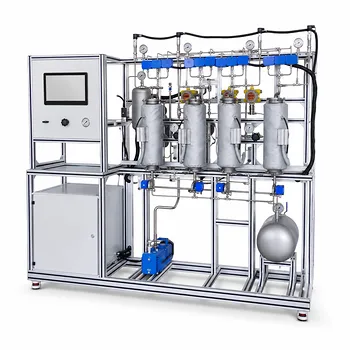
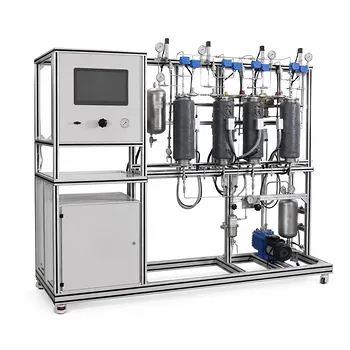
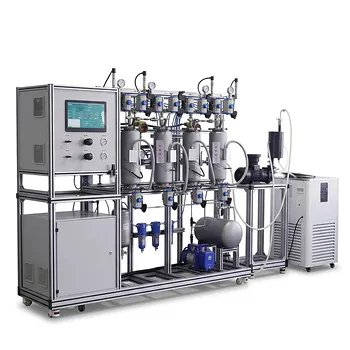
Carbon Dioxide Adsorption and Capture Educational Unit Operations Pilot Plant

Carbon Dioxide Adsorption and Capture Educational Unit Operations Pilot Plant

Advanced laboratory pilot plant for teaching carbon dioxide adsorption and capture unit operations. Features four-tower adsorption system with 400°C heating jackets, high-precision CO2 and O2 sensors, and 15.6-inch touchscreen with wireless data logging. Ideal for chemical engineering education.

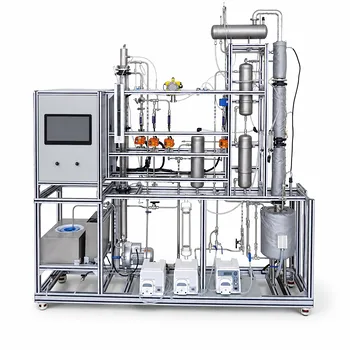
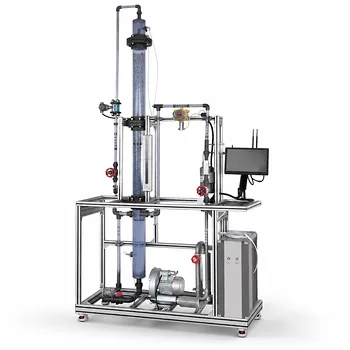
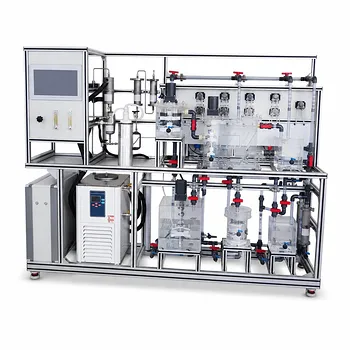
Carbon Dioxide Absorption and Desorption Educational Pilot Plant for Carbon Capture Studies

Carbon Dioxide Absorption and Desorption Educational Pilot Plant for Carbon Capture Studies

Explore carbon dioxide absorption and desorption with this educational pilot plant. Transparent columns visualize mass transfer; electric heating simulates industrial solvent regeneration; touchscreen interface enables data monitoring. Ideal for chemical engineering, bridging theory and practice.

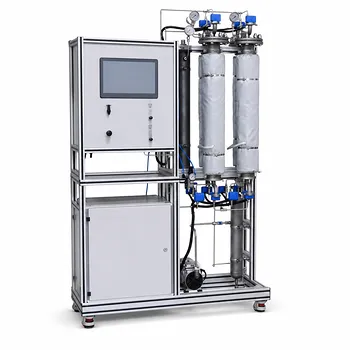
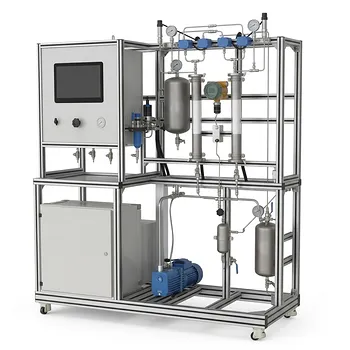
Low Concentration Carbon Dioxide Capture Pressure Swing Adsorption Educational Pilot Plant

Low Concentration Carbon Dioxide Capture Pressure Swing Adsorption Educational Pilot Plant

Low-concentration CO2 capture pilot plant using Pressure Swing Adsorption for engineering education. Students gain practical experience in breakthrough curve measurement, adsorption dynamics, and variable analysis in a hands-on lab setting. Ideal for unit operations, mass transfer, and chemical engineering labs.

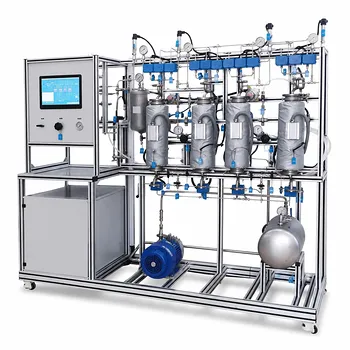
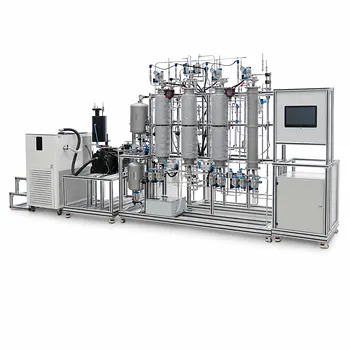
Carbon Dioxide Capture and Utilization Educational Pilot Plant for Unit Operations

Carbon Dioxide Capture and Utilization Educational Pilot Plant for Unit Operations

Educational pilot plant for carbon dioxide capture and utilization featuring four-tower adsorption, high-temperature regeneration, precise CO2 analysis, modern touchscreen control, real-time data, and robust construction for hands-on unit operations training in university labs with curriculum alignment and safe operation.

Bench Scale Carbon Dioxide Capture Educational Unit Operations Pilot Plant

Bench Scale Carbon Dioxide Capture Educational Unit Operations Pilot Plant

This bench-scale educational pilot plant simulates industrial CO₂ separation using a multi-tower adsorption system for hands-on engineering training. Students achieve ≥90% CO₂ purity while studying pressure swing adsorption, desorption kinetics, and process control in gas purification experiments.

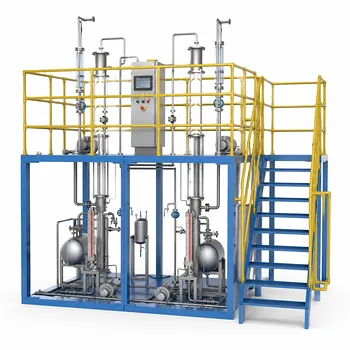
Dual-Mode Gas Absorption and Desorption Unit Operations Training Pilot Plant

Dual-Mode Gas Absorption and Desorption Unit Operations Training Pilot Plant

Industrial-scale pilot plant for gas absorption and desorption training in chemical engineering. Features dual-mode operation with real and simulated materials, transparent columns for flow visualization, and customizable design. Supports independent or combined loops for hands-on unit operations experiments.

Absorption and Desorption Educational Unit Operations Pilot Plant

Absorption and Desorption Educational Unit Operations Pilot Plant

Dual packed column absorption and desorption pilot plant for chemical engineering education, offering real-time mass transfer coefficient measurement, durable mobile frame, industrial touch-screen interface, and customizable design for varied laboratory curricula, enabling hands-on study of gas absorption and stripping.

Carbon Dioxide Hydrogenation Methanol Synthesis Educational Unit Operations Pilot Plant

Carbon Dioxide Hydrogenation Methanol Synthesis Educational Unit Operations Pilot Plant

Pilot-scale educational system for carbon dioxide hydrogenation to methanol. Designed for unit operations teaching, it features a fixed-bed reactor, three-stage heating, dual mass flow controllers, and a 15.6-inch touchscreen with data acquisition. Perfect for chemical engineering and sustainable energy courses.

Carbon Dioxide Hydrogen Methanol Synthesis Educational Unit Operations Pilot Plant

Carbon Dioxide Hydrogen Methanol Synthesis Educational Unit Operations Pilot Plant

Hands-on educational pilot plant for methanol synthesis from carbon dioxide and hydrogen. Enables practical study of high-pressure catalysis, unit operations, and process control. Features real-time data acquisition, safety systems, and customizable experiment modules for undergraduate and graduate chemical engineering laboratories.

Packed Bed Absorption Educational Unit Operations Pilot Plant

Packed Bed Absorption Educational Unit Operations Pilot Plant

Study gas-liquid absorption, pressure drop, flooding, and mass transfer coefficients with this pilot plant. Transparent packed column, industrial touchscreen, real-time sensor data, automated analysis. Investigate two-phase flow, loading points, column efficiency. Comprehensive data logging and assessment software included.

Bench Scale Dual Column Gas Separation and Capture Educational Pilot Plant

Bench Scale Dual Column Gas Separation and Capture Educational Pilot Plant

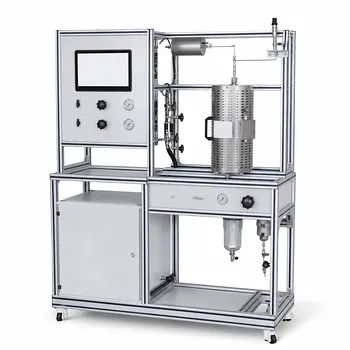
This dual-column educational pilot plant provides hands-on teaching of gas adsorption, separation, and capture processes. It features stainless steel columns, regeneration up to 400°C, and a 15.6-inch touchscreen PLC for TSA and PSA studies in chemical engineering curricula, process simulation.

Multimodal Absorption and Desorption Pilot Plant for Unit Operations Training

Multimodal Absorption and Desorption Pilot Plant for Unit Operations Training

Multimodal absorption and desorption pilot plant for higher education labs. Bridges theory and industrial practice with transparent packed columns, three operational modes (real-material, simulated, semi-physical), and SCADA control. Students explore mass transfer, column hydraulics, and process control. Customizable.

Carbon Dioxide PVT Curve Determination Educational Unit Operations Pilot Plant

Carbon Dioxide PVT Curve Determination Educational Unit Operations Pilot Plant

Enable hands-on learning of thermodynamic principles with this carbon dioxide PVT curve determination pilot plant. Students visualize critical opalescence, phase transitions, and generate P-V isotherms across liquid, gas, and supercritical regions. Robust safety features, adaptable for university engineering labs.

Carbon Material Thermal Pretreatment Multiphase Separation Educational Pilot Plant

Carbon Material Thermal Pretreatment Multiphase Separation Educational Pilot Plant

Educational pilot plant for carbon material thermal pretreatment and multiphase separation. Features jacketed agitated reactor, separation column, and modern controls for hands-on unit operations training in heat transfer, fluid flow, and process safety with industrial-grade materials and wireless data acquisition.

Multi-Component Gas Pressure Swing Adsorption Pilot Plant for Unit Operations Education

Multi-Component Gas Pressure Swing Adsorption Pilot Plant for Unit Operations Education

Multi-component gas pressure swing adsorption pilot plant designed for unit operations education. Features four-tower configuration, IoT touchscreen control, dual regeneration, and real-time breakthrough curve analysis for engineering training with safety interlocks and mobile frame simulates industrial PSA processes.

Thermal Desorption Exhaust Gas and Tail Water Treatment Educational Pilot Plant

Thermal Desorption Exhaust Gas and Tail Water Treatment Educational Pilot Plant

Bench-scale educational pilot plant for treating thermal desorption exhaust gas and tail water integrates condensation, Fenton oxidation, precipitation, filtration, and carbon adsorption. Ideal for chemical engineering and environmental labs, teaching unit operations, process control, and real-time data analysis.

Pressure Swing Adsorption Educational Unit Operations Pilot Plant

Pressure Swing Adsorption Educational Unit Operations Pilot Plant

Integrated bench-scale pressure swing adsorption pilot plant for hands-on teaching of gas-solid separation, mass transfer, and process optimization using nitrogen-oxygen model, featuring dual-column design, industrial touchscreen control, digital assessment suite, and customizable hardware and software configurations for educational laboratories.

Educational Pressure Swing Adsorption Ethylene Capture Unit Operations Pilot Plant

Educational Pressure Swing Adsorption Ethylene Capture Unit Operations Pilot Plant

Advanced educational pilot plant for pressure swing adsorption ethylene capture provides comprehensive hands-on training in industrial gas separation processes, featuring an eight-column PSA system, real-time data acquisition, and fully customizable design for chemical engineering unit operations laboratories and research.

Fixed-Bed Chemical Reaction and Gas Dust Tar Removal Unit Operations Pilot Plant

Fixed-Bed Chemical Reaction and Gas Dust Tar Removal Unit Operations Pilot Plant

Integrated educational pilot plant for studying catalytic gas-solid reactions and downstream gas purification. Features dual fixed-bed reactor, three-stage heating, and touchscreen control for hands-on engineering training. Ideal for chemical and environmental engineering curricula.

Electrolytic Hydrogen Production Educational Unit Operations Pilot Plant

Electrolytic Hydrogen Production Educational Unit Operations Pilot Plant

Bench-scale electrolytic hydrogen production pilot plant designed for university engineering labs. Provides hands-on training in water electrolysis, gas-liquid separation, and process safety. Fully customizable system with digital PID control, corrosion-resistant components, and hydrogen gas detector. Ideal for chemical engineering curricula.


Leave Your Message