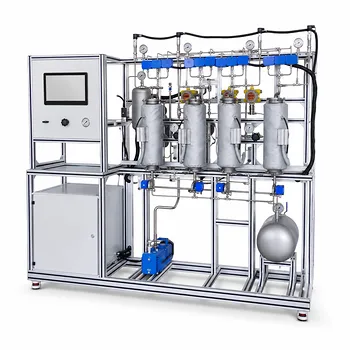
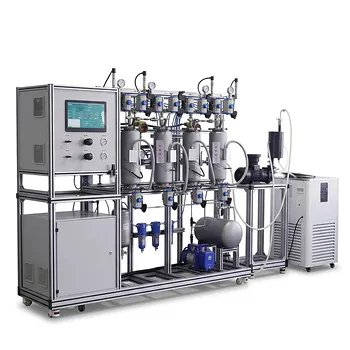
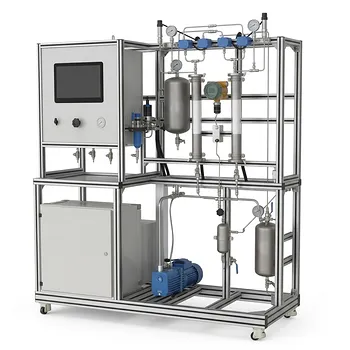
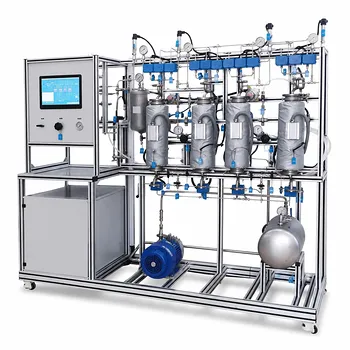
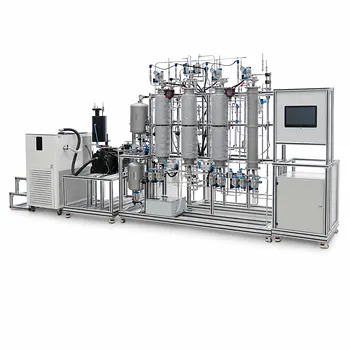
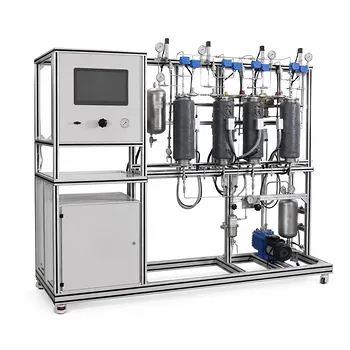
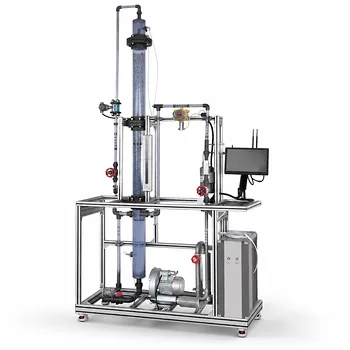
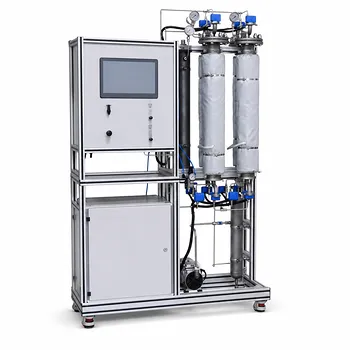
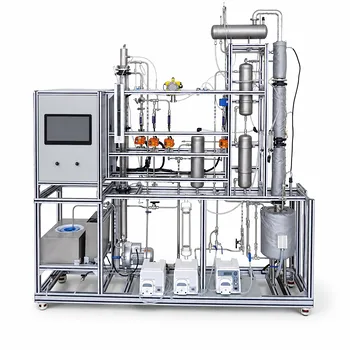
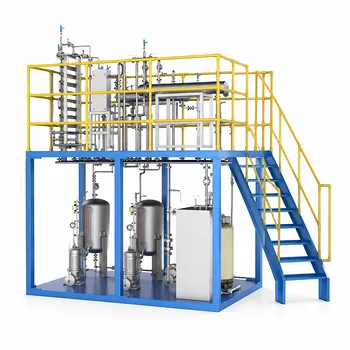
PSA cycles are defined by speed, completing in minutes, while TSA cycles are governed by thermal inertia and can take hours. In a university pilot plant, this fundamental difference means Pressure Swing Adsorption enables multiple full experimental runs in a single lab session, whereas Temperature Swing Adsorption often limits students to just one or two cycles during the same period. PSA regenerates the adsorbent by rapidly dropping pressure—a mechanism that propagates nearly instantaneously through the bed—while TSA relies on heating and cooling a gas purge, a process bottlenecked by the low thermal conductivity of solid adsorbents.
The choice between PSA and TSA for your pilot plant is not just about speed. It determines whether you teach the dynamics of pressure-driven equilibrium or the complexities of heat transfer, energy balances, and deep purification. Both are essential unit operations, but they serve fundamentally different pedagogical and research goals.
The Core Regeneration Mechanisms
How Pressure Swing Adsorption Regenerates the Bed
PSA operates under near-isothermal conditions by exploiting the pressure dependence of adsorption capacity. Adsorption occurs at elevated pressure, and when the bed is saturated, the system rapidly drops the pressure (sometimes to vacuum levels) to drive desorption.
Because pressure changes propagate at the speed of sound through the gas phase, the driving force for regeneration is applied almost instantaneously across the entire column. No external heating is required, making the process highly energy efficient for bulk separations and air drying. The fast desorption kinetics mean that even with short regeneration steps, a significant fraction of the adsorbent’s working capacity is restored.
How Temperature Swing Adsorption Regenerates the Bed
TSA capitalizes on the temperature sensitivity of adsorption equilibria. The bed is loaded at a lower temperature, then a hot purge gas is introduced to raise the solid and gas temperature, shifting the equilibrium toward desorption.
The mechanism is governed by heat transfer, not fluid dynamics. Solid adsorbents—such as activated carbon, zeolites, or silica gel—have inherently low thermal conductivity. Heating the entire bed to a target regeneration temperature (often 363 K or higher) and then cooling it back down requires a substantial time buffer. This thermal inertia means the system cannot respond quickly; the limiting step is the rate at which heat can be conducted into and out of the adsorbent particles.
Cycle Times in a Pilot Plant Context
The Speed of PSA
The primary advantage of PSA for a university lab is its rapid cycle time. Typical cycles fall within a 5- to 60-minute window, allowing a single lab group to execute multiple adsorption–desorption sequences while the data are still fresh. You can systematically vary parameters like purge flow, cycle step duration, or feed composition and collect a statistically meaningful dataset within a few hours.
This speed comes from removing the thermal bottlenecks entirely. The pilot plant does not wait for a furnace to heat up or for the bed to cool. A simple set of valves and a vacuum pump or back-pressure regulator is sufficient to swing the column’s pressure and continue the next cycle.
The Deliberate Pace of TSA
TSA cycles are measured in 60 to 200 minutes (1 to over 3 hours) for a well-designed pilot-scale column. In many configurations, the total time can stretch even longer if the bed diameter is large or the packing has poor thermal diffusivity.
The majority of that time is not adsorption, but the regeneration sequence: heating, holding at temperature, and cooling. For instance, heating a 2-inch diameter bed packed with activated carbon to a uniform 373 K can easily take 30–45 minutes, with a similar duration needed for cooling before the next adsorption step. This makes TSA less suited for high-throughput experimentation but invaluable for studying heat transfer limitations, energy consumption, and the behavior of strongly adsorbed species that resist simple pressure swings.
Educational and Research Implications
What PSA Teaches About Mass Transfer and Equilibrium
A PSA pilot plant immediately exposes students to the concept of equilibrium-driven separation. They observe how the adsorbent’s loading changes with partial pressure, and they learn to design cycle steps—pressurization, feed, blowdown, purge—to maximize productivity and recovery.
Because cycles are short, students can test the impact of parameters like purge-to-feed ratio or pressure equalization steps in a single afternoon. The near-isothermal operation simplifies energy balance calculations, allowing the pedagogical focus to remain on mass transfer zones, breakthrough curves, and the adsorptive capacity of different materials.
What TSA Reveals About Heat Transfer and Deep Purification
TSA shifts the focus from mass transfer to thermal management and energy efficiency. Students must calculate the minimum regeneration heat, account for heat loses, and evaluate the safety implications of heating a bed loaded with condensable or flammable vapors (e.g., monitoring LEL/UEL in VOC recovery).
Moreover, TSA is the method of choice when dealing with chemical adsorption or when ultralow impurity levels are required. Physical adsorption systems regenerate easily with a pressure reduction, but chemical adsorption (with adsorption heats of 80–400 kJ/mol) often demands the elevated temperatures of a TSA cycle to break chemical bonds. A TSA pilot plant thus becomes a unique platform for demonstrating irreversible adsorption/desorption kinetics, thermal runaway risks, and advanced process control.
Bridging the Gap with Physical vs. Chemical Adsorption
In an educational setting, you can further tune the learning outcome by selecting appropriate adsorbate–adsorbent pairs. For physical adsorption systems (van der Waals forces, <40 kJ/mol), a PSA unit can effectively demonstrate rapid cycling. For chemical adsorption systems, a TSA unit is not just a demonstration—it is a necessity, as regeneration requires high-temperature purges or chemical displacement. The pilot plant’s design (materials of construction, heating jackets, temperature sensors) must reflect these safety and thermal load requirements.
Understanding the Trade-offs
A TSA pilot plant can achieve deeper bed regeneration and is more tolerant of strongly adsorbed components, but it comes at the cost of longer cycle times and higher energy consumption. If your lab sessions are time-constrained, you may struggle to complete more than one full experimental cycle with TSA, limiting the number of variables you can explore.
Conversely, a PSA unit’s rapid cycling comes with its own limitations. It excels at bulk gas separations and air drying but may leave a non-negligible heel on the adsorbent if the adsorbate is too strongly held. In such cases, the purity or recovery you measure may not reflect complete regeneration, and you may need to incorporate a thermal swing (a hybrid PTSA) to truly clean the bed—adding complexity and cost.
From a research perspective, PSA pilot plants are ideal for developing and testing advanced cycle philosophies (e.g., rapid pressure swing adsorption, vacuum swing adsorption) because modifications to step timing and valving are relatively straightforward. TSA units, on the other hand, are the better foundation for studying process intensification through novel heating methods (microwave, direct electrical heating) or for life-cycle testing of adsorbents under realistic industrial regeneration conditions.
Making the Right Choice for Your Lab’s Focus
The decision ultimately hinges on which unit operation phenomena you want your students to master and which research pathways you intend to pursue.
- If your primary focus is maximum experimental throughput and demonstrating equilibrium-based separations: A PSA pilot plant allows repeated cycles per session, instant feedback on parameter changes, and a clear illustration of pressure-driven mass transfer.
- If your primary focus is exploring heat transfer limitations, thermal regeneration, or deep purification of strongly adsorbed species: A TSA pilot plant is necessary. It provides the authentic thermal management challenges seen in industry, from heating and cooling logistics to safety analysis of combustible vapors during regeneration.
- If your primary focus is studying chemical adsorption or irreversible processes: The high adsorption heats involved mandate thermal regeneration; a TSA unit is not optional but essential, and the pilot plant must be rated for the required temperatures and pressures.
Choose the configuration that aligns with the core learning objectives you want to emphasize—the mechanistic insight gained from manipulating pressure versus the profound engineering lessons of managing heat in a dynamic bed.
Summary Table:
| Parameter | Pressure Swing Adsorption (PSA) | Temperature Swing Adsorption (TSA) |
|---|---|---|
| Regeneration Mechanism | Pressure reduction (near-isothermal) | Thermal swing (heating and cooling) |
| Cycle Time | Fast (5 to 60 minutes) | Slow (60 to 200+ minutes) |
| Primary Pedagogy | Equilibrium-driven mass transfer | Heat transfer and energy management |
| Best Suited For | Bulk gas separation, high-throughput labs | Deep purification, chemical adsorption |
Ready to upgrade your laboratory curriculum? LABPARK designs and manufactures premium Educational and Vocational Unit Operations Pilot Plants in chemical engineering, bioprocess & biotech, and environmental & water treatment for universities, research institutes, and enterprises. Whether you want to teach the rapid dynamics of PSA or the complex thermal management of TSA, we provide the robust, industry-grade equipment you need to bridge theory and practice. Contact our engineering experts today to customize the perfect pilot plant configuration for your lab!
Related Products
- Carbon Dioxide Adsorption and Capture Educational Unit Operations Pilot Plant
- Multi-Component Gas Pressure Swing Adsorption Pilot Plant for Unit Operations Education
- Pressure Swing Adsorption Educational Unit Operations Pilot Plant
- Carbon Dioxide Capture and Utilization Educational Pilot Plant for Unit Operations
- Educational Pressure Swing Adsorption Ethylene Capture Unit Operations Pilot Plant
People Also Ask
- How does operating pressure influence the transition between absorption and desorption in a CO2 pilot plant?
- How do physical vs chemical adsorption impact pilot plant design? Key operational & regeneration strategies.
- How is moisture removal managed in an adsorption unit operations pilot plant? Dew Point Control Guide
- What unit operations are critical for CCUS training pilot plants? Build hands-on engineering expertise.
- How to demonstrate physical vs chemical absorption using a pilot plant? A practical lab guide.