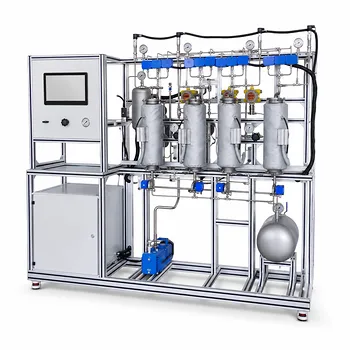
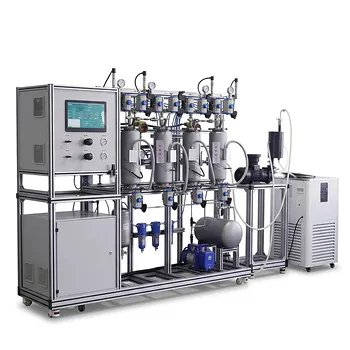
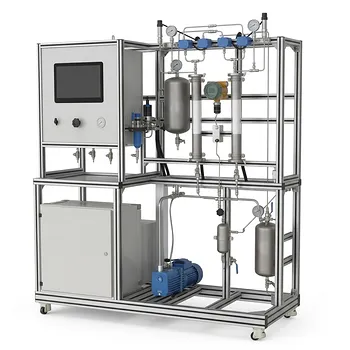
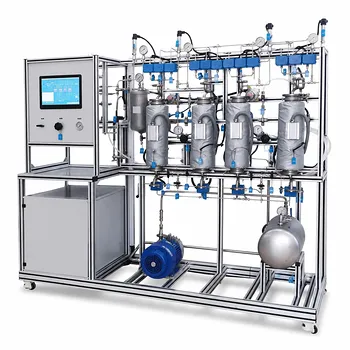
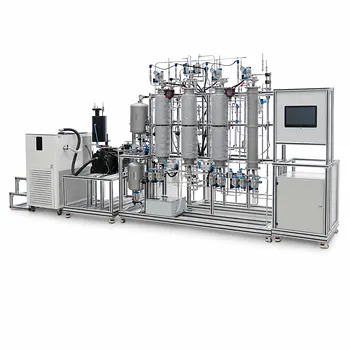
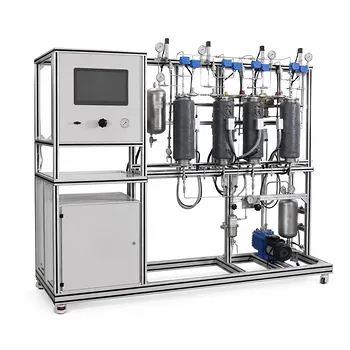
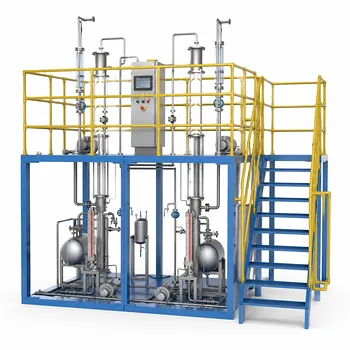
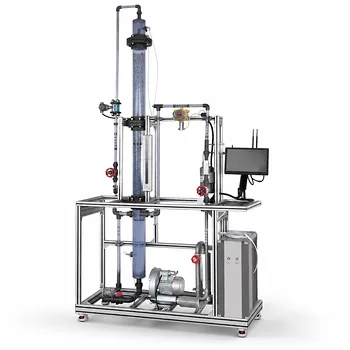
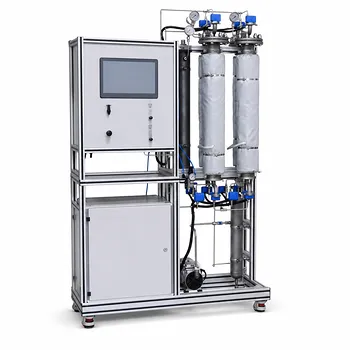
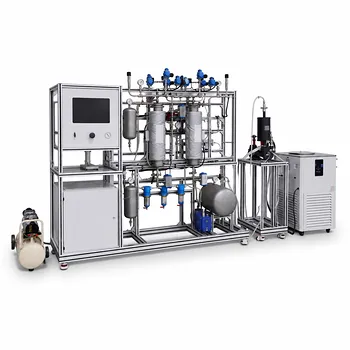
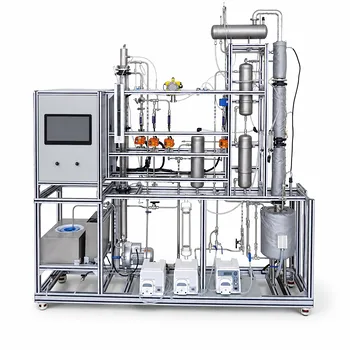
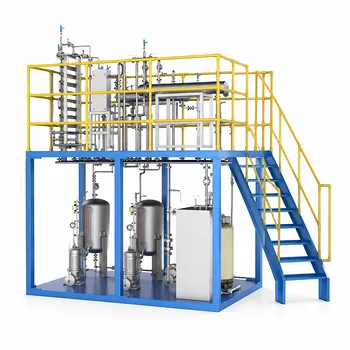
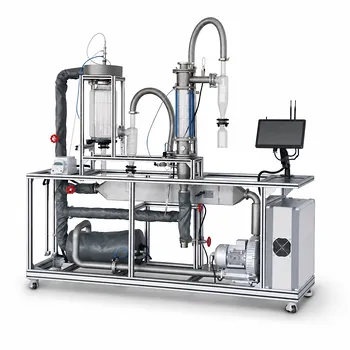
Physical adsorption, driven by weak van der Waals forces, enables regeneration of a pilot‑scale adsorber simply by lowering pressure or slightly raising temperature. Chemical adsorption, forming stronger bonds (80–400 kJ/mol) and often irreversible, demands aggressive thermal input or chemical displacement. This fundamental difference reshapes everything from cycle design and equipment materials to the control philosophy of an adsorption unit operations pilot plant.
The core lesson: physical adsorption offers fast, reversible cycles ideal for pressure‑swing or mild temperature‑swing demonstration, while chemical adsorption requires high‑temperature regeneration and robust hardware that can handle intense thermal loads, slow kinetics, and sometimes corrosive by‑products. The pilot plant’s sensors, safety systems, and even the teaching objectives must align with the chosen mechanism.
The Two Adsorption Mechanisms: Forces, Heat, and Response
Understanding the molecular‑level mechanism is the first step to linking it to plant‑scale operation.
Physical Adsorption: Weak Bonds, Easy Reversal
Physical adsorption (physisorption) relies on intermolecular van der Waals forces.
It releases less than 40 kJ/mol of heat, occurs rapidly, and can form multiple layers on the surface.
Because no chemical bond is broken, the process is fully reversible—the adsorbate can be removed by reducing its partial pressure or supplying a modest temperature increase.
Chemical Adsorption: Strong Bonds, High Selectivity
Chemical adsorption (chemisorption) involves actual chemical bonding between the adsorbate and the surface.
This generates 80–400 kJ/mol of heat, giving high selectivity but making the bond typically irreversible without a significant energy penalty.
The process often demands an activation energy, so the rate rises with temperature until equilibrium limitations take over.
That means you cannot simply “strip” the adsorbate with a slight pressure drop; you must break covalent or ionic linkages.
How the Adsorption Mechanism Drives Regeneration Strategy
The regeneration method you choose is a direct consequence of the bond strength and reversibility.
Pressure‑Swing and Mild Temperature‑Swing for Physical Systems
Because physisorbed layers are held by weak forces, pilot plants can exploit pressure‑swing adsorption (PSA) or a low‑temperature TSA.
Lowering the column pressure at the same temperature drives the equilibrium in reverse, releasing the adsorbate.
Alternatively, raising the bed temperature by only 50–80 °C (often with a hot nitrogen purge) provides enough thermal energy to overcome the small adsorption enthalpy.
This gentle regeneration keeps adsorbent life long and energy costs low, making physisorption perfect for demonstrating reversible cycles over many runs.
Aggressive Thermal or Chemical Regeneration for Chemisorbed Species
Chemisorption’s high heat of adsorption means simple depressurization is insufficient.
You must heat the bed to 200–400 °C or higher—temperatures that can sinter the adsorbent, degrade its structure, or cause unwanted side reactions if not carefully controlled.
In some cases, a chemical displacement agent (e.g., a reactive gas stream) is introduced to break the surface bond and carry away the species.
This mandates a pilot plant with high‑temperature alloy columns, ceramic insulation, and precise multi‑zone heating to avoid cold spots where regeneration stalls.
Because regeneration is slow, the cycle times are much longer than physical‑adsorption cycles, and the plant’s safety interlocks must handle high thermal inertia and potential off‑gassing of toxic or corrosive components.
Pilot Plant Design Implications: Hardware and Control
The difference in required regeneration conditions trickles down to every hardware and instrumentation decision.
Material Selection and Thermal Management
- Physical adsorption: The plant can use standard stainless‑steel vessels and simple electrical heating tapes. Thermal stress is minimal.
- Chemical adsorption: Vessels must withstand repeated thermal cycling up to 400 °C. You often need nickel‑alloy internals, refractory‑lined heaters, and expansion joints to prevent fatigue cracking. Cooling traps for the regeneration effluent must handle heavy condensates that may be corrosive.
Instrumentation and Control Requirements
Physisorption pilot plants rely on basic flow, pressure, and temperature sensors to switch between adsorption and regeneration modes.
Chemisorption systems demand high‑accuracy temperature profiling along the bed because a few degrees’ deviation can leave the adsorbent partially fouled.
You also need gas analysers (e.g., mass spectrometers or TCD‑based) at the regeneration outlet to detect when the bound species finally release—a proof of bond cleavage.
Because chemisorption rate is temperature‑sensitive, researchers can use the plant to calculate activation energy and thermodynamic parameters by systematic temperature ramping, something that is less instructive with fast physisorption.
Understanding the Trade‑offs and Common Pitfalls
Choosing one mechanism over the other—or trying to demonstrate both—carries operational challenges.
- Physical adsorption’s low selectivity can frustrate demonstrations where you want to capture a trace contaminant. You may need post‑treatment or a multi‑stage bed, complicating the pilot plant layout.
- Chemical adsorption’s high heat of reaction can cause temperature run‑away during adsorption if cooling is inadequate, especially when the feed gas concentration spikes. This may deactivate the adsorbent prematurely.
- Regeneration agent compatibility: Using steam or reactive chemicals to regenerate a chemisorption bed can corrode internals if materials were chosen only for temperature resistance.
- Cycle time disparity: When a pilot plant is used to teach both mechanisms, operators must recognize that chemisorption needs hours of heating/cooling downtime, while PSA cycles run in minutes— so scheduling and data logging must adapt.
Making the Right Choice for Your Pilot Plant Goal
The decision on which adsorption mechanism to emphasize—or how to build a dual‑capability skid—should be guided by the educational or research objectives.
- If your primary focus is demonstrating fundamental mass‑transfer and equilibrium concepts with fast, repeatable cycles: Build your plant around a physical‑adsorption system. Use a simple PSA or mild‑TSA setup, which keeps safety risks low and allows students to observe the effect of pressure and temperature on capacity.
- If your primary focus is high‑purity removal, reaction kinetics, or surface science measurements: Design for chemisorption. Invest in multi‑zone tubular furnaces, high‑temperature alloys, and precise gas‑analysis equipment. This will let students measure activation energy, enthalpy, and entropy changes directly.
- If your primary focus is comparing the two mechanisms in a single pilot plant: Modules are your ally. Equip the skid with a common gas‑handling manifold but interchangeable adsorption columns—one for PSA, one for high‑temperature regeneration. Program the control system to switch between the very different alarm and safety logic sets required for each.
- If your primary focus is bridging adsorption to industrial practice: For physical adsorption, study the effect of wet gas on adsorbent lifetime; for chemical adsorption, incorporate a solvent‑displacement regeneration loop to mimic amine‑based processes (though careful not to confuse with absorption—the contactor is a solid bed, not a liquid column).
Understanding the energetic and kinetic divide between physical and chemical adsorption turns a pilot plant from a black box into a powerful learning tool that reveals exactly why industry chooses one strategy over the other for purification, separation, or catalysis.
Summary Table:
| Feature | Physical Adsorption (Physisorption) | Chemical Adsorption (Chemisorption) |
|---|---|---|
| Bond Energy | Weak (< 40 kJ/mol) | Strong (80–400 kJ/mol) |
| Regeneration | Pressure-swing (PSA) or Mild TSA (50–80 °C) | Aggressive heating (200–400 °C+) or Chemical displacement |
| Hardware Needs | Standard stainless steel & basic heating tapes | High-temp alloys, ceramic insulation & expansion joints |
| Control Focus | Basic flow, pressure, and temperature monitoring | Multi-zone temperature profiling & gas analysis |
Optimize Your Chemical Engineering Lab with LABPARK
Are you looking to teach or research advanced separation and adsorption processes? LABPARK designs and manufactures premium Educational and Vocational Unit Operations Pilot Plants in chemical engineering, bioprocess & biotech, and environmental & water treatment.
Built specifically for universities, research institutes, and enterprises, our systems offer the thermal reliability, precise control, and structural durability required to study both physical and chemical adsorption mechanisms safely and effectively.
Contact LABPARK today to find the perfect pilot plant configuration for your laboratory!
Related Products
- Carbon Dioxide Adsorption and Capture Educational Unit Operations Pilot Plant
- Multi-Component Gas Pressure Swing Adsorption Pilot Plant for Unit Operations Education
- Pressure Swing Adsorption Educational Unit Operations Pilot Plant
- Carbon Dioxide Capture and Utilization Educational Pilot Plant for Unit Operations
- Educational Pressure Swing Adsorption Ethylene Capture Unit Operations Pilot Plant
People Also Ask
- How does operating pressure influence the transition between absorption and desorption in a CO2 pilot plant?
- How is moisture removal managed in an adsorption unit operations pilot plant? Dew Point Control Guide
- What are the key differences between PSA and TSA? Choosing the Right Adsorption Pilot Plant
- What unit operations are critical for CCUS training pilot plants? Build hands-on engineering expertise.
- How to demonstrate physical vs chemical absorption using a pilot plant? A practical lab guide.