Precise dissolved oxygen control is the linchpin of a successful recombinant E. coli fermentation. Recombinant strains carrying foreign plasmids exhibit dramatically elevated oxygen demands. Depletion or sudden fluctuations—called oxygen shock—trigger severe plasmid instability and force the cells into metabolic pathways that sabotage product yield. Modern bioreactors counter this by deploying automated cascade control loops that continuously adjust agitation speed, gas flow rate, and, when necessary, pure oxygen enrichment to lock dissolved oxygen within a tight, predefined window.
Recombinant E. coli cells pour energy into maintaining plasmids and expressing foreign genes, creating an oxygen appetite far beyond wild-type strains. The real risk isn’t just a slowdown—it’s genetic loss and metabolic rerouting that can derail an entire production run. Cascade control that orchestrates agitation, aeration, and oxygen supplementation is the proven strategy to eliminate oxygen shock and preserve both plasmid stability and high-titer yields.
Why Oxygen Demands Skyrocket in Recombinant E. coli
Engineering E. coli to produce a foreign protein transforms its physiology. The cell’s oxygen needs multiply because it must simultaneously support normal growth, plasmid replication, and the synthesis of the target product.
The Heavy Burden of Foreign Plasmids
Plasmid maintenance is metabolically expensive. Every plasmid copy the cell replicates demands energy and reducing equivalents, drastically increasing respiratory activity.
Recombinant microorganisms require significantly more oxygen for maintenance metabolism alone. This higher baseline demand leaves little room for error; even a small dip in dissolved oxygen can push the culture into a stressed state.
Oxygen as the Fuel for High-Yield Expression
Foreign gene expression shifts a large portion of the cell’s metabolic flux toward producing a protein it wouldn’t normally make. This unnatural workload requires abundant ATP, which is most efficiently generated through aerobic respiration.
If oxygen becomes limiting, the electron transport chain stalls. The cell cannot meet the energy demand for protein synthesis, causing productivity to plummet almost instantly.
The Dire Consequences of DO Fluctuations
A transient lack of oxygen is not a gentle warning—it’s a destructive event for a recombinant culture. The damage often persists long after DO levels recover.
Plasmid Instability and Genetic Drift
Oxygen shock creates a powerful selective pressure. Cells that lose their plasmid or reduce its copy number gain an immediate growth advantage because they shed the heavy metabolic burden.
Rapid depletion or sudden variations in dissolved oxygen can cause severe plasmid instability. Within a few generations, the productive plasmid-bearing population can be overrun by non-producing cells, permanently collapsing yield.
Unwanted Metabolic Shifts
When oxygen becomes scarce, E. coli switches from aerobic respiration to fermentative metabolism. This shift produces mixed acids, like acetate, that are toxic in high concentrations.
Acetate accumulation inhibits cell growth and further stresses the culture, creating a downward spiral. The metabolic rerouting not only wastes carbon source but also actively poisons the very cells that survive.
How Bioreactors Maintain a Stable Oxygen Environment
Preventing these failures demands more than manual adjustment of a valve. Modern systems rely on layered, automated control strategies that predict and preempt oxygen demand spikes.
The Cascade Control Philosophy
At its core, cascade control stacks multiple control loops in a master-slave arrangement. The primary DO controller monitors the oxygen sensor and sends a corrective output to a secondary controller—such as an agitator speed controller—rather than acting on the final element directly.
This layered approach enables a faster, smoother response. If agitation alone cannot satisfy the oxygen demand, the cascade can incrementally bring in additional aeration or oxygen enrichment, preventing overshoot and oscillation.
Agitation: The Primary Knob for Oxygen Transfer
Agitation directly increases oxygen transfer rate by breaking large gas bubbles into smaller ones, expanding the gas-liquid interfacial area. It also thins the stagnant liquid film around each bubble, reducing the resistance to oxygen diffusion.
Increasing stirrer speed is the most energy-efficient and immediate way to boost oxygen transfer. In a cascade, agitation typically ramps first because it delivers quick results while keeping gas flow low enough to avoid foaming.
Aeration and Oxygen Enrichment: Fine-Tuning the Supply
When agitation alone approaches its physical or shear-stress limits, the control system elevates gas flow rate. Higher aeration raises the overall oxygen concentration in the liquid by replacing depleted gas bubbles more frequently.
Where high airflow risks excessive foaming or when demand surpasses the capacity of air alone, the system enriches the inlet gas with pure oxygen. This strategy dramatically increases the driving force for oxygen dissolution without increasing bubble volume, sidestepping many foam-related problems.
The Role of Sensors and Controllers
An optical or polarographic dissolved oxygen probe provides the real-time feedback that makes cascade control possible. This sensor data feeds into a programmable logic controller (PLC) or distributed control system (DCS), which executes the cascade logic.
The control system repeatedly calculates the error between the measured DO and the setpoint. It then adjusts agitation speed, gas flow, or oxygen fraction in precise, predetermined steps to maintain DO within the safe range—often above 30% saturation for sensitive recombinant cultures.
Understanding the Trade-offs and Pitfalls
Bioreactor DO control is not a matter of simply cranking up all parameters. Every control action carries a potential downside that must be managed.
The Foaming Problem with High Airflow
Excessive aeration introduces a large volume of gas that can generate stable foam on the broth surface. Foam clogs exhaust filters, wets vessel internals, and can force premature termination of the run.
While antifoam agents help, over-reliance on them reduces oxygen transfer efficiency. The smarter strategy is to use high airflow only as a transient boost while agitation or oxygen enrichment catches up.
Shear Stress from Aggressive Agitation
High impeller tip speeds create hydrodynamic shear that can physically damage E. coli cells, especially those weakened by the metabolic burden of protein expression. Direct cell lysis releases proteases and nucleic acids, degrading product quality.
A cascade that prioritizes moderate agitation and supplements with oxygen enrichment often preserves both viability and DO. The trade-off is the added operational cost of supplying pure oxygen.
The Cost of Pure Oxygen Supplementation
Oxygen enrichment is highly effective but introduces recurring consumable costs and a potential safety hazard. Piping pure oxygen into a bioreactor requires strict adherence to explosion prevention protocols.
For many processes, however, the cost is far outweighed by the value of maintaining plasmid stability and reaching target yields. The decision often becomes clear when comparing the cost of oxygen against the cost of a failed batch.
Making the Right Choice for Your Process
The optimal DO control strategy depends on the specific strain, plasmid system, and production goals. A one-size-fits-all setpoint rarely works.
- If your primary focus is maximizing plasmid stability: Target a DO setpoint above 40% saturation and configure the cascade to use agitation first, then oxygen enrichment, to avoid oxygen shock during high-demand phases.
- If your primary focus is minimizing operational cost while maintaining acceptable yield: Use a cascade that primarily relies on agitation and aeration, adding oxygen enrichment only when the stirrer reaches a safe maximum RPM. Accept a slightly lower but stable DO setpoint.
- If your primary focus is rapid scale-up from bench to pilot plant: Prioritize a control strategy that mirrors production-scale capabilities—use a combination of moderate agitation and oxygen enrichment rather than extreme agitation, which becomes physically infeasible in large vessels.
- If your primary focus is process consistency for regulatory filing: Document the cascade logic precisely, define the deadbands for each loop, and qualify the DO probes to show that the control system can hold DO within a statistically proven narrow band across multiple batches.
Mastering dissolved oxygen control transforms recombinant E. coli fermentation from a gamble into a predictable, high-yield manufacturing step.
Summary Table:
| Control Method | Action Mechanism | Key Benefit | Main Trade-off / Risk |
|---|---|---|---|
| Agitation | Ramps impeller speed to break gas bubbles | Immediate, energy-efficient oxygen transfer | High shear stress can damage cells |
| Aeration | Increases overall gas flow rate | Simple, continuously refreshes oxygen supply | Can cause excessive foaming |
| O2 Enrichment | Sparges pure oxygen into the inlet gas | Maximum oxygen driving force without high volume | High consumable costs & safety risks |
Optimize Your Bioprocess Training & Research with LABPARK
Achieving precise dissolved oxygen control is the cornerstone of successful fermentation. At LABPARK, we help you bridge the gap between theory and industrial reality by providing state-of-the-art Educational and Vocational Unit Operations Pilot Plants in chemical engineering, bioprocess & biotech, and environmental & water treatment.
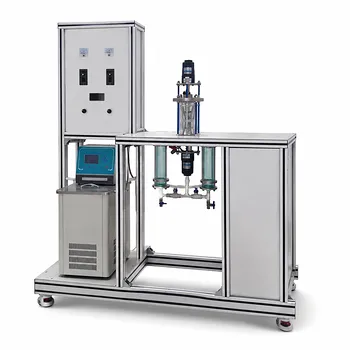
Our advanced pilot bioreactors are designed specifically for universities, research institutes, and enterprises to help students, researchers, and engineers master cascade control loops and scale up processes efficiently.
Ready to enhance your lab's capabilities and prepare the next generation of bioprocess experts? Contact LABPARK today to request a quote or discuss your custom pilot plant needs.
Related Products
- Quantitative Dosing and Liquid Flow Control Educational Unit Operations Pilot Plant
- Bio-fermentation Ethanol Production Practical Training Unit Operations Pilot Plant
- Dual-Mode Rectification Pilot Plant for Practical Training Unit Operations
- Carbon Dioxide Absorption and Desorption Educational Pilot Plant for Carbon Capture Studies
- Liquid-Liquid Mass Transfer Coefficient Determination Educational Pilot Plant
People Also Ask
- How do educational unit operations pilot plants bridge theory and design? Bridge the Engineering Gap
- How do educational unit operations pilot plants address safety and waste management when scaling up?
- How do conservation equations guide fluid flow pilot plants? Key Scale-Up Principles
- Why is the attenuation path length (lA) critical when positioning pressure sensors in a fluid flow unit operations pilot plant?
- What are the key differences in process analytics requirements from R&D to production?