Resin recovery is possible—but only if you address the root cause of fouling.
When standard sodium chloride regeneration stubbornly leaves cation exchange resin with low capacity, a straightforward brine upgrade is rarely enough. The proven reactivation path is a three‑stage reconditioning sequence: an acid strip with dilute hydrochloric acid to remove foulants, a thorough water rinse, and a final sodium chloride brine regeneration (around 10% NaCl) to return the resin to its active sodium form. This targeted chemical cleaning dissolves iron, hardness scale, and organic deposits that a salt‑only brine cannot touch, restoring breakthrough capacity to near‑original levels.
While salt brine is the foundation of softening regeneration, it cannot solubilise all accumulated foulants. When capacity drops despite optimal brine use, a controlled acid strip with dilute HCl is the definitive reactivation step—but it must be immediately followed by a properly balanced brine regeneration to re‑establish the resin’s sodium form. Mastering the interplay between foulant removal and salt‑based regeneration prevents recurring performance loss.
Why Standard Salt Regeneration Can Miss the Mark
The ion‑exchange equilibrium barrier
Regeneration of cation resin is fundamentally an equilibrium reaction. Even under ideal conditions, a large stoichiometric excess of sodium ions is required to displace the hardness ions (Ca²⁺, Mg²⁺) from exchange sites. If brine concentration is too low, contact time is too short, or the salt dosage is insufficient, capacity plummets. Practical salt efficiency curves confirm that the sweet spot for synthetic resins is around 0.5 lb NaCl per kilograin of CaCO₃ removed, typically achieved with a brine concentration near 10% NaCl.
When fouling locks out exchange sites
In real‑world water treatment, iron, manganese, aluminium, and recalcitrant organic molecules can adhere directly to resin beads. These foulants physically block ion‑exchange sites and cannot be dissolved by a standard sodium chloride brine—no matter how much salt you push through the bed. The result is progressive capacity loss that mimics under‑regeneration, misleading operators into believing the regeneration procedure is at fault.
The HCl Reconditioning Procedure: Step by Step
Step 1: Pre‑flush and safety preparation
Before introducing acid, backwash or rinse the resin column to remove loose debris and prevent channelling. Handle concentrated hydrochloric acid with full personal protective equipment, adequate ventilation, and neutralisation capability on standby.
Step 2: Dilute acid strip of contaminants
Prepare dilute hydrochloric acid (typically 2–5% HCl) and pass it gently through the resin bed at a slow, controlled flow rate—about 0.5 to 1 bed volume per hour. This allows the acid to dissolve iron oxides, carbonate scale, and organic films without damaging the resin matrix. Monitor the effluent pH and iron concentration to detect when the cleaning is complete.
Step 3: Displacement rinse
Immediately after the acid strip, rinse the bed with clean water until the effluent pH returns to neutral. This step removes all dissolved foulants and residual acid, preventing interference with the subsequent brine regeneration.
Step 4: Sodium form conversion with brine
Regenerate the now‑clean resin with a sodium chloride solution, targeting a concentration of 10–10.4% NaCl. The brine should be applied at a rate that allows sufficient contact time, aiming for the optimal salt dosage of approximately 0.5 lb NaCl per kilograin of capacity. This converts the resin from its hydrogen (post‑acid) form back to the active sodium form.
Step 5: Final rinse and return to service
Rinse the resin bed with clean water to flush out excess brine until the treated water meets the required hardness or conductivity specifications. The unit is then ready to be placed back into softening service.
Optimising Brine Regeneration to Prevent Future Decline
Finding the salt efficiency sweet spot
Even after acid reconditioning, daily operation must honour the economics of brine strength. Industrial data and pilot‑plant experiments show that 10% brine at a modest salt dosage delivers the highest softening capacity per pound of salt consumed. Over‑salting wastes chemicals and money, while under‑salting chronically under‑regenerates the bed. If your facility operates a pilot plant, use it to plot salt efficiency curves—comparing salt dosage to delivered softening capacity—to pin down your system’s optimum operating point.
Preventive monitoring and pre‑treatment
Regularly test a resin sample for iron and organic content so you can schedule acid cleanings before capacity drops drastically. Install a dedicated iron removal filter upstream if influent iron levels consistently exceed 0.3 mg/L. This simple pretreatment dramatically extends resin life and reduces the frequency of acid stripping.
Understanding the Trade‑offs of Acid Reconditioning
Resin compatibility and structural stress
Strong‑acid cation resins (sulfonated polystyrene‑based) generally tolerate dilute HCl well, but repeated high‑concentration acid cycles weaken bead integrity over time. Stick to dilute acid (≤ 5 % HCl) and limit the cleaning frequency to what proactive monitoring dictates. Always confirm your resin’s acid resistance rating with the manufacturer.
Safety, environmental, and handling costs
Hydrochloric acid is corrosive. Every acid reconditioning event demands rigorous safety protocols, proper containment, and neutralisation of waste streams before discharge. Both the direct chemical cost and the required downtime can be significant, making acid cleaning a calculated decision, not a routine fix.
Risk of incomplete sodium conversion
If the rinse after the acid strip is not thorough, residual acidity may inhibit the brine regeneration, leaving some exchange sites in the hydrogen form. This can cause temporary, low‑pH service water and a secondary capacity dip. Meticulous rinsing and pH verification are essential to avoid this pitfall.
Making the Right Choice for Your Facility
The decision to use acid reconditioning should flow directly from a clear diagnosis of the capacity loss.
- If your primary focus is restoring a severely fouled resin: Execute the full HCl reconditioning procedure followed by optimised brine regeneration; take a resin sample first to confirm iron or organic fouling as the root cause.
- If your primary focus is improving capacity without using acid: First verify that your standard regeneration already hits the 10% brine, 0.5 lb NaCl/kilograin sweet spot and that contact time is adequate—many apparent “fouling” cases are actually under‑regeneration.
- If your primary focus is operational safety and compliance: Ensure you have proper acid handling equipment, neutralisation capacity, and that your resin is rated for acid exposure; consider contracting a specialist service for the initial cleaning to benchmark the process.
- If your primary focus is long‑term resin health: Invest in upstream iron filtration, schedule periodic low‑concentration acid cleanings based on performance monitoring, and routinely plot salt efficiency curves to catch efficiency drift early.
By pairing a strategic acid strip with a precisely tuned brine regeneration, you can turn a failing softener into a reliable, high‑capacity unit that serves your process for years.
Summary Table:
| Step | Action | Key Parameters & Purpose |
|---|---|---|
| 1. Pre-flush | Backwash | Remove loose debris and prevent channeling. |
| 2. Acid Strip | Dilute HCl (2–5%) | Apply at 0.5–1 BV/h to dissolve iron, scale, and organic foulants. |
| 3. Rinse | Displacement | Flush with clean water until effluent pH returns to neutral. |
| 4. Brine Regen | 10–10.4% NaCl | Apply ~0.5 lb NaCl per kilograin of CaCO₃ to restore sodium form. |
| 5. Final Rinse | Rinse to Service | Flush excess brine until hardness and conductivity meet specs. |
Optimize Your Water Treatment & Environmental Unit Operations
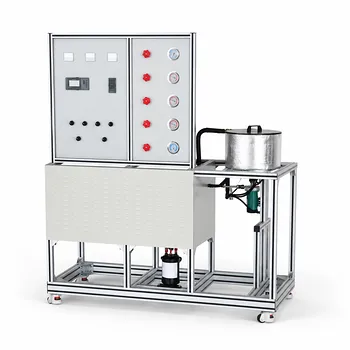
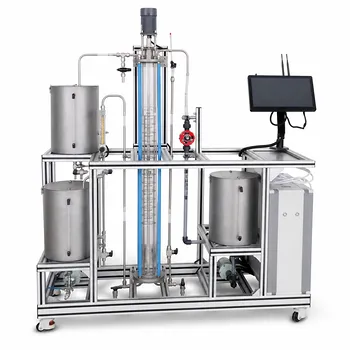
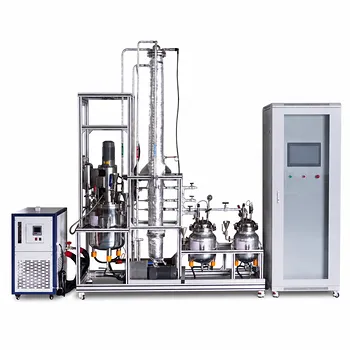
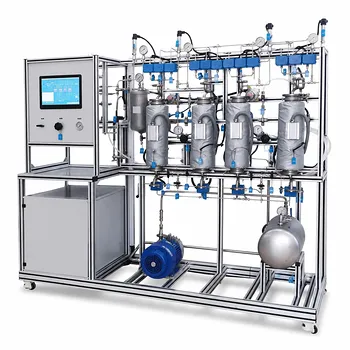
Are you looking to enhance hands-on learning or optimize your environmental engineering processes? LABPARK provides state-of-the-art Educational and Vocational Unit Operations Pilot Plants in chemical engineering, bioprocess & biotech, and environmental & water treatment.
Designed specifically for universities, research institutes, and enterprises, our pilot systems allow you to simulate, test, and master critical processes like ion exchange, filtration, and chemical dosing.
Contact LABPARK today to discover how our advanced pilot plants can elevate your research, training, and operational efficiency!
Related Products
- Ion Exchange Water Purification Educational Pilot Plant for Engineering Unit Operations
- Multi Functional Catalytic Reaction and Reactor Evaluation Educational Unit Operations Pilot Plant
- Residence Time Distribution and Reactor Flow Characteristics Determination Educational Pilot Plant
- Multi-Stage Stirred Tanks in Series Residence Time Distribution and Mixing Performance Determination Educational Pilot Plant
- Electrolyte Distillation Purification and Formulation Educational Pilot Plant
People Also Ask
- How to Prevent Ion Exchange Channeling? Expert Solutions for Pilot Plants
- What operational precautions should lab operators take for resin volume changes and air pockets? Key Guide
- How does ion exchange work in water treatment pilot plants? Cost & process guide.
- How to use ion exchange pilot plants to verify alkalinity? A hands-on guide for engineering students.
- Why does iron degrade cation resin & how to demonstrate capacity recovery? Step-by-Step Lab Guide