Salt-laden reaction mixtures are a hidden time bomb for your gas chromatograph. The immediate operational precaution when analyzing such samples from a pilot plant is to never inject them directly. Before any run, you must quench or neutralize the reaction mixture to convert charged, nonvolatile salt species into neutral, volatile compounds. This single step prevents injector plugging, eliminates false negatives from non-eluting analytes, and avoids the costly downtime required to clean a fouled system. Additionally, all standard GC operational protocols—proper carrier gas management, temperature control, and detector care—must be rigorously followed to safeguard instrument longevity.
The central rule for GC analysis of salt-containing streams is simple: no nonvolatile, charged material may enter the column. Accomplish this by chemically quenching the sample before injection, while simultaneously adhering to strict startup, shutdown, and thermal management practices to protect the entire system.
Why Salts Cripple Gas Chromatography Systems
Understanding the root cause is the first step to prevention. The damage is mechanical, chemical, and analytical—all stemming from the nonvolatile, charged nature of salts.
How Nonvolatile Particles Destroy Injector Performance
The GC inlet is designed for volatile liquids or gases, not dissolved solids. When a salty sample is injected, the solvent flashes off inside the hot vaporization chamber (typically ~280°C), leaving behind solid salt deposits. These deposits accumulate rapidly, narrowing the injector liner or completely blocking the split outlet.
The Invisible Threat: Charged Species Never Reach the Detector
Even if a salt particle could physically pass, its ionic form is fundamentally incompatible with gas chromatography. Charged species like carboxylate salts have negligible vapor pressure. They will not partition into the gas phase, meaning they will never be swept onto the column and will remain as stubborn residue at the injection point. The result is a blank chromatogram for target analytes that exist as salts.
A Direct Hit on Pilot Plant Productivity
In a pilot plant, each sample represents a precise snapshot of reaction kinetics. Injector plugging leads to skewed peak areas, inconsistent retention times, and eventual instrument shutdown. This erodes the data integrity needed for process scale-up decisions and forces engineers to waste time on unplanned maintenance.
The Critical Precursor: Transforming Salts Before Injection
The primary reference is clear: you must quench or neutralize the reaction mixture. This in‑situ chemical workup is not optional—it is the only way to make the sample GC‑ready.
What Quenching or Neutralization Achieves
The goal is to protonate anionic salts or deprotonate cationic salts, forming a neutral conjugate acid or base that is volatile. For example, neutralizing a sodium carboxylate salt with a drop of dilute acid liberates the free carboxylic acid, which will readily vaporize. The reaction converts a “chromatographic ghost” into a well-defined, detectable peak.
Practical Execution in the Pilot Plant Lab
- Sample Withdrawal: Pipette a small aliquot of the reaction slurry or solution.
- Reagent Addition: Add a stoichiometric excess of a volatile acid (e.g., hydrochloric acid) or base (e.g., ammonium hydroxide) depending on the salt. The reagent itself should not interfere with the detection method.
- Vortex and Let Settle: Ensure complete reaction. A micro‑extraction with a volatile organic solvent can help separate the neutralized organic product from any precipitated inorganic salts.
- Supernatant Injection: Inject only the clear, neutral‑species‑rich upper layer. The inorganic salt precipitate (e.g., NaCl) remains in the aqueous phase and is discarded.
Fortifying the Workflow: General Operational Precautions
While sample preparation solves the salt problem, the high‑temperature, sensitive nature of GC demands a disciplined operating ritual. The supplementary references highlight non‑negotiable habits that protect your column and detectors during every pilot plant run.
Startup Protocol: The Carrier Gas Comes First
Always turn on the carrier gas and verify flow before applying heat to the oven, inlet, or detectors. Hot stationary phases oxidize irreversibly without the protective blanket of an inert gas. Electronic Pressure Control (EPC) systems make this reliable, but the sequence must become muscle memory.
Shutdown Discipline: Cool Before You Cut the Gas
After the final run, reverse the startup sequence. Turn off all heating zones and wait until both the injection port and detector have cooled to safe thresholds—below 100°C for an FID and around 50°C for a TCD. Only then can you shut off the carrier gas. For TCDs, an additional step is critical: return the bridge current to zero before powering down the instrument, or the filament will burn out in seconds.
Temperature Control for Thermally Fragile Analytes
Pilot plants often contain heat‑sensitive intermediates. Even if a compound is neutral, a standard 280°C inlet can cause decomposition before the column separates it. Use a programmed temperature vaporization (PTV) inlet or a simple cool on‑column injection technique whenever thermal degradation is suspected. The oven temperature program should start low enough to prevent flash pyrolysis.
Detector‑Specific Vigilance
- FID: This detector is robust but its jet can clog with silica particles from column bleed or salt residues. Regular cleaning and hydrogen/air flow checks are essential.
- TCD: Treat the filament delicately. Never apply bridge current without carrier flow, and avoid oxygen ingress that corrodes the hot wire. These precautions directly prevent catastrophic failure.
Understanding the Trade‑offs
The quench‑and‑inject approach is powerful but not free of pitfalls. Acknowledging them upfront protects your data from misinterpretation.
The Risk of Incomplete Quenching
If the pH adjustment is insufficient, ion pairs or residual salts may still enter the inlet as fine aerosols. Over time, even trace salt will coat the liner and degrade performance. Always validate the neutralization efficiency by spiking a known salt‑form standard and confirming its disappearance from the chromatogram.
Reagent Interference and Side Reactions
The acid or base you add becomes part of the sample matrix. It can produce ghost peaks, catalyze unwanted reactions, or fog the FID if a non‑volatile counterion is present. Choose reagents like acetic acid or trimethylammonium hydroxide that volatilize cleanly. A blank run with the quenching reagent alone helps rule out artifacts.
When Derivatization is the Better Path
For some molecules, neutralization alone may still yield a compound with borderline volatility or poor thermal stability. In those cases, a dedicated derivatization step—such as silylation or methylation—creates a reliably volatile, thermally stable derivative. This adds a preparation step but can be the only way to obtain a sharp, reproducible peak for molecules like amino acids or highly polar alcohols present as salts.
Making the Right Choice for Your Pilot Plant Analysis
Your operational precaution strategy should map directly to your process monitoring goal. Use the following decision guide to prioritize actions.
- If your primary focus is preventing unplanned maintenance: Mandate a quench or neutralization step for every salt‑containing sample, no exceptions, and strictly follow the cool‑down‑before‑gas‑off shutdown procedure.
- If your primary focus is quantitative accuracy of volatile products: Validate that the quenching reagent does not produce interfering peaks at your detection limits, and use an internal standard to correct for volume changes during workup.
- If your primary focus is monitoring thermally sensitive intermediates: Pair the neutralization step with a PTV inlet or cool on‑column injection and a gentle oven ramp to avoid pyrolysis, even if it extends run time.
- If your primary focus is a rapid at‑line check for conversion: Consider a simple liquid‑liquid back‑extraction after quenching, then inject the organic phase directly; this provides a semiquantitative screen with minimal risk to the GC.
Treating the GC as a sensitive instrument that rewards clean, properly conditioned samples will transform it from a maintenance bottleneck into a reliable, insightful partner for your pilot‑scale development.
Summary Table:
| Operational Phase | Key Risk / Threat | Mitigation & Precaution |
|---|---|---|
| Sample Prep | Injector plugging & ghost peaks | Quench/neutralize salts to form volatile species before injection |
| System Startup | Column phase oxidation | Turn on carrier gas and verify flow before heating zones |
| System Shutdown | TCD filament burnout & oxidation | Cool inlet (<100°C) and detector before stopping carrier gas |
| Thermal Analysis | Analyte decomposition | Use PTV or cool on-column injection for fragile intermediates |
Elevate Your Pilot Plant Performance with LABPARK
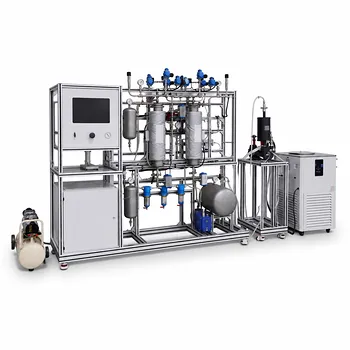
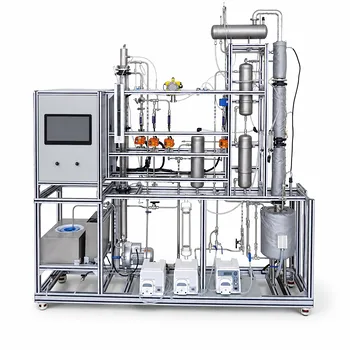
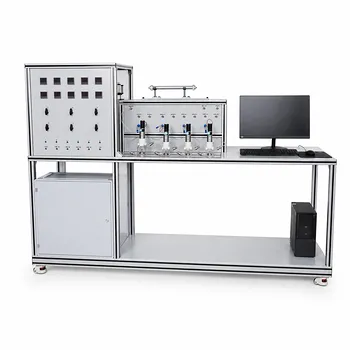
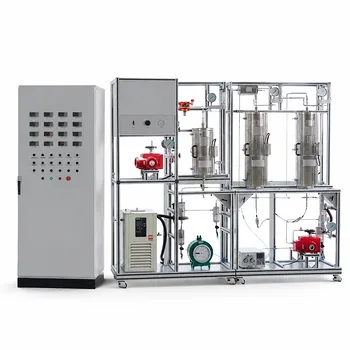
Running chemical engineering, bioprocess, or water treatment processes demands precise analytical workflows and reliable equipment. LABPARK provides premium Educational and Vocational Unit Operations Pilot Plants for universities, research institutes, and enterprises.
Our systems are designed to help you scale up safely, maintain data integrity, and prevent costly analytical downtime.
Ready to optimize your pilot plant operations? Contact our experts at LABPARK today for customized solutions!
Related Products
- Bench Scale Dual Column Gas Separation and Capture Educational Pilot Plant
- Carbon Dioxide Absorption and Desorption Educational Pilot Plant for Carbon Capture Studies
- Gas Phase Mixing and Residence Time Distribution Determination Educational Unit Operations Pilot Plant
- 100L Continuous Loop Hydrogenation Educational Unit Operations Pilot Plant
- Dual-Mode Gas Absorption and Desorption Unit Operations Training Pilot Plant
People Also Ask
- What are the key thermodynamic considerations for gas mixture modeling? Expert Guide
- How does the separation mechanism of gas permeation differ from liquid membrane processes? Pilot Plant Guide
- Why is Graham's Law critical for gas separation in pilot plants? Master Unit Operations Design
- Why Are Binary Interaction Parameters Critical for Gas Separation Pilot Plants? Avoid Costly Failures
- Which membrane materials are commonly used in gas separation pilot plants, and how is membrane fouling typically managed?