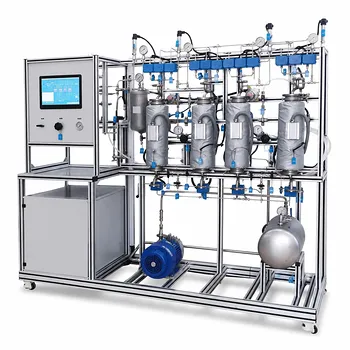
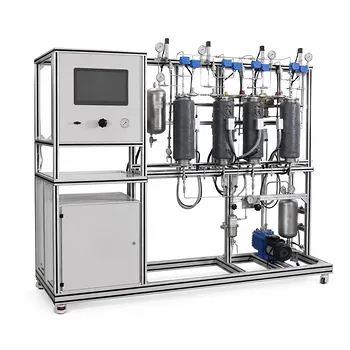
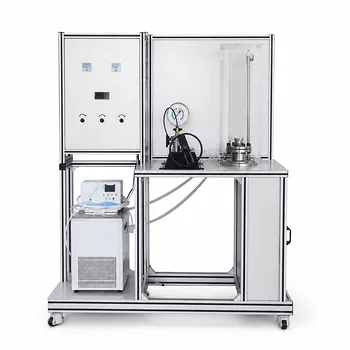
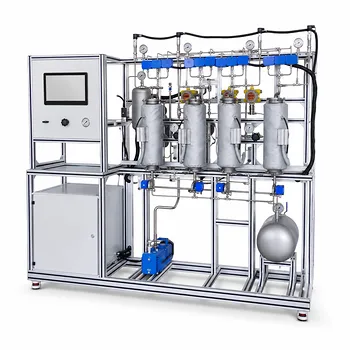
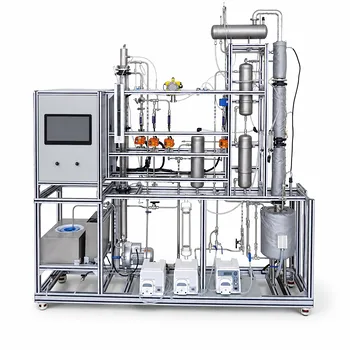
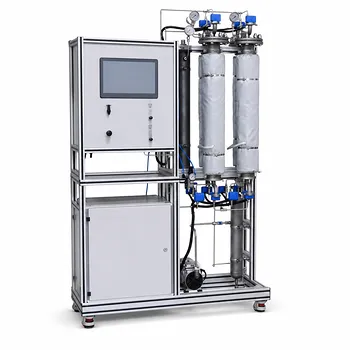
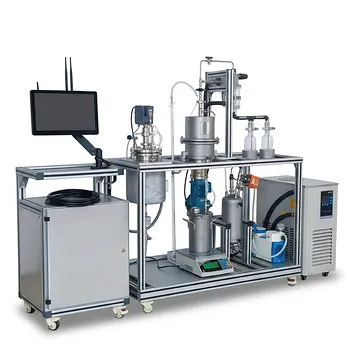
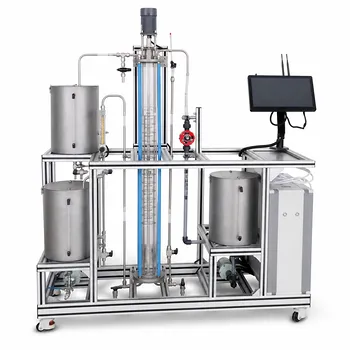
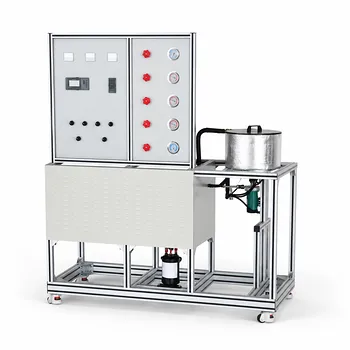
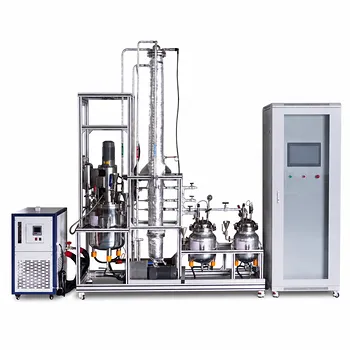
Solvent selection is a defining factor in the safety, efficiency, and environmental footprint of any extraction pilot plant. Supercritical carbon dioxide (scCO₂) extraction delivers decisive operational advantages over traditional organic solvents—chiefly through faster mass transfer, lower operating temperatures, and instantaneous solvent removal by depressurization. From a safety perspective, CO₂ is non‑toxic and non‑flammable, eliminating the health risks, complex recovery systems, and solvent residues inherent to chlorinated solvents like dichloromethane.
While organic solvents demand extensive downstream purification to manage toxicity and residue risks, supercritical CO₂ turns the extraction process into a tunable, self‑cleaning unit operation. In the pilot‑plant environment, where student safety and green chemistry demonstration are paramount, scCO₂ transforms extraction from a hazardous purification challenge into an inherently safe and highly efficient teaching tool.
The Operational Leap: How Supercritical CO₂ Re‑engineers Extraction
Supercritical CO₂ behaves as a hybrid fluid—it couples the high density and dissolving power of a liquid with the low viscosity and high diffusivity of a gas. This unique character directly translates into measurable operational gains in a pilot plant.
Rapid Mass Transfer and Reduced Cycle Times
High diffusivity and low viscosity allow scCO₂ to penetrate solid matrices far more quickly than liquid organic solvents. Extraction equilibrium is reached faster, shortening batch times and enabling higher throughput in a teaching or research setting.
In practice, this means a decaffeination or essential‑oil run that might take hours with dichloromethane can often be completed in tens of minutes with scCO₂. Students see process intensification in real time, bridging theory on mass transfer and Fick’s law with hands‑on results.
Low‑Temperature Extraction Protects Thermally Sensitive Compounds
The critical temperature of CO₂ is just 31.1 °C, barely above ambient. Extraction can therefore be conducted at near‑room temperature, preserving heat‑sensitive bioactives—vitamins, antibiotics, delicate aroma molecules—that would degrade under the boiling‑point temperatures needed to recover many organic solvents.
For bioprocess and pharmaceutical pilot plants, this low‑temperature capability is not a luxury; it is a prerequisite for investigating natural products without thermally distorting their active profile. It keeps the chemical identity of the extract intact for downstream characterization.
Solvent Removal Becomes Instantaneous—and Complete
With traditional solvents, residual dichloromethane or hexane must be stripped by evaporation or distillation, adding energy, time, and the risk of residual contamination. In supercritical CO₂ extraction, reducing the pressure returns the solvent to a gas that vents away completely.
The extract drops out cleanly, with zero solvent residue. This eliminates an entire purification unit operation, reduces energy consumption, and dramatically simplifies process scale‑up studies by removing the solvent‑recovery bottleneck.
Redefining Safety and Environmental Responsibility
Safety in a pilot plant is non‑negotiable, especially when student operators are involved. The shift to scCO₂ eliminates several categorical hazards tied to organic solvents.
Eliminating Toxicity from the Lab Floor
Chlorinated and other volatile organic solvents are known carcinogens, neurotoxins, or irritants. By replacing them with non‑toxic CO₂, the pilot plant removes chronic exposure risks and the need for expensive fume‑hood arrays and personal protective equipment.
A spill of liquid CO₂—unlike a dichloromethane spill—simply vents as inert gas, leaving no hazardous cleanup or exposure event. This changes the fundamental risk profile of the laboratory, permitting a wider range of operators and more flexible scheduling.
Inherently Non‑Flammable Operation
CO₂ is not only non‑toxic; it is non‑flammable. It requires no explosion‑proof equipment, specialized electrical fittings, or inert‑gas blanketing of storage areas. This contrasts sharply with hexane, acetone, or ethanol extractions, where a single ignition source can lead to catastrophe.
For universities and research institutes, this safety simplicity lowers facility construction costs and allows a greater focus on process investigation rather than hazard mitigation.
Zero Hazardous Air Pollutants and Minimal Waste
Using scCO₂ can cut volatile organic compound (VOC) emissions by 60 % to 80 % compared to conventional solvent extraction. There is no spent solvent requiring costly disposal, incineration, or complex recovery distillation.
The solvent—CO₂—is recycled in a closed loop, or if vented, simply returns to the atmosphere from whence it was drawn. This aligns perfectly with the principles of green chemistry, letting pilot plants demonstrate circular, waste‑minimized processing at an educational scale.
Understanding the Trade‑offs
No extraction technology is a universal panacea. A trusted advisor must lay bare the limitations alongside the strengths.
The High‑Pressure Investment
Supercritical CO₂ requires reliable pressure vessels, high‑pressure pumps, and precise back‑pressure regulators to maintain conditions above 7.38 MPa. The capital cost of an SFE system is higher than a simple Soxhlet or batch stirred‑tank extractor.
However, this investment is often offset by eliminating solvent recovery stills, explosion‑proof infrastructure, and hazardous waste disposal contracts over the pilot plant’s operating life.
Solubility Limitations for Polar Compounds
Pure scCO₂ is non‑polar and excels at extracting lipids, waxes, and non‑polar small molecules. It is a poor solvent for highly polar analytes, alkaloid salts, or many inorganic species unless a co‑solvent (e.g., ethanol) is added in small, controlled amounts.
This is a solvation chemistry constraint, not a safety one, but it means pilot‑plant curricula must teach co‑solvent selection and the subtle change in selectivitiy, rather than presenting scCO₂ as a universal solvent.
Operational Complexity and Training Needs
Running a supercritical fluid extraction unit requires understanding phase behavior, pressure‑temperature diagrams, and the interaction of thermodynamic variables. While this is an educational goldmine, it also demands more thorough training than a simple solvent shake‑out.
Pilot plants must invest in structured learning modules, interlocks, and safety protocols specific to high‑pressure equipment. When done right, this complexity becomes the very value of the unit—teaching core chemical engineering principles in one compact skid.
Making the Right Choice for Your Pilot Plant
Your choice of extraction technology should map directly to your primary educational or research mission. Consider the following goal‑driven guidance.
- If your primary focus is student safety and green chemistry demonstration: Supercritical CO₂ is the superior choice. It eliminates toxic and flammable solvent risks while making the elimination of waste a visible, measurable part of every experiment.
- If your primary focus is extracting heat‑labile, high‑value bioactives: scCO₂’s low‑temperature operation preserves product integrity and provides a solvent‑free extract that requires no downstream polishing—saving time and protecting compound identity.
- If your primary focus is teaching the core principles of mass transfer and phase equilibrium: An SFE pilot plant becomes a single‑platform laboratory for pressure, temperature, and co‑solvent effects, letting students tune a real thermodynamic system and instantly see the yield and selectivity impacts.
- If your primary focus is minimizing long‑term operating costs and VOC liabilities: The elimination of solvent purchase, recovery, and hazardous disposal costs gives supercritical CO₂ a compelling total‑cost‑of‑ownership advantage, despite higher initial capital.
The decision to adopt supercritical CO₂ extraction is a choice to embed safety, sustainability, and deep thermodynamic insight into the heart of your pilot‑plant curriculum—turning a routine unit operation into a flagship demonstration of modern chemical engineering.
Summary Table:
| Feature | Supercritical CO2 (CO2-SCF) | Organic Solvents (e.g., Hexane, DCM) |
|---|---|---|
| Safety & Flammability | Non-toxic, non-flammable | Highly toxic, volatile, flammable |
| Solvent Residue | Zero residue (vents completely) | Requires downstream purification |
| Mass Transfer Speed | Rapid diffusivity, faster extraction | Slower mass transfer, longer batch times |
| Operating Temp | Low-temperature (ambient, ~31.1°C) | High boiling temperatures required |
| Environmental Impact | Eco-friendly, closed-loop recycling | High VOC emissions, hazardous disposal |
Bring Green Engineering & Advanced Unit Operations to Your Facility
Enhance your training and research capabilities with state-of-the-art pilot plants. LABPARK provides advanced Educational and Vocational Unit Operations Pilot Plants in chemical engineering, bioprocess & biotech, and environmental & water treatment. Designed specifically for universities, research institutes, and enterprises, our systems ensure safe, hands-on, and industry-relevant learning experiences.
Ready to upgrade your lab? Contact LABPARK today to discuss your customized pilot plant solution!
Related Products
- Carbon Dioxide Capture and Utilization Educational Pilot Plant for Unit Operations
- Bench Scale Carbon Dioxide Capture Educational Unit Operations Pilot Plant
- Carbon Dioxide PVT Curve Determination Educational Unit Operations Pilot Plant
- Carbon Dioxide Adsorption and Capture Educational Unit Operations Pilot Plant
- Carbon Dioxide Absorption and Desorption Educational Pilot Plant for Carbon Capture Studies
People Also Ask
- What are the differences between post- and pre-combustion carbon capture training pilot plants?
- How can pilot plants show tail gas vs flue gas CO2 capture differences? Key educational insights.
- What unit operations are critical for CCUS training pilot plants? Build hands-on engineering expertise.
- How do temperature variations affect CO2 transport models in pilot plants? Model vs Reality
- How does operating pressure influence the transition between absorption and desorption in a CO2 pilot plant?