Tin and titanium are silent saboteurs in silica gravimetry.
When phosphoric acid is part of the dissolution step, these impurities react to form stannic and titanic phosphates. The phosphates remain intact during the first ignition, but they shed variable amounts of phosphoric acid in any subsequent heating. That erratic weight loss gets wrongly counted as silica, yielding consistently inflated results.
The interference is a phosphate‑driven artifact: tin and titanium create stable phosphate complexes that mimic silica’s thermal behavior during a single ignition, then decompose unpredictably in later treatments. Without phosphoric acid, the problem simply does not exist — and elements like barium, manganese, or silver pose no comparable threat under standard washing protocols.
The Chemistry That Hides Inside Your Crucible
Why Phosphoric Acid Opens the Door
Industrial scale deposits often contain stubborn oxides. To break them down, many dissolution procedures turn to hot phosphoric acid. This aggressive medium dissolves silica, tin, titanium, and almost everything else, but it also plants the seed for the interference you see later.
How Tin and Titanium Seize the Phosphate
In that acidic phosphate soup, Sn⁴⁺ and Ti⁴⁺ ions eagerly combine with phosphate groups. They precipitate or co‑precipitate as stannic phosphate and titanic phosphate. These compounds are not gelatinous like silica; they are microcrystalline solids that collect alongside any silica residue during filtration and dehydration.
The First Ignition Lulls You Into a False Sense of Security
When you fire the collected residue at high temperature (typically 1000 °C), silica remains as SiO₂. Crucially, the stannic and titanic phosphates also appear stable. They do not decompose or lose significant mass at this stage. The weight you record seems legitimate — it matches the “silica plus inert residue” expectation.
The Second Ignition Betrays the Deception
The standard gravimetric silica method demands a repetition: ignite, cool, weigh, then re‑ignite to constant weight. It is during this second (or third) firing that the phosphate deception unravels. Stannic and titanic phosphates begin to lose indefinite amounts of phosphoric acid. Some phosphate groups volatilize or rearrange, leaving behind lower‑mass phosphate species. Because the loss is not stoichiometrically fixed, the weight drop can be small or large, and it seldom correlates neatly with the original tin‑titanium content. Every milligram of lost phosphate gets misinterpreted as silica that was “not yet constant,” driving the reported silica upward.
Why Other Metals Don’t Join the Conspiracy
Barium, manganese, and silver are regularly present in deposit samples. Barium sulfate stays stubbornly unchanged under ignition. Manganese oxides are well‑behaved and don’t form interfering phosphates under these conditions. Silver chloride residues, if not washed properly, can cause a separate problem, but a simple ammonia wash dissolves them away. None of these three metals engage in the phosphate‑loss charade that defines the tin‑titanium interference.
Spotting the Interference in Your Lab Data
Symptoms of a Phosphate‑Drifted Silica Result
- Never‑ending constant‑weight cycle: You re‑ignite the residue again and again, but the mass keeps creeping downward.
- Unexpectedly high silica relative to known deposit composition: A boiler scale that should be mostly calcium carbonate suddenly shows 15 % SiO₂, while other elements don’t add up.
- A ‘step change’ in weight after the second ignition when tin or titanium are known constituents.
Separating Phosphate Deceit from Simple Hydration Drift
Genuine silica residues often pick up moisture between firings, causing small positive drifts. The tin‑titanium interference always produces a mass loss on re‑ignition, not a gain. So if your balance readings drop monotonically after each heating, suspect phosphate volatilization, not water adsorption.
Understanding the Trade‑offs
Phosphoric Acid: Dissolving Power at a Price
Many deposit-dissolution protocols deliberately include phosphoric acid because it chews through refractory materials that nitric or hydrochloric acids alone cannot. The trade‑off is stark: you get a complete dissolution but introduce a pathway for tin‑titanium‑phosphate interference. If your samples are free of Sn and Ti, the risk is purely theoretical.
When You Cannot Escape Phosphoric Acid
Some laboratory exercises are designed to mimic legacy industrial methods; the procedure is fixed and so is the acid matrix. In those cases, ignoring the interference is poor science — you must at least flag the potential bias. Without a corrective step, your silica number is a maximum possible value, not a reliable true value.
The Pitfall of Trying to “Burn Off” the Phosphate
One instinct is to ignite the residue longer or hotter to drive off all phosphate. This rarely works. Stannic and titanic phosphates can decompose over a wide temperature range, and silica itself can volatilize or react with other oxides at extreme temperatures, creating new errors. Chasing constant weight by brute force both degrades accuracy and wastes laboratory time.
Making the Right Choice for Your Analytical Goal
The interference is avoidable, manageable, or at least measurable — depending on the constraints you face.
- If your primary focus is obtaining a true silica value and you have flexibility: Replace phosphoric‑acid‑rich dissolution mixtures with alternative acid blends (e.g., nitric‑hydrochloric plus a small HF dose if permitted). Without phosphate, tin and titanium remain chemically innocent during gravimetric ignition.
- If the procedure is locked and tin or titanium are expected: Perform a complementary analysis (such as ICP‑OES or X‑ray fluorescence) specifically on the ignited residue to determine how much Sn and Ti are present, then correct the silica result with a phosphate‑loss model — or treat the gravimetric result as a semi‑quantitative upper limit.
- If you must stay entirely within the gravimetric method and phosphoric acid is non‑negotiable: Spike a blank dissolution with known masses of tin and titanium and carry it through the full procedure. The mass loss you measure gives you an empirical correction factor that, while approximate, is infinitely better than ignoring the bias.
- If your deposit contains phosphate‑rich compounds even without added phosphoric acid: Be aware that native phosphate can trigger the same interference. A pre‑treatment with cation exchange or a separate phosphate precipitation step may be necessary.
Understanding that tin and titanium only become interfering agents in the presence of phosphate transforms a confusing lab artifact into a predictable, controllable variable — and that clarity is the hallmark of a skilled analyst.
Summary Table:
| Analytical Component | Behavior & Reaction | Impact on Silica Determination |
|---|---|---|
| Tin & Titanium | Form stable phosphates that decompose during repeated ignition | Causes weight loss, leading to falsely inflated silica results |
| Phosphoric Acid | Enables dissolution but forms the interfering phosphate complex | Root cause of the mass drift during constant-weight cycles |
| Other Impurities (Ba, Mn, Ag) | Remain stable or are easily washed away during filtration | No interference with gravimetric silica determination |
Bring Industry-Scale Chemical Engineering into Your Lab
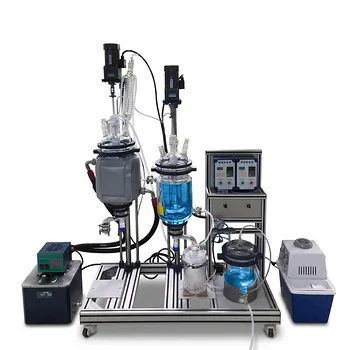
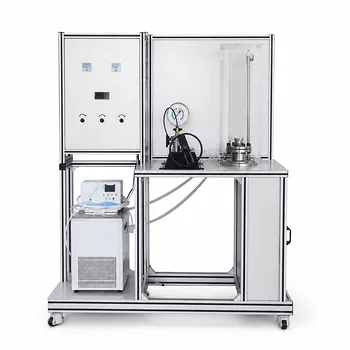
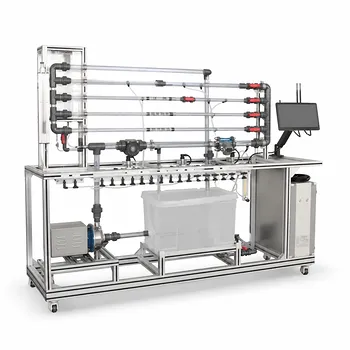
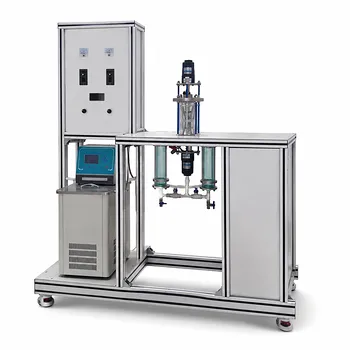
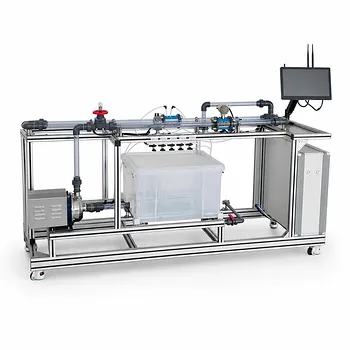
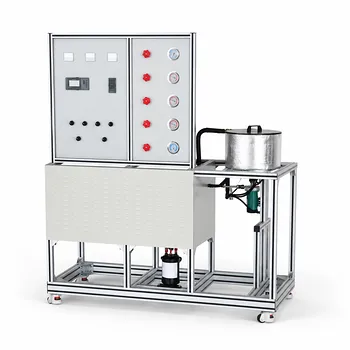
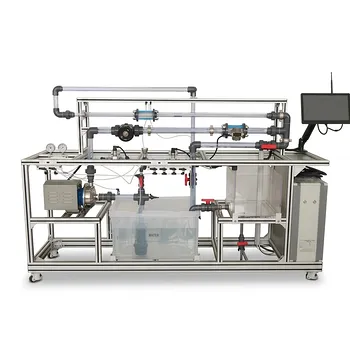
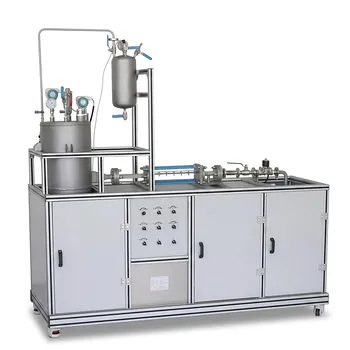
Hands-on experience with unit operations is vital for mastering complex analytical and chemical processes. LABPARK provides premium Educational and Vocational Unit Operations Pilot Plants designed specifically for universities, research institutes, and enterprises.
Whether your focus is chemical engineering, bioprocess & biotech, or environmental & water treatment, our pilot plants bridge the gap between classroom theory and real-world industrial applications.
Ready to upgrade your laboratory training and research capabilities? Contact LABPARK today to explore our tailored solutions!
Related Products
- Gas-Solid Heterogeneous Separation Demonstration Educational Unit Operations Pilot Plant
- Constant Pressure Filtration Educational Unit Operations Pilot Plant
- Ion Exchange Water Purification Educational Pilot Plant for Engineering Unit Operations
- Potassium Salt Thermal Dissolution and Crystallization Separation Educational Unit Operations Pilot Plant
- Hot Filtration Educational Unit Operations Pilot Plant Laboratory System
People Also Ask
- Why is pressure drop characterization critical in separation pilot plants? Key operational insights.
- What are the key thermodynamic considerations for gas mixture modeling? Expert Guide
- What are the primary operational objectives and physical requirements when running heterogeneous separation pilot plants?
- What are the material limitations of gas separation pilot plants? Key factors to consider.
- What are the trade-offs in olefin-paraffin separation? Optimize Pilot Plant Performance