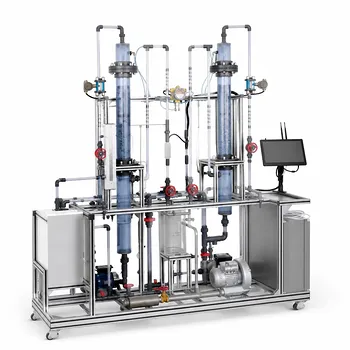
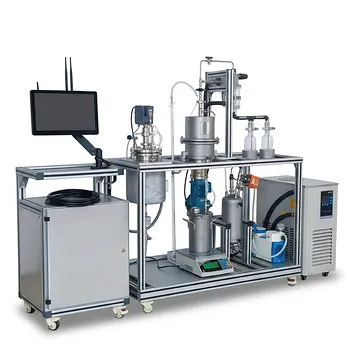
Plasticization and physical aging are the two most insidious material limitations that can sabotage a gas separation pilot plant. They cause a gradual, often invisible, loss of selectivity and permeability, turning what looked like a breakthrough membrane in the lab into an unreliable mess in continuous operation. This is why pilot plants overwhelmingly favor robust, industrial-grade polymers like cellulose acetate, polysulfone, and mature polyimides—materials that may have lower “hero” numbers on a spec sheet but deliver stable, reproducible performance that actually mirrors real-world conditions.
Pilot-scale reality punishes materials that lack long-term structural stability. While plasticization and physical aging are the headline aging mechanisms, operators must also contend with chemical degradation, compaction, and fouling. The key insight is that a pilot plant’s material choice determines whether you’re studying a membrane’s true lifetime or simply documenting its failure modes.
Understanding Plasticization: When Gases Turn Selectivity Inside Out
Plasticization is the loss of a membrane’s ability to discriminate between gas molecules because the polymer matrix swells. Highly condensable gases like CO₂, heavy hydrocarbons, or even water vapor dissolve into the material, act as a solvent, and force polymer chains apart. Once that happens, the membrane’s meticulously engineered free-volume architecture collapses, and selectivity plummets toward that of a simple porous film.
How plasticization hijacks pilot plant data
A membrane that shows excellent CO₂/CH₄ selectivity at low partial pressures can lose over half that selectivity at the pressures used in realistic gas sweetening. This means data collected before the swelling starts is not representative of the asset’s true lifetime performance. In a pilot plant, the first sign is often a creeping increase in permeate flow accompanied by a fall in product purity, even though the feed and pressure remain constant.
Why “designer polymers” fail under continuous load
Advanced materials like modified fluorinated polyimides push laboratory performance to the extreme, but their beautiful nanostructure is fragile. In a pilot environment, they are hit with real mixed-gas feeds, pressure cycling, and temperature fluctuations. The continuous presence of CO₂ or benzene quickly triggers swelling and plasticization, making the initial selectivity numbers meaningless after just a few days of operation.
The practical fix: use materials that “know how to age”
Industry-grade polymers are not immune to plasticization, but they are formulated to tolerate it. Cellulose acetate, for example, stabilizes at a slightly swollen equilibrium without a catastrophic loss of selectivity. That built-in tolerance is what gives a pilot plant the repeatable, predictive data needed to scale a process, even if the absolute permeability and selectivity figures look less spectacular on a datasheet.
Physical Aging: The Silent Thief of Free Volume
Physical aging is a thermodynamic inevitability. Glassy polymers are frozen in a non-equilibrium state. Over time—hours, days, or months—the polymer chains slowly relax, packing together more tightly and erasing the finely tuned free volume that makes gas separation possible. The membrane’s permeability drops steadily, and there is no chemical reaction involved, just a slow collapse of the physical structure.
The confounding variable in long-duration experiments
Pilot plant runs can span weeks or months. If a researcher is not tracking physical aging separately from fouling or compaction, a declining flux will be incorrectly attributed to something that can be cleaned or reversed. In reality, the membrane itself is changing. This makes it exceptionally difficult to deconvolute the true process economics, because the plant’s capacity appears to shrink for no obvious reason.
The “young vs. old” membrane dilemma
Membranes that are physically aged before being installed behave more predictably, but they sacrifice a large fraction of their initial throughput. Conversely, installing a “fresh” membrane delivers a deceptively high initial flux that the plant piping and compressors may not be sized to handle sustainably. Pilot plant designers must deliberately choose whether to operate in a chronic aging transient or stabilize the material artificially from the start.
Material-specific aging rates
Polysulfone and standard polyimides age at well-characterized rates that can be built into a process simulation. Cutting-edge materials like polymers of intrinsic microporosity (PIMs) or thermally rearranged polymers age so rapidly that just the sample storage time between fabrication and installation can change their properties. In a pilot plant, this unpredictability destroys the value of the run unless the entire timeline is perfectly controlled.
Beyond Plasticization and Aging: The Full Spectrum of Material Limitations
A pilot plant operator faces a gauntlet of other chemical and mechanical degradation paths that can mask or accelerate the core aging processes. Neglecting these is what turns a pilot plant into a lesson in failure rather than a tool for scale-up.
Chemical attack and carrier washout
Membranes that rely on facilitated transport (where a carrier molecule shuttles a specific gas across the film) are particularly vulnerable. Traces of acidic gases, water, or even oxygen can poison the carrier or leach it out of the polymer matrix. The result is a membrane that loses all its selective ability within weeks—sometimes in less than a month—making it a non-starter for any continuous pilot operation that isn’t hyper-focused on documenting that very failure mode.
Compaction under high transmembrane pressure
Hollow-fiber and spiral-wound modules operate under substantial pressure differentials. Over time, the polymer matrix physically densifies under this mechanical load, a phenomenon known as compaction. This is not chemical swelling or thermodynamic aging; it’s a hydraulic crushing. Flux drops, and the pressure vessel often requires higher compressor output to maintain capacity. A pilot plant must be instrumented to distinguish a permeability drop from aging versus a compaction event caused by a pressure excursion.
Fouling and the false signal of “material failure”
Heavy hydrocarbons, compressor oil carryover, and particulates can coat the membrane surface or plug its pores. The symptoms—reduced permeance, altered selectivity—mimic plasticization or physical aging. If operators automatically blame the material, they will discard a perfectly good membrane. A robust pilot plant strategy includes sacrificial prefiltration and regular witness testing with pure gases to isolate material aging from surface fouling.
Understanding the Trade-offs in Pilot Plant Material Selection
The central conflict is between frontier performance and operational predictability. Every material limitation forces a choice: do you accept lower selectivity for a stable, industrial baseline, or do you use the pilot plant to stress-test novel materials and accept that the results will be a study in degradation kinetics, not steady-state separation?
Stability vs. headline numbers
A commercially mature polyimide might give 30% lower CO₂/CH₄ selectivity than a state-of-the-art fluorinated analog, but it will give that same number on day 1, day 100, and day 500. If the pilot plant mission is to generate a scale-up package for an engineering firm, the stable, slightly lower number is infinitely more valuable than the higher number that cannot be guaranteed.
The “accelerated aging” assumption
Some researchers attempt to simulate long-term aging by operating at elevated temperatures or pressures. This can work if the material’s aging mechanism is purely physical, but once chemical degradation or plasticization thresholds are crossed, the experiment no longer represents what would happen at commercial conditions. The trade-off is that a pilot plant cannot escape real-wall-clock time for physical aging—there is no true substitute for a 1,000-hour run.
Corrosion and materials of construction as a confounding factor
While the membrane itself degrades, the seals, adhesives, and module housing must also survive. O-rings that swell in the presence of aromatics or CO₂ can cause leaks that mimic a selectivity loss. The lesson is that a material limitation is never just about the polymer film; it’s about the entire membrane element’s compatibility with the gas stream. A pilot plant that studies only the membrane polymer while ignoring tubesheet chemical attack is studying a laboratory curiosity, not a real separation stage.
Making the Right Choices for Your Pilot Plant’s Mission
Your material strategy must align precisely with why the pilot plant exists. There is no universal “best” membrane—only the most appropriate one for the data you need to generate.
- If your primary focus is generating scale-up data for a commercial project: Select an established polymer like cellulose acetate, polysulfone, or a commercial polyimide. Characterize its plasticization and physical aging behavior in detail first, then run your entire campaign with that known, stable material. The goal is to build a process model on a foundation that won’t shift under your feet.
- If your primary focus is evaluating a novel “designer polymer” for future commercialization: Design the pilot run as a lifetime stress test, not a performance demonstration. Include aggressive cycling of pressure and temperature, inject realistic contaminant loads, and budget for multiple module replacements. Your output will be a degradation curve, and that is exactly the intelligence investors and plant designers need.
- If your primary focus is vocational training or university education: Use materials with well-documented aging profiles. This makes the plant a reliable teaching tool where students can see the difference between a true equilibrium permeability and a plasticization-induced artifact. The learning happens when they can predict the performance drop and then verify it, instead of being surprised by a membrane that dies in three days.
- If your primary focus is exploring challenging feeds with heavy hydrocarbons or acids: Budget for aggressive pretreatment and for sacrificial modules. Test chemical-resistant membrane formats (e.g., perfluoropolymers) but also plan to monitor tubesheet integrity and housing corrosion. Never assume the pilot plant is “just about the membrane”; it’s a system-wide materials challenge.
A gas separation pilot plant that ignores material limitations is simply an expensive leak detector. Understand plasticization, physical aging, and their chemical siblings, and you transform that plant into the definitive bridge between a clever polymer and a profitable process.
Summary Table:
| Limitation | Core Cause | Operational Impact | Practical Mitigation |
|---|---|---|---|
| Plasticization | Polymer matrix swells due to condensable gases (CO₂, hydrocarbons) | Catastrophic loss of selectivity; creeping permeate flow | Choose mature polymers like cellulose acetate with stable swelling equilibrium |
| Physical Aging | Thermodynamic relaxation and loss of polymer free volume | Continuous decline in permeability over weeks or months | Use pre-aged membranes; factor predictable decay into process models |
| Compaction | Mechanical densification under high transmembrane pressure | Reduced gas flux; higher compressor output requirements | Monitor pressure differences; avoid sudden pressure excursions |
| Fouling & Chemical Attack | Particulates, heavy hydrocarbons, or reactive contaminants | Mimics aging/plasticization; loss of membrane activity | Install sacrificial prefilters; execute pure-gas witness tests |
Build a Reliable Foundation for Unit Operations Training & Research
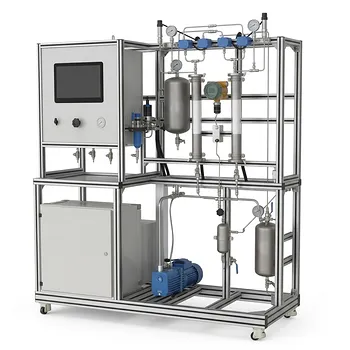
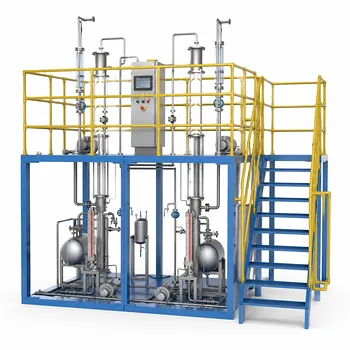
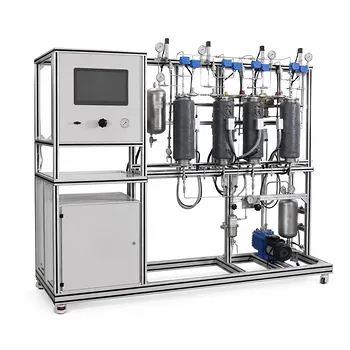
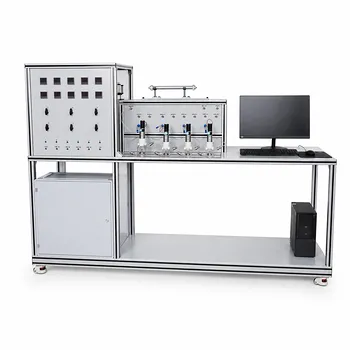
Ensure your lab generates stable, repeatable, and industry-relevant data. LABPARK provides state-of-the-art Educational and Vocational Unit Operations Pilot Plants in chemical engineering, bioprocess & biotech, and environmental & water treatment. Designed specifically for universities, research institutes, and enterprises, our pilot plants help you overcome real-world material limitations and bridge the gap between laboratory research and industrial process scale-up.
Ready to equip your institution with robust training and research systems? Contact LABPARK today to discuss your custom project requirements!
Related Products
- Gas-Solid Heterogeneous Separation Demonstration Educational Unit Operations Pilot Plant
- Multi-Component Gas Pressure Swing Adsorption Pilot Plant for Unit Operations Education
- Bench Scale Dual Column Gas Separation and Capture Educational Pilot Plant
- Educational Pressure Swing Adsorption Ethylene Capture Unit Operations Pilot Plant
- Pressure Swing Adsorption Educational Unit Operations Pilot Plant
People Also Ask
- Why is pressure drop characterization critical in separation pilot plants? Key operational insights.
- What are the key thermodynamic considerations for gas mixture modeling? Expert Guide
- What are the primary operational objectives and physical requirements when running heterogeneous separation pilot plants?
- What are the trade-offs in olefin-paraffin separation? Optimize Pilot Plant Performance
- What role do polymer membranes play in gas separation pilot plants? Enhance Chemical Engineering Research