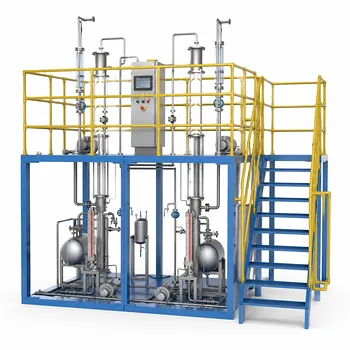
The simple thermodynamic answer lies in the reaction’s stoichiometry. Steam reforming of methane (CH₄ + H₂O ⇌ CO + 3H₂) transforms two reactant molecules into four product molecules. In a chemical engineering unit operations pilot plant, raising the operating pressure pushes this equilibrium back toward the reactants, directly reducing the conversion of methane to syngas. This is a direct consequence of Le Chatelier’s principle—the system shifts to relieve the imposed pressure by favoring the side with fewer moles.
Core takeaway: Steam reforming increases the total number of gas molecules; elevated pressures therefore thermodynamically suppress methane conversion. To compensate, the reaction requires significantly higher temperatures, creating a tight design balance between pressure, yield, and equipment limits that every pilot‑plant operator must understand.
The Equilibrium Penalty: Why Pressure Works Against Conversion
A Classic Le Chatelier Scenario
When a reaction at equilibrium experiences a change in pressure, it adjusts to partially offset that change. Steam reforming is a molecule‑increasing reaction—going from two moles to four. At elevated pressure, the equilibrium composition skews toward the side with fewer molecules, i.e., the unreacted methane and steam. The result is an inherently lower yield of hydrogen and carbon monoxide at any given temperature compared to low‑pressure operation.
Molecule Counting: From Two to Four
The net reaction
CH₄ + H₂O ⇌ CO + 3H₂
gives a Δn (change in moles) of +2. A positive Δn means that applying pressure must reduce the extent of forward reaction. This thermodynamic constraint is absolute—it doesn’t matter how active the catalyst is; it matters where the equilibrium sits.
Quantifying the Shift: 1 bar vs. 30 bar
In an educational pilot plant, you can easily demonstrate this. At 1 bar, modest temperatures around 700–800 °C can achieve high methane conversion. At 30 bar, however, the same conversion demands temperatures well above 900 °C. The primary reference for this phenomenon shows that higher operating pressures force a disproportionately steep rise in temperature just to maintain equivalent syngas output—exactly the behavior you would observe in any properly instrumented reactor.
Implications for Unit Operations Pilot Plants
Mimicking Industrial Conditions Despite the Penalty
Industrial reformers intentionally operate at high pressure (often 20–35 bar) because compressing the final syngas or hydrogen product is expensive. The energy saved by producing gas already at high pressure outweighs the thermodynamic penalty. Pilot plants replicate this by running at pressures up to 3.0–5.0 MPa, allowing students and researchers to measure exactly how much extra heat input is required to counteract the equilibrium shift.
The Necessity of Extreme Temperatures
Because the reaction is strongly endothermic (≈ 206 kJ/mol), a pilot plant must deliver massive heat to the catalyst bed. At elevated pressure, the required reaction temperature climbs into the 900–1000 °C range just to reach acceptable conversion. This places severe demands on reactor materials, heater design, and temperature control loops—all of which become critical learning points in a unit operations lab.
Side Reactions and Coking at High Pressure
While the primary equilibrium effect hinders syngas production, the story doesn’t end there. The Boudouard reaction (2CO ⇌ C + CO₂) is a molecule‑decreasing process—it is thermodynamically favored at higher pressure. Elevated carbon monoxide partial pressure thus increases the thermodynamic driving force for solid carbon formation. This means that running a steam reformer at high pressure not only reduces hydrogen yield but can also intensify catalyst‑deactivating coke deposition, a risk that pilot‑scale experiments are uniquely suited to quantify.
Understanding the Trade‑offs: Pressure, Temperature, and Carbon Formation
The Temperature‑Pressure Dance
There is no “free” high pressure. Every bar of back‑pressure you impose must be paid for with extra degrees of temperature. In practice, this means you cannot optimise conversion and pressure independently; you are forced to operate near the equipment’s maximum thermal capability. Pilot plants expose students to this real‑world compromise, where they must find the sweet spot between acceptable per‑pass conversion and realistic reactor metallurgy.
Coking: A Pressure‑Driven Risk
Carbon deposition kills catalysts and plugs reactor beds. The Boudouard equilibrium is exothermic and mole‑decreasing, so higher pressure and lower temperature both favour coke. When you operate the reformer at elevated pressure to save downstream compression, you unintentionally strengthen the thermodynamic driving force for carbon formation. Effective steam‑to‑carbon ratios, high temperatures, and careful catalyst formulation become the only levers to keep the bed clean—a key takeaway from pilot‑plant experimentation.
Design Materials and Safety Boundaries
The combination of high pressure (30 bar +) and high temperature (up to 1000 °C) pushes reactor materials into creep‑limited regimes. Pilot‑plant engineers must select alloys with sufficient high‑temperature strength and oxidation resistance. This direct correlation between thermodynamic penalties and hardware constraints is one of the most valuable lessons a unit operations pilot plant can teach.
Making the Right Choice for Your Pilot Plant Objectives
The “best” pressure depends entirely on what you aim to study or demonstrate. Use these goal‑driven guidelines:
- If your primary focus is thermodynamic fundamentals and catalyst screening: Operate at low pressure (1–5 bar) to isolate kinetic and heat transfer effects without equilibrium suppression, maximizing methane conversion and data clarity.
- If your primary focus is industrial‑relevance and process integration: Operate at high pressure (20–30 bar) to recreate the real‑world equilibrium penalty and to test the extreme temperatures and material limits that commercial reformers demand.
- If your primary focus is studying coking and catalyst durability: Run at intermediate pressures while systematically varying temperature and steam‑to‑carbon ratio; this will reveal the narrow operating window where carbon formation can be managed despite the thermodynamic push from pressure.
- If your primary focus is student learning and mass/energy balances: Compare high‑pressure and low‑pressure runs side‑by‑side on the same catalyst, documenting the temperature increase required to restore conversion—a demonstration that cements understanding of Le Chatelier’s principle far more effectively than any textbook.
By deliberately choosing pressure as a variable, you turn the fundamental thermodynamic hindrance into the most powerful teaching tool a unit operations pilot plant can offer.
Summary Table:
| Operating Parameter | Low Pressure (1–5 bar) | High Pressure (20–30 bar) | Engineering & Operational Impact |
|---|---|---|---|
| Methane Conversion | High at modest temperatures | Lower (equilibrium shifts to reactants) | Demands higher energy input to maintain yield |
| Required Temperature | 700–800 °C | 900–1000 °C | Pushes reactor metallurgy & heating elements to limits |
| Coking (Carbon) Risk | Low | High (Boudouard reaction favored) | Accelerates catalyst deactivation; requires careful steam-to-carbon control |
| Focus of Study | Kinetic analysis & catalyst screening | Industrial replication & process optimization | Perfect for teaching real-world trade-offs and thermodynamic limits |
Bring Real-World Industrial Dynamics into Your Lab with LABPARK
Understanding thermodynamic compromises like pressure-induced equilibrium shifts is critical for the next generation of engineers. LABPARK provides state-of-the-art Educational and Vocational Unit Operations Pilot Plants across chemical engineering, bioprocess & biotech, and environmental & water treatment to help universities, research institutes, and enterprises bridge the gap between theory and industrial practice.
Whether you need to demonstrate Le Chatelier's principle in action or test catalyst durability under extreme conditions, our safely engineered, highly instrumented pilot plants deliver precise data and reliable performance.
Ready to upgrade your lab's capabilities? Contact LABPARK today to request a quote or custom design!
Related Products
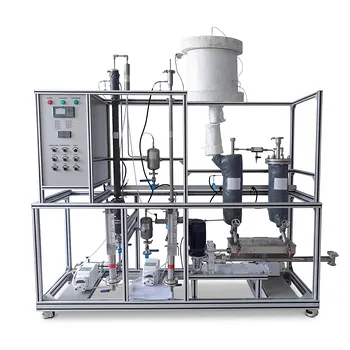
- Steam Methane Reforming Hydrogen Production and Purification Educational Pilot Plant
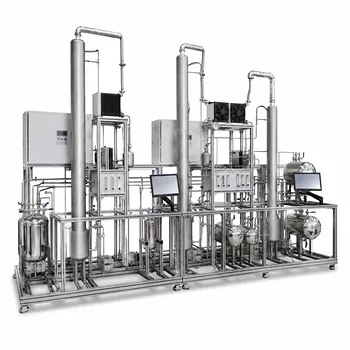
- Dual-Mode Rectification Pilot Plant for Practical Training Unit Operations
- Methanol Synthesis and Catalyst Performance Evaluation Educational Unit Operations Pilot Plant
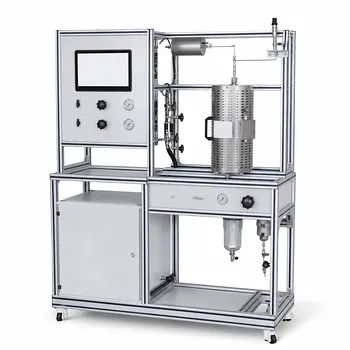
- Methane Cracking Educational Unit Operations Pilot Plant
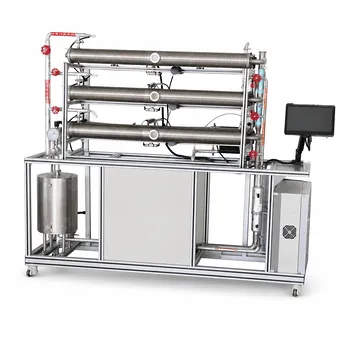
- Three-Tube Heat Transfer Educational Pilot Plant for Unit Operations Training
People Also Ask
- How Do Temp, Pressure & S:C Ratio Affect Methane Reforming? Optimize Your Pilot Reactor
- How to Integrate WGS & Purification in Steam Reforming Pilot Plants to Protect Fuel Cells from CO Poisoning
- What are the differences between steam reforming and ATR in pilot plants? Key Design Guide
- How is carbon deposition controlled in steam reforming? The Critical Role of S/C Ratio
- What is the difference between allothermal and autothermal steam reforming in pilot plants?