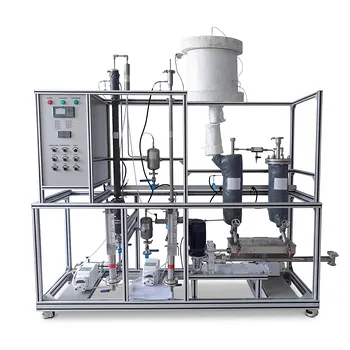
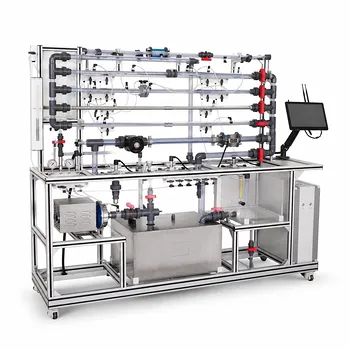
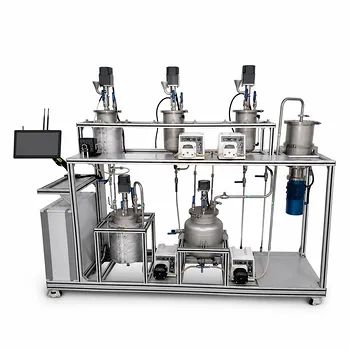
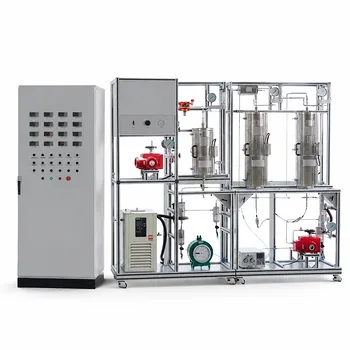
The defining operational difference between steam reforming and autothermal reforming in a pilot plant comes down to how heat reaches the catalyst.
Steam reforming (SR) uses an external furnace to drive the highly endothermic reaction through metal catalyst tubes, while autothermal reforming (ATR) generates the required heat internally by combusting a portion of the feed with pure oxygen inside a refractory‑lined vessel. These two heat management strategies produce sharp contrasts in temperature limits, syngas composition, and plant utility requirements – all visible and measurable on a unit operations scale.
Core Takeaway: Steam reforming prioritizes high‑purity hydrogen production using simple air‑free oxidation but demands rigorous thermal control of alloy‑tube reactors. Autothermal reforming achieves thermal self‑sufficiency through internal combustion, enabling higher temperatures and a lower H₂/CO ratio, though at the cost of an air separation unit and a different set of operating hazards.
The Fundamental Heat Supply: External vs. Internal
Steam Reforming Relies on External Furnace Heating
In a pilot‑scale steam reformer, all the reaction heat comes from outside the catalyst bed. The catalyst tubes sit inside a radiant section heated by an electric furnace or a gas‑fired combustion chamber. This arrangement makes the process strictly allothermal – the endothermic steam‑methane reaction has no internal heat source.
Because the heat must travel through the tube wall and into the catalyst, operators must manage three simultaneous heat sinks: the reforming reaction itself, vaporization of the liquid feedstock, and environmental losses. Cold spots on the tubes are a constant risk; they slow kinetics, lengthen required residence times, and can push operators toward higher furnace temperatures that creep closer to the material limits of the alloy.
Autothermal Reforming Generates Heat In‑Situ via Partial Oxidation
ATR eliminates the external firebox by feeding oxygen (or air) directly into the reactor. Inside the vessel, a portion of the methane combusts exothermically in a dedicated combustion zone, raising the temperature to roughly 2200 K before the gases flow into the catalytic reforming zone at 1200–1400 K.
This autothermal design makes the reactor thermally self‑sustaining. The pilot plant requires no large furnace, only precise mass‑flow controllers for methane, steam, and oxygen. Students can immediately observe the heat integration: the exothermic partial oxidation drives the endothermic reforming, and the energy balance can be tuned by adjusting the O₂/CH₄ ratio.
Reactor Design and Materials: Tubes vs. Refractory Vessel
Critical Material Limits in Steam Reforming
Steam reforming pilot plants are bound by the creep and thermal fatigue of the metal catalyst tubes. Operating temperatures are normally kept in the range of 500–900 °C (up to about 1100 K) and pressures around 20 bar, because beyond these thresholds nickel‑alloy tubes begin to lose mechanical integrity.
The need to protect these tubes dictates everything from heater ramp rates to emergency shutdown procedures. Even in small‑scale units, the structural constraints are clear: a hotter furnace translates to shorter tube life and the potential for catastrophic failure.
Why ATR’s Refractory Lining Enables Harsher Conditions
By contrast, an ATR reactor is a pressure vessel with an internal refractory lining – there are no metal catalyst‑carrying tubes exposed to the highest temperatures. This allows the reforming zone to operate continuously at 1200–1400 K and pressures up to 100 bar, well beyond what a metal‑tube reformer could survive.
In a benchtop or pilot unit, the refractory‑lined construction also means the reactor can handle the intense heat release from the combustion zone without relying on external cooling. The main design consequence is that the high‑temperature materials shift from metal tubes to ceramic refractories and specialized burner designs, which is a stark physical lesson in materials selection.
Operational Profiles: Temperature, Pressure, and Syngas Composition
Temperature and Pressure Envelopes
The two reactor types operate in distinctly different windows.
- Steam reforming: 500–900 °C, typically ≤ 20 bar, limited by tube integrity.
- Autothermal reforming: combustion zone ~2200 K, catalytic zone 1200–1400 K, pressures 20–100 bar.
In a pilot plant, these envelopes are not just numbers – they determine which sensors and safety systems are needed. The ATR demands ultra‑high‑temperature thermocouples and rapid oxygen shut‑off valves, while the SR demands multi‑zone furnace controllers and precise tube‑wall temperature monitoring.
Impact on the H₂/CO Ratio
Because ATR introduces oxygen right into the reaction mixture, it produces a lower H₂/CO ratio in the syngas. The partial oxidation step consumes hydrogen and generates CO, shifting the product slate away from the near‑stoichiometric H₂‑rich output of pure steam reforming.
Pilot plant exercises often focus on this trade‑off. By varying the S/C (steam‑to‑carbon) and O₂/CH₄ ratios, students can map how the syngas composition moves from hydrogen‑rich (SR) toward more balanced H₂/CO mixtures (ATR) that are better suited for Fischer‑Tropsch or methanol synthesis.
Understanding the Trade‑offs
Hydrogen Efficiency vs. Thermal Simplicity
Steam reforming is the most efficient route to high‑purity hydrogen, but it demands complex external heat management. In a pilot plant, this translates to the need for micro‑channel heat exchangers, combustion exhaust recovery, and meticulous insulation – all of which add control complexity.
ATR sacrifices some hydrogen yield for thermal neutrality. The lack of an external furnace simplifies the physical plant, but the internal combustion makes the reactor inherently less efficient at producing H₂ per mole of feed. For fuel‑cell applications, that efficiency penalty is a critical consideration.
Capital and Safety Costs of Oxygen Supply
ATR almost always requires pure oxygen to avoid nitrogen dilution and soot formation. This means a pilot plant must either house a cryogenic air separation unit or handle high‑pressure oxygen cylinders, both of which raise capital and operating costs compared to the all‑gaseous feed of a steam reformer.
Safety is fundamentally different, too. SR handles a flammable gas (methane) but operates without an oxidizer inside the reactor. ATR mixes methane with oxygen at elevated temperatures, introducing an explosion hazard that demands strict reactant flow interlocking, oxygen‑compatible materials, and rapid emergency purging.
What Students Learn from Each Configuration
In educational unit operations labs, steam reforming teaches heat transfer, material limits, and furnace control. Cold‑spot management, tube‑wall temperature monitoring, and vaporizer integration make the SR pilot plant a comprehensive exercise in thermal system design.
ATR shifts the focus to stoichiometric control, heat integration, and safety engineering. Students see firsthand how an exothermic oxidation zone can power an endothermic reforming zone, and they learn to tune O₂/CH₄ ratios to balance conversion, temperature, and syngas quality – all while managing an explosive atmosphere inside the vessel.
Making the Right Choice for Your Pilot Plant Goal
The choice between an SR or ATR unit depends entirely on what you want to demonstrate or research.
- If your primary focus is teaching classic heat transfer and reactor materials: A steam reforming setup clearly illustrates external furnace heating, tube‑wall temperature limits, and the dangers of cold spots, making it the better educational tool for thermal design principles.
- If your primary focus is demonstrating autothermal operation and heat integration: An ATR pilot plant lets you explore how combustion heat can drive an endothermic reaction, highlighting the trade‑offs in syngas composition and the removal of an external furnace.
- If your primary focus is hydrogen fuel cell applications: Steam reforming’s superior hydrogen efficiency and simpler gas cleanup (no residual nitrogen from air) align directly with the requirements of a downstream fuel cell stack.
- If your primary focus is gas‑to‑liquids or syngas tuning research: ATR’s flexible H₂/CO ratio and ability to operate at high pressure make it the natural choice for studies that mimic industrial syngas generation for methanol or Fischer‑Tropsch synthesis.
In the end, a well‑designed unit operations pilot plant doesn’t just compare two reactor types – it reveals the deep engineering compromises between thermal control, chemical efficiency, and plant complexity that define the industrial reforming landscape.
Summary Table:
| Parameter | Steam Reforming (SR) | Autothermal Reforming (ATR) |
|---|---|---|
| Heat Source | External furnace (Allothermal) | Internal partial oxidation (Autothermal) |
| Reactor Design | Metal catalyst tubes (creep-limited) | Refractory-lined pressure vessel |
| Operating Temp | 500–900 °C (≤ 20 bar) | 1200–1400 K (up to 100 bar) |
| Syngas Profile | High-purity H₂ (high H₂/CO ratio) | Lower H₂/CO ratio (tailored for GTL) |
| Main Hazard | High temperature tube creep/rupture | Internal oxygen-hydrocarbon explosion |
| Key Teaching Focus | Heat transfer & material limitations | Stoichiometric control & heat integration |
Elevate Chemical Engineering Education with LABPARK
Are you looking to enhance hands-on learning or research in reforming technologies? LABPARK provides state-of-the-art Educational and Vocational Unit Operations Pilot Plants across chemical engineering, bioprocess & biotech, and environmental & water treatment. Designed specifically for universities, research institutes, and enterprises, our systems offer a safe, industrial-grade environment to study heat transfer, material limits, and reaction kinetics.
Ready to upgrade your laboratory? Contact LABPARK today to explore our custom pilot plant solutions!
Related Products
- Steam Methane Reforming Hydrogen Production and Purification Educational Pilot Plant
- Dual-Mode Rectification Pilot Plant for Practical Training Unit Operations
- Solid Waste Pyrolysis and Refining Educational Pilot Plant for Unit Operations
- Green Anhydrous Ethanol Refining Practical Training Pilot Plant
- Continuous Batch Extractive Distillation Educational Pilot Plant
People Also Ask
- What thermodynamic principles govern methane reforming in pilot plants? Master equilibrium and coke control.
- How is carbon deposition controlled in steam reforming? The Critical Role of S/C Ratio
- What causes boiler water foaming in pilot plants, and how to monitor & control it?
- How to prevent carbon & hot spots in steam reforming pilot plants? Essential Safe Operation Guide
- Why is thermal runaway hard to observe in lab glassware? Quantify heat loss for safe scale-up