Knowledge Chemical Engineering Education Why is the acentric factor crucial in pilot plants? Predict fluid behavior in chemical engineering.
Author avatar

Tech Team · LABPARK

Updated 1 month ago

Why is the acentric factor crucial in pilot plants? Predict fluid behavior in chemical engineering.


Your lab data is meaningless without the right framework to interpret it. The principle of corresponding states, enhanced by the acentric factor, gives you that framework—a universal, pressure-based method to predict how any real, non‑spherical fluid will behave in your pilot plant. It transforms a few easily measured critical constants into accurate vapor pressure, compressibility, and phase‑equilibrium estimates, directly enabling equipment sizing, mass‑balance closure, and the critical comparison of experimental results to theoretical models.

The acentric factor extends the simple corresponding‑states law to real, asymmetric molecules. It is the single parameter that determines how much a fluid deviates from idealized spherical behaviour, making it indispensable for reliable thermodynamic predictions in distillation, gas compression, and any high‑pressure pilot‑plant operation—provided you know when it stops working.

From Ideal to Real: The Foundation of Accurate Pilot Plant Analysis

The bedrock of your pilot‑plant calculations is the recognition that no industrial fluid behaves like an ideal gas. The principle of corresponding states, armed with the acentric factor, bridges the gap between the clean theory you learn in class and the messy reality inside your unit operation.

The Principle of Corresponding States: A Universal Scaling Law

When you scale a fluid’s temperature and pressure by its critical constants (reduced temperature Tr, reduced pressure Pr), simple, spherical molecules all collapse onto the same p‑V‑T curve. This is the essence of the two‑parameter corresponding‑states principle. In a pilot plant, this gives you an immediate, order‑of‑magnitude profile of how a fluid will expand, compress, or change phase—using only its critical temperature and pressure.

The Acentric Factor: Capturing Molecular Asymmetry

Most fluids are not simple spheres. The acentric factor (ω) is the third parameter that quantifies the deviation of a molecule’s shape from perfect symmetry. It is defined directly from the reduced vapor pressure at Tr = 0.7. Once you know ω, you can inject real‑fluid complexity into the corresponding‑states framework, correctly predicting properties for the hydrocarbons, refrigerants, and light gases that dominate pilot‑plant curricula.

Why Students Rely on This in Pilot‑Scale Operations

Understanding ω isn’t an academic exercise—it’s the key that unlocks accurate pilot‑plant design and data analysis.

Predicting Volumetric Behavior Without Volumetric Data

Critical pressure is far easier to measure accurately than critical volume. The acentric factor’s definition relies on pressure data alone, sidestepping the large experimental errors that plague critical volume measurements. When you estimate the compressibility factor (Z) for a real gas using the linear combination Z = Z^(0) + ω·Z^(1), you are using a robust, empirically validated route to volumetric flow rates, pressure drops, and vessel sizes—without ever needing a precise critical volume.

Designing and Optimizing Separation Processes

In your distillation or vapor‑liquid equilibrium (VLE) experiment, the relative volatility that determines the number of trays depends on fugacity coefficients. Equations of state that embed ω directly translate molecular asymmetry into these coefficients. An error in ω cascades into a wrong stage count, a mis‑sized column, or a failed purity specification. Using the acentric factor lets you move from a barrel of a crude oil to an optimized separation train with confidence.

Comparing Theory with Experiment

A pilot plant is a truth machine. When you record unexpected pressure drops or phase splits, the corresponding‑states model gives you a theoretical baseline. Deviations point straight to instrumentation errors, unaccounted mixture interactions, or the onset of conditions where the model’s assumptions break down. ω‑based predictions thus become your diagnostic tool, teaching you to reconcile textbook theory with real hardware.

The Hidden Risks: When Corresponding States Fall Short

No model is universal. The most important lesson you can learn is where the acentric‑factor method stops adding value.

The Limits of a Single Shape Parameter

For non‑polar molecules with ω < ~0.25 (e.g., lower hydrocarbons, cryogenic fluids), the approach is highly effective. But the moment your pilot plant handles water, ammonia, alcohols, or lower amines, the deviations become too large and irregular to be captured by a single ω. In bioprocess or wastewater‑treatment pilot units, forcing a one‑parameter model on a hydrogen‑bonding fluid will produce dangerously inaccurate property predictions. You must switch to activity‑coefficient models or specially tailored equations of state.

Breakdown at High Densities

Extended corresponding‑states methods are also used to predict transport properties like viscosity and thermal conductivity. These correlations break down when the density ratio ρ/ρ_c reaches 1 or higher—precisely the dense‑gas and supercritical regions where many modern pilot plants operate. If you rely solely on theory for heat‑transfer coefficients or mass‑transfer rates in such regimes, you will mis‑size exchangers and reactors. Direct cross‑validation with pilot‑plant measurements becomes mandatory.

Making the Right Choice for Your Unit Operation

Your goal as a pilot‑plant analyst is not blind trust in a model, but informed selection. Adapt your approach to the system in front of you.

  • If your primary focus is gas compression or pipeline experiments: Lean heavily on ω‑based compressibility‑factor charts to accurately predict volumetric flow rates, pressure drop, and compressor power.
  • If your primary focus is distillation or VLE experiments: Use equations of state that incorporate ω to calculate K‑values and validate your tray‑count calculations against experimental reflux ratios.
  • If your pilot plant handles water, alcohols, or aqueous mixtures: Abandon single‑parameter corresponding states immediately. Move to activity‑coefficient models (e.g., NRTL, UNIQUAC) or predictive EoS (e.g., PSRK) designed for polar molecules.
  • If your experiment ventures into supercritical or dense‑gas territory: Always cross‑check corresponding‑states predictions of transport properties with direct measurements from your pilot plant’s flowmeters and temperature probes.

Mastering when to leverage the acentric factor—and when to discard it in favor of a more complex model—is what transforms a student into a trustworthy process engineer.

Summary Table:

Concept Role in Unit Operations Applicability & Limitations
Corresponding States Scales fluid properties using critical constants ($T_r, P_r$). Best for simple, spherical molecules.
Acentric Factor ($\omega$) Adjusts for molecular asymmetry to predict VLE and compressibility ($Z$). Great for hydrocarbons; fails for polar fluids like water and alcohols.
Transport Predictions Estimates viscosity and thermal conductivity. Breaks down at high densities ($
\rho/\rho_c \ge 1$) and supercritical states.

Bring Thermodynamics to Life in Your Lab

Bridging the gap between thermodynamic theory and real-world process dynamics requires robust, high-fidelity hardware. LABPARK provides premium Educational and Vocational Unit Operations Pilot Plants in chemical engineering, bioprocess & biotech, and environmental & water treatment. Designed specifically for universities, research institutes, and enterprises, our pilot plants empower students and researchers to validate fluid behavior models with absolute precision.

Ready to upgrade your laboratory capabilities? Contact us today to request a quote or customize your pilot plant setup!

Related Products

People Also Ask

Related Products

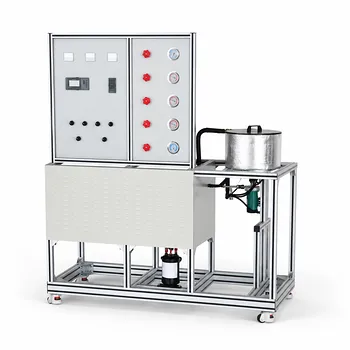
Educational Compression Refrigeration Performance Determination Unit Operations Pilot Plant

Educational Compression Refrigeration Performance Determination Unit Operations Pilot Plant

This educational pilot plant for compression refrigeration performance determination offers dual COP evaluation, regenerative cycle comparison, and calorimeter calibration. Customizable for curriculum integration, it features environmentally conscious design. Supports thermodynamic mapping on pressure-enthalpy diagrams and synchronous monitoring with centralized instrumentation.

Fluid Friction Resistance Determination Educational Unit Operations Pilot Plant

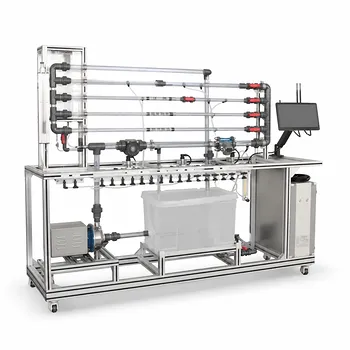
Fluid Friction Resistance Determination Educational Unit Operations Pilot Plant

Engineered bench-scale system for university engineering labs. Provides hands-on fluid mechanics experience: quantitative energy loss analysis, flow regime observation, friction coefficient determination. Features four-point pressure measurement, transparent sections, industrial touchscreen PLC, 3D virtual simulation. Ideal for chemical, mechanical, civil engineering.

Rising and Falling Film Evaporation Educational Unit Operations Pilot Plant

Rising and Falling Film Evaporation Educational Unit Operations Pilot Plant

Hands-on educational pilot plant for studying rising and falling film evaporation, flow regimes, and heat transfer. Customizable for university labs with industrial instrumentation and data acquisition. Enables comparative evaluation of evaporation modes and energy efficiency.

Constant Pressure Filtration Educational Unit Operations Pilot Plant

Constant Pressure Filtration Educational Unit Operations Pilot Plant

Hands-on educational pilot plant for constant pressure filtration. Classic plate and frame filter press allows students to study kinetics, determine specific cake resistance, perform cake washing and evaluate washing rates. Ideal for chemical engineering curriculum. Mobile, customizable, safety-compliant design.

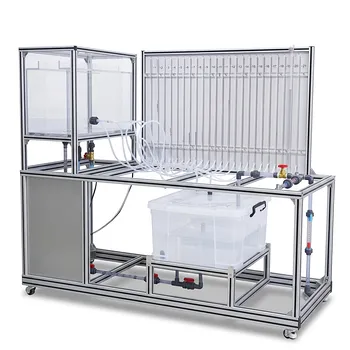
Bernoulli Equation Demonstration Unit Operations Pilot Plant

Bernoulli Equation Demonstration Unit Operations Pilot Plant

Laboratory pilot plant for Bernoulli's equation demonstration with transparent PVC pipes, 23 piezometer tubes for pressure measurement, and hands-on experiments. Designed for engineering education to study energy conservation, hydraulic grade line, and localized losses in fluid steady-flow systems.

Multi Functional Catalytic Reaction and Reactor Evaluation Educational Unit Operations Pilot Plant

Multi Functional Catalytic Reaction and Reactor Evaluation Educational Unit Operations Pilot Plant

Bench-scale educational pilot plant for catalytic reaction and reactor evaluation, integrating fixed bed, fluidized bed, and stirred tank reactors. Students compare reactor designs, evaluate catalysts, and study reaction kinetics and hydrodynamics. Perfect for unit operations labs in chemical engineering curricula.

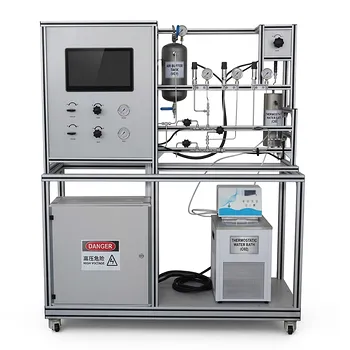
Throttling Effect Determination Educational Unit Operations Pilot Plant

Throttling Effect Determination Educational Unit Operations Pilot Plant

Investigate the Joule-Thomson throttling effect with this educational unit operations pilot plant. Designed for engineering students, it enables hands-on comparative analysis of adiabatic gas expansion using precise process control, interactive digital interface, and eco-friendly operation, ensuring safe repeatable thermodynamic experiments.

Comprehensive Heat Transfer Coefficient Determination Educational Unit Operations Pilot Plant

Comprehensive Heat Transfer Coefficient Determination Educational Unit Operations Pilot Plant

Advanced industrial-grade educational pilot plant for comprehensive heat transfer coefficient determination. Enables quantitative convective heat transfer analysis, evaluates double-pipe and shell-and-tube exchanger configurations, and includes digital data acquisition. Customizable for engineering curriculum. Ideal for engineering unit operations labs.

Educational Unit Operations Pilot Plant for Intraparticle Diffusion Effective Factor Measurement

Educational Unit Operations Pilot Plant for Intraparticle Diffusion Effective Factor Measurement

Designed for chemical engineering university labs, this pilot plant allows hands-on determination of catalyst particle intraparticle diffusion effective factors and gas-solid reaction kinetics using a fixed-bed tubular reactor with industrial touchscreen control, bridging theory and practical reactor design.

Educational Rotary Disc Liquid-Liquid Extraction Pilot Plant

Educational Rotary Disc Liquid-Liquid Extraction Pilot Plant

A transparent rotary disc column for educational liquid-liquid extraction experiments. This pilot plant enables students to study mass transfer, droplet dynamics, and flooding behavior, bridging theory and practice in chemical engineering unit operations education. Features variable-speed agitation and PLC control.

Centrifugal Pump Performance Determination Educational Unit Operations Pilot Plant

Centrifugal Pump Performance Determination Educational Unit Operations Pilot Plant

This lab system determines centrifugal pump performance curves for unit operations. Students configure dual pumps in series or parallel for hands-on learning. Includes industrial controls, clear piping, and data logging. Customizable for chemical, mechanical, and environmental engineering programs.

Ternary Liquid-Liquid Equilibrium Educational Pilot Plant

Ternary Liquid-Liquid Equilibrium Educational Pilot Plant

An integrated laboratory training system for engineering students to determine ternary liquid-liquid equilibrium data, construct phase diagrams, and gain hands-on experience with industrial instrumentation, including Abbe refractometer and magnetic stirrers, for precise data acquisition and curriculum-aligned experiments.

Multifunctional Membrane Separation Educational Pilot Plant with Ultrafiltration, Nanofiltration, Reverse Osmosis

Multifunctional Membrane Separation Educational Pilot Plant with Ultrafiltration, Nanofiltration, Reverse Osmosis

An integrated laboratory bench-scale membrane separation system for higher education engineering labs combining Ultrafiltration, Nanofiltration, and Reverse Osmosis processes. Features industrial PLC control with touch-screen HMI, transparent piping, and academic assessment software. Ideal for chemical and environmental engineering curricula.

Centrifugal Pump Performance and Orifice Flowmeter Calibration Educational Pilot Plant

Centrifugal Pump Performance and Orifice Flowmeter Calibration Educational Pilot Plant

This versatile educational pilot plant enables engineering students to conduct centrifugal pump performance tests, orifice flowmeter calibration, and fluid mechanics experiments using a transparent flow loop, industrial HMI, and 3D virtual simulation for a comprehensive hands-on learning experience.

General Purpose Cosmetics Production Unit Operations Training Pilot Plant

General Purpose Cosmetics Production Unit Operations Training Pilot Plant

Integrated pilot-scale cosmetics production training plant for chemical engineering education featuring utility supply emulsification blending and filtration modules with dual touchscreen manual control customizable mobile design ideal for practical hands-on unit operations and advanced process control learning.

Carbon Dioxide PVT Curve Determination Educational Unit Operations Pilot Plant

Carbon Dioxide PVT Curve Determination Educational Unit Operations Pilot Plant

Enable hands-on learning of thermodynamic principles with this carbon dioxide PVT curve determination pilot plant. Students visualize critical opalescence, phase transitions, and generate P-V isotherms across liquid, gas, and supercritical regions. Robust safety features, adaptable for university engineering labs.

Multi-Functional Special Distillation Educational Pilot Plant

Multi-Functional Special Distillation Educational Pilot Plant

Versatile multi-functional special distillation pilot plant for chemical engineering education. Supports continuous, vacuum, azeotropic, reactive, extractive distillation. Transparent glass columns enable real-time visual observation of hydrodynamics and separation processes.

Cavitation Phenomenon Demonstration and Analysis Educational Unit Operations Pilot Plant

Cavitation Phenomenon Demonstration and Analysis Educational Unit Operations Pilot Plant

Advanced educational pilot plant for demonstrating and analyzing cavitation phenomena in fluid systems. Features a transparent acrylic Venturi test section, high-precision pressure and flow sensors, digital data acquisition, and integrated safety relief valves for engineering curricula.

Ion Exchange Water Purification Educational Pilot Plant for Engineering Unit Operations

Ion Exchange Water Purification Educational Pilot Plant for Engineering Unit Operations

This bench-scale ion exchange pilot plant trains engineering students in water purification. Dual transparent columns simulate industrial softening and demineralization. Students observe fluid dynamics, perform resin regeneration, and analyze breakthrough curves. The corrosion-resistant frame ensures durability in unit operations experiments.

Gas-Solid Heterogeneous Separation Demonstration Educational Unit Operations Pilot Plant

Gas-Solid Heterogeneous Separation Demonstration Educational Unit Operations Pilot Plant

Comprehensive visual transparent gas-solid separation pilot plant for chemical engineering labs. Demonstrates gravity settling inertial settling cyclone and bag filter technologies. Enables real-time analysis of fluid-particle mechanics pressure drop and collection efficiency. Ideal for undergraduate unit operations courses.


Leave Your Message