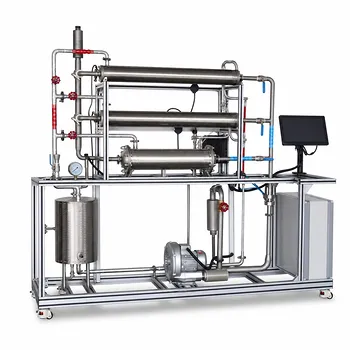
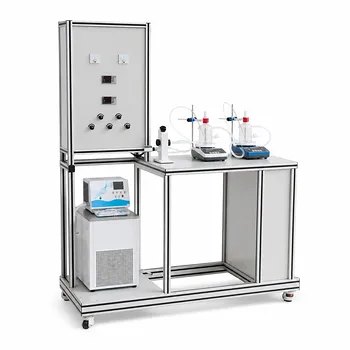
The era of sampling a pilot plant to prove a product was made correctly after it was already out of spec is over. The integration of Process Analytical Technology (PAT) and Multivariate Data Analysis (MVDA) is crucial because it transforms a pilot plant from a traditional, data-poor scale-up tool into a real-time, knowledge-rich development engine. This combination replaces guesswork and physical testing with a direct, multivariate fingerprint of the process state, enabling students and researchers to achieve modern manufacturing goals like true Quality by Design (QbD), automated control, and Real-Time Release (RTR).
Pilot plants face a critical bottleneck: "data-rich but information-poor." PAT sensors generate thousands of complex, overlapping data points per second that a univariate approach cannot interpret. MVDA is the essential "decoder" that translates this raw spectral noise into a clear, actionable picture of process health, directly quantifying how multiple interacting variables (e.g., temperature, feedstock purity, mixing speed) simultaneously affect final quality.
Decoding Complexity: The Raw Data Challenge
A single near-infrared (NIR) or Raman spectrum isn't a simple pH reading. It’s a convoluted signal containing overlapping information about chemical composition, physical properties (like particle size), and even temperature effects.
Traditional univariate analysis fails because it focuses on a single peak. This misses the rich, interactive information embedded in the entire spectral shape.
Why One Variable is Never Enough
A change in a single NIR peak could indicate a concentration change, a temperature fluctuation, or a shift in particle size. MVDA teases these effects apart.
By using methods like Principal Component Analysis (PCA), you can separate the signal from the noise. This reduces hundreds of spectral variables into a few "principal components" that capture the true, structured variation in your process.
The Power of the Process Fingerprint
PAT and MVDA together give you a process fingerprint. This is not just a number; it’s a multi-dimensional map of your process state.
Instead of tracking a univariate trend chart, you monitor a trajectory in a multivariate model. This allows you to define a "normal operating region" (the design space) and detect even subtle deviations long before they result in a failed batch.
Solving the Core Pilot Plant Mission: Scale-Up and Robustness
The deep need of any pilot plant is not just to make a product, but to generate a predictable, scalable recipe. This integration directly addresses the core challenges that cause scale-up to fail.
Pinpointing Scale-Dependent Phenomena
Lab-scale chemistry often behaves differently in a pilot-scale reactor due to mixing inefficiencies, heat transfer limitations, or shear stress. MVDA of PAT data exposes these hidden effects.
By comparing the multivariate trajectories of a lab run versus a pilot run, you can visually pinpoint exactly when and how the processes diverged. This moves the scale-up discussion from speculation to data-driven investigation.
Taming Biological and Feedstock Chaos
Bioprocesses and biofuel production start with inherently variable raw materials. You cannot fix your feedstock, but you can fix your process’s response to it.
PAT rapidly qualifies complex raw materials, measuring parameters like moisture, protein content, or potency in seconds. MVDA then correlates this raw material fingerprint with final performance, enabling feed-forward control that adjusts process parameters proactively to neutralize incoming variability.
Understanding the Trade-offs
Despite its power, a PAT/MVDA strategy is not a magic wand. Ignoring its practical demands is a common route to project failure.
The Calibration Investment
An MVDA model is only as good as the data it is trained on. Building a robust model requires a significant upfront investment of time and resources.
You must deliberately create a diverse calibration set that spans all expected sources of process variation (different raw material lots, normal operating ranges, etc.). The reference analytical methods used to build this model must be impeccable, as the model will faithfully replicate their errors.
The Trap of "Black Box" Thinking
Treating the MVDA model as an infallible black box is dangerous. Process understanding, not just a software score, remains the goal.
A model can drift over time due to instrument aging or an unmodeled new impurity. Students and engineers must be trained to critically evaluate the model's diagnostics and question illogical results, using the data to build their fundamental understanding rather than replace it.
Making the Right Choice for Your Application
Integrating PAT and MVDA demands a clear strategy based on the problem you are solving. The tools you choose and the model you build are defined by the control objective.
- If your primary focus is developing a robust design space for scale-up: Prioritize exploring deliberate process failures and using MVDA (e.g., PCA) to establish a proven acceptable range where quality is assured, regardless of how parameters are shifted within it.
- If your primary focus is real-time product release or rapid feedstock qualification: Invest heavily in building a tightly calibrated, supervised regression model (e.g., PLS) that can predict a specific quantitative value like concentration, moisture, or potency in seconds.
- If your primary focus is automating proactive process control: Deploy a fast, rugged multivariate classifier to instantly categorize the process state (e.g., "steady-state," "reaction endpoint," "deviation detected") and directly trigger a feedback or feed-forward control loop in the DCS.
The integration of PAT and MVDA is not merely an analytical upgrade; it’s a fundamental shift in how we interact with and learn from pilot-scale processes, turning a black box into a transparent window where every interacting variable is seen, understood, and controlled.
Summary Table:
| Feature / Aspect | Traditional Univariate Analysis | Integrated PAT/MVDA Approach |
|---|---|---|
| Data Analysis | Tracks single, isolated variables (pH, temp) | Deconstructs complex, overlapping spectral data |
| Process Visibility | "Data-rich but information-poor" state | Direct, multi-dimensional process fingerprint |
| Control Capability | Reactive testing after batch completion | Proactive, real-time automated control (RTR) |
| Scale-Up Success | High dependency on physical trial-and-error | Data-driven deviation pinpointing and analysis |
Bring Modern Process Control to Your Lab
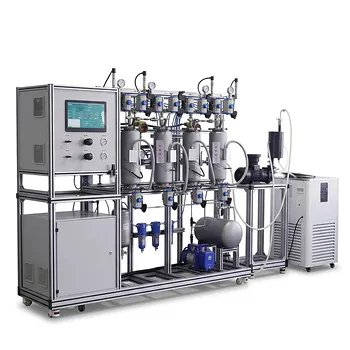
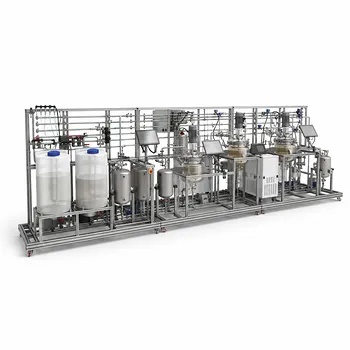
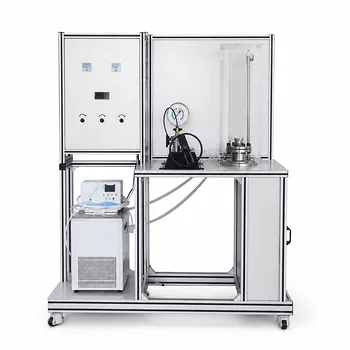
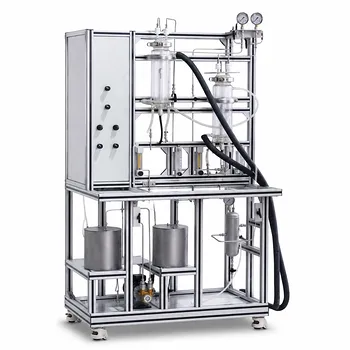
Teaching Quality by Design (QbD) and advanced automation requires hands-on experience with industry-standard tools. LABPARK offers specialized Educational and Vocational Unit Operations Pilot Plants in chemical engineering, bioprocess & biotech, and environmental & water treatment. Engineered for universities, research institutes, and enterprises, our plants provide the ideal platform to implement real-time PAT and MVDA workflows.
Ready to elevate your research capabilities and prepare the next generation of engineers? Contact LABPARK today to customize your pilot plant solution!
Related Products
- Multi-Component Gas Pressure Swing Adsorption Pilot Plant for Unit Operations Education
- General Purpose Cosmetics Production Unit Operations Training Pilot Plant
- Continuous Batch Extractive Distillation Educational Pilot Plant
- Residence Time Distribution and Reactor Flow Characteristics Determination Educational Pilot Plant
- Polymerization Granulation and Pellet Processing Educational Unit Operations Pilot Plant
People Also Ask
- How does Pressure Swing Adsorption (PSA) technology operate? Optimize gas separation with pilot plants.
- How do two-film & penetration theories apply to gas absorption pilot plant teaching? Key pedagogical insights.
- How is the direction and driving force of mass transfer determined in a gas absorption unit operations pilot plant?
- How does partial pressure behavior influence gas absorption pilot plants? Master Mass Transfer
- What are the limitations of Henry's Law in gas absorption pilot plants? Avoid critical lab errors.