The reactor’s starting temperature is not just a warm-up step—it is a decision that can lock in failure or success before a steady state is ever reached.
In a gas-solid catalytic reactor pilot plant, the initial temperature profile during startup directly determines which of multiple possible steady states the reactor will occupy. If the catalyst bed is preheated above a critical ignition temperature when the feed is introduced, the system shifts to a high-conversion, high-temperature state. If it starts cold, it may remain trapped in a low-conversion, low-temperature state—even under identical feed conditions and wall temperatures. This behavior is explained by hysteresis: the path taken to ignite the reactor differs from the path that would later cause it to extinguish, making the final steady-state dependent on the startup thermal history.
Because exothermic catalytic systems exhibit multiple steady states due to interfacial heat and mass gradients, the same operating conditions can sustain two very different outcomes. The startup temperature profile acts as the selector, and the resulting hysteresis loop means the reactor “remembers” its ignition path—a critical insight for safe and efficient pilot plant operation.
The Existence of Multiple Steady States
A fixed-bed catalytic reactor for exothermic reactions does not always have a single, predictable steady-state solution. Under identical feed flow, concentration, and coolant temperature, it can settle into a high-reaction-rate or a low-reaction-rate condition. This multiplicity arises from the non-linear coupling of transport phenomena and kinetics.
How Heat and Mass Gradients Create Instability
Between the bulk fluid and the solid catalyst surface, interfacial temperature and concentration gradients exist. The reaction rate depends exponentially on the catalyst surface temperature, which itself is heated by the reaction.
If the reaction generates heat faster than it can be removed, the surface temperature rises, which accelerates the reaction further. This feedback loop can push the system toward a high-temperature steady state—or, if heat removal dominates, toward a low-temperature one.
The Interplay of External Transport and Reaction Kinetics
Reaction kinetics alone do not explain multiplicity. It is the interaction between external transport resistances (heat and mass transfer across the fluid-solid boundary film) and the intrinsic rate law that creates the possibility of two stable solutions for the same bulk conditions.
Small differences in the initial temperature can tip the balance, determining whether the heat-generation curve intersects the heat-removal curve at a high-activity or low-activity point.
The Startup Temperature as a Determinant of the Final State
Because the reactor can exist in multiple states, the initial conditions when the feed is introduced act as a decisive switch. The steady state eventually reached is not governed solely by the ongoing operating parameters—it is a path-dependent outcome.
Preheating Above the Ignition Threshold
If the catalyst bed is preheated so that its temperature exceeds a critical ignition temperature, the reaction rate upon feed introduction immediately generates more heat than can be removed. The surface temperature climbs rapidly until the system locks into a high-conversion steady state.
In a pilot plant, this ignition point can be deliberately targeted by controlling the preheat temperature, ensuring that the reactor operates in the desired high-productivity regime from the very beginning.
Cold Starts and the Risk of Low Conversion
When the reactor starts cold, the initial reaction rate is low. The heat generated is easily dissipated, and the catalyst surface temperature remains too low for reaction self-acceleration.
Under the same feed conditions that would sustain a thriving reaction in a preheated bed, the reactor instead stays in a low-conversion steady state. The identical hardware and settings yield drastically different performance, purely because of the startup thermal profile.
The Hysteresis Loop: Different Paths for Ignition and Extinction
The memory effect is most clearly captured by a hysteresis loop. As a control variable (like feed temperature or concentration) is slowly changed, the reactor does not simply reverse its path. The critical point at which it ignites is different from the point at which it extinguishes.
Sudden Ignition and Extinction Jumps
During a slow increase in feed temperature, the reactor may suddenly “jump” from a low-activity to a high-activity state at the ignition temperature. Once in that high state, lowering the feed temperature does not immediately return it to the low state.
The system stays on the upper branch until the feed temperature drops below a lower extinction temperature, at which point the reaction rate collapses abruptly. This asymmetry is the essence of hysteresis.
Why History Matters More Than Instantaneous Conditions
Because ignition and extinction occur at different conditions, a reactor operating at a feed temperature between those two critical values could be in either the high or the low state. Which state it occupies depends entirely on how it arrived at that condition—whether it was heated into the region (ignited) or cooled into it (extinguished).
Startup creates exactly this directional starting point. The initial temperature profile sets the reactor on the upper or lower branch of the hysteresis curve, and the subsequent steady-state is a direct reflection of that historical path.
Understanding the Trade-offs: Practical Implications for Pilot Plants
While hysteresis enables a controlled ignition strategy, it also introduces operational risks that pilot plant designers and operators must manage carefully. The non-linear nature of the system means precise startup protocols are not optional—they are safety and performance requirements.
Experimental Insights into Reactor Stability
Pilot plants with precise temperature control allow users to experimentally map the hysteresis loop. By recording catalyst surface temperature as feed conditions are ramped up and down, the ignition and extinction points can be identified.
This data provides a practical foundation for specifying safe startup procedures and defining the safe operating window that avoids accidental runaway or unwanted extinction at production scale.
Avoiding Runaway and Incomplete Conversion
A startup temperature that is too high can push the reactor into an uncontrollable exotherm, leading to thermal runaway. Conversely, a temperature that is too low can leave the plant in a state of incomplete conversion, wasting feedstock and requiring a shutdown and re-ignition.
Pilot plant tests teach that the region between ignition and extinction is not a smooth control range—it is a bistable zone where the wrong startup decision will directly determine a poor steady-state.
Making the Right Choice for Your Pilot Plant Operation
Every startup is a deliberate move along the hysteresis curve. The following goal-based guidance helps you align the initial temperature profile with your specific pilot plant objectives.
- If your primary focus is achieving maximum conversion quickly: Precisely preheat the catalyst bed above the documented ignition temperature before feed introduction. This ensures the reactor jumps to the high-activity branch immediately, and you capture the full productivity from the first hour of operation.
- If your primary focus is mapping reactor stability limits: Perform a series of controlled startups from different initial temperatures while holding all other conditions constant. Record both the solid and gas temperatures to locate the upper and lower boundaries of the hysteresis loop, and identify the critical ignition and extinction points.
- If your primary focus is safe scale-up and runaway prevention: Document the hysteresis data to define a mandatory preheat protocol that avoids the low-conversion trap without overshooting into runaway territory. Incorporate the measured extinction temperature as the lower safety limit for planned shutdowns or turndown operations.
The steady-state performance of your catalytic pilot plant is not a fixed destination—it is a choice made visible by hysteresis. Control the startup thermal profile, and you control which of the multiple possible futures the reactor will settle into.
Summary Table:
| Startup Strategy | Initial Bed Temperature | Final Steady State | Operational Impact |
|---|---|---|---|
| Preheated Start | Above critical ignition threshold | High-conversion / High-temperature | Maximizes reaction productivity immediately; requires careful run-away monitoring |
| Cold Start | Below critical ignition threshold | Low-conversion / Low-temperature | Results in incomplete conversion and wasted feedstocks; requires system restart |
Master Chemical Reactor Dynamics with LABPARK Pilot Plants
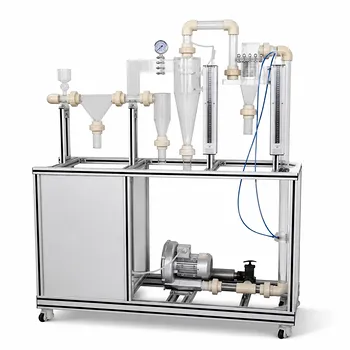
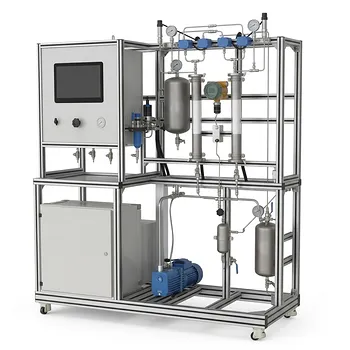
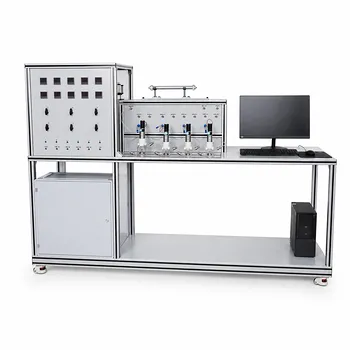
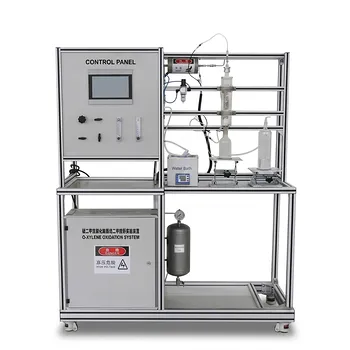
Understanding complex thermodynamic behaviors like hysteresis and reactor stability is essential for training the next generation of engineers and researchers. LABPARK designs and manufactures premium Educational and Vocational Unit Operations Pilot Plants in chemical engineering, bioprocess & biotech, and environmental & water treatment.
Tailored for universities, research institutes, and progressive enterprises, our robust pilot plants allow users to safely map hysteresis loops, simulate thermal runaway, and master startup protocols in a controlled laboratory environment.
Bring hands-on operational excellence to your institution—contact our technical experts today to find the perfect pilot plant system for your curriculum or research needs.
Related Products
- Fixed Bed Gas Solid Catalytic Reaction Educational Pilot Plant
- Fluidized Bed Gas Solid Catalytic Reaction Educational Pilot Plant
- Micro-Scale Gas-Solid Catalytic Reaction Educational Pilot Plant
- Fixed-Bed Chemical Reaction and Gas Dust Tar Removal Unit Operations Pilot Plant
- Educational Unit Operations Pilot Plant for Intraparticle Diffusion Effective Factor Measurement
People Also Ask
- How do reactor pilot plants safely study gas-solid reactions? Master kinetics with thermal & flow control.
- How does the Mears criterion evaluate transport resistance? Key Guide to Intrinsic Kinetics
- Fluidized vs. Fixed Bed Reactors: Comparing Heat & Complexity in Pilot Plants
- Why is a multibed configuration necessary for exothermic reactions? Optimize your pilot plant trajectory.
- What are the differences between pseudohomogeneous and heterogeneous models in pilot plants?