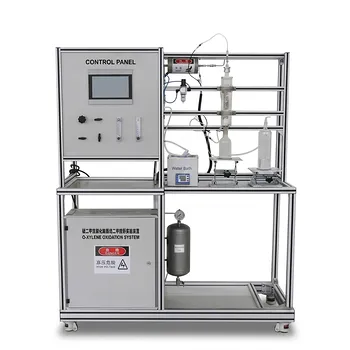
The catalyst pellet effectiveness factor is the critical translator that converts intrinsic laboratory kinetics into the real-world performance you measure in a pilot plant. Without it, you cannot tell if a slow reaction rate stems from poor catalyst chemistry or from diffusion starving the pellet’s interior. Numerically, this factor is obtained by solving a nonlinear boundary value problem of coupled mass and heat balances—a task researchers and students handle efficiently through orthogonal collocation, which turns differential equations into a fast-solvable algebraic system.
For education and research, calculating the effectiveness factor is essential because it quantifies the tug-of-war between pore diffusion and chemical reaction. Mastering its numerical solution with orthogonal collocation gives you a rapid, physically transparent tool to validate pilot plant data, diagnose mass transfer limitations, and guide catalyst design—all without getting lost in cumbersome shooting methods.
Why the Effectiveness Factor is a Cornerstone in Pilot Plant Work
The Fundamental Concept: Unmasking the True Reaction Rate
The effectiveness factor, η, is the ratio of the actual reaction rate observed in a catalyst pellet to the rate that would occur if every interior point experienced the surface temperature and concentration.
It directly reveals how much internal mass and heat transfer are distorting the intrinsic kinetics—the “true” activity of the catalyst material.
Diagnosing Hidden Diffusion Limitations
When η is very low—for example 0.02–0.04 in steam reforming of natural gas—the reaction barely penetrates the pellet and takes place in a thin outer skin.
Pilot plant operators who calculate this number immediately know the catalyst interior is wasted and can pivot to smaller particles, tailored pore structures, or eggshell active-phase distributions without relying on trial and error.
Forecasting Performance Under Real Industrial Conditions
Lab-scale tests rarely mimic actual feeds, which may contain impurities or involve recycled streams. Pilot plants replicate these realistic conditions.
By calculating η from pilot data, researchers can decouple the catalytic material’s intrinsic performance from transport disguises, giving confidence that a catalyst chosen today will behave predictably after scale‑up.
Capturing Surprising Temperature Effects
For strongly exothermic reactions, the pellet interior can become significantly hotter than the external surface. Because kinetics accelerate with temperature, the effectiveness factor may exceed unity.
Pilot units equipped with internal temperature measurements let students observe this directly, turning a counter-intuitive concept into a hands‑on lesson on the interplay between heat generation and mass transport.
How the Effectiveness Factor is Numerically Solved in Practice
The Mathematical Heart: A Coupled Boundary Value Problem
Inside a pellet, reactant concentration and temperature profiles obey simultaneous differential equations with boundary conditions at the center (symmetry) and at the external surface (coupling to bulk fluid).
The equations are nonlinear because the reaction rate depends on both concentration and temperature, and the heat generation term couples back to the rate. This is a classic two‑point boundary value problem.
Orthogonal Collocation: The Method That Makes It Manageable
Orthogonal collocation belongs to the family of weighted residual methods. It approximates the unknown concentration and temperature profiles as a series of smooth basis polynomials—typically Lagrange interpolants.
The interpolation points are chosen as the roots of orthogonal polynomials (Jacobi polynomials). At these collocation points, the differential balances are forced to be exactly satisfied. The result: the original ODEs and boundary conditions are transformed into a purely algebraic set of equations.
This algebraic system can be solved with a standard Newton‑Raphson solver, making the method far faster and easier to implement than iterative shooting techniques, especially in educational settings with tools like MATLAB or Python.
A Practitioner’s Roadmap for Pilot Plant Studies
- Step 1 – Dimensionless formulation: Express the model in terms of Thiele modulus (reaction vs. diffusion) and Arrhenius number (temperature sensitivity). This reveals the governing dimensionless groups.
- Step 2 – Select collocation points: Typically 3–7 interior points are enough for smooth profiles. More points capture steep gradients but increase algebraic size.
- Step 3 – Discretize the equations: Replace the differential operators with differentiation matrices derived from the collocation polynomials. Boundary conditions are applied directly.
- Step 4 – Solve the nonlinear algebraic system: Use Newton iteration, initializing with the known isothermal analytical solution (η = tanh φ / φ) or a similar guess.
- Step 5 – Compute η by quadrature: Integrate the reaction rate over the pellet volume using the collocation‑based polynomial approximation, delivering the effectiveness factor in seconds.
Understanding the Trade-offs and Intrinsic Limitations
Accuracy Versus Computational Simplicity
Using just a few collocation points works beautifully for moderate Thiele moduli, but for steep concentration gradients (high Thiele modulus or intense exothermicity) the profile can be poorly resolved.
Adding more points improves precision at the cost of a larger nonlinear system. Students learn to recognize when the polynomial approximation fails and refine their discretization accordingly.
Model Assumptions You Must Respect
The classic pellet model assumes uniform effective diffusivity, constant physical properties, and a single reaction. Real‑world catalysts often involve multicomponent diffusion, sintering, or coking.
Orthogonal collocation can be extended to these complexities, but the programmer must treat variable properties and multiple species carefully to avoid spurious results.
The Danger of Ignoring External Transport
If the fluid‑to‑pellet film resistance is significant, the surface concentration and temperature differ from the bulk values. The calculated η will be misleading unless the model incorporates Biot numbers for mass and heat.
Pilot plant experiments should always include runs at varying flow velocities to separate external and internal limitations before trusting the computed effectiveness factor.
Making the Right Choice for Your Goal
- If your primary focus is teaching the heart of reaction engineering: Use orthogonal collocation with a small number of points so students can instantly see how η changes as they adjust the Thiele modulus or thermal parameters, anchoring theory in live computation.
- If your primary focus is validating pilot data for reliable scale‑up: Embed external transport terms into the collocation model, and cross‑check by running different pellet sizes and operating temperatures. This isolates kinetics from diffusion and prevents costly mis‑scale‑up.
- If your primary focus is optimizing catalyst formulation: Rely on the η calculation to decide whether eggshell profiles or smaller particles will unlock enough extra activity to justify the pressure‑drop penalty, using the algebraic speed to explore many “what‑if” scenarios rapidly.
By making orthogonal collocation your go‑to numerical tool, you turn the effectiveness factor from an abstract dimensionless number into a practical, data‑driven compass—guiding every decision from pilot plant experimentation through to full‑scale reactor design.
Summary Table:
| Aspect | Key Concept / Method | Practical Application & Benefit |
|---|---|---|
| Effectiveness Factor ($\eta$) | Ratio of actual reaction rate to surface rate | Diagnoses hidden diffusion limitations and prevents wasted catalyst interior. |
| Numerical Challenge | Non-linear coupled boundary value problem | Models concentration and temperature profiles within the pellet. |
| Orthogonal Collocation | Polynomial approximation at Jacobi root points | Converts complex ODEs into easily solved algebraic systems (via MATLAB/Python). |
| Pilot Plant Relevance | Kinetic decoupling & dimensionless scale-up | Isolates true chemical activity from transport limitations for reliable scale-up. |
Bridge Theory and Practice with LABPARK Pilot Plants
To truly master reaction engineering, students and researchers need hands-on experience translating mathematical models into real-world operations. LABPARK provides state-of-the-art Educational and Vocational Unit Operations Pilot Plants across chemical engineering, bioprocess & biotech, and environmental & water treatment.
Designed specifically for universities, research institutes, and progressive enterprises, our pilot plants allow you to:
- Visualize complex mass and heat transfer phenomena in real-time.
- Validate theoretical calculations, like effectiveness factors, using robust experimental data.
- Prepare students and engineers for industrial-scale reactor design with industry-grade equipment.
Ready to elevate your department's research and teaching capabilities? Contact us today to explore our customizable pilot plant solutions!
Related Products
- Fixed Bed Gas Solid Catalytic Reaction Educational Pilot Plant
- Multi Functional Catalytic Reaction and Reactor Evaluation Educational Unit Operations Pilot Plant
- Fluidized Bed Gas Solid Catalytic Reaction Educational Pilot Plant
- Micro-Scale Gas-Solid Catalytic Reaction Educational Pilot Plant
- Internal Circulation Gradient Free Catalytic Reaction Educational Pilot Plant
People Also Ask
- How do reactor pilot plants safely study gas-solid reactions? Master kinetics with thermal & flow control.
- How does the Mears criterion evaluate transport resistance? Key Guide to Intrinsic Kinetics
- Fluidized vs. Fixed Bed Reactors: Comparing Heat & Complexity in Pilot Plants
- Why is a multibed configuration necessary for exothermic reactions? Optimize your pilot plant trajectory.
- What are the differences between pseudohomogeneous and heterogeneous models in pilot plants?