The short answer: Microfibrous entrapped ZnO/SiO₂ outperforms alumina-supported ZnO during thermal regeneration because the silica support is chemically inert under the regeneration conditions. Where alumina reacts with ZnO to form an inactive zinc aluminate spinel and promotes rapid crystal growth, silica simply provides a stable, non-reactive framework that keeps the active zinc phase highly dispersed and accessible cycle after cycle.
Sorbent regenerability is not just about temperature—it’s about preventing irreversible solid-state chemistry. ZnO/SiO₂ preserves up to 60% zinc utilization after regeneration, while ZnO/γ-Al₂O₃ collapses to just 8–15% because the alumina support itself becomes a reactant, locking zinc into a dead spinel phase.
Why Regeneration Cripples Many Sorbents
Regeneration is meant to restore a sorbent’s capacity, not destroy it. For ZnO-based desulfurization sorbents, the thermal oxidation step (550–600°C in air) is particularly unforgiving because it accelerates two destructive mechanisms at once: solid-state reactions and sintering. The support material determines which of these mechanisms dominates—and whether the sorbent survives.
The Spinel Trap: Alumina’s Fatal Chemistry
When ZnO sits on γ-Al₂O₃, the regeneration heat drives a reaction between the active ZnO and the support. The result is zinc aluminate (ZnAl₂O₄), a spinel phase that is thermodynamically stable but completely inactive for desulfurization.
Zinc atoms locked inside the spinel lattice cannot interact with sulfur-bearing gases. This chemical consumption of the active material is irreversible, and it drops the practical zinc utilization from an initial 65% to a dismal 8–15% after only a few cycles.
Accelerated Sintering on Alumina
The alumina support not only reacts with zinc—it also encourages ZnO crystals to grow rapidly. During regeneration, small, highly active ZnO crystallites aggregate into large particles with much lower surface area. Larger crystals mean fewer available surface sites for the sulfidation reaction, effectively “diluting” the remaining active zinc even before spinel formation takes its toll.
How Silica Preserves Activity
ZnO/SiO₂ avoids both pitfalls because silica is chemically indifferent to ZnO under regeneration conditions. It neither participates in solid-state reactions nor catalyzes excessive crystal growth. The result is a support that behaves as a true structural scaffold.
No Spinel, No Loss of Active Phase
Silica (SiO₂) does not form a stable aluminate-like compound with zinc at 550–600°C. XRD analysis shows no detectable new phase formation after regeneration—only ZnO and the amorphous or crystalline silica support remain. This chemical inertness means virtually all the zinc remains as ZnO, fully available for the next desulfurization cycle.
Minimal Crystal Growth Preserves Dispersion
Without the reactive, mobile surface that alumina provides, ZnO crystallites on silica grow much more slowly. The smaller crystal size maintains a higher specific surface area, keeping a large fraction of zinc atoms at the gas‑solid interface where they can do their job. Post‑regeneration zinc utilization stays up to 60%, a dramatic retention compared to the collapse seen on alumina.
The Microfibrous Entrapment Advantage
Embedding the ZnO/SiO₂ within a sintered metal fiber network adds another layer of robustness. The microfiber matrix physically isolates sorbent particles, reducing particle‑to‑particle contact and further suppressing sintering. It also enhances heat and mass transfer during regeneration, ensuring uniform temperature distribution without creating local hot spots that might otherwise drive unwanted side reactions.
Understanding the Trade-offs
No support is perfect, and the choice between SiO₂ and Al₂O₃ involves legitimate engineering compromises that go beyond regenerability.
Initial activity versus long‑term stability. Alumina typically offers stronger metal‑support interactions, which can lead to a higher initial dispersion and slightly higher first‑cycle utilization (65% vs. 60% for SiO₂). If your process is single‑cycle or you replace the sorbent after each run, that initial edge may matter. However, in any cyclic operation, regenerability quickly becomes the overriding factor.
Mechanical and thermal properties. Alumina supports are well‑characterized and widely available with high crush strength. Silica supports can be more brittle, but the microfibrous entrapment compensates for this by providing a flexible, reinforcing cage. The trade‑off shifts from being a material limitation to a design one—the microfibrous structure adds a manufacturing step but delivers a sorbent that withstands dozens of cycles without attrition.
Cost and scalability. Silica supports are generally cost‑competitive, but the microfibrous entrapment process may increase upfront fabrication expense. For research pilot plants exploring multi‑cycle absorption‑regeneration, the dramatic reduction in sorbent turnover often justifies that investment.
Making the Right Choice for Your Research
When you evaluate sorbent candidates for a cyclic desulfurization process, align your decision with the actual operating model.
- If your primary focus is maximum zinc utilization over hundreds of cycles: Choose an inert support like SiO₂, ideally in a microfibrous entrapped form. The absence of solid-state reactions and sintering ensures stable, predictable performance run after run.
- If your primary focus is single‑use or very few cycles: Alumina‑supported ZnO might deliver a slight first‑cycle advantage. But consider whether the performance drop after regeneration is acceptable—or if the cost of fresh sorbent offsets any initial gain.
- If your primary focus is pilot‑scale validation of a regenerative process: ZnO/SiO₂ gives you the repeatability you need to gather meaningful data without the confounding variable of rapid deactivation. It allows you to study process parameters, not sorbent decay.
The key to superior thermal regenerability is simple: separate the active phase from a chemically reactive support. ZnO/SiO₂ does exactly that, making it a foundational building block for truly cyclic desulfurization systems.
Summary Table:
| Feature / Metric | ZnO/SiO₂ (Silica Support) | ZnO/γ-Al₂O₃ (Alumina Support) |
|---|---|---|
| Chemical Reactivity | Inert (No spinel formation) | Reactive (Forms inactive ZnAl₂O₄ spinel) |
| Post-Regeneration Zinc Utilization | High (Up to 60%) | Low (Drops to 8–15%) |
| Sintering Resistance | High (Minimal crystal growth) | Low (Rapid crystal aggregation) |
| Physical Framework | Microfibrous metal cage prevents attrition | Rigid support; prone to thermal sintering |
Scale Your Unit Operations Research with LABPARK
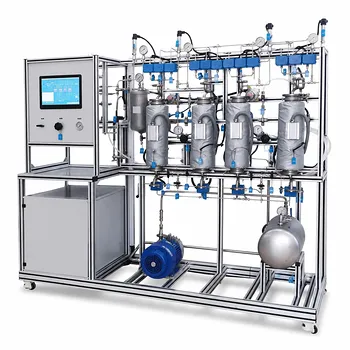
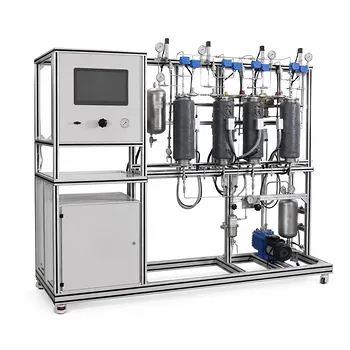
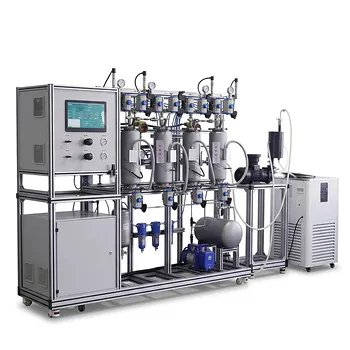
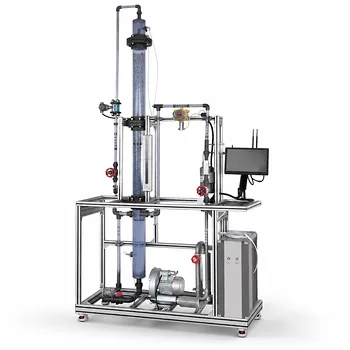
Validating advanced sorbent regeneration and chemical process cycles requires highly accurate, reliable equipment. LABPARK provides premium Educational and Vocational Unit Operations Pilot Plants in chemical engineering, bioprocess & biotech, and environmental & water treatment.
Tailored for universities, research institutes, and enterprises, our pilot plants deliver the precise process control and scalability required for groundbreaking research.
Ready to elevate your laboratory capabilities? Contact LABPARK today to discuss your project requirements with our engineering specialists!
Related Products
- Carbon Dioxide Absorption and Desorption Educational Pilot Plant for Carbon Capture Studies
- Dual-Mode Gas Absorption and Desorption Unit Operations Training Pilot Plant
- Carbon Dioxide Adsorption and Capture Educational Unit Operations Pilot Plant
- Absorption and Desorption Educational Unit Operations Pilot Plant
- Low Concentration Carbon Dioxide Capture Pressure Swing Adsorption Educational Pilot Plant
People Also Ask
- How does operating pressure influence the transition between absorption and desorption in a CO2 pilot plant?
- How do temperature variations affect CO2 transport models in pilot plants? Model vs Reality
- What unit operations are critical for CCUS training pilot plants? Build hands-on engineering expertise.
- How do electrolytes affect phase equilibrium in absorption pilot plants, and how to calculate it?
- Why is critical surface tension key in column internals? Optimize gas absorption pilot plant efficiency