Here is the definitive principle: In a sodium hydroxide (NaOH) absorption unit, acid gas removal relies on a fast, irreversible chemical reaction that converts gaseous acids into non-volatile salts. For a pilot plant demonstrating this, the primary reactions are:
- CO₂ + 2NaOH → Na₂CO₃ + H₂O (Carbon dioxide to sodium carbonate)
- H₂S + 2NaOH → Na₂S + 2H₂O (Hydrogen sulfide to sodium sulfide)
- COS + 4NaOH → Na₂S + Na₂CO₃ + 2H₂O (Carbonyl sulfide yielding a sulfide/carbonate mix)
- RSH + NaOH → RSNa + H₂O (Mercaptans converted to mercaptide salts)
These reactions shift the process from simple dissolution to chemical absorption, maximizing mass transfer.
Core Takeaway: The real value of an NaOH pilot plant isn't just neutralizing acid gas—it’s demonstrating irreversible chemistry. Unlike physical solvents that merely dissolve the gas, caustic permanently sequesters it, enabling near-total removal in a single pass. The key operational lesson lies in precisely managing the explosive reaction kinetics, corrosive environment, and the transition from "purification" to the "waste treatment" problem of spent caustic disposal.
Decoding the Chemistry of Caustic Scrubbing
To a student or researcher, an acid gas removal column is a practical lesson in kinetic vs. thermodynamic control. Purging CO₂ and H₂S below 1 μL/L cannot be achieved by equilibrium dissolution alone; it requires the driving force of an instantaneous reaction.
Why Irreversibility Changes the Process
Physical absorption relies on pressure and low temperatures to dissolve the solute. When you heat or depressurize the solvent, the gas fizzes back out.
Chemical absorption with NaOH eliminates that reversibility. The gas molecule is destroyed on contact and transformed into an ionic salt. Because the resulting salt has virtually no vapor pressure, the chemical reaction consumes the solute from the gas-liquid interface so rapidly that the mass transfer rate can be an order of magnitude higher than that of plain water.
The Dominant Reactions
In a mixed hydrocarbon stream, NaOH is indiscriminate. It will attack any acidic component with a labile proton, but the hierarchy of concern in a typical gas processing pilot plant is:
- The H₂S Scavenger: The reaction with hydrogen sulfide is blindingly fast, forming sodium sulfide (Na₂S) or sodium hydrosulfide (NaHS) depending on stoichiometry. In a packed column, this reaction occurs in a razor-thin film at the interface.
- The CO₂ Trap: Carbon dioxide consumes a disproportionate amount of caustic. The formation of sodium carbonate is highly exothermic and governed by the liquid-side resistance.
- The Nuisance Compounds: COS and mercaptans (RSH) react more slowly, requiring sufficient residence time in the caustic inventory.
The Operational Principles of a Pilot-Scale Absorber
Running this process in a pilot plant isn't just about connecting pipes. It’s about designing a system where the gas finds the liquid, and the liquid neutralizes the threat before it exits the column.
The Multi-Stage Counter-Current Necessity
Industrial units often tout pipelines as contactors, but educational pilot plants require visualization of the scrubbing profile. You don't pour fresh caustic in the top and expect the bottom tray to see pure gas.
A multi-stage or packed column design is mandatory for hitting sub-1 μL/L specs. As the gas rises, it encounters progressively lower concentrations of acid gas but—crucially—higher concentrations of active hydroxide. This counter-current configuration maximizes the log-mean concentration difference. The top stage acts as the "polishing" layer, where fresh caustic provides the zero-solute vapor pressure needed to strip the final traces.
Material Compatibility as a Process Variable
The supplementary references correctly highlight that you cannot build this system from standard materials. The combination of corrosive alkaline absorbing solution and acidic sour gas creates a boundary of constant material stress.
Borosilicate glass and PTFE are not luxury options; they are the standard. Sodium sulfide solutions are aggressive. Stainless steel can suffer from caustic stress corrosion cracking at the elevated temperatures caused by the exothermic CO₂ reaction. Furthermore, the plant must operate as a closed loop with emergency shutdowns tied to H₂S sensors, as the gas is lethal at concentrations far below process levels.
Understanding the Trade-offs: The Spent Caustic Dilemma
No discussion of NaOH absorption is complete without addressing the end-of-life problem.
Efficient scrubbing creates a hazardous waste stream. While the primary reference frames the disposal step as an "excellent practical lesson," this is where many pilot plants fail to mimic reality. The sodium sulfide (Na₂S) in the spent caustic is both toxic and odorous.
The High Cost of Fresh Reagent
Unlike amines, you don't regenerate caustic with boiling heat. The chemistry is irreversible. Once the hydroxide is consumed, its scrubbing power vanishes.
Attempting to push the caustic to complete utilization leads to a sharp performance cliff. If the pH drops below 9, the H₂S destruction efficiency plummets, and dangerous sour gas can immediately break through the column without being caught. You must either dump the spent solution or integrate an air oxidation unit (which itself requires catalysts and precise control) to convert the toxic sulfide into benign thiosulfate or sulfate.
Making the Right Choice for Your Pilot Plant Goal
When setting up the acid gas removal unit, align the variable you prioritize with the specific lesson you intend to demonstrate.
- If your primary focus is gas purity: Optimize the NaOH flow rate and concentration to maintain a clear pH endpoint. Monitor the top tray chemistry to keep H₂S breakthrough below detection limits.
- If your primary focus is reaction kinetics: Isolate the column temperature profile. Track the exothermic rise from the CO₂ reaction to calculate the heat of absorption, comparing the experimental data against the theoretical reaction enthalpy.
- If your primary focus is process economics and safety: Run the system with a bleed-and-feed strategy. Measure the chemical consumption per volume of gas treated, and simultaneously operate the wet air oxidation unit to close the loop on sulfur toxicity.
By treating the caustic column as an integrated system rather than a single step, you master the critical duality of chemical absorption: permanent purification at the cost of a permanent waste footprint.
Summary Table:
| Acid Gas | Chemical Reaction with NaOH | Operational Insight |
|---|---|---|
| Carbon Dioxide (CO₂) | CO₂ + 2NaOH → Na₂CO₃ + H₂O | Highly exothermic; dominates caustic consumption |
| Hydrogen Sulfide (H₂S) | H₂S + 2NaOH → Na₂S + 2H₂O | Blindingly fast reaction; requires strict safety and spent caustic management |
| Carbonyl Sulfide (COS) | COS + 4NaOH → Na₂S + Na₂CO₃ + 2H₂O | Slower reaction kinetics; demands longer contact residence time |
| Mercaptans (RSH) | RSH + NaOH → RSNa + H₂O | Converted to mercaptide salts; requires adequate column height |
Advance Your Chemical Engineering Program with LABPARK
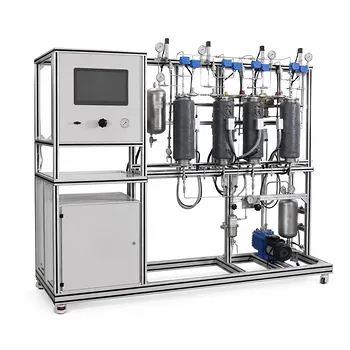
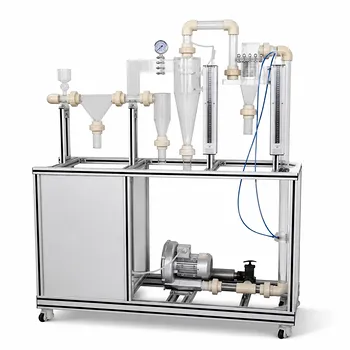
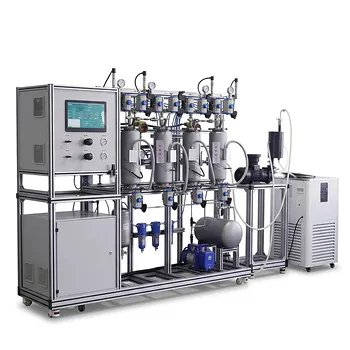
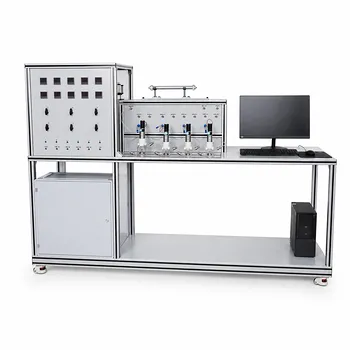
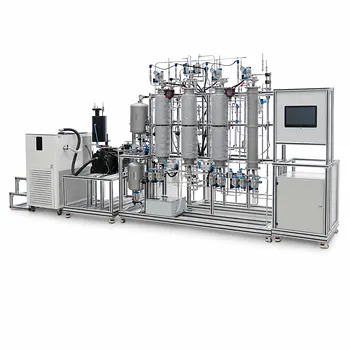
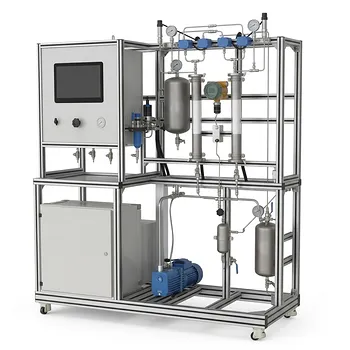
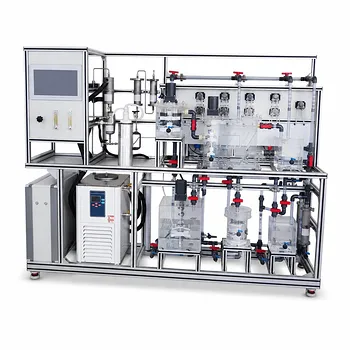
Bridge the gap between theory and industrial reality. LABPARK provides state-of-the-art Educational and Vocational Unit Operations Pilot Plants in chemical engineering, bioprocess & biotech, and environmental & water treatment for universities, research institutes, and enterprises.
Our custom-built gas purification pilot plants feature premium borosilicate glass and PTFE construction, ensuring safety and visual clarity for students and researchers analyzing absorption kinetics.
Contact LABPARK today to request a quote or custom design consultation!
Related Products
- Bench Scale Carbon Dioxide Capture Educational Unit Operations Pilot Plant
- Fixed-Bed Chemical Reaction and Gas Dust Tar Removal Unit Operations Pilot Plant
- Green Anhydrous Ethanol Purification Extractive Distillation Unit Operations Training Pilot Plant
- Gas-Solid Heterogeneous Separation Demonstration Educational Unit Operations Pilot Plant
- Ion Exchange Water Purification Educational Pilot Plant for Engineering Unit Operations
People Also Ask
- What unit operations are critical for CCUS training pilot plants? Build hands-on engineering expertise.
- What are the differences between post- and pre-combustion carbon capture training pilot plants?
- How can pilot plants show tail gas vs flue gas CO2 capture differences? Key educational insights.
- How do temperature variations affect CO2 transport models in pilot plants? Model vs Reality
- How does operating pressure influence the transition between absorption and desorption in a CO2 pilot plant?