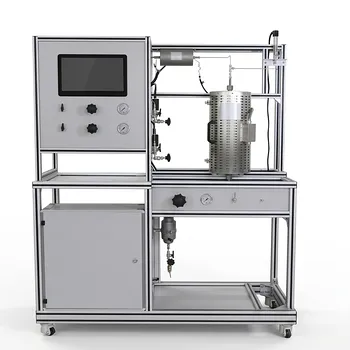
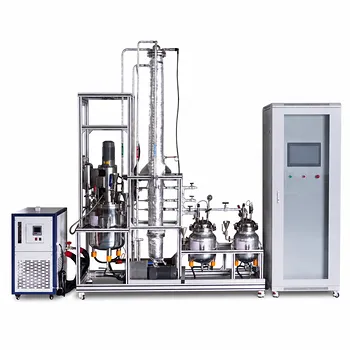
Allothermal coal gasification relies on an external heat source, while autothermal gasification generates that heat internally by partially burning the feed with oxygen. This single thermodynamic difference controls the entire energy balance, dictates the product gas composition, and fundamentally shapes how an educational pilot plant must be built and run. In an allothermal process, external heating preserves a high hydrogen-to-oxygen ratio in the reaction zone, leading to higher yields of H₂ and CH₄. In an autothermal process, oxygen injected directly into the reactor drives a partial combustion that supplies the necessary heat, which increases the fractions of CO and CO₂ while reducing H₂ and CH₄ output.
The core trade‑off for teaching: allothermal operation cleanly separates heat supply from gasification chemistry, giving students a clear view of endothermic reactions and producing a methane‑rich syngas. Autothermal operation merges exothermic combustion with gasification, forcing students to master real‑time oxygen‑to‑steam ratios and thermal balancing while generating the CO‑rich syngas typical of large‑scale industrial gasifiers. Both paths illuminate distinct thermodynamic principles, and an educational pilot plant can be designed to demonstrate both.
The Thermodynamic Distinction: How Heat Enters the Reactor
Heat Supply: External vs. Internal
Allothermal gasification keeps the heat source physically isolated from the gasification zone. An electric furnace or a combustion chamber surrounding the reactor walls transfers the necessary enthalpy without adding any oxygen to the process stream.
Autothermal gasification introduces oxygen (or air) directly into the coal‑steam mixture. A portion of the coal burns exothermically, releasing heat right where it is needed for the endothermic gasification reactions. Heat generation and consumption occur together inside the same vessel.
The Exothermic–Endothermic Balancing Act
Coal gasification is a thermal tightrope. Highly endothermic reactions, such as the water‑gas reaction (C + H₂O ⇌ CO + H₂, ΔH = +32.2 kcal mol⁻¹) and the Boudouard reaction (CO₂ + C ⇌ 2CO, ΔH = +41.4 kcal mol⁻¹), must absorb large amounts of energy. In an autothermal unit, that energy is supplied by the exothermic oxidation of carbon—CO formation (ΔH = −26.4 kcal mol⁻¹) and CO₂ formation (ΔH = −94.2 kcal mol⁻¹).
An allothermal plant sidesteps this internal combustion. It supplies the same heat demand externally, which lets the reactor run with a completely different oxygen balance—and, therefore, a different syngas fingerprint.
How Heat Source Alters Product Gas Composition
The Allothermal Advantage: Higher H₂ and CH₄
Because an allothermal pilot plant never injects oxygen for heat, the hydrogen‑to‑oxygen (H/O) ratio in the reactor stays high. The gasification chemistry shifts toward products that conserve this ratio, favoring hydrogen and methane. The result is a syngas stream richer in combustible gases, which is ideal for discussing pure endothermic reaction thermodynamics and methane‑formation pathways.
The Autothermal Signature: Elevated CO and CO₂
When oxygen enters the reactor, it partially oxidizes carbon, adding CO and CO₂ to the product stream while consuming hydrogen that might otherwise form H₂ or CH₄. The H/O ratio drops, and the equilibrium shifts. Students consistently observe a gas with higher CO and CO₂ concentrations and notably lower H₂ and CH₄ yields—a direct, quantifiable consequence of internal combustion.
Impact on Pilot Plant Design and Operation
Reactor Configuration and Insulation
An allothermal educational rig must incorporate a robust external heating jacket or furnace and meticulously designed thermal insulation to deliver uniform heat across the catalyst bed or fuel charge. Heat transfer rates and thermal gradients become key experimental variables.
An autothermal rig eliminates the furnace but demands excellent internal mixing and precise injection points for oxygen and steam. The reactor must manage the intense local heat release of the oxidation zone without damaging the vessel or causing slagging, making insulation and material choice equally critical.
Feed System Complexity
In allothermal mode, the feed system handles coal and steam only; the operator’s challenge is to maintain steady heat input from the external source. In autothermal mode, you add a third stream: oxygen (or air). The operator must control the oxygen‑to‑steam‑to‑coal ratio in real time, because this directly determines the reactor temperature and the final H₂/CO ratio of the syngas. Pilot plants often alternate between steam‑only and oxygen/air feeds to study the transition, teaching students the immediate thermal response of the bed.
Temperature Control and Safety
Autothermal operation introduces an exothermic reaction that can run away if oxygen flow is not perfectly regulated. Pilot‑plant control systems must incorporate fast‑response temperature sensors and automated oxygen shut‑off valves. Allothermal rigs, on the other hand, face the opposite challenge: if the external heat source fails, the endothermic reactions rapidly quench. Both scenarios provide powerful safety and control‑loop lessons for students.
Educational Value: Turning Thermodynamics into a Hands‑On Lesson
Energy Balances and O₂/Steam Ratios
By switching between allothermal and autothermal modes in the same pilot plant, students can directly measure the energy required to drive the water‑gas and Boudouard reactions and then compare it to the heat released by partial oxidation. They see how adjusting the oxygen‑to‑steam ratio shifts the syngas H₂/CO ratio, reinforcing the thermodynamic principles behind industrial syngas conditioning.
Gas‑Solid Kinetics and Reactor Dynamics
Whether the pilot plant uses a fixed‑bed, fluidized‑bed, or entrained‑flow configuration, the heat supply method influences heat transfer rates, char reactivity, and gas residence times. Allothermal fluidized beds, for example, let students decouple heat‑up rates from reaction rates. Autothermal beds force them to study how the combustion front moves through the fuel and how that affects carbon conversion.
Syngas Purity and Downstream Processing
Autothermal operation with air introduces nitrogen, diluting the syngas and dramatically lowering its lower heating value. An educational plant can demonstrate this trade‑off by comparing runs with pure oxygen and with air, giving students a real‑world feel for why industrial gasifiers often use an air separation unit. The allothermal path, free of nitrogen dilution, produces a higher‑purity fuel gas or synthesis gas, highlighting the cost–benefit analysis of heat supply versus syngas quality.
Common Pitfalls and Trade‑offs
The Hidden Cost of Allothermal Operation
External heating may produce a cleaner syngas, but it requires a continuous, high‑grade heat source and suffers from heat transfer limitations across reactor walls. In a pilot plant, scaling the external furnace to a larger unit becomes impractical, and the thermal inertia can make rapid temperature changes difficult to demonstrate.
The Autothermal Control Challenge
The same internal combustion that simplifies heat supply creates a tight coupling between oxygen flow and reactor temperature. Slight maladjustments can cause temperature spikes, sintering of the ash, or even a total shutdown of the endothermic zone. Students must learn that running an autothermal gasifier is essentially an advanced thermochemical balancing act.
When Air Dilutes the Syngas
If an educational pilot plant uses air instead of pure oxygen in autothermal mode, nitrogen can make up more than 50 % of the product gas. The resulting syngas has a lower heating value and is less suitable for synthesis reactions. It is an excellent teaching point, but it can also lead to underwhelming flame tests if students expect a high‑energy fuel gas.
Making the Right Choice for Your Educational Pilot Plant
The best teaching strategy often involves a modular pilot plant that can be reconfigured for both modes. Your choice of primary demonstration mode should align with your learning objectives.
- If your primary focus is pure endothermic thermodynamics and methane‑rich syngas: Start with an allothermal setup. It gives students a clean, uncoupled view of gasification chemistry and produces a gas that burns vividly, making abstract concepts tangible.
- If your primary focus is industrial relevance and process control: Adopt an autothermal configuration. It mirrors real‑world gasifiers, forces students to master O₂/steam ratios, and directly links combustion heat to gasification kinetics.
- If your primary focus is syngas quality and downstream synthesis: Use an allothermal bed or an autothermal bed with pure oxygen. Demonstrate how heat supply method and diluent gases (N₂ vs. none) alter the product’s H₂/CO ratio and suitability for Fischer–Tropsch or methanol synthesis.
Mastering the thermodynamic differences between allothermal and autothermal coal gasification isn’t just an academic exercise; it’s the foundation for teaching students how to design, control, and optimize the reactors that will one day power a cleaner carbon economy.
Summary Table:
| Feature | Allothermal Gasification | Autothermal Gasification |
|---|---|---|
| Heat Source | External (electric furnace/jacket) | Internal (partial combustion with O₂) |
| Syngas Profile | Rich in H₂ and CH₄ | Rich in CO and CO₂ |
| Control Focus | External heat transfer rates | Real-time oxygen-to-steam-to-coal ratios |
| Operational Risk | Rapid quenching upon heat source failure | Thermal runaway and ash sintering |
Bring Chemical Engineering Thermodynamics to Life in Your Lab
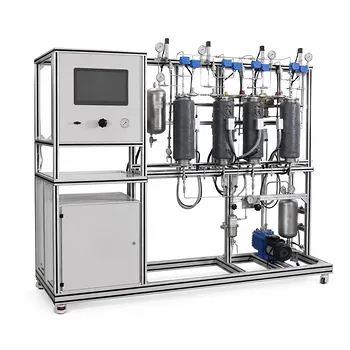
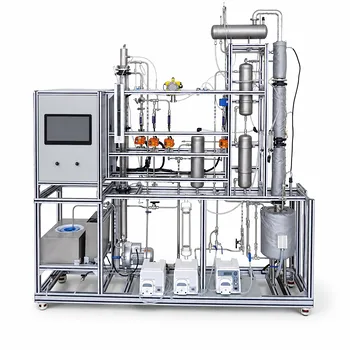
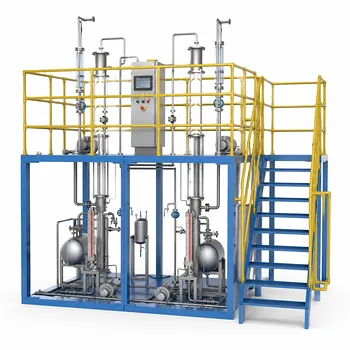
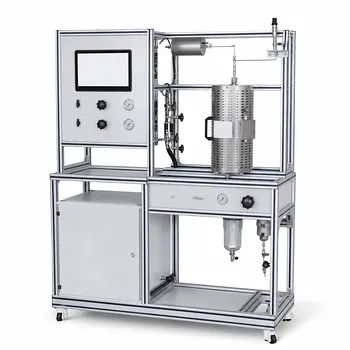
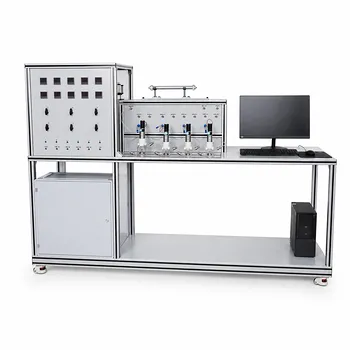
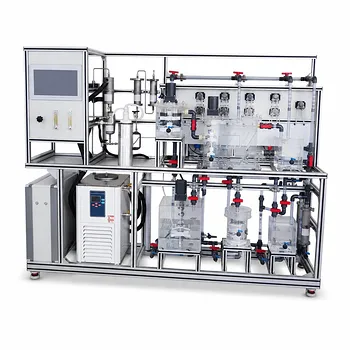
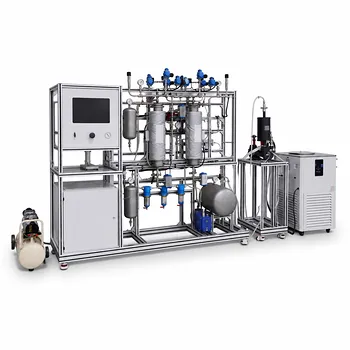
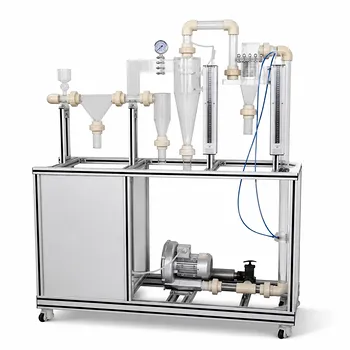
Are you looking to provide students and researchers with hands-on experience in advanced chemical processes? LABPARK designs and manufactures premium Educational and Vocational Unit Operations Pilot Plants in chemical engineering, bioprocess & biotech, and environmental & water treatment.
Whether you need a modular gasification system to demonstrate the real-time balance of allothermal and autothermal reactions or custom solutions tailored for universities, research institutes, and enterprises, we deliver the safety, reliability, and precision your curriculum demands.
Contact our engineering experts today to discuss how we can configure the perfect pilot plant for your institution!
Related Products
- Bench Scale Carbon Dioxide Capture Educational Unit Operations Pilot Plant
- Fixed-Bed Chemical Reaction and Gas Dust Tar Removal Unit Operations Pilot Plant
- Carbon Dioxide Absorption and Desorption Educational Pilot Plant for Carbon Capture Studies
- Dual-Mode Gas Absorption and Desorption Unit Operations Training Pilot Plant
- Carbon Dioxide Hydrogenation Methanol Synthesis Educational Unit Operations Pilot Plant
People Also Ask
- How does piping diameter restrict gas flow? Scale-down design tips for pilot plants.
- How to calculate theoretical and excess air in a combustion training pilot plant to prevent incomplete combustion.
- How to Minimize Hazardous Inventory in Pilot Plants? Master Inherently Safer Design
- How to use pilot plants to estimate gas compression costs? Master scale-up economics.
- What is the operational difference between adsorption and absorption in pilot plants? Key Comparison Guide