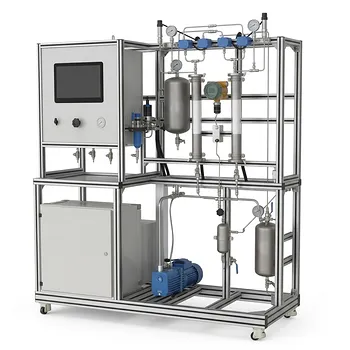
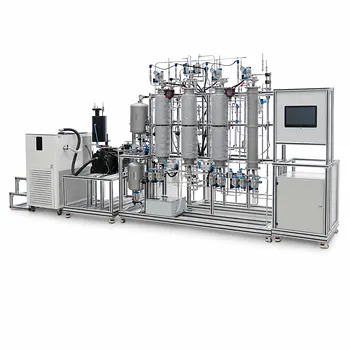
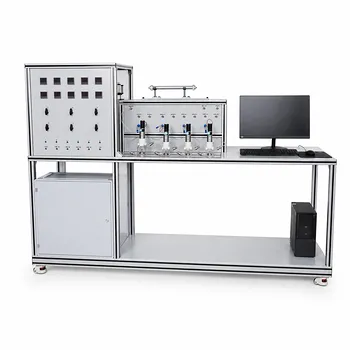
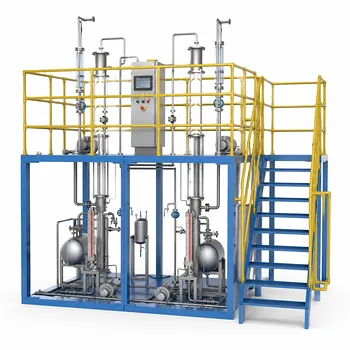
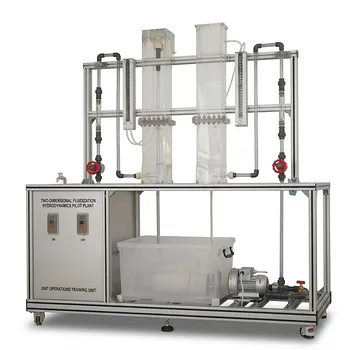
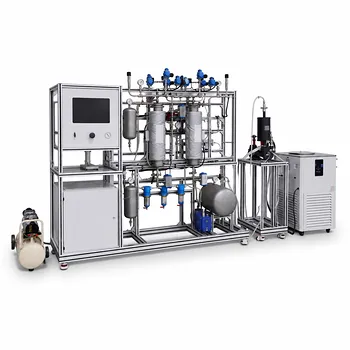
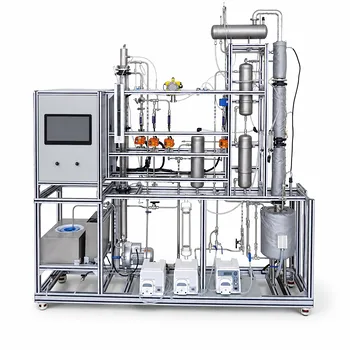
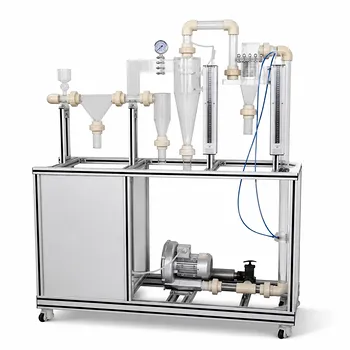
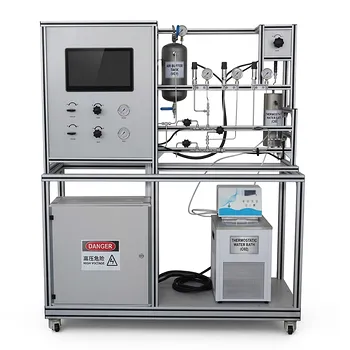
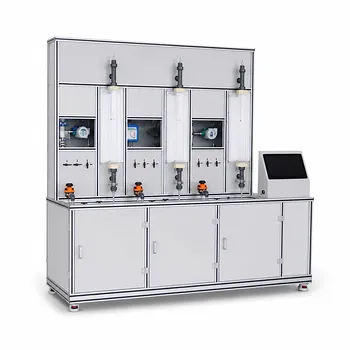
Pressurized gasification in a pilot plant unlocks a direct window into industrial reality, revealing how elevated pressure fundamentally reshapes reaction chemistry, energy efficiency, and process design. By moving beyond ambient-pressure demonstrations, researchers and students can observe the thermodynamic shift toward direct methane formation, quantify the dramatic reduction in downstream syngas compression work, and gain hands-on experience with the operational variables that define commercial processes for methanol, ammonia, and hydrogen.
The core advantage is a unique, integrated learning environment where theory meets practice under industrially relevant conditions. Pressurized pilot plants compress the otherwise invisible kinetic, thermodynamic, and mass-transfer effects into observable data, enabling a deep, quantitative understanding of reactor behavior that textbooks alone cannot provide. This experiential bridge turns abstract chemical engineering principles into an intuitive design toolkit.
How Pressure Transforms Gasification Chemistry
Elevating the pressure inside a gasification reactor is not simply a linear change in conditions; it triggers a cascade of interconnected thermodynamic and kinetic shifts that a pilot plant makes tangible.
The Thermodynamic Lever: Shifting Equilibrium to Methane
Gasification produces a mix of hydrogen, carbon monoxide, carbon dioxide, and methane. According to Le Chatelier’s principle, increasing the system pressure favors reactions that reduce the total number of gas molecules. In gasification, this directly promotes methanation reactions such as CO + 3H₂ ⇌ CH₄ + H₂O.
In a pilot plant, researchers can see this shift in real time. Direct methane production reduces the downstream load on catalytic methanation steps, and because methane formation is exothermic, it simultaneously cuts the oxygen demand needed to sustain the reactor’s heat balance—a concept the primary reference captures as “reducing oxygen heat load.” This interplay of chemistry and energy is far more instructive than any simulation.
Kinetic Acceleration Through Concentration
Beyond equilibrium, pressure directly accelerates reaction rates. For gas-phase reactions, increasing pressure increases the concentration of reactant molecules per unit volume. This leads to a higher effective collision frequency, which the supplementary references highlight as a key driver of reaction kinetics.
In a pilot plant, students can manipulate system pressure via back-pressure regulators and mass flow controllers to observe how a two- or three-fold increase in pressure can halve the reaction time. This direct, hands-on demonstration of the link between pressure and space velocity cements an understanding that purely theoretical treatments often leave abstract.
The Syngas Compression Dividend
Any application that converts syngas into methanol, ammonia, or synthetic fuels requires the gas to be delivered at high pressure to the downstream synthesis loop. Performing gasification under pressure means the raw syngas leaves the gasifier already partially compressed.
The primary reference rightly points to the reduction in downstream syngas compression energy as a major advantage. Demonstrating this in a pilot plant quantifies the energy savings and teaches an essential lesson in process integration: a costly unit operation on the front end (pressurized gasification) can deliver a larger net economic benefit when the whole plant flowsheet is considered.
Bridging Theory and Industrial Practice
A pilot plant is more than a large-scale experiment; it is a learning platform designed to make the invisible visible. Pressurized operation adds a layer of complexity that mirrors real-world challenges and deepens educational value.
Visualizing Rate-Controlling Regimes
One of the most powerful capabilities of a pilot plant is the ability to experimentally identify what limits a reaction: chemical kinetics, pore diffusion, or gas-film mass transfer. According to the supplementary references, changing operating conditions like gas velocity and temperature while under pressure lets students pinpoint the transition between regimes.
For example, at lower temperatures, the reaction may be kinetically controlled. Increasing the temperature can shift the bottleneck to pore diffusion within a char particle. In a pressurized environment, the higher partial pressures can also influence whether gas-film resistance becomes dominant. This hands-on diagnostic work transforms abstract transport phenomena equations into a practical investigative skill.
Engineering Insight into Oxygen Management
Autothermal gasification balances endothermic gasification reactions with exothermic combustion. The primary reference mentions “reducing oxygen heat load,” which is a nuanced operational benefit.
In a pressurized pilot plant, researchers can directly measure how much oxygen is needed to reach a target temperature, observing that as pressure rises and methane formation increases, the net oxygen demand for heat supply drops. This teaches a critical design trade-off: the cost of air separation units versus the savings from lower oxygen usage and reduced syngas compression. It is exactly this kind of multi-variable optimization that a pilot plant uniquely enables.
Safety as a Curriculum
High-pressure operation inherently carries risk. However, the supplementary references emphasize that modern pilot plants are engineered with layers of safeguards: pressure relief valves, safety burst discs, gas leak detectors, and automated emergency shutdown systems. Demonstrating these systems in action makes process safety an integral part of the learning experience, not a peripheral checklist.
Students learn to operate within a safe operating envelope, understanding how interlocks, blast shields, and PID temperature controls create a robust experimental platform. This exposure to real-world safety engineering is invaluable and impossible to replicate in purely computational coursework.
Understanding the Trade-offs
No technology is without drawbacks, and objective advisors must confront them directly. The benefits of pressurized pilot-scale gasification come with significant costs and complexities that must be managed.
The High Cost of High Pressure
Pressurized reactors, compressors, and the necessary safety infrastructure are substantially more expensive than their atmospheric counterparts. A pilot plant must be built with thick-walled vessels, high-integrity seals, and precision instrumentation, all of which escalate capital and maintenance budgets.
Pressure Drop and Backmixing
As the supplementary references note for sparged reactors, high operating pressures can lead to increased pressure drops across the bed, which consume energy and can create operational instability. In fluidized bed gasifiers, maintaining proper fluidization while managing pressure drop requires careful design of the gas distribution system.
Additionally, while pressure boosts reaction rates, it does not inherently solve fluid mixing problems. In bubble column or fluidized bed configurations, backmixing can still reduce conversion efficiency, and the interplay between pressure and bubble coalescence can shrink the effective gas-liquid interfacial area. A pilot plant is essential to map out these competing effects.
Scale-Down Compromises
For highly equilibrium-limited reactions like the Haber process, pilot plants often operate at lower pressures and temperatures than industrial counterparts to ensure safety. While the thermodynamic principles remain, the magnitude of observed effects is dampened.
The key insight is that a pilot plant demonstrates trends and principles, not necessarily exact industrial yields. Recognizing this scale-down factor prevents students from over-extrapolating and teaches the critical skill of dimensionless analysis and scaling.
Making the Right Choice for Your Research or Teaching Goal
The decision to invest in a pressurized gasification pilot plant should be driven by your specific objectives. Not every educational or research program requires this level of complexity.
- If your primary focus is process integration and energy efficiency: A pressurized unit is indispensable. It will demonstrate the crucial link between gasifier pressure and downstream compression savings, as well as the oxygen heat-load trade-off, forming the cornerstone of an advanced process design curriculum.
- If your primary focus is fundamental reaction engineering: The pilot plant becomes a powerful kinetic tool. It allows you to isolate rate-controlling steps and witness the equilibrium shift toward methane, providing data-rich experiments that illustrate Le Chatelier’s principle and mass transfer theory in action.
- If your primary focus is industrial safety and operational training: The high-pressure pilot plant is the only credible platform. The integrated safety systems, standard operating procedures, and the experience of managing a high-energy process prepare students for the realities of the chemical industry far better than any simulation.
- If your primary focus is budget or introductory demonstrations: An atmospheric gasifier may suffice for basic concepts like syngas composition and mass balances. The added cost and complexity of pressure are only justified when the thermodynamic and kinetic advantages are central to your learning outcomes.
The true power of a pressurized gasification pilot plant lies in its ability to collapse the distance between an academic equation and an industrial reactor, forging engineers who think in systems, not just in silos.
Summary Table:
| Advantage | Mechanism | Practical Benefit |
|---|---|---|
| Thermodynamic Shift | Promotes methanation via Le Chatelier’s principle | Reduces downstream methanation load and oxygen demand |
| Kinetic Acceleration | Increases reactant concentration per unit volume | Speeds up reaction rates and reduces required space velocity |
| Syngas Compression | Delivers raw syngas at elevated pressure | Lowers energy costs for downstream synthesis (methanol/ammonia) |
| Safety & Operations | Integrated relief systems and automated shutdowns | Teaches real-world process safety and risk management |
Bring Industrial Reality to Your Lab with LABPARK
LABPARK provides state-of-the-art Educational and Vocational Unit Operations Pilot Plants in chemical engineering, bioprocess & biotech, and environmental & water treatment. Designed specifically for universities, research institutes, and enterprises, our systems bridge the gap between academic theory and industrial practice.
Why Partner with LABPARK?
- Hands-On Learning: Enable students and researchers to master pressurized reactions, thermodynamics, and mass-transfer effects.
- Industrial-Grade Safety: Equip your facility with pilot plants featuring advanced safety interlocks, relief valves, and control systems.
- Custom Engineering: Tailor pilot plants to meet your specific research, curriculum, or process development goals.
Ready to enhance your training and research capabilities? Contact our engineering team today to find the perfect pilot plant solution for your institution.
Related Products
- Pressure Swing Adsorption Educational Unit Operations Pilot Plant
- Educational Pressure Swing Adsorption Ethylene Capture Unit Operations Pilot Plant
- Constant Pressure Filtration Educational Unit Operations Pilot Plant
- Fixed-Bed Chemical Reaction and Gas Dust Tar Removal Unit Operations Pilot Plant
- Carbon Dioxide Hydrogen Methanol Synthesis Educational Unit Operations Pilot Plant
People Also Ask
- How does Pressure Swing Adsorption (PSA) technology operate? Optimize gas separation with pilot plants.
- How to demonstrate physical vs chemical absorption using a pilot plant? A practical lab guide.
- What are the key differences between PSA and TSA? Choosing the Right Adsorption Pilot Plant
- How do physical vs chemical adsorption impact pilot plant design? Key operational & regeneration strategies.
- How is moisture removal managed in an adsorption unit operations pilot plant? Dew Point Control Guide