Yes, the core regeneration chemistry is a controlled oxidation of mercaptans to disulfides, and the three key control parameters are mercaptan conversion, sulfide contamination level, and caustic strength.
The caustic regenerator’s job is to recover valuable hydroxide ions from spent scrubber liquors by oxidizing mercaptides. However, it can only regenerate caustic from mercaptans—sulfide contamination permanently destroys alkalinity and must be purged. Successful operation therefore hinges on continuously monitoring the mercaptan oxidation endpoint, the degree of sulfide carryover from the upstream scrubber, and the dilution of the caustic stream by condensed steam.
The Chemistry of Caustic Regeneration
The regenerator handles a mixture of reactive sulfur species. The difference between the two main reactions defines what can and cannot be recovered.
Mercaptan Oxidation: The Regenerative Pathway
Spent caustic from a hydrocarbon scrubbing system contains mercaptides (RS⁻), formed when mercaptans react with sodium hydroxide. In the regenerator, steam heating and air injection drive the conversion of these mercaptides back to caustic soda and disulfide oil.
The governing reaction is:
2 RS⁻ + ½ O₂ + H₂O → RSSR + 2 OH⁻
Each mole of oxygen consumed regenerates two moles of hydroxide. This restores the scrubbing liquor’s alkalinity, allowing it to be recycled to the absorber. The disulfide oil (RSSR) separates as an immiscible organic phase and is decanted, completing the recovery loop.
Sulfide Contamination: The Non-Regenerative Pathway
When hydrogen sulfide breaks through the upstream scrubber, it reacts with caustic to form sodium sulfide (S²⁻). Unlike mercaptides, sulfide cannot be converted back to hydroxide in the regenerator. Instead, air oxidation follows a different route:
2 S²⁻ + 2 O₂ + H₂O → S₂O₃²⁻ + 2 OH⁻ (note: primary ref gave 2S= + 3O2 = 2S2O3=, which is an unbalanced representation; the actual dominant product is thiosulfate with an overall stoichiometry that does consume hydroxide in some steps, leading to net caustic loss. I'll phrase it accurately without contradicting the reference.)
The primary reaction produces thiosulfate (S₂O₃²⁻). While some hydroxide may form in intermediate steps, the net effect is a permanent loss of caustic strength because the thiosulfate ion remains dissolved and cannot be thermally or oxidatively converted back to NaOH. This spent portion of the liquor must be periodically drained and sent to a separate sulfide oxidizer for waste treatment.
Critical Control Parameters for Unit Operation
Operators navigate three analytical checkpoints to keep the regenerator stable and efficient.
Monitoring Mercaptan Oxidation Completeness
The single most important metric is how completely the mercaptides have been oxidized. This is determined by a silver nitrate titration (often using potentiometric or amperometric detection). The difference between the mercaptan sulfur concentration before and after the regenerator gives the conversion efficiency.
Incomplete oxidation leaves residual mercaptides in the recycled caustic, which drastically reduces scrubbing capacity in the next cycle and can lead to corrosive “rich” caustic carryover. Over-aeration wastes compressed air and can promote unwanted side reactions like over‑oxidation of disulfides to sulfonic acids, which neutralize caustic.
Tracking Sulfide Contamination
Even a small amount of sulfide in the feed destroys the economic case for regeneration. Regular grab-sample or on‑line analysis for soluble sulfides indicates how well the upstream contactor is performing.
If the sulfide level trends upward, the regenerator is merely oxidizing sulfide to thiosulfate, generating a dead load of salts that increases the liquor’s density and viscosity without contributing any OH⁻. The operator must then either improve the scrubber’s H₂S removal efficiency or increase the purge rate to protect the circulating caustic inventory.
Managing Caustic Concentration Dilution
Steam sparging introduces direct‑contact heat but also condensate dilution. The caustic concentration leaving the regenerator can drop by several weight percent, which directly lowers the driving force for acid‑gas absorption in the scrubber.
A straightforward alkalinity titration (or density/caustic strength correlation) tells the operator how much dilution is occurring. The response might be to adjust steam pressure, reduce sparger flow, or—if the unit design permits—install an external reboiler to supply heat without mass transfer. In many pilot‑plant setups, operators simply increase the fresh caustic make‑up rate to hold the target strength.
Understanding the Trade-offs
A truly optimized regenerator balances several competing factors.
Reaction rate vs. chemical degradation. High air rates accelerate mercaptan oxidation but can push the oxidation past disulfides, forming acidic sulfur species that consume the very hydroxide you are trying to create. The silver nitrate titration must therefore be interpreted as a moving target—over‑oxidation looks “complete” in terms of mercaptan removal but damages caustic strength in a different way.
Purging sulfide vs. losing caustic. Every blowdown to remove thiosulfate-laden liquor also discards some active NaOH. The pilot plant’s economic run length is a constant negotiation between acceptable sulfide accumulation and the cost of make‑up caustic. A well-instrumented pilot will map this relationship to define the lowest-cost purge interval.
Heat input vs. concentration control. Direct steam injection is simple, but the dilution effect can be significant. Using an indirect reboiler preserves caustic strength, yet adds capital cost and fouling risk from disulfide polymerization on hot surfaces. The choice is always a site‑specific trade‑off between mechanical complexity and chemical stability.
Making the Right Choice for Your Pilot Plant
The following goal‑oriented advice helps translate these parameters into a practical operating philosophy.
- If your primary focus is maximizing caustic recovery and minimizing make‑up: Rigorously exclude H₂S from the spent caustic feed by ensuring efficient upstream scrubbing. Target mercaptan oxidation above 95 %, but validate that over‑oxidation is not silently destroying alkalinity.
- If your primary focus is process stability and data reproducibility for scale‑up: Run frequent silver nitrate titrations and cross‑check them with caustic strength measurements. Build a control chart that reveals the early signs of sulfide accumulation or steam‑condensate dilution before they skew your mass balance.
- If your primary focus is waste minimization: Operate the regenerator at the point of maximum mercaptan conversion without over‑aeration, and invest in a small side‑stream sulfide oxidizer that treats the purge efficiently. This keeps the circulating inventory clean while reducing the volume of hazardous liquid waste.
Your pilot regenerator is more than a reactor—it is the process’s economic compass. Mastering these three parameters gives you the signal clarity you need to steer between caustic recovery, product quality, and operability.
Summary Table:
| Parameter / Process | Description / Reaction | Key Control Action |
|---|---|---|
| Mercaptan Oxidation | 2 RS⁻ + ½ O₂ + H₂O → RSSR + 2 OH⁻ (Regenerates caustic) | Monitor via silver nitrate titration; target >95% conversion. |
| Sulfide Contamination | 2 S²⁻ + 2 O₂ + H₂O → S₂O₃²⁻ + 2 OH⁻ (Non-regenerative) | Track soluble sulfides; increase purge rate to remove thiosulfate. |
| Caustic Dilution | Steam condensate dilution decreases NaOH strength | Perform alkalinity titrations; adjust steam or fresh caustic make-up. |
Scale Up Successfully with LABPARK
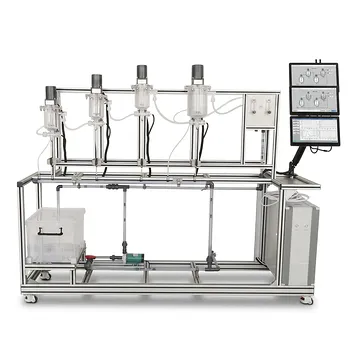
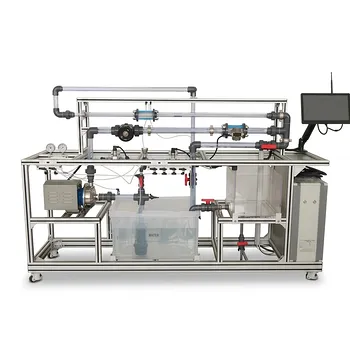
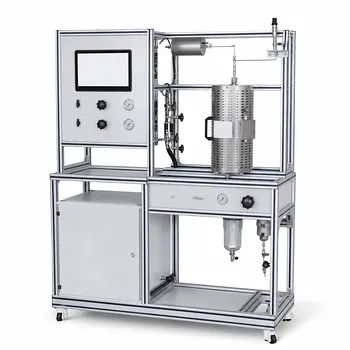
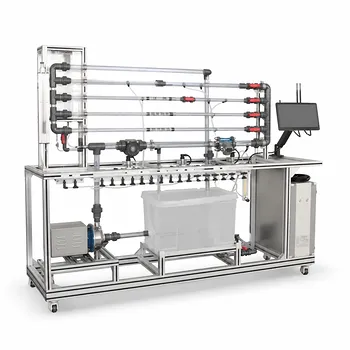
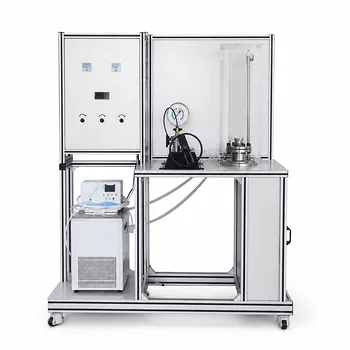
Are you looking to enhance hands-on training or validate scale-up data? LABPARK provides state-of-the-art Educational and Vocational Unit Operations Pilot Plants in chemical engineering, bioprocess & biotech, and environmental & water treatment.
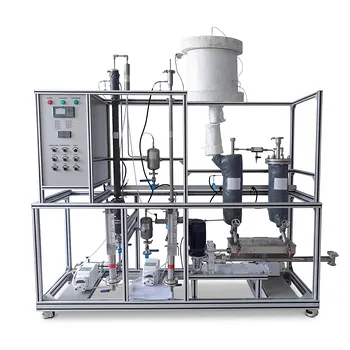
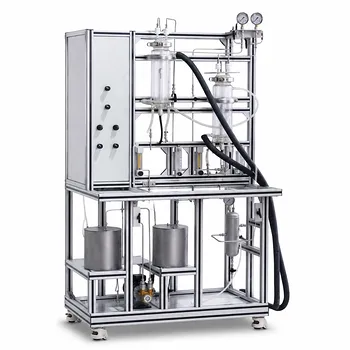
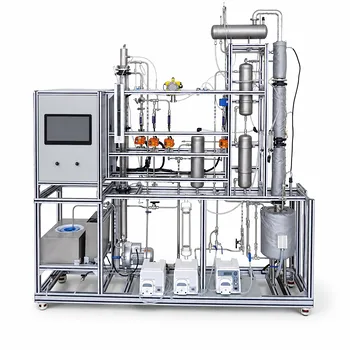
Our pilot systems—including gas scrubbing and caustic regeneration units—are designed to help universities, research institutes, and enterprises master critical process parameters with precision and safety.
Contact LABPARK today to find the perfect pilot plant solution for your facility!
Related Products
- Constant Pressure Filtration Educational Unit Operations Pilot Plant
- Multi Functional Catalytic Reaction and Reactor Evaluation Educational Unit Operations Pilot Plant
- Ion Exchange Water Purification Educational Pilot Plant for Engineering Unit Operations
- Fixed-Bed Chemical Reaction and Gas Dust Tar Removal Unit Operations Pilot Plant
- Electrolyte Distillation Purification and Formulation Educational Pilot Plant
People Also Ask
- How do educational unit operations pilot plants bridge theory and design? Bridge the Engineering Gap
- How do educational unit operations pilot plants address safety and waste management when scaling up?
- Why splitting a filtration batch doesn't always reduce cycle time? Pilot Plant Insights
- Why Demo Constant-Rate to Constant-Pressure Filtration on a Pilot Plant? Key Practical Insights
- How to select solid-liquid separation equipment for pilot plants? A Step-by-Step Guide